



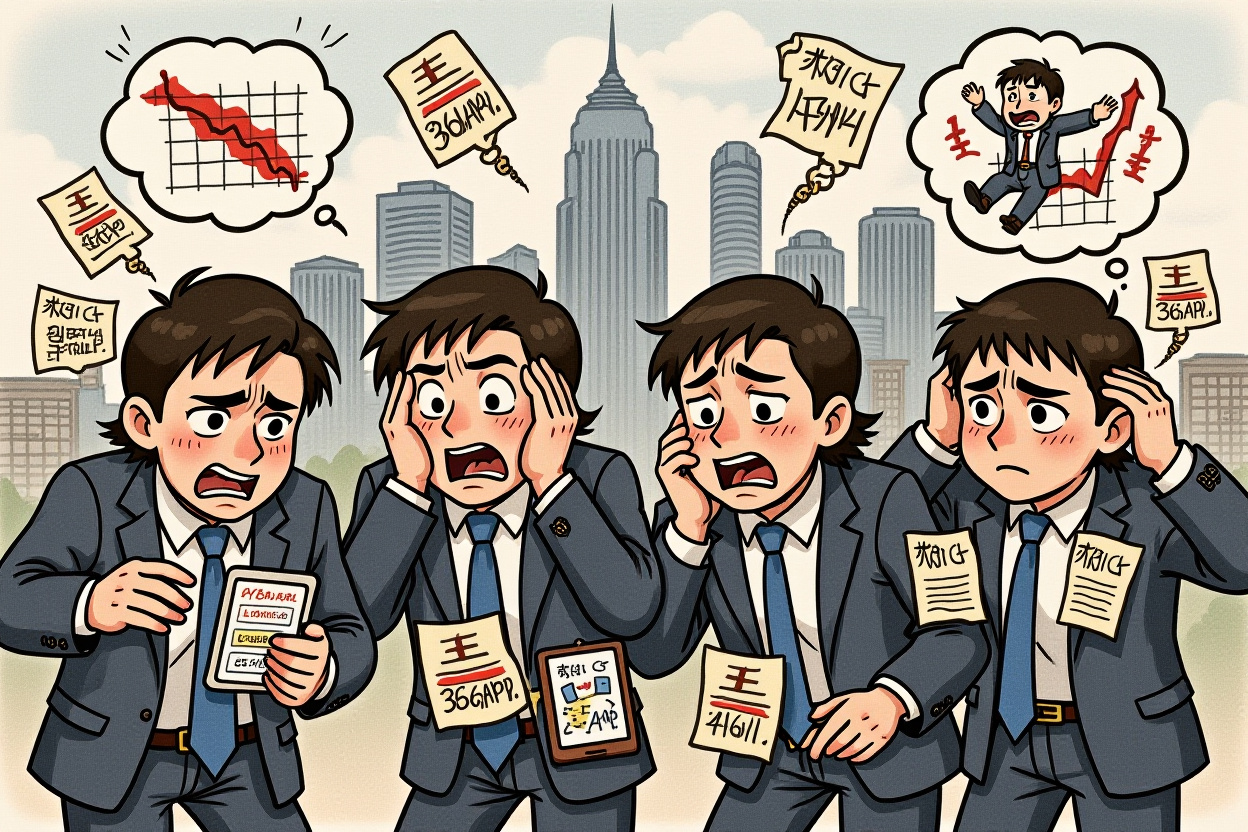
Executive Summary: Key Takeaways on Mini Loan Risks
– Fenqile (分期乐), a prominent mini loan platform, faces scrutiny for lending practices where borrowers can end up repaying nearly double the principal, as seen in a case of borrowing 13,674 yuan to repay 26,859 yuan.
– New regulations from the People’s Bank of China (中国人民银行) and National Financial Regulatory Administration cap comprehensive financing costs at 24% APR, but platforms often use hidden fees to exceed this limit, pushing costs towards 36%.
– Despite claims of moving past its origins, Fenqile remains linked to campus lending, with numerous complaints about targeting students and employing aggressive, sometimes violent, debt collection tactics.
– Consumer complaint platforms like Hei Mao (黑猫投诉) host over 160,000 grievances against Fenqile, highlighting issues with transparency, unauthorized fees, and privacy violations.
– This case underscores broader tensions in China’s fintech sector between innovation and consumer protection, signaling increased regulatory oversight that could impact related equities and investment strategies.
The Allure and Pitfalls of Mini Loans in Modern China
As Chinese consumers, particularly young adults, seek quick cash for holidays, travel, or daily expenses, mini loans presented as convenient, low-pressure solutions have surged in popularity. Platforms like Fenqile (分期乐) market these products with enticing promises of high credit limits and low daily interest rates, perfect for those feeling financially strained. However, beneath this glossy fintech exterior lies a reality where borrowers can find themselves trapped in a cycle of debt, repaying sums far exceeding what they borrowed. This mini loan phenomenon is not just a consumer issue but a critical focal point for investors monitoring China’s consumer credit market and regulatory evolution.
The recent case of Ms. Chen, who borrowed 13,674 yuan only to owe 26,859 yuan after years of accruing interest, exemplifies the hidden costs of these mini loans. What begins as a manageable-looking monthly payment—sometimes as low as 18.23 yuan—can balloon over extended repayment periods, often stretching to 36 months. The psychological toll is equally severe, with aggressive debt collection practices invading personal privacy and causing significant distress. For international investors, understanding this dynamic is essential, as it highlights both the risks in consumer lending sectors and the potential for regulatory crackdowns that could affect companies like Le Xin Group (乐信集团), Fenqile’s parent, traded on Nasdaq.
Case Study: From 13,000 to 26,000 – The Debt Spiral
In a detailed example that went viral on social media, Ms. Chen, a university student at the time, took out five mini loans from Fenqile between 2020 and 2021 for amounts ranging from 400 yuan to 6,800 yuan. Each was structured with lengthy repayment terms of up to 36 periods, with annual percentage rates (APRs) between 32.08% and 35.90%. Despite promotional claims of “low interest,” the cumulative effect meant her total repayment obligation nearly doubled the principal. After stopping payments in August 2022 due to financial strain, she faced over 1,000 days of delinquency, accompanied by collection efforts that notified her family and friends, exacerbating her mental health struggles.
This case is not isolated. Data from complaint platforms reveals a pattern where mini loans, often perceived as small and manageable, morph into burdensome debts. The mechanics are simple yet effective: by extending repayment timelines and layering on fees, platforms ensure that the total cost of borrowing skyrockets, even for trivial amounts like 400 yuan split over three years. For investors, this raises red flags about the sustainability of business models reliant on high-cost consumer credit, especially as regulatory pressures mount.
The Mechanics of Debt Accumulation in Mini Loans
Fenqile’s mini loan model operates on a premise of accessibility, offering instant approvals and flexible terms. However, the devil is in the details. Upon entering the platform’s interface, users see appealing figures such as “borrow up to 200,000 yuan with annual rates as low as 8%.” Yet, the fine print often includes additional charges—membership fees, guarantee fees, credit assessment fees—that are not prominently disclosed. These opaque costs can inflate the comprehensive annualized cost to the legal ceiling of 36%, effectively circumventing spirit of regulations designed to protect borrowers.
– Example from complaints: A user from Zhejiang reported borrowing 10,300 yuan at a stated 6% APR for 12 months, expecting to repay 10,643 yuan. Actual bank statements showed monthly payments of 1,034.78 yuan, totaling 12,425.4 yuan—an excess of approximately 1,782 yuan attributed to hidden fees.
– Another case from Sichuan involved a borrower charged 1,102.14 yuan in guarantee fees without clear prior notification, embedded within lengthy electronic agreements.
Such practices not only erode consumer trust but also invite regulatory scrutiny, which could lead to fines, operational restrictions, or forced business model adjustments. For stakeholders in Chinese fintech equities, these issues signal potential volatility and the need for due diligence on compliance practices.
Regulatory Framework: Navigating the 24% APR Cap
In December 2025, the People’s Bank of China (中国人民银行) and the National Financial Regulatory Administration jointly issued the “Guidelines for the Management of Comprehensive Financing Costs of Small Loan Companies,” aiming to rein in excessive lending costs. The rules explicitly prohibit new loans with comprehensive costs exceeding 24% APR and mandate that, by the end of 2027, all new loans should align with four times the one-year Loan Prime Rate (LPR). From 2026 onward, local financial authorities are empowered to correct violations, halt new lending, and incorporate oversight into dynamic credit reporting systems.
This regulatory tightening presents a direct challenge to mini loan platforms like Fenqile, which have historically relied on high-interest margins for profitability. The guidelines target the very fees and structures that enable APRs to approach 36%, pushing companies to innovate within stricter boundaries. For institutional investors, this shift necessitates a reevaluation of risk profiles in the consumer finance sector, as non-compliance could lead to significant financial penalties and reputational damage.
Fenqile’s Response and Adaptation Strategies
Fenqile, operated by Ji’an Fenqile Network Small Loan Co., Ltd. (吉安市分期乐网络小额贷款有限公司) under Le Xin Group, has publicly emphasized partnerships with licensed institutions like Shanghai Bank (上海银行) to enhance credibility. However, the platform’s struggle to align with new caps is evident in ongoing consumer complaints. For instance, a February 2025 complaint on Hei Mao detailed a user’s inability to identify the actual lender due to Fenqile’s refusal to disclose funding sources, complicating efforts to seek redress under the 24% threshold.
The company’s trajectory reflects broader fintech trends in China. After evolving from its roots in campus lending—a sector heavily regulated since 2016—Le Xin Group rebranded as a financial technology pioneer, listing on Nasdaq in 2017. Yet, as mini loans continue to draw criticism, Fenqile must balance growth with compliance, potentially impacting its stock performance and investor confidence. Monitoring these adaptations is crucial for fund managers assessing Chinese tech equities exposed to regulatory headwinds.
The Lingering Shadow of Campus Lending
Fenqile’s origins are deeply intertwined with student credit, a segment that fueled its early expansion but now poses reputational risks. Founded in 2013 by Xiao Wenjie (肖文杰), the platform initially gained traction by offering installment plans for electronics to university students, amassing a user base that propelled it to trillion-yuan transaction volumes. However, after regulatory crackdowns on campus loans due to predatory practices, Le Xin Group attempted to shed this image, repositioning as a mainstream fintech player.
Despite these efforts, evidence suggests that mini loans still permeate student circles. Searches for “Fenqile campus loans” on Hei Mao yield 922 complaints, with users recounting experiences of on-campus promotions and loans taken while enrolled. This persistence highlights a disconnect between corporate messaging and ground reality, raising questions about effective oversight and ethical lending standards.
Aggressive Collection and Privacy Concerns
The mini loan experience often extends beyond borrowing to intrusive debt recovery methods. Over 20,000 complaints reference violent collection tactics, including harassment of family members, colleagues, and even community leaders. Such practices not only violate consumer rights but also contravene guidelines from bodies like the China Banking and Insurance Regulatory Commission (CBIRC), which advocate for fair collection practices.
– Privacy issues: Fenqile’s user agreement grants extensive data access, collecting names, ID photos, bank details, income information, facial recognition data, and location. This information is shared with third parties, including payment partners and credit enhancement agencies, often without explicit consent.
– Reference: An investigation by Economic Information Daily (经济参考报) highlighted cases where non-borrowers faced collection harassment due to data sharing, underscoring systemic privacy risks.
For corporate executives and investors, these factors represent operational and legal liabilities that could trigger regulatory action or consumer backlash, affecting brand value and market positioning.
Consumer Backlash and Legal Recourse
The volume of grievances against Fenqile paints a stark picture of consumer dissatisfaction. On Hei Mao alone, 160,000 complaints cite issues ranging from opaque pricing to obstacles in early repayment. This collective voice is shaping legal and regulatory responses, as seen in media coverage from outlets like Southern Daily (南方日报) and China Consumer (中国消费者), which have detailed cases and sought expert commentary.
Legal experts note that while regulations set clear caps, enforcement remains a challenge, especially when fees are disguised. Borrowers like Ms. Chen often find themselves in binds where the cost of legal action outweighs the debt, though class-action suits and increased regulatory vigilance could shift this dynamic. For the financial community, these developments signal a growing emphasis on consumer protection that may influence market stability and investment in fintech stocks.
Data-Driven Insights from Complaint Platforms
– Statistical evidence: The 160,000 complaints on Hei Mao often cluster around themes of unauthorized fees, with users reporting comprehensive costs hitting 36% APR despite advertised lower rates.
– Real-world example: A January 2025 complaint described a borrower charged an extra 1,450 yuan for “credit assessment” fees, illustrating how mini loans can deviate from transparent pricing.
These patterns not only inform consumer advocacy but also provide due diligence material for investors analyzing company risk. As China’s financial ecosystem matures, transparency in lending practices will likely become a key metric for evaluating sector health.
Broader Implications for China’s Fintech and Equity Markets
The mini loan saga extends beyond Fenqile to reflect systemic issues in China’s rapidly evolving credit landscape. For young consumers, these products can undermine financial health, leading to long-term debt burdens that affect spending power and economic participation. From an investment perspective, companies engaged in high-cost lending face heightened regulatory risks, potential restructuring costs, and reputational damage that could depress equity valuations.
Regulators are walking a tightrope between fostering innovation in financial technology and preventing consumer harm. The ongoing scrutiny of mini loans may precipitate tighter controls on data usage, fee structures, and marketing practices, impacting a wide range of players from small lenders to large tech firms diversifying into finance. Institutional investors should monitor announcements from bodies like the People’s Bank of China (中国人民银行) for signals on policy direction, as these will influence market sentiment and strategic allocations.
Forward-Looking Market Guidance
As China’s economy navigates post-pandemic recovery and shifting consumption patterns, the demand for credit remains robust, but the rules of engagement are changing. Investors in Chinese equities, particularly in the fintech and consumer discretionary sectors, should:
– Assess company compliance with the 24% APR cap and transparency in fee disclosure.
– Evaluate exposure to consumer credit segments prone to regulatory intervention.
– Consider the ethical dimensions of business models, as social responsibility increasingly affects brand resilience and stock performance.
Synthesizing Insights for Strategic Decision-Making
The case of Fenqile’s mini loans serves as a cautionary tale for both borrowers and investors. While these products offer short-term liquidity, their long-term costs—financial and psychological—can be devastating, echoing broader concerns about debt sustainability in China’s consumer market. Regulatory frameworks are evolving to address these pitfalls, but enforcement gaps persist, creating opportunities for both risk and reform.
For business professionals and fund managers, proactive engagement is key. Stay informed on regulatory updates from Chinese authorities, conduct thorough due diligence on lending practices within portfolios, and advocate for transparent standards that align with global best practices. By prioritizing consumer protection and compliance, stakeholders can navigate the complexities of China’s equity markets while contributing to a more stable financial ecosystem. The mini loan phenomenon is not just a trend to watch; it’s a litmus test for the future of responsible finance in the world’s second-largest economy.