



The Alluring Trap of Instant Cash
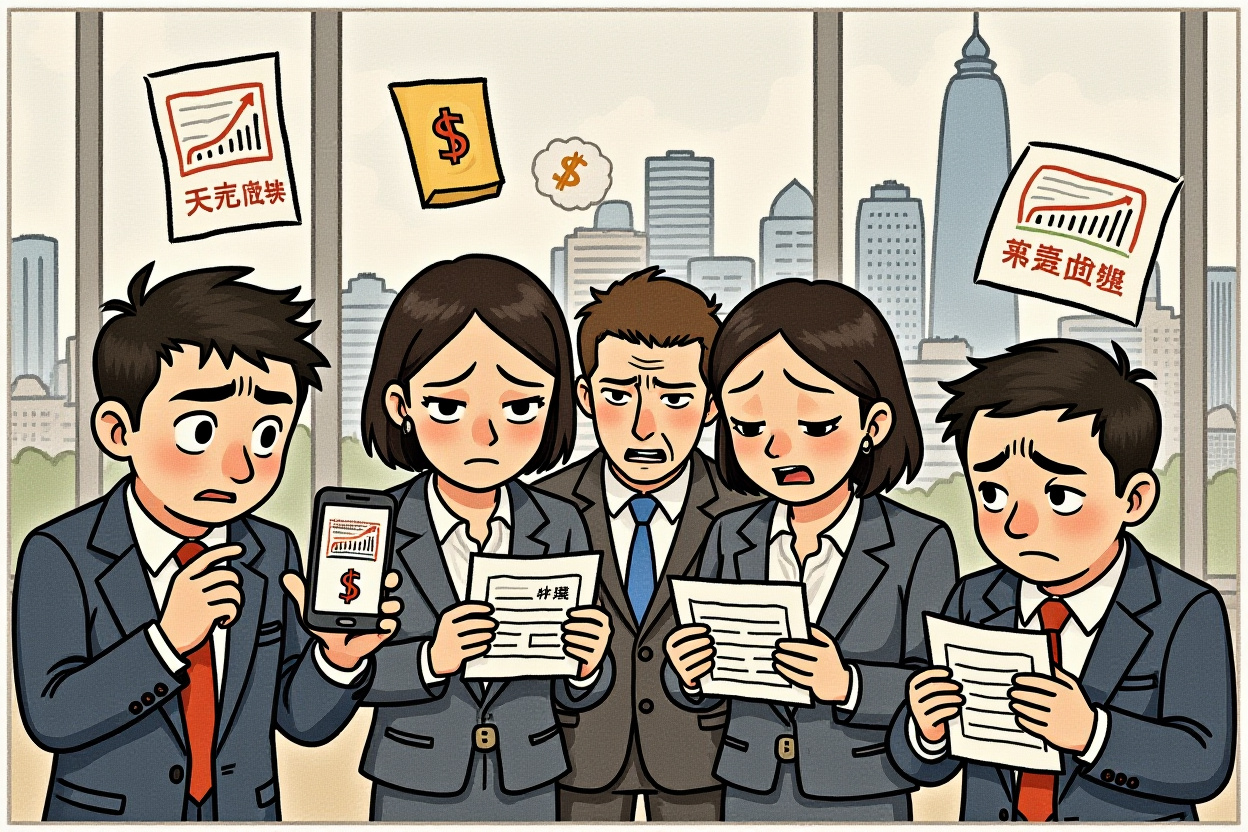
The Lunar New Year, a time for family reunions and red envelope gifts, often puts a strain on wallets. For many young Chinese, online platforms like Fenqile (分期乐, Installment Fun) offer a tempting solution: instant credit with a few taps on a smartphone. Promising “up to 200,000 yuan with an annual interest rate as low as 8%,” these services position themselves as convenient, tech-savvy allies for the cash-strapped. However, a recent viral case has ripped away the veneer of this financial technology, revealing a harsh reality of usurious costs and aggressive collection tactics that are ensnaring a generation. The case of a borrower who took out 13,674 yuan only to owe 26,859 yuan—nearly double the principal—has cast a harsh spotlight on the entire mini-loans sector, forcing a critical examination of its practices against a backdrop of tightening regulation.
Key Market Implications
-
– The proliferation of high-cost mini-loans poses a systemic risk to consumer financial health and could trigger more aggressive regulatory intervention.
– Publicly traded fintech firms like Lexin Fintech Holdings (NASDAQ: LX), Fenqile’s parent company, face significant reputational and compliance risks that could impact investor sentiment.
– New rules from the People’s Bank of China (PBOC, 中国人民银行) and the National Financial Regulatory Administration (NFRA, 国家金融监督管理总局) are setting a clear path toward a 24% interest rate cap, fundamentally challenging current business models.
– International investors must scrutinize the sustainability of revenue derived from high-margin lending in China’s evolving consumer credit landscape.
Opaque Fees and the Debt Snowball Effect
The core controversy lies not just in high headline rates but in a labyrinth of hidden fees and deliberately extended repayment terms. The mini-loans model thrives on offering small, manageable-looking monthly payments by stretching loans over exceptionally long periods—sometimes up to 36 months for a mere 400 yuan purchase. This structure dramatically inflates the total interest paid, creating a debt snowball that overwhelms the borrower.
Breaking Down the True Cost of Borrowing
The viral case involves a Ms. Chen, a university student at the time of borrowing, who took five separate loans from Fenqile between 2020 and 2021 totaling 13,674 yuan. The annual percentage rates (APR) ranged from 32.08% to 35.90%, already brushing against the informal judicial ceiling of 36%. However, borrower complaints allege additional, non-transparent charges are the real culprit. Users report being hit with membership fees, guarantee fees, and credit assessment fees that are buried within lengthy electronic agreements and not prominently disclosed during the application process.
This lack of transparency is systemic. A report by China Consumer magazine (中国消费者) detailed cases where the actual repayment total far exceeded the amount calculated using the contract-stated interest rate. In one instance, a borrower from Hangzhou took a loan of 10,300 yuan at a stated 6% annual rate for 12 months. The expected repayment was 10,643 yuan, but bank records showed the actual total was 12,425.4 yuan—an extra 1,782 yuan in hidden costs. On the Black Cat Complaints platform (黑猫投诉), a major consumer rights site, over 160,000 complaints are logged against Fenqile, with a common theme being the effective APR being pushed to the legal brink of 36% through these ancillary fees.
The Regulatory Clock is Ticking
Chinese authorities are acutely aware of the risks posed by predatory lending. In a decisive move, the People’s Bank of China (PBOC, 中国人民银行) and the National Financial Regulatory Administration (NFRA, 国家金融监督管理总局) jointly issued the “Guidelines for the Management of Comprehensive Financing Costs of Small Loan Companies” on December 19, 2025. This directive is a game-changer for the mini-loans industry.
Understanding the New Regulatory Framework
The guidelines explicitly prohibit new loans with a comprehensive financing cost exceeding 24% per annum. Furthermore, they mandate that, in principle, by the end of 2027 at the latest, the cost of all newly issued loans must be reduced to within four times the one-year Loan Prime Rate (LPR, 贷款市场报价利率). Given the current LPR, this would imply a cap significantly lower than 24%. The rules have teeth: starting in 2026, local financial regulators are ordered to immediately correct violations, halt new lending, and incorporate dynamic credit reporting management for lenders exceeding the 24% threshold. This creates a powerful compliance imperative for platforms like Fenqile to radically restructure their pricing models or face severe operational constraints.
A Legacy of Controversy: The Persistent Shadow of Campus Lending
To understand Fenqile’s current challenges, one must look at its origins. The platform’s operator, Jian’An Fenqile Network Microfinance Co., Ltd. (吉安市分期乐网络小额贷款有限公司), is ultimately controlled by Lexin Fintech Holdings, founded by Xiao Wenjie (肖文杰). Lexin’s growth story is inextricably linked to the controversial “campus loan” (校园贷) boom of the last decade. The company rapidly expanded by providing credit to university students, a practice that came under intense regulatory fire in 2016 due to widespread reports of over-indebtedness and coercive collection.
Old Habits Die Hard
Despite Lexin’s rebranding as a fintech leader and its 2017 Nasdaq listing, allegations persist that its core platform has not fully shed its old skin. On the Black Cat Complaints platform, over 922 entries combine the keywords “Fenqile” and “campus loan.” Users claim they were students when they borrowed, and some report promotional stalls for Fenqile loans being set up directly on university campuses. This suggests ongoing targeting of a demographic particularly vulnerable to impulsive borrowing and less financially experienced.
Aggressive collection practices further tarnish its image. Thousands of complaints describe “violent debt collection” (暴力催收), including threats, harassment of family and friends by disclosing debt details (known as “blasting the address book” or 爆通讯录), and public shaming. An investigation by The Economic Reference News (经济参考报) also highlighted concerning data privacy practices, where user consent grants the platform sweeping access to personal information—from ID cards and bank details to facial recognition data—which is then shared with a wide array of third parties.
Investment and Market Outlook in a Tightening Environment
For international investors and market participants, the saga of mini-loans is a critical case study in Chinese regulatory evolution and business model risk. The sector is at an inflection point. The 2025 guidelines provide a clear regulatory runway: the era of 36% effective APRs is ending. Companies that built profitability on high-margin lending must now innovate around lower-cost capital, superior risk assessment, and genuine value-added services to maintain growth.
Navigating the New Normal
The immediate future will involve heightened scrutiny. Investors should monitor:
-
– Quarterly filings from listed players like Lexin for shifts in revenue mix, net interest margins, and provisions for compliance adjustments.
– Enforcement actions by local financial regulators against non-compliant small loan companies as the 2026 deadline approaches.
– The development of alternative consumer finance products that comply with the 24% and eventual 4x LPR caps.
– Social sentiment and consumer litigation, which can act as a leading indicator for regulatory crackdowns.
The ultimate viability of the mini-loans model, as currently practiced, is in serious doubt. Platforms that quickly adapt to transparency, fair pricing, and ethical collection will survive and potentially thrive in a more rational market. Those that resist will face escalating legal, reputational, and financial penalties. The Chinese regulator’s message is unambiguous: financial innovation must serve real economic needs without exploiting consumer vulnerability. The coming year will separate the true fintech innovators from the lenders merely cloaked in technology.