



Executive Summary: Key Takeaways on China’s Mini-Loan Crisis
– Mini-loans, often marketed as convenient credit for small purchases, are ensnaring young Chinese borrowers with effective annualized costs approaching 36%, leading to repayment amounts that can double the principal. – Despite regulatory guidelines capping comprehensive financing costs at 24%, platforms like Fenqile (分期乐) employ hidden fees, extended terms, and opaque pricing to maintain profitability. – The legacy of campus lending persists, with complaints indicating ongoing targeting of students and the use of aggressive, privacy-invading debt collection tactics. – Data privacy concerns are significant, as borrowers’ personal information is widely shared with third parties, exacerbating the risks associated with these financial products. – For investors and regulators, the sustainability of this business model is under scrutiny, demanding closer alignment with consumer protection standards and ethical lending practices.
The Allure and Trap of Instant Credit in Modern China
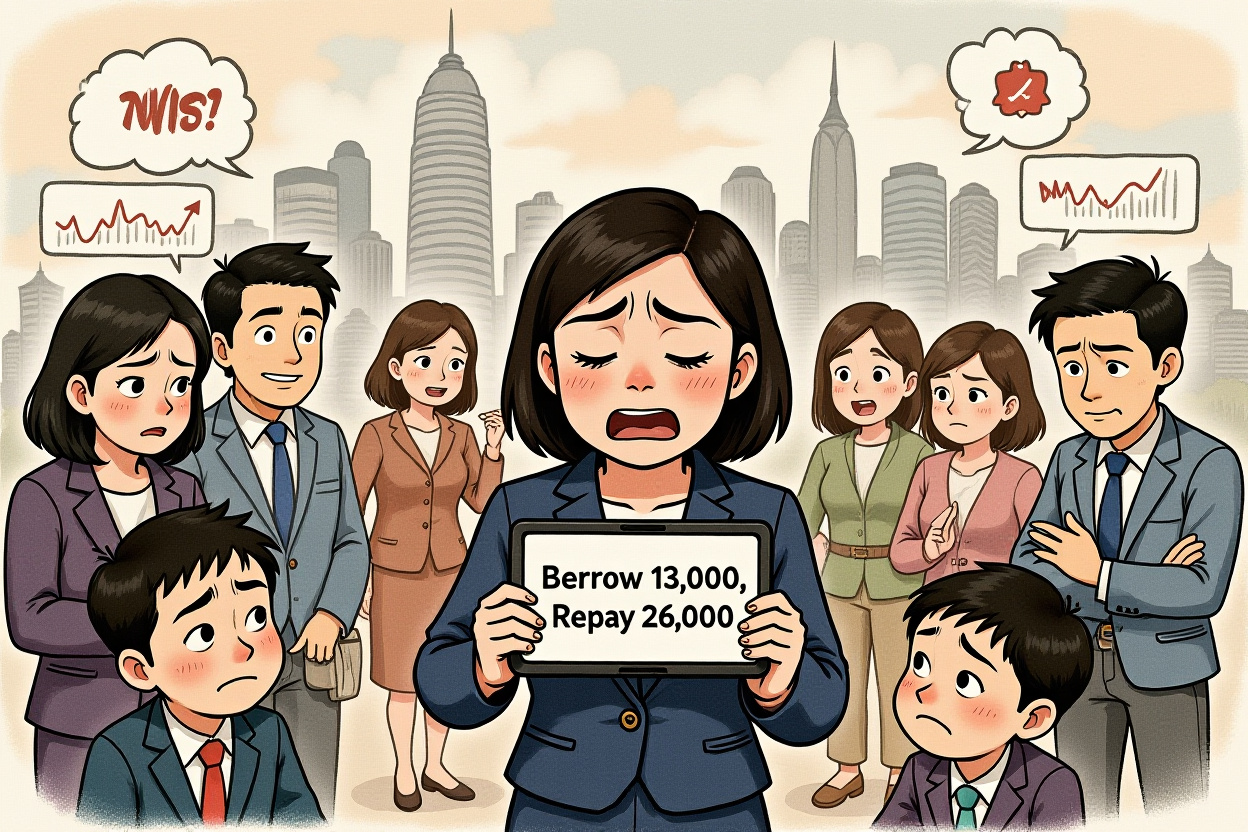
As lunar New Year pressures mount—from red envelopes for family to holiday travel—many young Chinese find themselves short on cash. Enticing offers flood social media: “Credit limits boosted to 50,000 yuan,” promises one post from the Fenqile (分期乐) platform公众号. With a single click, funds seem within reach. Yet, for a growing number, this convenience has morphed into a relentless debt cycle. The recent case of Ms. Chen, who borrowed 13,674 yuan only to owe 26,859 yuan after six years, has ignited public outrage and regulatory scrutiny. This incident epitomizes the darker side of China’s fintech boom, where ‘mini-loans’ designed for small, manageable amounts are draining the financial vitality of a generation. For global investors monitoring Chinese equities, understanding the risks and realities of this sector is paramount.
The Opaque Cost Structure of Mini-Loans: A Debt Snowball
The core appeal of mini-loans lies in their perceived affordability: low monthly payments spread over long periods. However, this structure often masks exorbitant true costs.
Case Study: Ms. Chen’s Descent into a 26,000 Yuan Debt
While a university student, Ms. Chen turned to Fenqile (分期乐) for everyday expenses, even splitting a 400 yuan purchase into 36 installments. Between 2020 and 2021, she took five loans totaling 13,674 yuan, with terms from 12 to 36 months. The annual percentage rates (APRs) ranged from 32.08% to 35.90%, far above the sales pitch of “low interest” and “minimum monthly payments of 18.23 yuan.” By August 2022, she defaulted, and over 1,000 days of delinquency later, her debt had ballooned to nearly double the principal. The psychological toll was severe, with debt collectors notifying her friends and family, leading to depression and social stigma. This case is not isolated; it highlights how mini-loans can transform small borrowings into crippling obligations.
Hidden Fees and the Erosion of Transparent Pricing
On the surface, Fenqile’s (分期乐) mini-loan offers appear competitive, advertising “annual rates as low as 8%.” Yet, user complaints reveal a different reality. On the Hei Mao投诉平台 (Black Cat Complaints Platform), over 160,000 complaints are logged against Fenqile. Users report unauthorized charges for membership fees, guarantee fees, and credit assessment fees, which cumulatively push the comprehensive borrowing cost toward the 36% ceiling. For example, one borrower from February 2024 alleged that a 36% effective rate was applied, with the platform refusing to disclose the actual lender. Another from January 2024 cited a “credit assessment fee” that inflated costs beyond the stated interest. These practices are documented in media reports; The Chinese Consumer detailed cases where borrowers like Meng from Hangzhou repaid over 1,700 yuan more than the contract stipulated on a 10,300 yuan loan, and Sha from Sichuan was charged a 1,102.14 yuan guarantee fee without clear disclosure. The lack of prominent fee information in lengthy electronic agreements violates principles of informed consent, turning mini-loans into financial traps.
Regulatory Crackdown and Persistent Compliance Gaps
Chinese authorities have moved to curb predatory lending, but enforcement remains a challenge, allowing mini-loan platforms to adapt their models.
The 2025 Guidance: Capping Costs at 24% and Beyond
In December 2025, the 中国人民银行 (People’s Bank of China) and the 国家金融监管总局 (National Financial Regulatory Administration) jointly issued the Guidance on the Management of Comprehensive Financing Costs for Micro-Loan Companies. This directive prohibits new loans with comprehensive costs exceeding 24% annually and mandates that by end-2027, all new lending must stay within four times the one-year 贷款市场报价利率 (Loan Prime Rate, LPR). From 2026, violations will trigger corrective actions, suspension of new loans, and dynamic credit reporting management. This framework aims to protect consumers, yet its phased implementation creates a window for non-compliance.
How Mini-Loan Platforms Skirt the Rules
Fenqile (分期乐) and similar operators utilize several tactics to maintain high yields. By extending repayment terms to 36 months or more, they reduce monthly payments but accrue more interest over time. Additionally, fees are bundled into the overall cost, often obfuscated as service charges rather than interest. The platform’s operator, 吉安市分期乐网络小额贷款有限公司 (Jian分期乐 Network Micro-Loan Co., Ltd.), a subsidiary of the Nasdaq-listed 乐信集团 (Lexin Group), leverages partnerships with licensed institutions like 上海银行 (Bank of Shanghai) to lend, but the onus of cost transparency falls on the platform. Investors should note that while regulatory红线 (red lines) tighten, the profitability of mini-loans relies on pushing legal boundaries, posing reputational and regulatory risks.
The Persistent Shadow of Campus Lending in Mini-Loan Operations
Despite efforts to rebrand, the origins of many mini-loan platforms in student lending continue to influence their practices.
Fenqile’s Origins: From Campus Pioneer to Fintech Giant
乐信集团 (Lexin Group) was founded in 2013 by 肖文杰 (Xiao Wen杰), with its core brand Fenqile (分期乐) pioneering installment e-commerce in China. Its early growth was fueled by lending to university students, a controversial strategy that provided rapid scale. After a 2016 regulatory crackdown on 校园贷 (campus loans), Lexin pivoted, rebranding as a fintech firm and listing on the Nasdaq in 2017. However, the shift may be more superficial than substantive.
Ongoing Targeting and Ethical Concerns
Searching “分期乐 校园贷” on Hei Mao投诉平台 yields 922 complaints, indicating that student targeting persists. Users report that promotion agents still operate on campuses, even setting up booths to market loans. Furthermore, over 20,000 complaints cite violent debt collection, including harassment of family, colleagues, and community leaders. This underscores a systemic issue: mini-loans, while marketed broadly, often prey on financially inexperienced youth. For investors, this legacy complicates ESG assessments and raises questions about sustainable business practices in China’s consumer finance sector.
Data Privacy Risks and Aggressive Collection Tactics
The mini-loan ecosystem extends beyond lending into data exploitation and psychological pressure, amplifying risks for borrowers.
Information Sharing: From Consent to Loss of Control
Upon agreeing to Fenqile’s (分期乐) terms, users grant access to sensitive data—姓名 (name), 身份证号码 (ID number), 银行卡信息 (bank card details), 人脸信息 (facial recognition data), and more. The privacy policy permits sharing this information with third-party merchants, payment partners,清算银行 (clearing banks), and credit enhancement agencies. As reported by 经济参考报 (Economic Reference Report), this creates a chain where personal data is commodified, leaving borrowers vulnerable to privacy breaches and unsolicited marketing. In an era of heightened data security concerns under China’s 个人信息保护法 (Personal Information Protection Law), such practices could attract regulatory penalties.
The Human Toll: Mental Health and Social Consequences
Debt collection methods employed by mini-loan platforms often involve “爆通讯录” (blasting the contact list), where collectors message or call the borrower’s social circle. This not only invades privacy but can lead to anxiety, depression, and social isolation, as seen in Ms. Chen’s case. The psychological impact is a hidden cost of these loans, affecting productivity and well-being. For corporate executives and fund managers, these social repercussions translate into potential brand damage and consumer backlash, influencing long-term valuation of fintech stocks.
Synthesizing the Risks and Charting a Path Forward
The mini-loan phenomenon in China reveals a critical tension between fintech innovation and consumer protection. While these products fill a credit gap for young consumers, their opaque costs, aggressive tactics, and privacy risks undermine financial health. Regulatory strides are being made, but full alignment with guidelines like the 2025 lending cost cap will require stringent oversight. For international investors, due diligence on mini-loan platforms must extend beyond financial metrics to include compliance audits and ethical lending practices. As China’s equity markets evolve, sustainable growth in consumer finance will hinge on transparency and trust. Stakeholders—from regulators to borrowers—must advocate for clearer disclosures and fair treatment to ensure that mini-loans serve as tools for empowerment, not exploitation.