



Executive Summary
– A recent viral case highlights how borrowers like Ms. Chen face repayments nearly double their principal on Fenqile mini-loans, with effective annual rates pushing 36%.
– Opaque fee structures, including hidden service and guarantee charges, systematically inflate costs beyond advertised rates, trapping consumers in debt cycles.
– Fenqile, operated by Nasdaq-listed Lexin Group, retains ties to controversial campus lending practices despite regulatory crackdowns, with ongoing complaints about marketing to students.
– Regulatory guidelines from the People’s Bank of China (中国人民银行) and National Financial Regulatory Administration (国家金融监督管理总局) cap rates at 24%, but enforcement gaps allow mini-loans to proliferate.
– Consumers are urged to scrutinize loan terms, report violations, and seek financial literacy to navigate China’s evolving credit landscape.
A Festive Season Marred by Debt
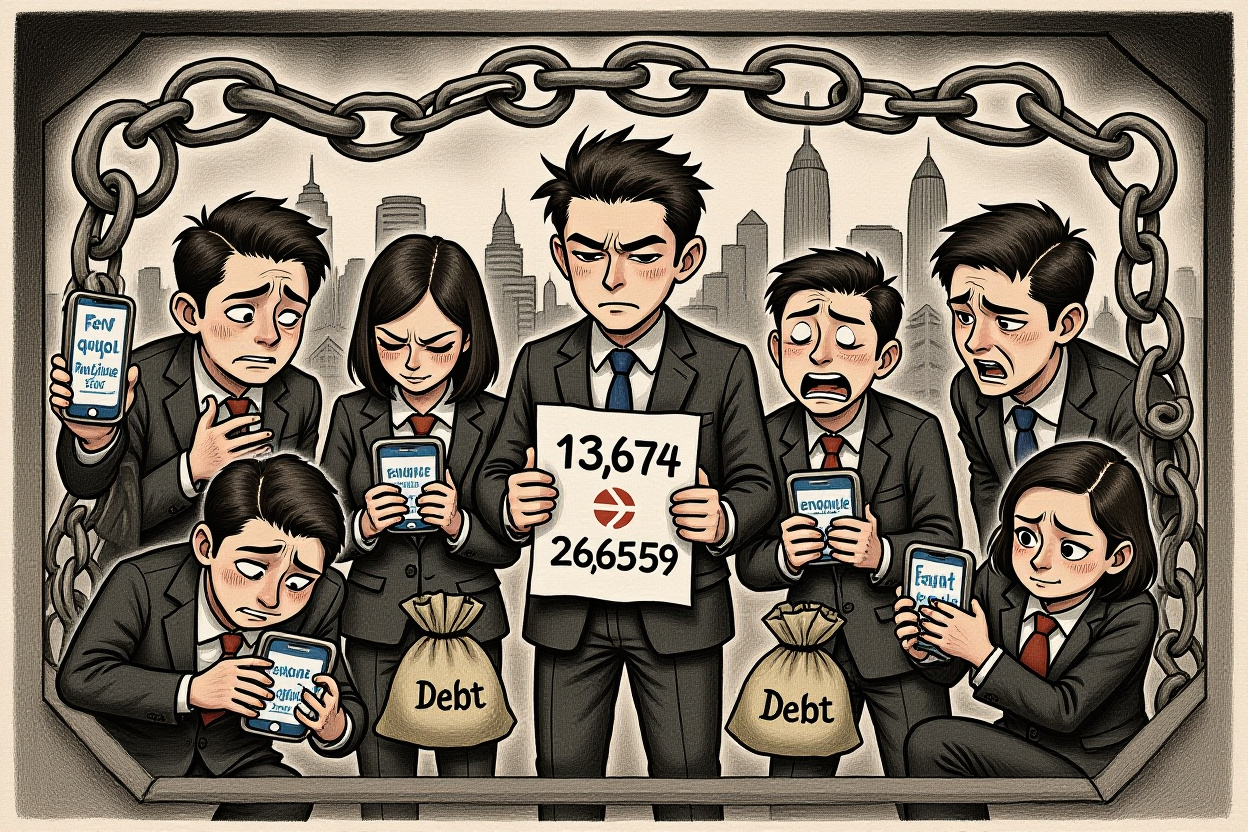
The Lunar New Year, a time for family reunions and generosity, has become a pressure cooker for many young Chinese grappling with tight budgets. Enticed by platforms like Fenqile (分期乐) promoting instant credit with “low interest” and high limits, they click to borrow, only to find themselves ensnared in a web of debt. This article delves into the predatory world of mini-loans, a burgeoning segment in China’s fintech ecosystem that promises convenience but delivers financial ruin. Through cases like Ms. Chen’s—where borrowing 13,674 yuan demands repayment of 26,859 yuan—we uncover how these products are systematically draining the youth, raising urgent questions about consumer protection and regulatory oversight in China’s equity markets.
The Seductive Promise and Harsh Reality of Mini-Loans
Mini-loans, characterized by small amounts and extended repayment periods, are marketed as lifelines for cash-strapped millennials and Gen Z consumers. However, beneath the glossy facade of financial technology lies a business model built on exorbitant costs and deceptive practices.
Case Study: From 13,000 to 26,000 Yuan
In February, Ms. Chen’s ordeal with Fenqile mini-loans went viral on social media, spotlighting the extreme terms these products impose. During her university years, she took out five loans totaling 13,674 yuan for everyday expenses, including a 400-yuan purchase stretched over 36 installments. The contracts listed annual interest rates between 32.08% and 35.90%, but with added fees, her total repayment ballooned to 26,859 yuan—approaching double the principal. After stopping payments in August 2022 due to financial strain, she faced over 1,000 days of delinquency, coupled with aggressive debt collection that harassed her family and friends, exacerbating mental health issues. This case epitomizes how mini-loans leverage long tenures and compounded costs to trap borrowers, a trend increasingly scrutinized by investors monitoring consumer finance risks in Chinese equities.
The Mechanics of Debt Multiplication
Fenqile’s platform lures users with promises like “up to 200,000 yuan borrowing limit” and “annual rates as low as 8%,” but the fine print reveals a different story. By extending分期 periods to 36 months or more, monthly payments seem manageable, yet the effective annual percentage rate (APR) soars when ancillary charges are included. For instance, a loan of 10,000 yuan at an advertised 8% might incur additional service fees, pushing the real cost toward 36%. This structure ensures that debt snowballs over time, often exceeding borrowers’ initial expectations. Data from Hei Mao Tousu (黑猫投诉), a consumer complaint platform, shows over 160,000 grievances against Fenqile, with many citing unexplained membership fees, guarantee costs, and credit assessment charges that inflate costs. Such practices highlight the systemic risks mini-loans pose, not just to individuals but to the stability of consumer lending sectors watched by institutional investors.
Unveiling the Opaque Cost Structure
Transparency is a cornerstone of ethical finance, yet mini-loan providers frequently obscure true borrowing costs through complex fee arrangements and buried clauses. This opacity not only violates regulatory spirit but also erodes trust in China’s fintech innovation.
Hidden Fees and Service Charges
Complaints detail how Fenqile mini-loans add layers of costs beyond stated interest. One user reported in February that a loan with a 36% APR included undisclosed charges, while another in January accused the platform of levying “credit evaluation fees” that raised total payments. Investigations by China Consumer (中国消费者) reveal stark discrepancies: in Hangzhou, a borrower named Meng took a 10,300-yuan loan at a 6% contract rate but paid 12,425.4 yuan total—over 1,782 yuan extra. Similarly, a 15,000-yuan loan at 7.5% resulted in 17,650.43 yuan repaid, exceeding the agreed sum by 2,053 yuan. These cases underscore how mini-loans use add-ons like guarantee fees, often hidden in lengthy electronic agreements, to bypass rate caps. For global fund managers analyzing Chinese financial stocks, such practices signal compliance risks that could impact valuations, especially as regulators tighten screws on usury.
Regulatory Red Lines and Compliance Gaps
Guidelines for the Management of Comprehensive Financing Costs for Micro-Loan Companies, capping new loans at 24% APR and mandating alignment with the loan prime rate (LPR) by 2027. The rules threaten corrective actions, including halted lending and credit reporting penalties for violations. However, Fenqile’s mini-loans, with APRs nearing 36%, suggest enforcement lags. Platforms exploit loopholes by categorizing excess charges as “fees” rather than interest, delaying compliance. This regulatory arbitrage poses challenges for policymakers aiming to protect vulnerable borrowers while fostering innovation. Investors should monitor how companies like Lexin Group adapt, as stricter enforcement could pressure profitability in the mini-loan segment, influencing stock performance in Nasdaq-listed Chinese fintech firms.Fenqile: From Campus Pioneer to Controversial Giant
The rise of Fenqile mini-loans is inextricably linked to the broader narrative of Lexin Group (乐信集团), its parent company. Founded in 2013 by Xiao Wenjie (肖文杰), Lexin pioneered installment e-commerce in China, but its growth was fueled by contentious campus lending, a legacy that continues to haunt its operations.
A History Built on Student Lending
Lexin’s early expansion relied on targeting university students with easy credit, amassing a user base through products like Fenqile mini-loans. After regulatory crackdowns on campus loans in 2016, the company rebranded as a fintech firm and went public on Nasdaq in 2017. Despite this, Fenqile’s operator, J’an Fenqile Network Micro-Loan Co., Ltd. (吉安市分期乐网络小额贷款有限公司), remains accused of persisting with youth-oriented marketing. Searches for “campus loans” on Hei Mao Tousu yield 922 complaints against Fenqile, including reports of promoters setting up booths on campuses and enrolling students. This history raises red flags for ESG-focused investors, as such practices could trigger reputational damage and regulatory backlash, affecting Lexin’s stock stability in volatile markets.
Persistent Ties to Youth Marketing and Aggressive Tactics
Economic Reference Report (经济参考报) found that Fenqile’s app collects extensive personal data—from ID photos to location info—and shares it with third parties like payment partners and credit enhancers, often without clear consent. This ecosystem, from enticing ads to invasive recovery methods, exemplifies how mini-loans compromise financial and personal sovereignty. For corporate executives evaluating partnerships or investments, these practices underscore the need for due diligence on consumer protection metrics in China’s digital lending space.The Human Cost: Privacy Invasion and Mental Health Toll
The fallout from mini-loans extends beyond finances, impacting borrowers’ well-being and privacy. As debt mounts, collection agencies resort to intimidation, exacerbating stress and depression among young adults already struggling with economic pressures.
Data Sharing and Consent Issues
Fenqile’s privacy policy allows data sharing with entities like banks and merchants, often buried in complex agreements. Users like Sha from Sichuan reported unexpected guarantee fees after borrowing, highlighting how consent is manipulated. This lack of transparency violates principles of data governance increasingly emphasized by Chinese regulators, such as the Cybersecurity Administration. For institutional investors, these risks hint at potential legal liabilities and fines that could erode returns from fintech equities, making scrutiny of data practices essential in portfolio decisions.
The Toll of Harassment and Recovery Practices
Navigating the Future: Regulation and Consumer EmpowermentThe mini-loan dilemma presents a crossroad for China’s financial ecosystem: will innovation be tempered by stronger safeguards, or will predatory practices persist under regulatory gaps? Stakeholders, from policymakers to borrowers, must collaborate to foster a healthier credit culture.
Strengthening Enforcement and Transparency
Regulators like the NFRA are poised to intensify inspections, leveraging tools like dynamic credit reporting to penalize non-compliant lenders. Companies offering mini-loans must proactively disclose all costs in standardized formats, perhaps借鉴 international best practices from markets like the U.S. or EU. Additionally, linking loan approvals to income verification could prevent over-indebtedness among youth. For fund managers, these trends signal investment opportunities in compliant fintech firms, while shorting those reliant on opaque mini-loan models might mitigate risks.
Empowering Borrowers with Financial Literacy
Towards a Responsible Lending LandscapeThe saga of Fenqile mini-loans reveals a systemic issue in China’s consumer finance sector: the tension between rapid innovation and ethical responsibility. With cases like Ms. Chen’s sparking public outrage, pressure is mounting on platforms to reform and regulators to act. For international investors, this underscores the importance of ESG factors in assessing Chinese financial stocks, as companies adapting to stricter norms may offer resilient growth. As we move forward, a collective effort—from transparent pricing to robust oversight—can curb the excesses of mini-loans, ensuring they serve as tools for financial inclusion rather than exploitation. Stay informed by monitoring regulatory updates and diversifying investments towards firms championing fair lending practices in China’s dynamic markets.