



Executive Summary: Key Takeaways on China’s Mini Loans Landscape
– Mini loans platforms, exemplified by Fenqile (分期乐), lure young consumers with low initial payments but often impose effective annual percentage rates (APRs) nearing 36%, leading to repayment totals that can double the principal borrowed.
– Regulatory efforts, including the 2025 guidance capping comprehensive financing costs at 24%, face enforcement challenges as platforms innovate with hidden fees, prolonging debt cycles and undermining consumer protection.
– The legacy of campus lending persists, with reports of aggressive marketing to students and violent debt collection practices that violate privacy rights, highlighting ethical concerns in China’s fintech sector.
– For international investors, these mini loans models raise red flags about sustainability and compliance, necessitating closer scrutiny of consumer finance stocks amid growing systemic risks in Chinese equity markets.
The Allure and Trap of Mini Loans in China’s Digital Economy
As Chinese consumers, particularly millennials and Gen Z, navigate festive seasons or unexpected expenses, the promise of quick cash from mini loans platforms has become increasingly seductive. These micro-lending schemes, often branded under the guise of financial technology, offer seemingly manageable installments but cloak exorbitant costs that can cripple borrowers. The case of Fenqile (分期乐), a prominent player, underscores how these mini loans are designed to exploit financial vulnerability, turning short-term relief into long-term debt traps.
Case Study: Ms. Chen’s Debt Trap and the Psychological Hook
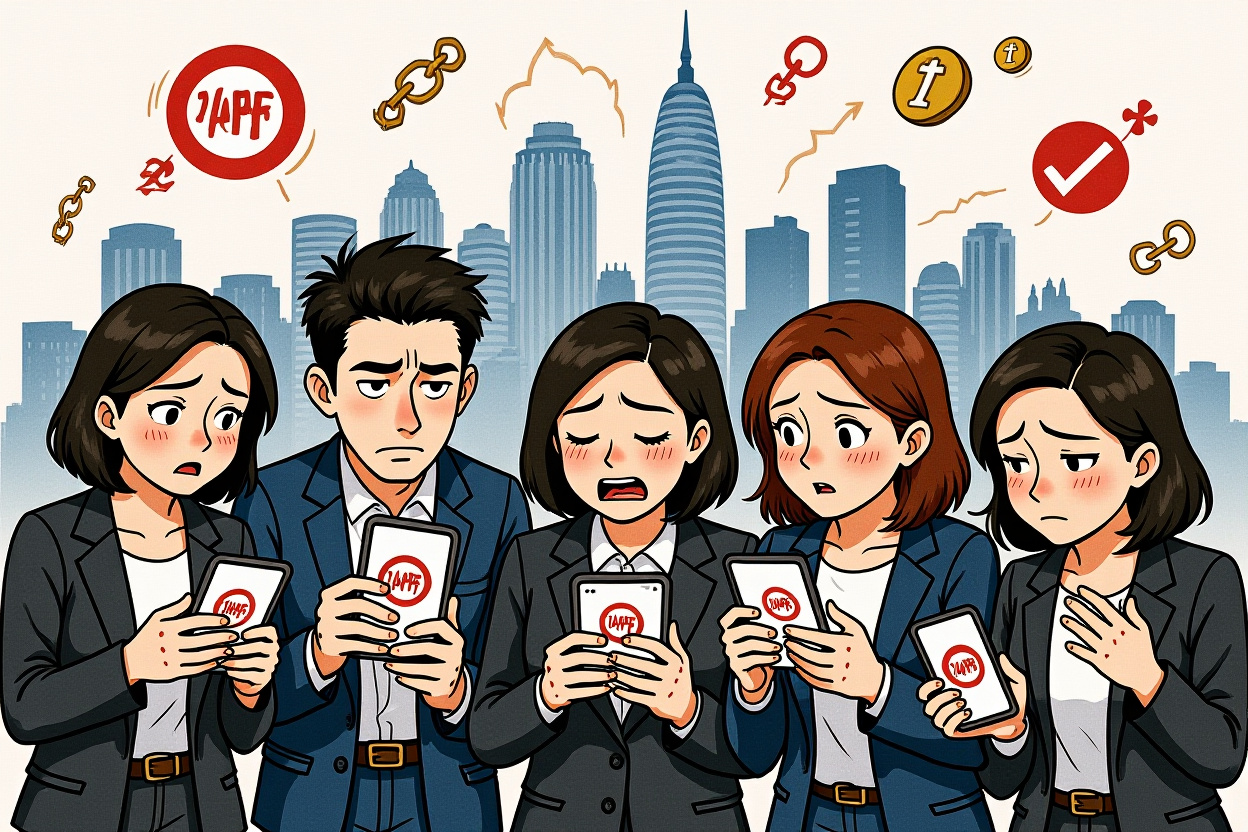
Ms. Chen (陈女士), a university student at the time, fell prey to Fenqile’s marketing, borrowing small amounts for daily expenses—including a mere 400 yuan split over 36 months. Between 2020 and 2021, she accumulated five loans totaling 13,674 yuan, with APRs ranging from 32.08% to 35.90%. Despite promotional claims of ‘low interest’ and ‘monthly payments as low as 18.23 yuan,’ her total repayment ballooned to 26,859 yuan, nearly double the principal. This stark reality mirrors broader trends where mini loans ensnare young borrowers through extended tenures and compounded fees, as reported by Phoenix Finance’s Corporate Research Institute (凤凰网财经《公司研究院》). Her story highlights the psychological allure of these schemes, which target impulsive spending and financial inexperience.
Marketing Tactics: Low Thresholds and High Limits
Platforms like Fenqile deploy aggressive digital campaigns, such as offering credit limits up to 50,000 yuan during holidays, with advertised APRs as low as 8%. However, these figures often exclude ancillary charges, creating a disconnect between perception and reality. The mini loans model thrives on accessibility—easy approval processes and minimal documentation—while burying critical terms in lengthy electronic agreements. This approach not only attracts volume but also ensures that borrowers overlook the true cost until debt snowballs, a tactic that has fueled over 160,000 complaints on platforms like the Black Cat Complaint Platform (黑猫投诉平台).
Unraveling the True Cost: Opaque Fees and Sky-High APRs
Beyond advertised rates, the mini loans industry is rife with hidden fees that inflate comprehensive financing costs. Consumers frequently report unexpected charges for membership,担保费 (guarantee fees), and credit assessments, which push effective APRs toward the 36% legal grey zone. This opacity not only violates transparency norms but also exacerbates debt burdens, turning manageable loans into financial quagmires.
The Mechanics of Debt Inflation Through Fee Stacking
A closer look at Fenqile’s practices reveals how fees accumulate. For instance, a borrower from Hangzhou, Mr. Meng (孟某), took a 10,300 yuan loan at a 6% stated APR over 12 months. According to contract terms, he should have repaid 10,643 yuan, but bank records show actual payments of 12,425.4 yuan—an excess of approximately 1,782 yuan. Similarly, a second loan of 15,000 yuan at 7.5% APR resulted in overpayments of 2,053 yuan. These discrepancies, documented by The Chinese Consumer (《中国消费者》), stem from undisclosed担保费 (guarantee fees) and other ancillary costs embedded in complex agreements. Such practices blur the line between legitimate interest and predatory pricing, making mini loans a high-risk proposition for unsuspecting users.
Consumer Backlash and Legal Recourse
Regulatory Framework: Gaps Between Policy and PracticeIn response to mounting concerns, Chinese regulators have introduced measures to rein in excessive costs. The December 19, 2025, joint guideline from the中国人民银行 (People’s Bank of China) and the国家金融监管总局 (National Financial Regulatory Administration) caps new loans’ comprehensive financing costs at 24% APR, with a phased reduction to within four times the 1-year Loan Prime Rate (LPR) by end-2027. However, enforcement remains patchy, allowing mini loans platforms to maintain profitability through structural loopholes.
The 24% Cap and LPR Alignment Challenges
The regulatory push aims to align mini loans with broader monetary policy, using the LPR as a benchmark for affordability. Yet, as of early 2026, platforms like Fenqile continue to issue loans near 36% APR by classifying fees separately from interest. Local financial authorities are tasked with动态管理 (dynamic management) of non-compliant lenders, but resource constraints and jurisdictional overlaps slow corrective actions. This gap highlights the tension between innovation and oversight in China’s rapidly evolving fintech landscape, where mini loans providers often outpace regulatory scrutiny.
Enforcement Hurdles and Platform Evasion Tactics
Fenqile’s operator,吉安市分期乐网络小额贷款有限公司 (Jian Fenqile Network Micro-Loan Co., Ltd.), leverages its status as a网络小贷公司 (online micro-lender) to navigate rules. By partnering with licensed institutions like上海银行 (Bank of Shanghai), it obscures accountability, making it difficult for borrowers to identify liable entities. Moreover, the use of electronic contracts and data-driven risk models complicates audits, enabling persistent overcharging. Investors monitoring Chinese equities must note that such regulatory arbitrage could invite stricter crackdowns, impacting valuations of firms like Lexin Fintech Holdings Ltd. (乐信集团), Fenqile’s parent company listed on Nasdaq.
From Campus to Mainstream: The Unshakable Legacy of Student Lending
Fenqile’s origins trace back to campus lending, a controversial niche that fueled its early growth. Founded in 2013 by肖文杰 (Xiao Wenjie), Lexin pioneered分期购物 (installment shopping) for students, selling smartphones on credit. Despite regulatory bans on校园贷 (campus loans) in 2016, the platform’s tactics persist, reflecting deeper issues in the mini loans ecosystem.
Lexin’s Origins and Controversial Growth Strategy
Lexin’s ascent to a trillion-yuan transaction volume was built on targeting financially naive students, a strategy that drew regulatory ire. After rebranding as a fintech firm and listing in 2017, it attempted to shed the campus label, but evidence suggests ongoing outreach. Searches for ‘分期乐 校园贷’ on complaint platforms yield 922 results, with users reporting promotional booths on campuses and loans issued to enrolled students. This continuity indicates that mini loans providers may still rely on high-risk demographics, undermining claims of responsible lending.
Persistent Targeting of Young Borrowers and Privacy Exploitation
Agreements on Fenqile’s app require consent to collect数十项个人信息 (dozens of personal data points), including身份证号码 (ID numbers),人脸信息 (facial recognition data), and location details. These are shared with third parties like增信机构 (credit enhancement agencies) and清算银行 (clearing banks), creating privacy risks. The经济参考报 (Economic Reference Report) investigation revealed that such data harvesting facilitates aggressive collection, where催收人 (debt collectors) harass borrowers’ social circles. This end-to-end control—from enticing offers to invasive recovery—exemplifies how mini loans platforms exploit digital footprints to maximize returns, often at the cost of ethical boundaries.
Data Privacy and Aggressive Collection: The Dark Side of Fintech
The mini loans model’s reliance on personal data amplifies consumer vulnerability. By integrating with digital ecosystems, platforms gain unprecedented access to behavioral insights, which are used not only for credit scoring but also for coercive tactics when debts falter.
Information Harvesting and Third-Party Sharing Risks
The Human Cost of Violent Debt Recovery MethodsMarket Implications and Forward-Looking InsightsInvestor Perspectives on Sustainable Lending ModelsRecommendations for Consumers and PolicymakersSynthesizing the Crisis: Pathways to Reform in China’s Mini Loans IndustryThe mini loans dilemma epitomizes the double-edged sword of financial innovation—offering convenience while enabling exploitation. Cases like Fenqile’s reveal systemic flaws: opaque pricing, regulatory evasion, and ethical lapses that jeopardize young borrowers’ futures. As China advances its digital economy, balancing access to credit with consumer protection will be crucial.
Looking ahead, the industry’s evolution hinges on stricter enforcement of the 24% cap, possibly through blockchain-based transparency tools or centralized reporting systems. For market participants, this signals a transition toward more sustainable lending, where mini loans could integrate with broader financial inclusion goals if reformed. Investors and executives must prioritize ethical governance to mitigate risks and capitalize on long-term opportunities in Chinese equities. Ultimately, resolving the mini loans crisis requires collective action—from vigilant consumers to proactive regulators—to ensure that financial technology empowers rather than impoverishes the next generation.