



Executive Summary
– The case of a borrower repaying nearly double her principal exposes systemic opacity and high effective costs in China’s burgeoning ‘mini-loan’ sector, threatening consumer financial health.
– New regulations from 中国人民银行 (People’s Bank of China) and 国家金融监管总局 (National Financial Regulatory Administration) mandate caps on comprehensive financing costs, directly challenging the profitability models of platforms like 分期乐 (Fenqile).
– Investors in Chinese fintech equities must reassess valuation risks stemming from potential enforcement actions, reputational damage, and shifts away from high-margin lending practices.
– Persistent links to banned ‘campus loan’ activities and aggressive debt collection tactics highlight ongoing compliance failures and consumer protection gaps.
– Actionable insight: Institutional players should enhance due diligence on lending platforms’ fee structures, monitor regulatory enforcement trends, and factor ESG considerations into investment decisions.
The Hidden Cost of Convenience: Mini-Loans and the Debt Trap
As Chinese consumers increasingly turn to digital platforms for quick liquidity, so-called ‘mini-loans’ are presenting a severe financial paradox. These small-amount, long-tenure credit products promise easy access to cash but often ensnare borrowers in a cycle of debt that far exceeds original principals. The recent viral case of a borrower who took out 13,674 yuan only to owe 26,859 yuan—a near 100% effective cost—underscores a critical fault line in China’s consumer finance ecosystem. For global investors monitoring Chinese equities, particularly in the fintech space, understanding the mechanics and risks of these mini-loans is no longer optional; it’s essential for navigating an evolving regulatory landscape and protecting portfolio value.
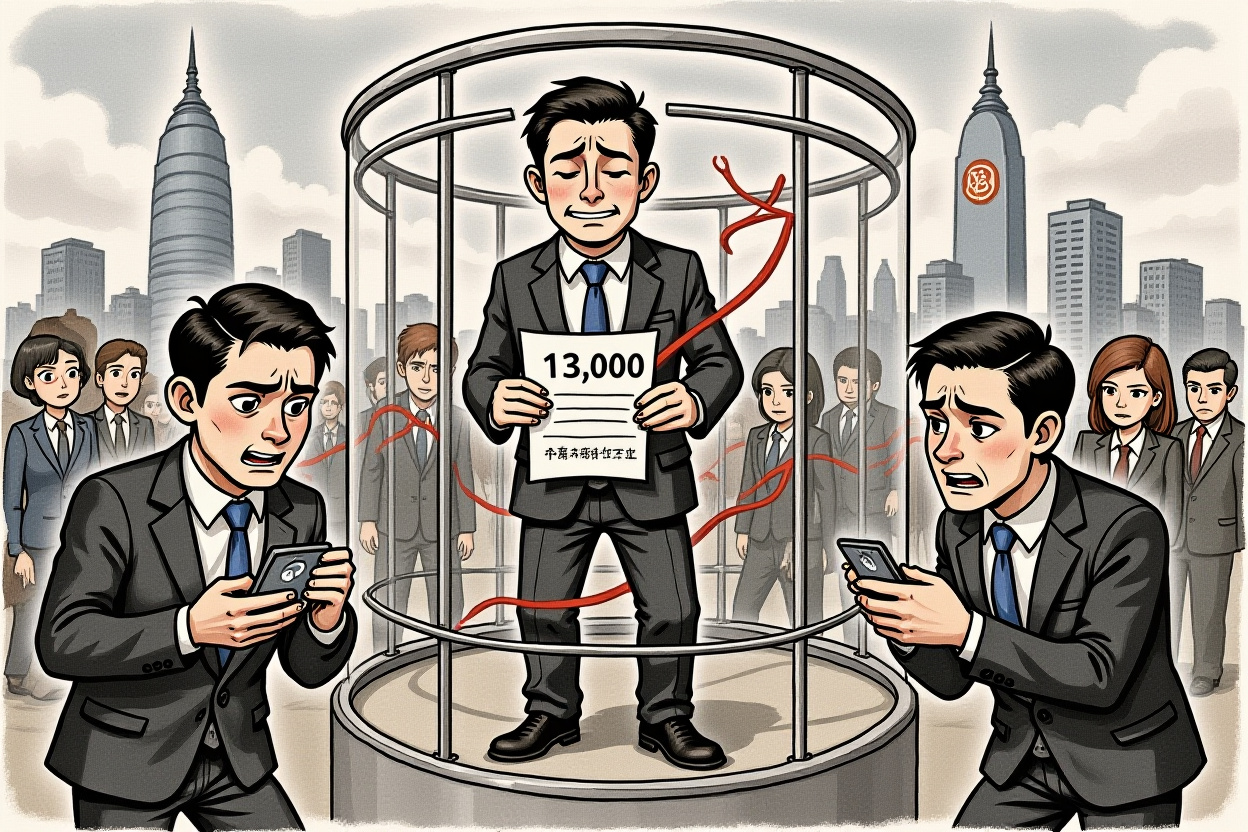
Case Study: From 13,000 to 26,000 – Anatomy of a Debt Spiral
The experience of Ms. Chen, as reported, is a textbook example of how mini-loans can deteriorate personal finances. While studying at university, she accessed five separate loans through the 分期乐 (Fenqile) platform between 2020 and 2021, with amounts as small as 400 yuan stretched over 36-month terms. The advertised monthly payments appeared manageable, but the stipulated annual percentage rates (APRs) ranged from 32.08% to 35.90%. Over time, the compounding effect of these high rates on extended terms transformed a modest debt into an overwhelming burden. After ceasing payments in August 2022, she faced over 1,000 days of delinquency, accompanied by intense collection efforts that involved contacting her family and social circle, exacerbating mental distress. This case illuminates a core tactic: by elongating repayment periods and layering on fees, mini-loan providers can obscure the true cost of credit, leading to a snowball effect that traps unsuspecting consumers.
Regulatory Response: Drawing a Line in the Sand
Recognizing the systemic risks, Chinese authorities have moved to curb excessive financing costs. In December 2025, 中国人民银行 (People’s Bank of China) and 国家金融监管总局 (National Financial Regulatory Administration) jointly issued the Guidance on the Management of Comprehensive Financing Costs for Microfinance Companies. This directive explicitly prohibits new loans with comprehensive annualized costs exceeding 24%. Furthermore, it mandates that, in principle, all new lending must align with a cap of four times the one-year Loan Prime Rate (LPR) by the end of 2027. From 2026 onward, local financial regulators are empowered to order immediate corrections, halt new lending, and incorporate dynamic credit reporting for violations. This regulatory tightening poses a direct threat to the business model of platforms reliant on pushing effective rates to the legal ceiling of around 36%, forcing a fundamental rethink of revenue streams.
分期乐 (Fenqile) and 乐信集团 (Lexin Group): A FinTech Giant’s Problematic Foundation
At the center of this controversy stands 分期乐 (Fenqile), operated by 吉安市分期乐网络小额贷款有限公司 (Ji’an Fenqile Network Microfinance Co., Ltd.) and ultimately controlled by the Nasdaq-listed 乐信集团 (Lexin Group). Founded in 2013 by entrepreneur Xiao Wenjie (肖文杰), Lexin rode the wave of digital consumption credit to achieve scale, often touting partnerships with licensed institutions like 上海银行 (Bank of Shanghai). However, its growth narrative is inextricably linked to the volatile history of lending to young, financially vulnerable demographics.
From Campus Loans to Public Markets: A Legacy of Controversy
乐信集团 (Lexin Group) built its initial user base by aggressively targeting university students with分期乐 (Fenqile), positioning itself as a pioneer in installment e-commerce. This ‘campus loan’ strategy fueled rapid expansion but attracted intense regulatory scrutiny and public backlash, leading to a nationwide crackdown in 2016. Lexin’s subsequent rebranding as a fintech company and its 2017 U.S. IPO were attempts to distance itself from that legacy. Yet, evidence suggests the ties remain. On consumer complaint platforms like黑猫投诉 (Hei Mao Tousu), searches for ‘分期乐 校园贷’ (Fenqile campus loan) yield hundreds of results, with users alleging that promotional activities and loan disbursements to students persist. This indicates a failure to fully shed high-risk origination practices, leaving the company exposed to both regulatory action and reputational decay.
The Opacity Engine: Hidden Fees and Aggressive Collections
Beyond high stated interest, the profitability of mini-loans often hinges on ancillary charges that are not transparently disclosed. Complaints against 分期乐 (Fenqile)—exceeding 160,000 on黑猫投诉 (Hei Mao Tousu)—routinely cite unexpected fees for membership, guarantees, and credit assessments that inflate the true cost of borrowing. For instance, one borrower reported a contract showing a 6% annual rate on a 10,300 yuan loan, but bank statements revealed total repayments 1,782 yuan higher than the calculated amount. Another user from Sichuan cited undisclosed guarantee fees of 1,102.14 yuan buried within lengthy digital agreements. This lack of clear, upfront disclosure violates principles of fair lending and consumer rights. Moreover, the collection arm of this business model has drawn fierce criticism, with over 20,000 complaints describing ‘violent’ tactics including harassment of family, colleagues, and even community leaders, creating severe social and psychological impacts.
Investment Implications: Recalibrating Risk in Chinese FinTech Equities
For institutional investors and fund managers with exposure to Chinese fintech stocks, the mini-loan saga presents material financial and regulatory risks. The core revenue driver for companies like 乐信集团 (Lexin Group) is under direct assault from new cost caps, potentially compressing net interest margins and necessitating a costly pivot to lower-yield, more transparent products. This transition could dampen growth projections and trigger valuation reassessments across the sector.
Profitability Pressures and Valuation Concerns
The business model of maximizing comprehensive financing costs—often through fee stacking—is now a regulatory target. As enforcement of the 24% cap and the future 4x LPR rule intensifies, platforms face a binary choice: either absorb the hit to profitability or innovate into safer, potentially less lucrative credit assessment and servicing models. Investors must scrutinize quarterly reports for shifts in fee income as a percentage of total revenue and monitor guidance on net interest margin trends. A sustained decline could signal longer-term headwinds for stock performance, especially for companies less diversified beyond high-cost consumer lending.
Compliance Overhangs and ESG Scrutiny
The persistent allegations of improper lending to students and abusive collection practices introduce significant environmental, social, and governance (ESG) risks. Global asset managers are increasingly applying ESG filters, and failures in consumer protection can lead to exclusion from sustainable investment funds or downgrades by rating agencies. Moreover, regulatory penalties—fines, restrictions on new business, or even license revocations—pose direct financial liabilities. Proactive investors should engage with management teams on their compliance roadmaps, internal audit findings related to the 2025 guidance, and concrete steps to eliminate hidden fees and reform collection practices. The mini-loan sector’s social impact cannot be divorced from its investment thesis.
The Road Ahead: Consumer Protection and Sustainable Lending
The mini-loan phenomenon is not isolated to China; it reflects a global tension between financial inclusion and predatory lending. However, China’s concentrated regulatory response offers a potential blueprint for market correction. The future health of digital lending hinges on transparency, fair practice, and alignment with broader economic goals of household debt stability.
Embracing Transparency and Technology for Good
Sustainable players in the space must leverage their technological prowess not to obfuscate costs but to enhance financial literacy and risk-based pricing. Clear, standardized disclosure of all fees and the annual percentage rate (APR) in a prominent manner—before contract signing—is a minimum standard. Furthermore, adopting ethical AI for collections that avoids harassment and respects privacy can help rebuild consumer trust. Regulatory bodies like the国家金融监管总局 (National Financial Regulatory Administration) are likely to amplify scrutiny on data usage and privacy policies, given reports that platforms like分期乐 (Fenqile) collect and share extensive personal information, including biometric data, with third parties.
Global Lessons and Integration into Broader Markets
International investors should draw parallels with similar episodes in other markets, such as the payday loan crackdowns in the U.S. or the UK’s high-cost short-term credit regulations. These precedents show that regulatory intervention, while initially disruptive, can lead to a more stable and legitimate industry. For China, the successful implementation of the new financing cost rules could channel credit towards more productive uses and reduce systemic risks from over-indebted households. This aligns with the government’s broader financial stability objectives. Consequently, investors might find opportunities in fintech firms that are early adopters of compliance and pioneers in serving the genuine credit needs of underserved segments without exploitative terms.
Synthesizing the Mini-Loan Challenge for Market Professionals
The unfolding narrative around China’s mini-loans is a multifaceted issue with clear stakes for the investment community. The cases of exorbitant repayment burdens reveal a sector where growth has too often been prioritized over consumer welfare and regulatory adherence. With authorities now enforcing strict cost ceilings and demanding greater transparency, the era of easy profits from opaque, high-interest lending is closing. For乐信集团 (Lexin Group) and its peers, the path forward involves fundamental operational restructuring and a genuine commitment to fair lending principles.
As an investor or analyst, your immediate action should be to conduct a thorough review of your Chinese fintech holdings. Scrutinize their lending portfolios for exposure to high-cost mini-loans, assess their compliance readiness for the 2025 regulatory guidance, and evaluate their contingency plans for revenue diversification. Engage directly with investor relations teams on these points during earnings calls. Furthermore, incorporate consumer complaint data and regulatory announcement monitors into your research workflow to anticipate potential shocks. The mini-loan dilemma is more than a social issue; it’s a pivotal factor that will separate the resilient from the vulnerable in China’s dynamic financial technology landscape. By prioritizing due diligence on these fronts, you can make more informed decisions, mitigate unforeseen risks, and identify the companies positioned to thrive in a more disciplined market environment.