



Executive Summary
As digital lending booms in China, so-called ‘mini-loans’ are coming under intense scrutiny for practices that can trap young borrowers in cycles of debt. This article delves into the mechanisms, regulatory challenges, and market implications of these products.
Key takeaways include:
– Mini-loans, often marketed with low apparent rates, can carry effective annualized costs nearing 36%, doubling principal amounts through hidden fees and extended terms.
– Despite new rules from Chinese authorities capping rates, platforms like Fenqile (分期乐) employ opaque fee structures and target vulnerable groups, including students.
– Aggressive data collection and collection tactics raise serious privacy and consumer protection concerns, with over 160,000 complaints filed on platforms like Hei Mao Tousu (黑猫投诉).
– The business model, rooted in earlier ‘campus loan’ scandals, faces sustainability questions as regulatory enforcement tightens and social backlash grows.
– Investors in Chinese fintech must weigh compliance risks, while borrowers need enhanced financial literacy to navigate this landscape.
The Alluring Trap of Digital Credit
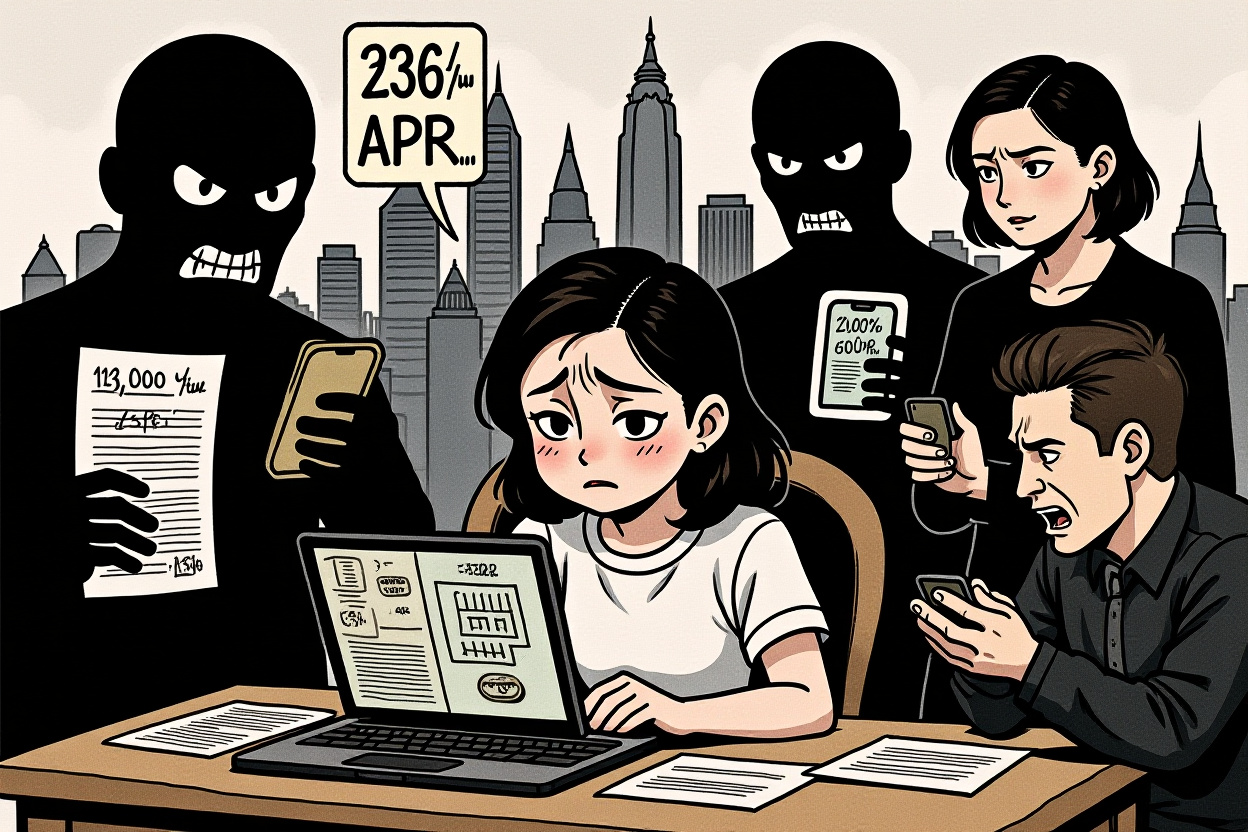
In an era of instant gratification, Chinese consumers, particularly the youth, are increasingly turning to online platforms for quick cash. Products dubbed ‘mini-loans’ promise accessibility with small amounts and low monthly payments, but behind this facade lies a reality of exorbitant costs. The case of borrowing 13,000 yuan only to repay 26,000 yuan is not an outlier; it epitomizes how these mini-loans are draining the financial resources and mental well-being of a generation. As festive seasons like Chinese New Year drive spending, platforms capitalize on urgency, offering ‘generous’ credit limits that mask long-term burdens.
The focus on mini-loans reveals a critical tension in China’s consumer credit market: between innovation and exploitation. With digital penetration deepening, understanding this dynamic is essential for anyone involved in Chinese equities or consumer finance.
A Borrower’s Descent: The Case of Ms. Chen
The recent spotlight on Fenqile (分期乐) stemmed from Ms. Chen’s ordeal, which went viral on Chinese social media. During her university years, she took out five loans totaling 13,674 yuan from the platform, lured by promises of ‘low interest’ and minimal monthly installments. For instance, a 400 yuan expense was stretched over 36 months, with a monthly payment of just 18.23 yuan. However, the annualized interest rates ranged from 32.08% to 35.90%, pushing her total repayment to 26,859 yuan—nearly double the principal.
After stopping payments in August 2022 due to financial strain, she faced over 1,000 days of delinquency. The collection efforts escalated to harassment, with agents contacting her family, friends, and even her partner, exacerbating her depression. This mini-loan experience highlights how manageable debts can snowball into unmanageable crises, especially for young adults with limited income.
Decoding the True Cost: Hidden Fees and Opaque Terms
On the surface, Fenqile’s marketing touts annual rates as low as 8% and daily costs of 2.2 yuan per 10,000 yuan borrowed. Yet, user complaints reveal a different story. Platforms often tack on additional charges—such as membership fees, guarantee fees, and credit assessment fees—that inflate the effective cost. For example, a borrower from Zhejiang reported a contract rate of 6% on a 10,300 yuan loan, but bank statements showed total repayments of 12,425.4 yuan, implying a much higher real rate.
Common tactics include:
– Burying fee disclosures in lengthy electronic agreements, violating transparency norms.
– Using extended tenures (e.g., 36-month terms for small amounts) to keep monthly payments low while accruing more interest.
– Failing to clearly identify lending partners, complicating borrower recourse. On Hei Mao Tousu (黑猫投诉), over 16,000 complaints target Fenqile alone, with many citing unexplained charges that push costs toward the 36% cap.
This lack of clarity turns mini-loans from a convenience into a trap, as borrowers only realize the full burden after signing.
Regulatory Framework: Rules, Gaps, and Enforcement Challenges
Chinese authorities have moved to curb predatory lending, but implementation hurdles persist. The mini-loan sector operates in a grey area where regulatory intent often clashes with platform ingenuity.
New Directives from the PBOC and NFRA
In December 2025, the People’s Bank of China (中国人民银行) and the National Financial Regulatory Administration (国家金融监管总局) jointly issued the ‘Guidelines for the Management of Comprehensive Financing Costs of Small Loan Companies’. Key provisions include:
– A ban on new loans with annualized comprehensive costs exceeding 24%.
– A phase-down target to align all new lending with four times the one-year Loan Prime Rate (LPR) by the end of 2027.
– Starting in 2026, local financial watchdogs must correct violations, suspend new lending, and incorporate oversight into credit systems.
These rules aim to protect consumers, especially from mini-loans that skirt usury limits. However, the guidelines focus on ‘comprehensive costs,’ which platforms can manipulate by reclassifying interest as fees.
Evasion Tactics and Compliance Loopholes
Despite the 24% cap, platforms like Fenqile continue to offer products with effective rates near 36%. They achieve this through:
– Structuring loans with third-party partners to obscure true costs.
– Relying on arbitration clauses that limit legal challenges.
– Leveraging data analytics to target less financially savvy users, including young adults and students.
For instance, in complaints documented by 《中国消费者》 (China Consumer), borrowers reported being charged guarantee fees without explicit consent, embedded in complex digital contracts. This highlights a enforcement gap: while rules exist, monitoring and penalizing non-compliance across thousands of digital platforms remains a challenge for regulators.
The Unshakable Legacy of Campus Lending
The roots of today’s mini-loan issues trace back to the ‘campus loan’ boom of the early 2010s, a period marked by aggressive lending to university students. Fenqile’s operator, Lexin Group (乐信集团), exemplifies this history.
Lexin’s Evolution from Student Focus to Fintech Giant
Founded in 2013 by entrepreneur Xiao Wenjie (肖文杰), Lexin started as ‘Fenqile’ (分期乐), pioneering installment shopping for electronics like smartphones. Its early growth was fueled by lending to students, a practice that expanded rapidly until regulatory crackdowns in 2016 banned such targeting. Lexin then rebranded, went public on Nasdaq in 2017, and positioned itself as a fintech leader serving ‘creditworthy consumers.’
However, the mini-loan model retains echoes of its past. Lexin’s subsidiary, Jishou Fenqile Network Small Loan Co., Ltd. (吉安市分期乐网络小额贷款有限公司), holds the lending license, but promotional activities often blur lines. Reports from 《经济参考报》 (Economic Reference News) indicate that campus promotions persist, with agents setting up booths in schools to attract student borrowers.
Ongoing Targeting and Privacy Risks
Complaints data underscores continued student exposure. On Hei Mao Tousu (黑猫投诉), searches for ‘Fenqile campus loans’ yield over 900 entries, with users recounting borrowing while enrolled. Beyond lending, privacy violations are rampant. Fenqile’s privacy policy, as investigated, mandates sharing of sensitive data—including ID photos, bank details, and facial recognition—with third parties like payment processors and credit enhancers.
This data ecosystem enables aggressive collection:
– Harassment of borrowers’ social circles, known as ‘blasting the contact list,’ is common, with over 20,000 complaints citing threats to family and colleagues.
– The integration of personal data into collection algorithms exacerbates psychological pressure, as seen in Ms. Chen’s case.
Thus, mini-loans are not just a financial product but a gateway to broader consumer rights issues.
Market Implications and Paths Forward
The mini-loan phenomenon has ripple effects across China’s financial landscape, affecting consumer behavior, regulatory priorities, and investment decisions. For stakeholders, navigating this requires a balanced view of risks and opportunities.
Consumer Protection Strategies and Legal Recourse
Borrowers can take steps to shield themselves from predatory mini-loans:
– Always calculate the effective annual percentage rate (APR) including all fees, using online tools or regulatory resources.
– Read contracts thoroughly, especially fine print on data sharing and collection terms.
– Report violations to local financial bureaus or via platforms like the 12315 consumer hotline, citing specific rules like the PBOC’s 24% cap.
Legal experts note that lawsuits can succeed if platforms violate transparency requirements, but the process is often daunting for individuals. Collective action through consumer associations is gaining traction, as seen in media exposures by outlets like 《南方日报》 (Southern Daily).
Investment Considerations in the Fintech Sector
For investors in Chinese equities, companies reliant on mini-loan revenue face significant headwinds:
– Regulatory scrutiny could lead to fines, forced restructuring, or license revocations, impacting profitability.
– Reputational damage from consumer backlash may erode user trust and growth prospects.
– Sustainable models that prioritize compliance and ethical lending, such as those aligned with China’s ‘common prosperity’ goals, are likely to fare better.
Analysts advise monitoring quarterly reports for shifts in fee income and loan portfolios, as well as regulatory announcements from bodies like the National Financial Regulatory Administration (国家金融监管总局).
Synthesizing the Mini-Loan Dilemma
The story of mini-loans in China is a cautionary tale of innovation outpacing protection. While digital credit offers convenience, the cases of doubled debts and harried borrowers reveal systemic flaws. Regulatory frameworks are evolving, but enforcement must catch up to close loopholes exploited by platforms. For young consumers, financial literacy—coupled with vigilance—is the first defense against these draining products.
Looking ahead, the market may see consolidation as stricter rules take effect, favoring players with transparent practices. Investors should factor in ESG (environmental, social, and governance) criteria, particularly social responsibility, when assessing fintech stocks. Borrowers, meanwhile, must advocate for their rights by leveraging complaint channels and supporting regulatory enhancements. Ultimately, a healthy credit ecosystem in China will depend on balancing access with accountability, ensuring that mini-loans serve as tools for empowerment, not exploitation.