



Executive Summary: Key Takeaways on China’s Mini Loan Crisis
– The case of a borrower repaying nearly double the principal on a 13,674 yuan loan from Fenqile highlights the predatory nature of some mini loan platforms, with effective annualized rates approaching 36%.
– Regulatory guidelines from the 中国人民银行 (People’s Bank of China) and 国家金融监督管理总局 (National Financial Regulatory Administration) cap comprehensive financing costs at 24%, but enforcement gaps allow platforms to use opaque fees to exceed limits.
– Fenqile, operated by 乐信集团 (Lexin Group), faces over 160,000 complaints on platforms like 黑猫投诉 (Hei Mao Tousu) for hidden charges, aggressive debt collection, and historical ties to controversial campus lending.
– The mini loan business model relies on extending repayment periods and stacking ancillary fees, creating a debt snowball effect that disproportionately impacts young and financially vulnerable consumers.
– Investors and regulators must scrutinize the sustainability and ethics of mini loan operations as China tightens fintech oversight, with implications for consumer credit markets and financial stability.
The Hidden Costs of Mini Loans: A Case Study in Debt Doubling
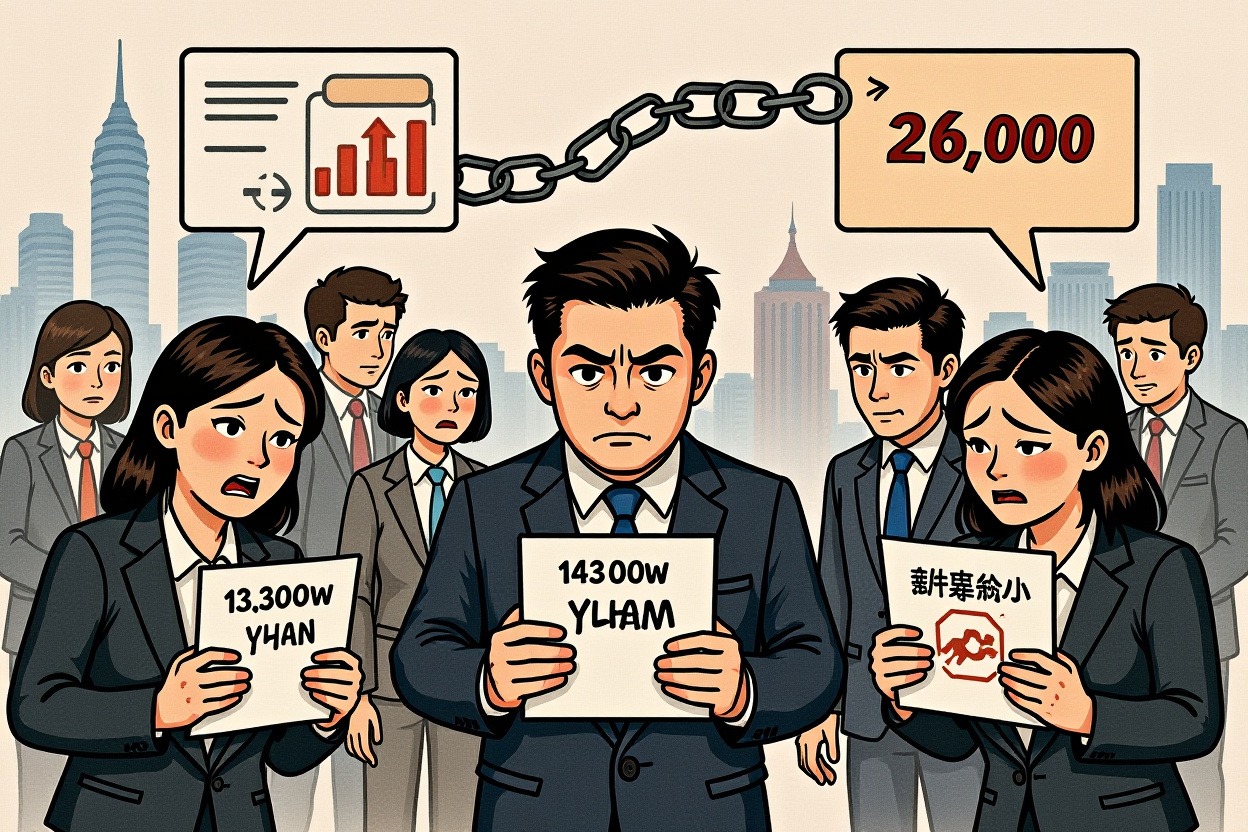
As the Lunar New Year approached, many Chinese consumers turned to digital lenders for quick cash to cover gifts and travel. Platforms like 分期乐 (Fenqile) promoted increased credit limits, touting “annual interest rates as low as 8%.” However, beneath this veneer of convenience lies a darker reality of exploitative lending practices. The recent viral story of Ms. Chen, who borrowed 13,674 yuan only to owe 26,859 yuan after six years, encapsulates the systemic issues plaguing China’s mini loan sector. This case underscores how mini loans, often marketed as manageable small-amount credit, can trap borrowers in cycles of escalating debt through opaque fee structures and extended repayment terms.
Ms. Chen’s Ordeal: From 400 Yuan to Financial Despair
Ms. Chen, a university student at the time, first used Fenqile for a 400 yuan purchase, spread over 36 installments. Between 2020 and 2021, she took five loans totaling 13,674 yuan, with terms ranging from 12 to 36 months. Promised “low interest” and minimum monthly payments as small as 18.23 yuan, she later discovered the actual annual percentage rates (APRs) ranged from 32.08% to 35.90%. By August 2022, unable to keep up, she defaulted, accruing over 1,000 days of delinquency. The debt collection tactics exacerbated her plight: agents contacted her family, friends, and even her partner, leading to severe psychological distress. This example illustrates how mini loans leverage perceived affordability to mask exorbitant long-term costs, a tactic that has drawn regulatory scrutiny.
The Mechanics of Debt Snowballing in Mini Loans
Mini loans, characterized by small principal amounts and elongated tenures, create an illusion of low burden. However, the compounding effect of high interest and ancillary fees quickly inflates obligations. In Ms. Chen’s case, a 400 yuan loan over 36 periods might seem trivial, but at a 35% APR, the total repayment balloons significantly. Platforms often embed additional charges such as:
– Membership fees for premium services
– Guarantee fees from third-party insurers
– Credit assessment fees that are non-refundable
These are frequently buried in lengthy electronic agreements, violating transparency principles outlined by the 中国消费者协会 (China Consumers Association). For instance, a borrower from Sichuan reported undisclosed guarantee fees of 1,102.14 yuan on a 49,880 yuan loan via Fenqile’s 乐花借钱 (Le Hua Jie Qian) product. Such practices shift the comprehensive financing cost toward the 36% legal ceiling, despite regulatory caps at 24%.
Regulatory Crackdown: Guidelines Versus Ground Reality
In December 2025, the 中国人民银行 (People’s Bank of China) and 国家金融监督管理总局 (National Financial Regulatory Administration) jointly issued the “小额贷款公司综合融资成本管理工作指引” (Guidelines for the Management of Comprehensive Financing Costs of Small Loan Companies). This directive explicitly prohibits new loans with comprehensive costs exceeding 24% annually and mandates that by end-2027, all new lending must stay within four times the one-year 贷款市场报价利率 (Loan Prime Rate, LPR). From 2026, local financial authorities are empowered to correct violations, halt new loans, and integrate oversight into dynamic credit reporting systems. However, the persistence of high-cost mini loans suggests a gap between policy intent and practical enforcement, allowing platforms to innovate around profitability while consumers bear the brunt.
Enforcement Challenges and Platform Evasion Tactics
Despite clear red lines, mini loan operators employ several strategies to maintain high yields. These include:
1. Structuring fees as separate from interest: By labeling charges as service or guarantee fees, platforms can technically comply with interest caps while elevating overall costs.
2. Prolonging loan terms: Extending durations to 36 months or more reduces monthly payments but amplifies total interest outlays, especially at high APRs.
3. Targeting less sophisticated borrowers: Young adults and students, often first-time credit users, may lack the financial literacy to decode complex agreements.
The 经济参考报 (Economic Reference News) investigation revealed that Fenqile’s privacy policy allows sharing user data—including ID photos, bank details, and location—with third-party merchants, payment partners, and credit enhancers. This data leverage can facilitate aggressive collection, further pressuring borrowers. Regulatory bodies must enhance monitoring mechanisms, such as real-time auditing of loan contracts and stricter penalties for non-disclosure, to close these loopholes.
Fenqile and the Evolution of Mini Loans: From Campus to Mainstream
The operator of Fenqile, 吉安市分期乐网络小额贷款有限公司 (Jian Division Loan Network Small Loan Company Ltd.), is a subsidiary of Nasdaq-listed 乐信集团 (Lexin Group). Founded in 2013 by 肖文杰 (Xiao Wenjie), Lexin began as a campus-focused installment shopping platform, leveraging student demand for electronics to build scale. After regulatory crackdowns on 校园贷 (campus loans) in 2016, Lexin rebranded as a fintech firm, partnering with licensed institutions like 上海银行 (Bank of Shanghai) to offer credit to broader consumer segments. However, the legacy of campus lending persists: over 922 complaints on Hei Mao Tousu reference “campus loans” and Fenqile, with reports of promoters soliciting students on university grounds and using predatory tactics. This history raises questions about the ethical foundations of the mini loan model and its adaptation to tighter oversight.
Business Model Scrutiny: Profitability Versus Consumer Protection
Consumer Backlash: A Mountain of Complaints and Ethical ConcernsOn 黑猫投诉 (Hei Mao Tousu), a consumer complaint platform, searches for “分期乐” (Fenqile) yield over 160,000 entries. Users consistently allege hidden fees, refusal to provide lender details, and violent debt collection methods. For example, one complainant on February 12, 2025, noted a 36% comprehensive APR and demanded a refund of excess charges above 24%. Another from January 2025 cited disguised interest through credit evaluation fees. These patterns highlight systemic issues in mini loan operations, where transparency is sacrificed for profit maximization. The 中国消费者 (China Consumer) journal documented cases like Mr. Meng from Hangzhou, who paid 1,782 yuan more than contracted on a 10,300 yuan loan due to undisclosed adjustments. Such discrepancies erode trust and call for robust consumer advocacy.
Aggressive Collection and Privacy Violations
Beyond high costs, mini loan platforms face criticism for unethical recovery practices. Complaints describe:
– Harassment of borrowers’ social circles, including family and colleagues
– Threats and verbal abuse from collection agents
– Public shaming through communication exposure
These tactics not only violate guidelines from the 中国互联网金融协会 (National Internet Finance Association of China) but also contribute to mental health issues, as seen in Ms. Chen’s depression. The privacy policy of Fenqile, as reported by 经济参考报 (Economic Reference News), permits extensive data sharing, raising concerns about consent and security. In an era of heightened data protection under laws like the 个人信息保护法 (Personal Information Protection Law), such practices could invite legal repercussions. Consumers are advised to review privacy terms meticulously and report violations to authorities like the 网信办 (Cyberspace Administration of China).
Navigating the Future: Implications for Investors and Consumers
For international investors and fund managers focused on Chinese equities, the mini loan sector presents both opportunities and risks. Lexin’s stock performance may be influenced by regulatory developments and consumer sentiment. As China prioritizes financial inclusion and stability, companies that align with ethical standards and transparent pricing could gain competitive advantage. However, those reliant on high-cost mini loans may face headwinds from stricter enforcement. The 2025 guidelines signal a shift toward responsible lending, urging firms to innovate within cost constraints, perhaps through better risk modeling or value-added services. Market participants should monitor regulatory announcements and consumer feedback to gauge sector health.
Protective Measures for Borrowers and Regulatory Recommendations
Synthesis and Forward-Looking Market GuidanceThe mini loan phenomenon in China reflects broader tensions in fintech development between accessibility and abuse. The case of Fenqile underscores that without vigilant enforcement, regulatory caps on interest rates can be circumvented through opaque fee structures. As authorities push for compliance by 2027, companies must adapt their business models to prioritize transparency and fairness. For investors, this sector requires careful due diligence on regulatory exposure and consumer reputation. The ongoing evolution of China’s credit landscape will likely see consolidation, with ethical players gaining market share. Consumers, meanwhile, must exercise caution and leverage available resources to avoid debt traps. By fostering a culture of responsible lending and borrowing, stakeholders can contribute to a healthier financial ecosystem where mini loans fulfill their intended purpose without draining the youth.
Call to Action: Stay informed on regulatory updates from the 国家金融监督管理总局 (NFRA) and engage with consumer protection agencies to report unfair practices. Investors should diversify exposure in Chinese fintech, focusing on firms with strong compliance records and sustainable models. For borrowers, always read the fine print and seek alternatives like bank loans or community credit unions when possible. Together, we can drive positive change in China’s dynamic credit markets.