



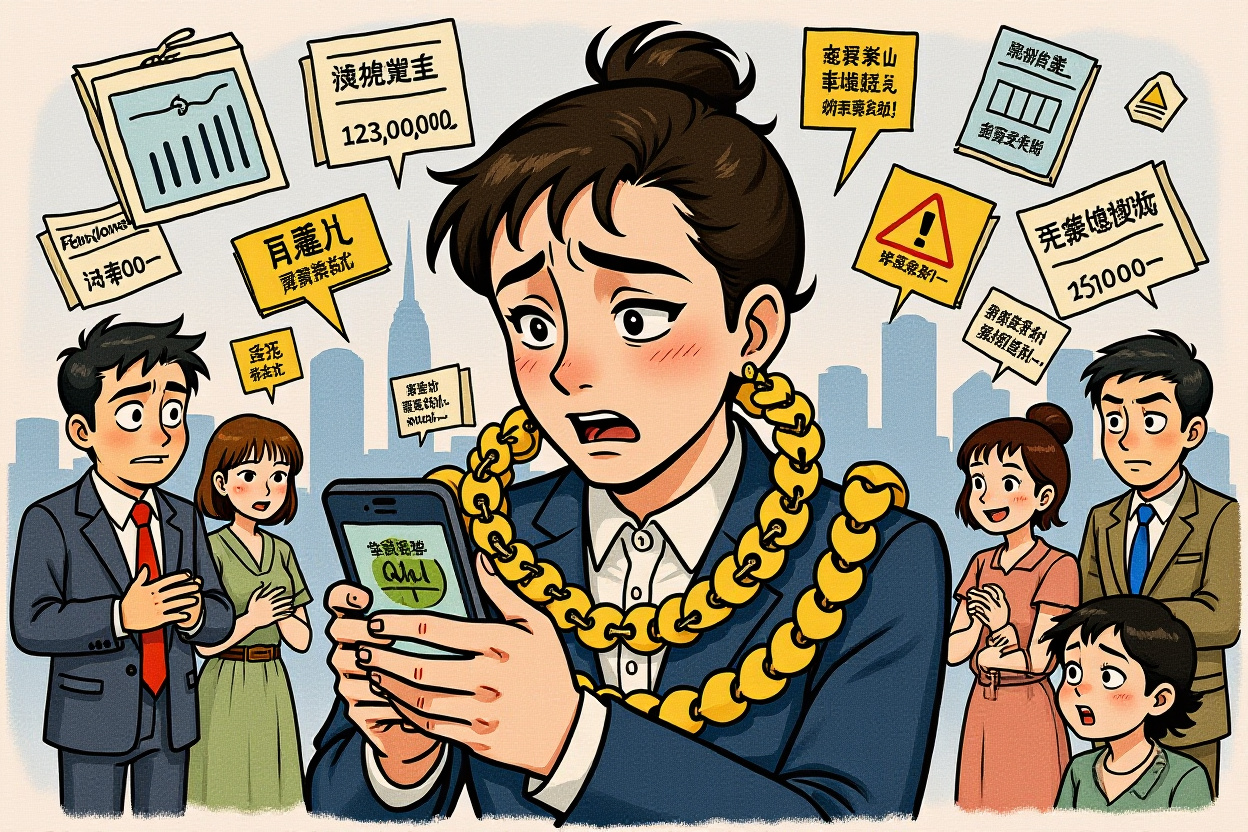
– Young borrowers in China are trapped by ‘mini-loans’ with effective annualized rates nearing 36%, doubling debt through opaque fees and long tenures.
– Regulatory efforts, including the 2025 guidance capping costs at 24%, face enforcement challenges as platforms innovate to maintain profitability.
– Fenqile (分期乐), operated by Lexin Fintech (乐信集团), faces over 160,000 complaints for hidden charges, aggressive collection, and historical ties to controversial campus lending.
– Investors must scrutinize the sustainability of fintech business models reliant on high-yield, short-term consumer credit amid tightening oversight.
– The case highlights systemic risks in China’s online lending sector, urging greater transparency and consumer protection measures.
As Chinese families prepared for Lunar New Year festivities, many young adults turned to digital lending platforms for quick cash to cover gifts and travel. Promises of ‘low interest’ and ‘easy approvals’ from apps like Fenqile (分期乐) offered a tempting solution. Yet, beneath the veneer of financial technology convenience lies a harsh reality: borrowers like Ms. Chen, who took out 13,674 yuan in loans, now face a repayment burden of 26,859 yuan—nearly double the principal. This case, which recently trended on social media, underscores how ‘mini-loans’ are draining the financial health of China’s youth, even as regulators ramp up efforts to rein in predatory practices. With the focus phrase ‘mini-loans’ becoming a buzzword for deceptive high-cost credit, this article delves into the mechanics, regulatory gaps, and market implications of a sector at a crossroads.
The Anatomy of a Debt Trap: How Mini-Loans Inflate Costs
Mini-loans, characterized by small principal amounts and extended repayment periods, often mask exorbitant true costs through complex fee structures. The Fenqile (分期乐) case exemplifies this, where a 400-yuan expense was stretched over 36 months, making monthly payments seem minimal while cumulative interest soared.
Opaque Pricing and Hidden Fees
Platforms frequently advertise annual percentage rates (APRs) as low as 8%, but additional charges—such as membership fees,担保费 (guarantee fees), and credit assessment costs—can push the综合融资成本 (comprehensive financing cost) to the regulatory ceiling of 36%. For instance, a borrower from Zhejiang reported a contract rate of 6% on a 10,300-yuan loan, yet实际还款额 (actual repayment) was 1,782 yuan higher due to undisclosed add-ons. These practices, detailed in complaints to the Black Cat platform (黑猫投诉), highlight a systemic lack of transparency, with fees buried in lengthy电子协议 (electronic agreements).
The Snowball Effect of Extended Tenures
By offering分期 (installment) terms as long as 36 periods, lenders reduce immediate repayment pressure but exponentially increase total interest. Ms. Chen’s loans, with APRs between 32.08% and 35.90%, illustrate how债务滚雪球 (debt snowballs), trapping borrowers in cycles where他们最终偿还 (they ultimately repay) far more than borrowed. This model targets financially vulnerable groups, including students and low-income earners, who are lured by accessible credit without fully grasping the long-term implications.
Regulatory Framework: Gaps Between Policy and Practice
In December 2025, the中国人民银行 (People’s Bank of China) and国家金融监督管理总局 (National Financial Regulatory Administration) issued the《小额贷款公司综合融资成本管理工作指引》 (Guidance on Comprehensive Financing Cost Management for Micro-Loan Companies), mandating that new loans not exceed 24% in综合融资成本年化 (annualized comprehensive financing cost). The rules aim to cap rates at four times the 1-year LPR by end-2027, with stricter oversight for violations. However, enforcement remains inconsistent, allowing mini-loans to proliferate.
Compliance Challenges and Evasive Tactics
Historical Context: From Campus Lending to Fintech RebrandingBusiness Model Scrutiny: Fenqile and the Mini-Loan EcosystemOperated by吉安市分期乐网络小额贷款有限公司 (Ji’an Fenqile Network Micro-Loan Co., Ltd.), Fenqile (分期乐) partners with licensed institutions like上海银行 (Bank of Shanghai) to offer credit. Its appeal lies in instant approvals and high limits—up to 50,000 yuan during promotions—but this便利 (convenience) comes at a steep price.
Profit Drivers and Consumer Backlash
Market Positioning and Investor ImplicationsConsumer Impact and Ethical ConsiderationsThe human cost of mini-loans is stark: borrowers like Ms. Chen experience depression and social stigma, while others face financial ruin. These products often target年轻人 (young people) with limited financial literacy, exacerbating wealth inequality.
Case Studies and Legal Recourse
The Role of Financial EducationForward-Looking Analysis: Trends Shaping the Mini-Loan LandscapeAs China’s economy navigates post-pandemic recovery, demand for short-term credit remains high, but the mini-loan sector faces pivotal changes. Regulatory scrutiny, technological innovation, and shifting consumer behavior will define its trajectory.