



Executive Summary
As Chinese fintech platforms promote accessible credit, a dark underbelly of high-cost lending is emerging, particularly through so-called mini-loans. This report delves into the case of Fenqile (分期乐), a major player, to uncover practices that are financially draining young borrowers.
– Effective annual percentage rates (APRs) on some mini-loans approach 36%, significantly above the 24% regulatory cap introduced in recent guidelines.
– Opaque fee structures, including hidden charges for membership,担保费 (guarantee fees), and credit assessment, inflate total repayment obligations, often to nearly double the principal borrowed.
– Despite past regulatory crackdowns on 校园贷 (campus loans), platforms continue to target students and employ aggressive, privacy-invading collection methods.
– Data privacy concerns are paramount, as lenders harvest extensive personal information and share it with third parties, compounding borrower vulnerability.
– For investors in Chinese fintech and equity markets, these practices pose reputational and regulatory risks that could impact valuations and sector stability.
The Alluring Trap of Mini-Loans
The promise of quick, easy money is a powerful lure, especially for young consumers facing seasonal expenses like holiday gifts or travel. Platforms like Fenqile (分期乐) capitalize on this need with advertisements promising low rates and manageable payments. However, the reality is a debt trap where mini-loans, characterized by small initial amounts and extended repayment terms, bury borrowers under crushing interest.
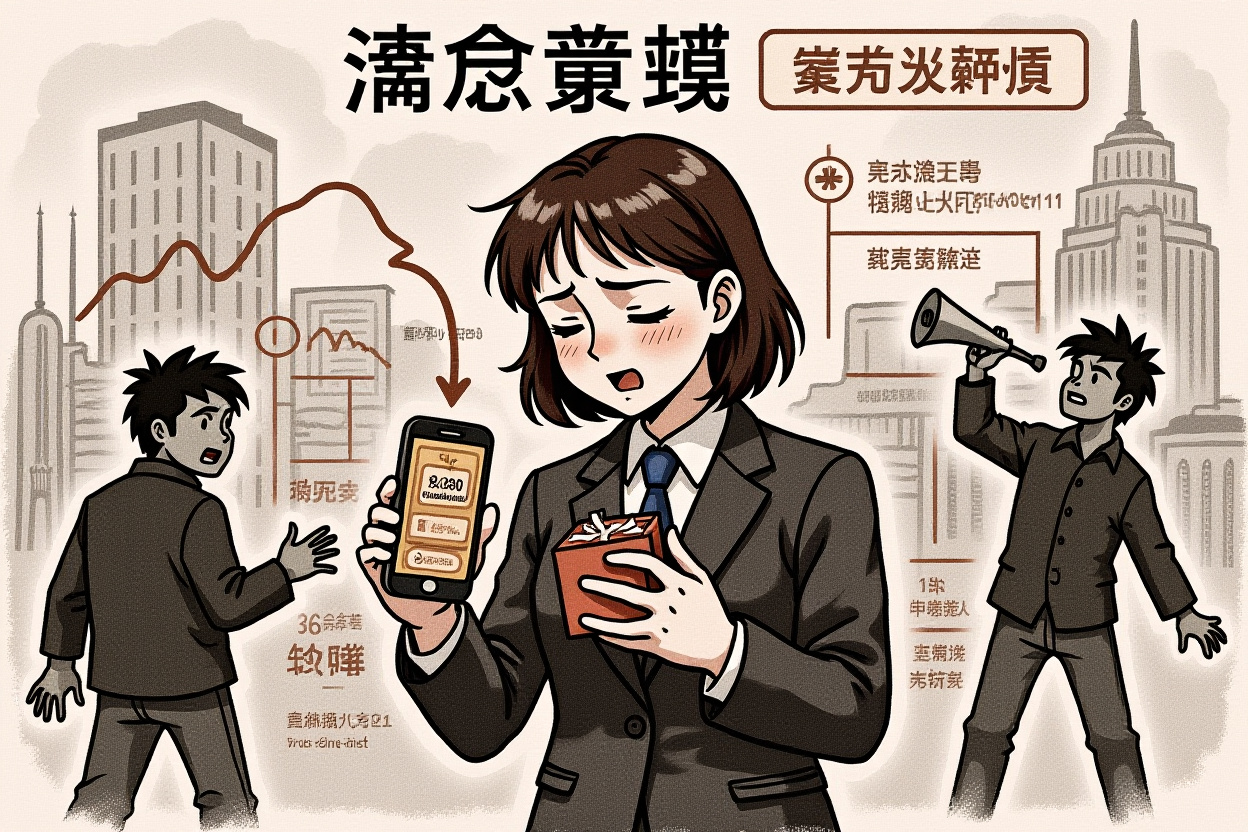
The recent viral social media case of Ms. Chen illustrates this perfectly. As a university student, she was enticed by low monthly payments—as little as 18.23 yuan—for a 400-yuan purchase stretched over 36 months. Between 2020 and 2021, she took out five loans totaling 13,674 yuan from Fenqile. Today, her total repayment obligation has ballooned to 26,859 yuan, nearly double the principal, with APRs ranging from 32.08% to 35.90%.
Opaque Fees and the Snowball Effect
The true cost of these mini-loans is often obscured at the point of sale. While advertised rates may seem reasonable, a plethora of additional fees are layered on. On consumer complaint platforms like 黑猫投诉 (Hei Mao Tousu), over 160,000 complaints have been lodged against Fenqile. Users report being charged unexplained membership fees,担保费 (guarantee fees), and信用评估费 (credit assessment fees), which collectively push the综合融资成本 (comprehensive financing cost) to the legal brink.
– A complaint from February 12, 2025, alleges a comprehensive APR of 36% and demands a refund of all fees exceeding 24%, highlighting the disconnect between marketed and actual costs.
– Another from January 20, 2025, details how a 信用评估费用 (credit assessment fee) was used to disguise additional interest, resulting in an extra 1,450 yuan charge.
Case studies reported by 《中国消费者》 (China Consumer) magazine reveal systematic overcharging. One borrower from Hangzhou, Mr. Meng, took a loan with a contracted 6% annual rate but ended up paying approximately 1,782 yuan more than the calculated amount. A second loan saw an overpayment of about 2,053 yuan. In neither instance were these additional costs clearly disclosed upfront.
Regulatory Red Lines and Creative Evasion
Regulators are taking notice. On December 19, 2025, the 中国人民银行 (People’s Bank of China, PBOC) and the 国家金融监督管理总局 (National Financial Regulatory Administration, NFRA) jointly issued the 《小额贷款公司综合融资成本管理工作指引》 (Guidelines for the Management of Comprehensive Financing Costs of Micro-loan Companies). These rules explicitly forbid new loans with a综合融资成本 (comprehensive financing cost) exceeding 24% per annum and mandate that by the end of 2027, all new loans should be priced within four times the 1-year Loan Prime Rate (LPR).
However, the business model for mini-loans relies on stretching repayment terms to make high APRs seem palatable. By offering 36-month terms for trivial amounts, platforms like Fenqile ensure that debt compounds over time, creating a snowball effect. This structural evasion tests the enforceability of new caps, as lenders may adjust fee names rather than fundamentally lower costs.
Fenqile’s Business Model: From Campus Roots to Fintech Facade
To understand the persistence of these practices, one must examine the history of Fenqile’s operator, 乐信集团 (Lexin Fintech Holdings Ltd.). Founded in 2013 by 肖文杰 (Xiao Wenjie), Lexin pioneered the分期购物 (installment shopping) e-commerce model in China, famously selling its first phone on credit. Its rapid growth was fueled early on by lending to university students—a controversial practice known as 校园贷 (campus loans).
Following a regulatory clampdown on campus lending in 2016, Lexin rebranded, expanded its partnership with licensed institutions like 上海银行 (Bank of Shanghai), and went public on NASDAQ in 2017. It now presents itself as a fintech service for 信用消费人群 (credit consumption populations). Yet, evidence suggests the core tactics remain.
The Unshakable ‘Campus Loan’ Label
Despite its public shift, Fenqile has not fully shed its association with student lending. On the Hei Mao Tousu platform,搜索 (searching) for 分期乐 校园贷 (Fenqile campus loans) yields 922 complaints. Users report borrowing while still enrolled, with promotional staff actively operating on campuses, even setting up booths to solicit business.
– This direct targeting of financially inexperienced young adults is a critical vulnerability in the mini-loans ecosystem, perpetuating cycles of debt from an early age.
– The platform’s owner, 吉安市分期乐网络小额贷款有限公司 (Ji’an Fenqile Network Small Loan Co., Ltd.), a 2016-established entity, operates under the broader Lexin umbrella, leveraging its fintech branding while engaging in high-risk lending.
Aggressive Collection and Psychological Toll
When borrowers default, the collection tactics employed are notoriously aggressive. Over 20,000 complaints reference暴力催收 (violent collection practices), including the爆通讯录 (blasting of the contact list), where friends, family, colleagues, and even community leaders are harassed. In Ms. Chen’s case, this intrusion caused significant depression and social pressure, a common consequence that transforms financial distress into a mental health crisis.
This approach not only violates norms of fair debt collection but also exacerbates the social cost of these mini-loans, creating a ripple effect of stress and stigma far beyond the individual borrower.
Data Privacy: The Hidden Currency of Mini-Loans
Beyond interest and fees, the cost of accessing mini-loans includes a vast surrender of personal data. An investigation by 《经济参考报》 (Economic Reference News) found that upon agreeing to Fenqile’s terms, users grant access to dozens of data points:姓名 (name), 身份证号码 (ID number), 银行卡信息 (bank card details), 行业与职业信息 (industry and occupation information), 收入信息 (income information), 人脸信息 (facial recognition data), 居住地址 (home address), and 位置信息 (location data).
Information Harvesting and Third-Party Sharing
This sensitive information is not kept in isolation. Fenqile’s privacy policy, as reported, states that data will be 共享 (shared) with第三方商家 (third-party merchants), 支付服务合作商 (payment service partners), 资金清算银行 (fund settlement banks), 增信机构 (credit enhancement agencies), and 行业自律组织 (industry self-regulatory organizations).
– This creates a comprehensive digital profile that can be monetized or used for further targeting, embedding borrowers in a wider surveillance network.
– The lack of transparent, granular consent for each data use compounds the opacity of the mini-loans process, leaving consumers with little control from the moment they click 同意 (agree).
The convergence of high-cost credit, aggressive collection, and extensive data sharing forms a potent trap. For young consumers navigating these mini-loans, the financial bleed is accompanied by a significant erosion of privacy.
Regulatory Crossroads and Market Implications
The Chinese regulatory environment for consumer finance is at a pivotal moment. The 2025 guidelines from the PBOC and NFRA represent a clear intent to curb predatory lending. However, the gap between policy and on-the-ground practice in the mini-loans sector remains wide.
Enforcement Challenges in a Dynamic Market
Enforcing the 24% cap and eventual LPR-linked limit requires robust monitoring of the综合融资成本 (comprehensive financing cost), which lenders can manipulate through fee structures. Local financial regulators must now 立即纠正 (immediately correct) violations, 停发新贷 (stop issuing new loans), and 纳入征信动态管理 (incorporate into dynamic credit reporting management) for offenders starting in 2026.
– The success of this crackdown hinges on the ability of authorities to pierce through complex contractual language and hold both platforms and their funding partners accountable.
– For institutional investors, this introduces regulatory risk into the fintech equity space. Companies reliant on high-margin mini-loans may face profitability pressures, legal challenges, and reputational damage.
The Path Forward: Scrutiny and Consumer Empowerment
Moving forward, several key actions are necessary. First, enhanced disclosure requirements must force lenders to present a single, clear APR that includes all mandatory fees. Second, stricter penalties for targeting prohibited groups like students must be enforced. Third, data privacy laws need to align with financial regulations to prevent the misuse of borrower information.
For the global investment community engaged with Chinese equities, understanding these dynamics is crucial. The mini-loans model, while profitable in the short term, carries systemic risks that could trigger regulatory interventions affecting entire sectors. Due diligence must now extend beyond financial statements to include compliance audits and consumer protection metrics.
Synthesizing the Mini-Loan Dilemma
The case of Fenqile is a microcosm of a broader issue in China’s consumer credit expansion. Mini-loans, marketed as convenient financial tools, are often structured to maximize lender profit at the expense of vulnerable borrowers. The journey from borrowing 13,000 yuan to repaying 26,000 is not an anomaly but a feature of a business model built on opacity, high rates, and aggressive tactics.
Key takeaways for market participants include the persistent regulatory lag in curbing innovative evasion techniques, the ongoing ethical and legal breaches in student lending and data handling, and the material financial and mental health costs borne by young consumers. As authorities tighten the screws, companies that fail to adapt authentically—not just cosmetically—face significant headwinds.
For investors and executives worldwide, the call to action is clear: Scrutinize the consumer-facing practices of Chinese fintech holdings beyond their growth metrics. Engage with management on compliance strategies and consumer protection frameworks. Support regulatory efforts that promote transparency and fairness. Ultimately, the sustainability of China’s financial technology sector depends on building trust, not traps, ensuring that the allure of mini-loans does not become a perpetual drain on the next generation of consumers.