



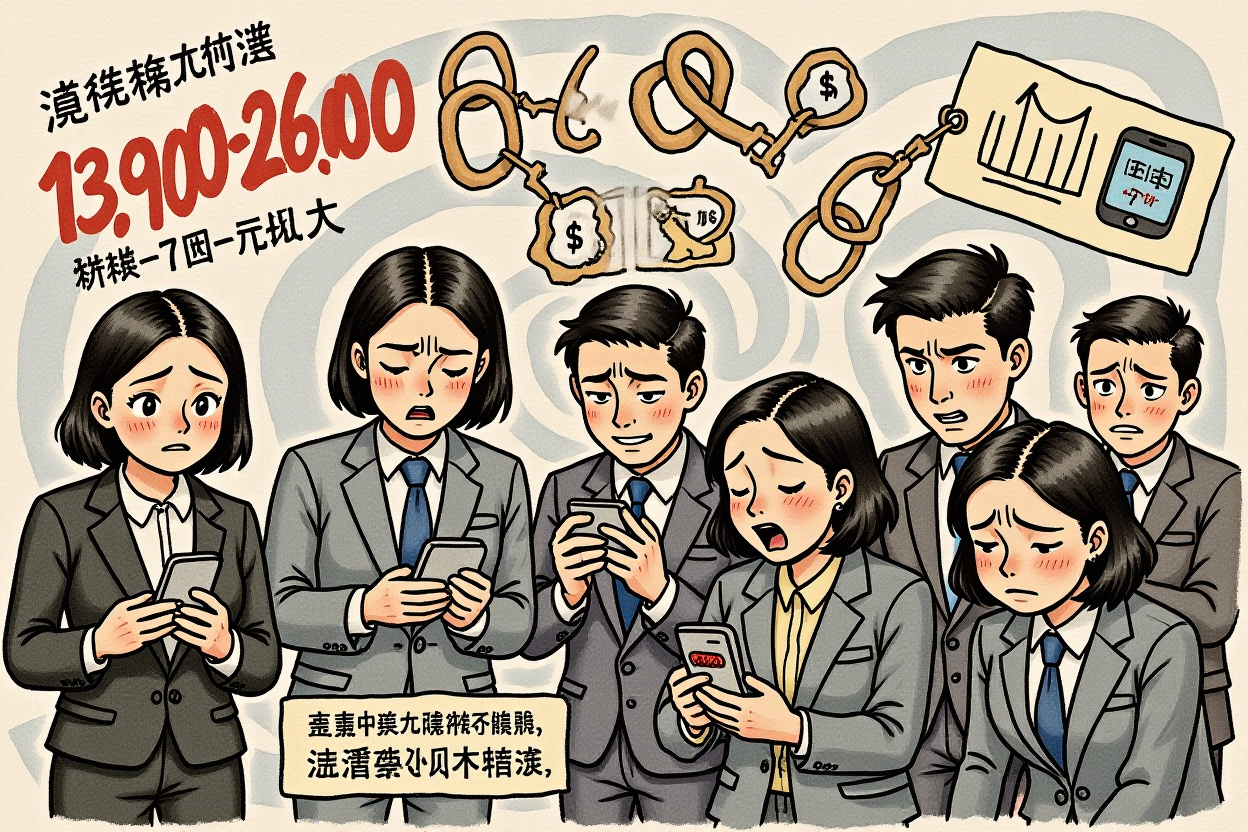
– Mini-loans from platforms like Fenqile (分期乐) often conceal exorbitant interest rates and fees, leading to borrowers repaying double their principal or more.
– Despite regulatory caps from the People’s Bank of China (中国人民银行) and National Financial Regulatory Administration (国家金融监管总局), loopholes allow effective annual percentage rates (APRs) to approach 36%, exploiting young consumers.
– The business model remains tied to controversial campus lending practices, with over 16,000 complaints on Heimaotousu (黑猫投诉) citing aggressive collection tactics and data privacy violations.
– Investors must scrutinize fintech firms’ compliance risks as regulatory scrutiny intensifies, impacting valuations in China’s equity markets.
The Alluring Promise and Harsh Reality of Mini-Loans
As Chinese families prepared for Lunar New Year celebrations, Fenqile (分期乐) promoted loan limits up to 50,000 yuan, enticing users with “one-click activation” for holiday spending. However, behind this facade of financial convenience lies a deepening crisis: mini-loans are trapping young borrowers in cycles of debt with effective costs nearing regulatory redlines. The case of a borrower, Ms. Chen, exemplifies this trap—she borrowed 13,674 yuan over six years, only to face a repayment total of 26,859 yuan, nearly double the principal. This mini-loan model, characterized by small, manageable-looking installments, masks snowballing debt through extended terms and hidden fees.
Case Study: A Debt Spiral from 13,000 to 26,000 Yuan
Ms. Chen’s ordeal began during university, where she used Fenqile (分期乐) for everyday expenses, including a 400-yuan purchase stretched over 36 installments. Between 2020 and 2021, she took five loans totaling 13,674 yuan, with APRs ranging from 32.08% to 35.90%. Promoters highlighted “low monthly payments of just 18.23 yuan,” but the long terms amplified interest burdens. By August 2022, she defaulted, accruing over 1,000 days of delinquency. Aggressive collectors notified her family and friends, exacerbating mental distress—a common tactic in mini-loan recoveries. This pattern underscores how mini-loans leverage behavioral biases to ensnare vulnerable demographics.
Decoding the Opaque Fee Structure
Fenqile’s (分期乐) front-end advertising promises “annual rates as low as 8%” and “daily interest from 2.2 yuan per 10,000 yuan,” yet backend contracts reveal additional charges. Complaints on Heimaotousu (黑猫投诉) cite mysterious fees for membership, guarantees, and credit assessments, inflating comprehensive borrowing costs. For instance, a Zhejiang borrower reported a 10,300-yuan loan at a 6% stated rate, but actual repayments exceeded the expected total by 1,782 yuan. Similarly, a Sichuan user was charged 1,102.14 yuan in undisclosed guarantee fees on a 49,880-yuan loan. These mini-loan practices often bury critical details in lengthy electronic agreements, violating transparency norms set by the China Consumers Association (中国消费者协会).
Regulatory Crackdown and Persistent Loopholes
In December 2025, the People’s Bank of China (中国人民银行) and National Financial Regulatory Administration (国家金融监管总局) issued the “Guidelines for Comprehensive Financing Cost Management of Small Loan Companies,” capping new loan APRs at 24% and aiming to align costs with four times the one-year Loan Prime Rate (LPR) by 2027. From 2026, breaches will trigger corrective actions, halted lending, and dynamic credit reporting. However, mini-loan platforms innovate to sustain profitability. By extending terms to 36 months or layering ancillary fees, they push effective APRs toward 36%, testing regulatory limits. This mini-loan arbitrage poses systemic risks, as seen in Fenqile’s (分期乐) strategies to maintain margins amid tightening rules.
New Guidelines and Their Enforcement Challenges
The 2025 guidelines represent a significant step, but implementation gaps persist. Local financial authorities must monitor thousands of small loan companies, creating oversight burdens. For mini-loans, enforcement relies on borrower complaints and audits, yet many consumers lack awareness of their rights. Platforms like Fenqile (分期乐) may shift fee structures or partner with third-party servicers to obscure true costs. Investors should watch for regulatory announcements on the National Financial Regulatory Administration (国家金融监管总局) website for updates on compliance drives.
How Mini-Loan Platforms Skirt the Rules
– Fee Obfuscation: Charging for “credit evaluation” or “insurance” without clear disclosure.
– Term Extension: Offering longer installments to reduce monthly payments while accruing more interest over time.
– Partnership Models: Collaborating with banks like Shanghai Bank (上海银行) to distribute liability, though Fenqile (分期乐) retains customer-facing risks.
Data from Heimaotousu (黑猫投诉) shows over 160,000 complaints against Fenqile (分期乐), with many citing APRs above 24%. This mini-loan ecosystem thrives on regulatory latency, emphasizing the need for real-time monitoring.
The Lingering Shadow of Campus Loans
Fenqile’s (分期乐) operator, Jian’an Fenqile Network Small Loan Co., Ltd. (吉安市分期乐网络小额贷款有限公司), is backed by Nasdaq-listed Lexin Group (乐信集团), founded by Xiao Wenjie (肖文杰). Lexin’s growth was fueled by campus lending, a sector banned in 2016 due to predatory practices. Despite rebranding as a fintech pioneer, mini-loans from Fenqile (分期乐) continue to target students. Searches for “campus loans” on Heimaotousu (黑猫投诉) yield 922 complaints, including reports of promoters soliciting on university grounds. This mini-loan heritage raises ethical questions and regulatory risks for investors eyeing China’s consumer finance sector.
Fenqile’s Origins and Evolution
Xiao Wenjie (肖文杰) launched Fenqile (分期乐) in 2013 as a分期购物电商 (installment shopping e-commerce) platform, leveraging student demand for electronics. After the campus loan crackdown, Lexin Group (乐信集团) pivoted to serve broader “credit consumption populations,” yet its mini-loan products retain high-risk attributes. The 2017 U.S. IPO showcased growth, but underlying practices, like data harvesting for credit assessments, mirror earlier controversies. This mini-loan trajectory highlights the challenges of transitioning from unregulated niches to compliant operations.
Ongoing Complaints and Collection Abuses
Over 20,000 complaints describe violent collection tactics, including doxxing (releasing personal information) and harassing relatives, colleagues, and even village heads. Such methods, common in mini-loan recoveries, violate China’s regulations on debt collection and privacy. The Economic Reference Report (经济参考报) found that Fenqile’s (分期乐) privacy policy mandates sharing user data—from IDs to facial recognition—with third-party merchants, payment partners, and banks. This mini-loan ecosystem compromises consumer sovereignty, urging investors to assess social responsibility metrics.
Data Privacy and Consumer Rights at Risk
Mini-loan applications often require sweeping permissions, collecting dozens of data points under vague consent clauses. Fenqile’s (分期乐) policy shares information with “information authorization agencies” and “industry self-regulatory organizations,” raising cybersecurity concerns. For young borrowers, this exposure amplifies the mini-loan trap, as defaults lead to reputational damage via leaked data. Regulatory bodies like the Cyberspace Administration of China (国家互联网信息办公室) are tightening data laws, but enforcement in the fast-moving mini-loan space remains patchy.
Information Collection and Sharing Practices
Upon agreeing to terms, users grant access to:
– Personal identifiers: Name, ID photos, bank details.
– Behavioral data: Location, income, occupation.
– Biometric data: Facial scans for verification.
This data fuels credit models but also risks breaches, as seen in past fintech scandals. Mini-loan platforms argue this is essential for risk pricing, yet transparency is lacking. The China Consumers Association (中国消费者协会) calls for standardized disclosures to protect vulnerable groups.
Impact on Borrowers’ Financial and Mental Health
The mini-loan cycle—from easy access to coercive collection—correlates with rising depression and anxiety among youth. Ms. Chen’s experience of social shaming exemplifies how these products can disrupt lives beyond finances. Studies suggest that high-cost debt reduces economic mobility, a concern for policymakers aiming to boost domestic consumption. For international investors, these social costs may translate into reputational risks for held equities.
Market Implications and Investor Perspectives
China’s mini-loan sector, valued in trillions of yuan, faces inflection points as regulations evolve. Lexin Group’s (乐信集团) stock performance may hinge on compliance adjustments, with short-term pressures from fee caps offset by long-term opportunities in legitimate credit services. The mini-loan model’s profitability attracts scrutiny, but well-managed firms could pivot to sustainable practices. Investors should monitor key indicators: complaint volumes, regulatory fines, and APRs on new loans.
Risks for Fintech Companies and Equity Valuations
– Regulatory Penalties: Non-compliance could lead to license revocations or fines, impacting earnings.
– Reputational Damage: Public backlash may reduce customer acquisition and increase funding costs.
– Market Consolidation: Tighter rules may squeeze smaller players, benefiting larger, compliant entities.
For example, Fenqile’s (分期乐) parent Lexin Group (乐信集团) might face valuation adjustments if mini-loan controversies persist, affecting Nasdaq-listed Chinese fintech stocks.
Opportunities in a Reformed Landscape
As mini-loan abuses are curbed, demand for transparent credit products could grow. Platforms adopting ethical practices, such as clear APRs and fair collections, may capture market share. Regulatory trends favor integration with traditional banks, offering partnerships for firms like Fenqile (分期乐). Investors can engage with company disclosures and regulatory filings to identify leaders in this transition.
Synthesizing the Mini-Loan Crisis and Paths Forward
The mini-loan trap, epitomized by Fenqile’s (分期乐) cases, reveals systemic flaws in China’s consumer finance: opaque pricing, aggressive collections, and regulatory arbitrage. Key takeaways include the urgent need for enhanced transparency, stricter enforcement of APR caps, and consumer education on debt risks. For young borrowers, avoiding mini-loans requires scrutinizing terms and seeking alternatives like bank products or family support.
Actionable Steps for Stakeholders
– Consumers: Report overcharges to Heimaotousu (黑猫投诉) or local financial bureaus, and demand fee breakdowns before borrowing.
– Regulators: Accelerate on-site inspections and real-time monitoring of mini-loan APRs, leveraging technology for compliance.
– Investors: Conduct due diligence on fintech firms’ lending practices, favoring those with clean complaint records and proactive compliance.
The mini-loan saga underscores a broader narrative in Chinese equities: sustainable growth hinges on aligning innovation with consumer protection. As markets evolve, vigilance and adaptation will define winners in this high-stakes arena.