



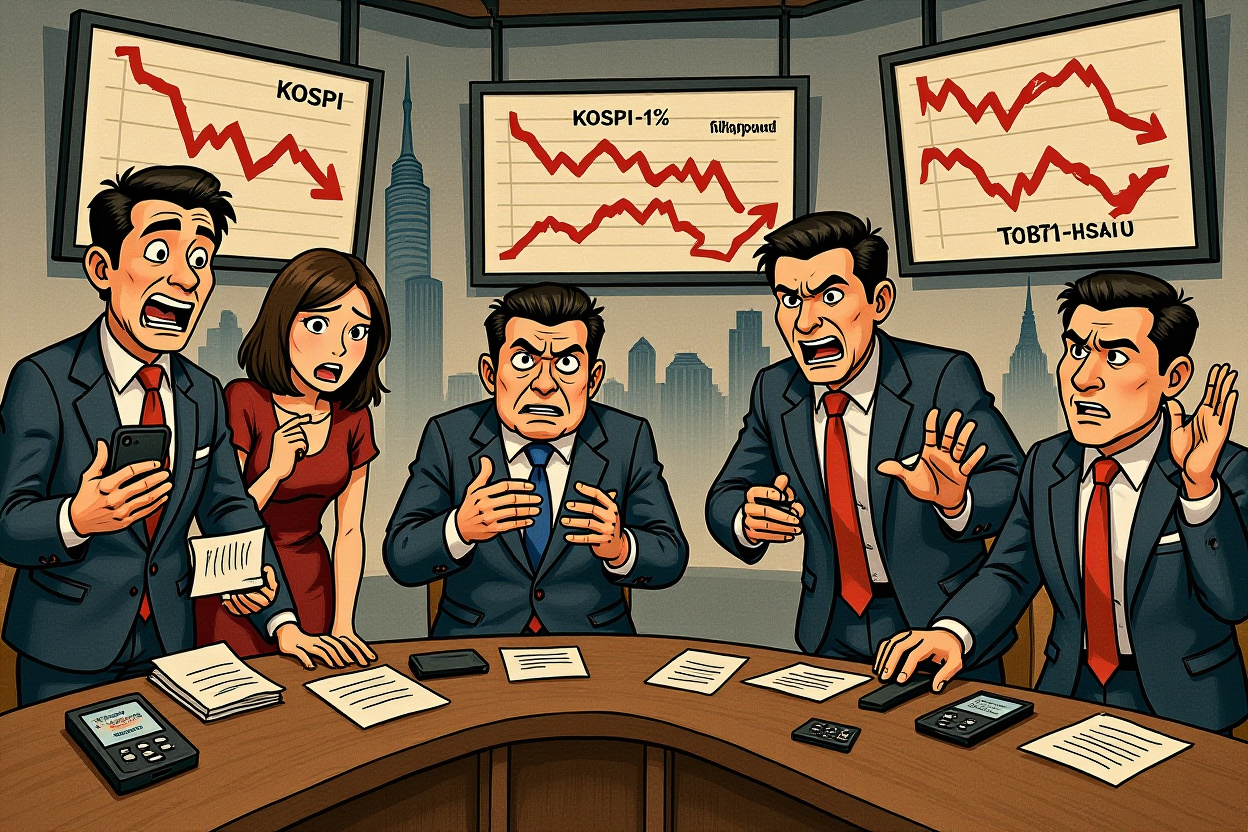
Executive Summary: Critical Market Takeaways
– The Middle East turmoil shocks global trading rooms, triggering oil price spikes above $110 and sharp equity declines, with volatility reminiscent of historical crises.
– Traders face unprecedented risks, reporting potential losses of $1 million in mere seconds due to rapid, whip-saw price movements driven by rumors and news flow.
– Traditional safe-haven assets like gold, yen, and U.S. Treasuries failed as inflation fears surged, highlighting a shift in crisis dynamics that caught many investors off guard.
– Asian markets, heavily reliant on Middle East energy imports, bore severe impacts, with South Korea’s KOSPI crashing over 12% and currencies like the Indian rupee hitting record lows.
– Veteran traders advise constant vigilance and strategic hedging, warning that the turbulence is far from over, requiring adapted portfolios for sustained uncertainty.
The Overnight Panic: A Global Wake-Up Call
In the dead of night in London, the frantic buzz of a smartphone shattered the silence, heralding a day of chaos that would see Middle East turmoil shock global trading rooms. At 1 a.m. local time, Michael Brown (迈克尔·布朗), a senior strategist at brokerage Pepperstone, was jolted awake by incessant alerts: Brent crude oil breaching $100 per barrel, then $110; Nasdaq futures down 2%; and the Nikkei index plunging 5%. He rolled out of bed, fired up his computer, and was immediately inundated with calls from anxious Asian clients. “There was already a sense of panic setting in,” Brown recalled, capturing the tense onset of a market meltdown.
This scenario echoed across time zones. In Singapore, Gerald Gan (杰拉尔德·甘), chief investment officer at Reed Capital Partners, was similarly roused as investor fear drove oil prices up over 30% in early trading, according to Bloomberg reports. His firm’s clients faced massive equity losses, and staff urgently sought guidance before dawn, repeatedly calling with pleas to “protect the portfolio.” The rapid escalation underscored how Middle East turmoil shocks global trading rooms, forcing professionals into round-the-clock vigilance.
From London to Singapore: Traders on High Alert
The simultaneous reactions in London and Singapore highlight the interconnected nature of modern financial markets. As Middle East turmoil shocks global trading rooms, the ripple effects are instantaneous, with energy price surges triggering cascading sell-offs in equities and currencies. Brown noted that the panic was palpable, driven by fears of sustained supply disruptions from the region. This global wake-up call served as a stark reminder that in today’s digital age, market shocks transcend borders, demanding real-time responses from investors worldwide.
“Two Seconds to Lose $1 Million”: The High-Stakes Reality
In the U.S. oil heartland, veteran commodity trader Dennis Kisler (丹尼斯·基斯勒) confronted a different crisis. As energy trading director at BOK Financial Securities, his clients—executives from shale oil producers—were increasingly eager to lock in soaring prices after overnight surges. From the moment he walked into his Oklahoma City office at 6 a.m. on Monday, trade orders flooded in, and Kisler found himself juggling three phone calls simultaneously. By noon, his voice was hoarse. “Someone always gets hurt,” he said, emphasizing the perilous environment. “In moments like these, if you’re not focused and you’re on the wrong side, you can lose a million dollars in two seconds.”
Over the past two weeks, war-induced volatility has left global investors on edge, with record crashes in South Korean stocks, a 68% spike in European natural gas futures over two days, and currencies like the Indian rupee and Egyptian pound hitting historic lows. Even renowned firms like PIMCO (品浩), Citadel, and ExodusPoint Capital Management were not spared, illustrating how Middle East turmoil shocks global trading rooms indiscriminately. Kisler’s warning encapsulates the extreme risk-reward dynamics at play, where milliseconds can separate profit from catastrophic loss.
Commodity Traders in the Eye of the Storm
Kisler’s experience reflects the intense pressure on energy traders, who must navigate wild price swings while managing client expectations. His advice to his team: maintain full staffing and limit coffee and water intake to minimize bathroom breaks, ensuring eyes never leave the screen. This pragmatic approach underscores the physical and mental toll as Middle East turmoil shocks global trading rooms, with veterans drawing on decades of experience to survive the frenzy.
The Whip-Saw Effect: When Markets Move on Rumors
Traders were stunned not only by the speed of volatility but also by the violent “whip-saw effect,” where markets convulse on news—even if it’s false. For instance, U.S. Energy Secretary Chris Wright’s Tuesday post about naval escorts for a tanker through the Strait of Hormuz sparked brief turmoil, though it was later clarified. Just a day earlier, U.S. WTI crude futures nearly erased a 31% gain after former President Trump hinted the war might be winding down, marking the largest intraday reversal in at least four decades. The S&P 500 soared in the final hour, logging its biggest gain in a month.
One of the most perplexing features of the sell-off was the failure of traditional havens. From gold to the yen, Swiss franc, and U.S. Treasuries, assets typically seen as safe harbors in crises all fell, as spiking energy prices reignited inflation worries and pushed interest rates higher. Raymond Lee (雷蒙德·李), chief investment officer at Sydney’s Torica Capital, had hoped to hedge risk with U.S. Treasuries. But seeing oil surge and bonds fall again early Monday, he cut losses, ordering traders to dump two-year Treasury futures. He concluded the Treasury market had become an extension of the oil market, with yields moving in lockstep with crude, and opted out until stability returns.
False News and Frenetic Reversals
This whip-saw phenomenon demonstrates how Middle East turmoil shocks global trading rooms by amplifying misinformation risks. Market reactions to unverified reports can trigger flash crashes or rallies, forcing traders to constantly verify sources. The volatility underscores the need for robust risk management systems that can withstand sudden reversals, a lesson hard-learned as assets like Treasuries lose their haven status amid inflation fears.
Asian Markets in the Crosshairs: Currency and Equity Carnage
Asia, heavily reliant on Middle East oil and gas imports to fuel economies, felt the brunt of the shockwaves. Currencies in Indonesia and the Philippines, like India’s, tumbled to record lows. South Korea’s KOSPI index fell over 7% on March 3, then plummeted a record 12% the next day, before recouping some losses in several volatile sessions. Gerald Gan (杰拉尔德·甘) in Singapore described it as a “roller coaster,” and he has prepared for weeks more. “This isn’t over yet,” he said, echoing a sentiment shared by peers who see Middle East turmoil continuing to shock global trading rooms.
Gan adheres to a grueling schedule: online at 6 a.m., eyes glued to screens until around 2 a.m. the next day. This marathon vigilance is common across Asia, where markets are particularly sensitive to energy price shocks. The region’s dependency magnifies the impact, making currencies and equities vulnerable to sustained volatility, as seen in Korea’s historic crash.
Korea’s Record Crash and Regional Vulnerabilities
The KOSPI’s 12% plunge highlights systemic risks in Asian markets when Middle East turmoil shocks global trading rooms. Analysts point to high leverage and foreign investor outflows as exacerbating factors. For investors, this signals the importance of diversifying away from energy-sensitive assets in the region and considering geopolitical risk premiums in portfolio allocations.
Veteran Insights: Navigating Decades of Oil Shocks
As BOK’s energy trading head, Dennis Kisler (丹尼斯·基斯勒) cut his teeth decades ago in the Chicago Mercantile Exchange trading pits. He lived through the oil price spikes triggered by the 1990 Gulf War and the Iraq War a decade later, memories that inform his current approach. In the first week of the U.S.-Israel-Iran conflict, oil rose about 30%, but investor anxiety piled up ahead of Monday’s open as weekend reports detailed potential regional production declines. Within minutes of opening, WTI gains exceeded 10%.
Kisler reminded his traders that full staffing is essential, and his tip to limit fluids is a tactical move to maintain focus. “You never let your eyes leave the screen,” he stressed, a mantra for survival as Middle East turmoil shocks global trading rooms. His experience shows that historical parallels offer guidance, but each crisis brings unique twists, requiring adaptability.
Lessons from Gulf Wars and Iraq Conflicts
Kisler’s recall of past wars underscores that while patterns repeat—like oil price surges—the market context has evolved with higher frequency trading and global interconnectivity. This time, the shock was compounded by the failure of traditional hedges, urging veterans to update playbooks. For newer traders, these insights are invaluable: study history, but expect unprecedented elements when Middle East turmoil shocks global trading rooms.
Strategic Implications for Global Investors
The ongoing volatility demands recalibrated strategies. With Middle East turmoil shocking global trading rooms, investors must look beyond conventional safe havens. The correlation breakdown between assets like gold and bonds suggests a need for diversified hedging, perhaps incorporating commodities-linked instruments or currency swaps. Data from the recent weeks shows that energy stocks may offer short-term gains, but caution is warranted given the whip-saw risks.
For institutional players, enhancing liquidity buffers is critical to withstand margin calls during sudden swings. Retail investors should consider reducing leverage and increasing cash positions to seize opportunities amid chaos. As Michael Brown (迈克尔·布朗) from Pepperstone warned, “One minute you think, ‘Maybe we’re out of the woods, maybe there’s progress.’ The next minute news flips, and all your positions are in the red. Back to square one.” This unpredictability means Middle East turmoil will continue to shock global trading rooms, necessitating agile responses.
Hedging in a Time of Turmoil
Practical steps include using options for downside protection, monitoring real-time news feeds for geopolitical developments, and stress-testing portfolios against various oil price scenarios. Resources like Bloomberg and official reports from the People’s Bank of China (中国人民银行) can provide timely data. The key is to avoid panic-driven decisions and instead rely on disciplined risk frameworks that account for how Middle East turmoil shocks global trading rooms.
Navigating the Uncertainty: A Call to Vigilance
The events of the past weeks serve as a potent reminder that geopolitical risks can unravel markets in moments. As Middle East turmoil shocks global trading rooms, the path forward is fraught with volatility, but also opportunity. Investors should prioritize continuous education on regional dynamics, leverage expert analysis, and maintain flexible investment horizons. The collective wisdom from traders like Kisler and Gan points to sustained tension, urging a proactive rather than reactive stance.
In conclusion, the global financial landscape remains on a knife-edge, with Middle East turmoil at the epicenter. By embracing robust risk management, diversifying hedges, and staying informed through credible sources, market participants can better weather the storms ahead. The call to action is clear: enhance your market surveillance, adjust strategies for prolonged instability, and prepare for the next shock—because in today’s interconnected world, no trading room is immune.