



Executive Summary: Critical Takeaways for Market Participants
– McDonald’s CEO Chris Kempczinski’s stilted taste test video has ignited a global public relations crisis, highlighting a significant disconnect between corporate leadership and consumer expectations, and underscoring a broader trust crisis for the brand.
– The incident occurs against a backdrop of financial headwinds for McDonald’s, including inflationary pressures impacting costs and pricing, and food safety concerns that further erode brand credibility in core markets.
– In China, McDonald’s faces intense competition from local fast-food chains such as 华莱士 (Wallace) and 塔斯汀 (Tasting), which threaten its growth ambitions despite aggressive expansion plans targeting 10,000 stores by 2028.
– For investors in Chinese equities and global consumer sectors, this trust crisis serves as a reminder to closely monitor brand perception, operational efficiency, and corporate governance as key indicators for investment stability.
– The PR debacle offers lessons on the importance of authentic executive communication in the digital age, with potential ripple effects on shareholder value and market positioning.
The Bite That Echoed Around the World
In early March 2026, a meticulously planned global product launch by McDonald’s spiraled into a public relations nightmare, cascading across social media platforms and capturing the attention of consumers and investors alike. At the heart of the storm was a less-than-one-minute video featuring McDonald’s CEO Chris Kempczinski, who offered a hesitant, barely-there bite of a new burger, a moment quickly mocked as inflicting only “a superficial wound” on the sandwich. This seemingly minor misstep has ripped open a deeper conversation about corporate authenticity and consumer trust in one of the world’s most recognizable brands. For stakeholders in Chinese equity markets, where brand loyalty and consumer sentiment are critical drivers of value, this incident provides a stark case study in how executive actions can precipitate a trust crisis with tangible financial implications. The episode underscores the fragile nature of brand equity in an era of hyper-scrutiny, where every corporate move is dissected by a global audience.
The Viral PR Disaster: A CEO’s Misstep Goes Global
Deconstructing the Infamous Video
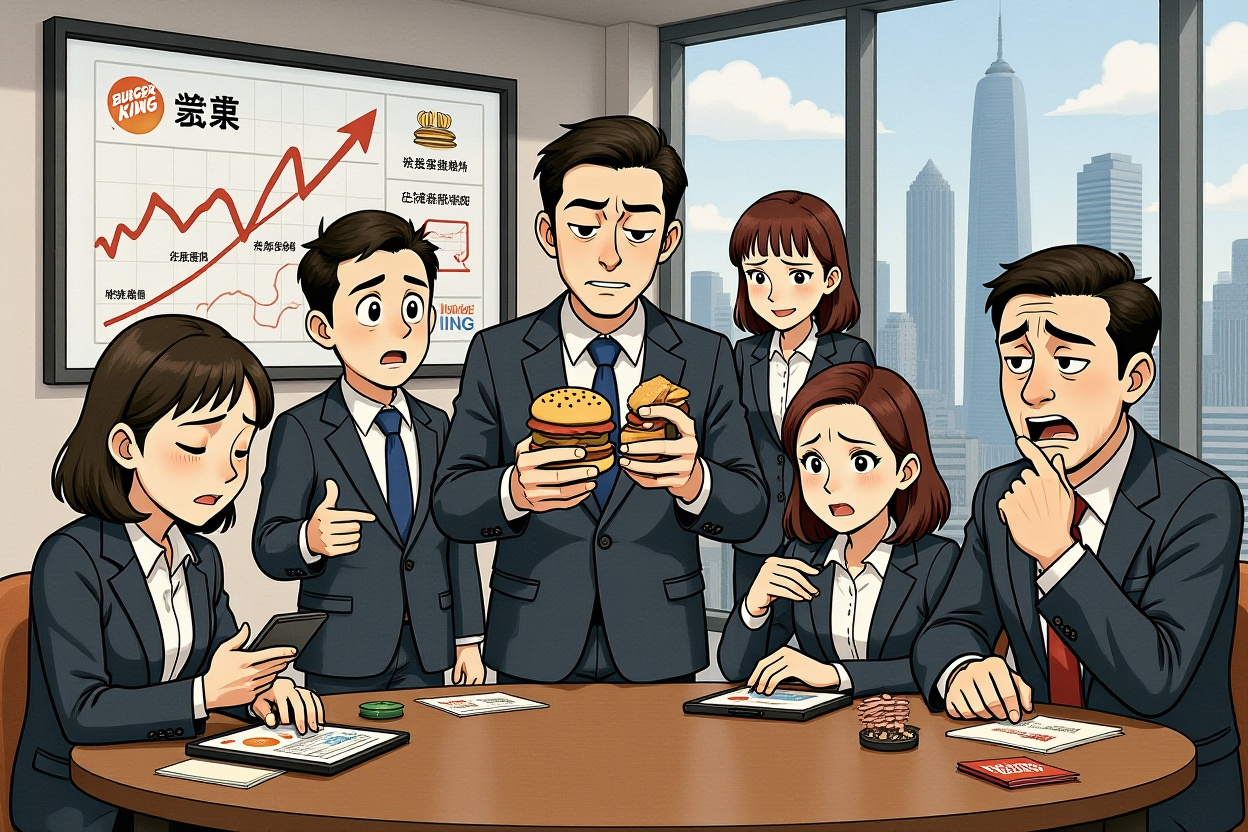
The crisis catalyst was a promotional video for McDonald’s new “Grand Arch” burger, where CEO Chris Kempczinski was tasked with showcasing the product. Instead of a hearty endorsement, viewers witnessed a CEO who appeared unfamiliar with his own offering. Kempczinski hesitated, joked about not knowing how to take a bite, and ultimately delivered only a tiny nibble from the burger’s edge. This “bite-sized blunder” was immediately seized upon by netizens, who flooded social media with comments comparing his action to giving the burger “a superficial wound” and accusing him of insincerity. Critics pointed out that this was not an isolated incident; in August 2024, during a chicken burger taste test, footage suggested he may have spit out the food after a couple of chews before praising it. The use of corporate jargon, repeatedly calling the burger a “product” rather than “food,” further alienated audiences, making the video feel like a sterile business presentation rather than a genuine culinary experience. This authenticity gap is a core element of the emerging trust crisis, as consumers increasingly demand transparency and relatability from brands they support.
Competitor Exploitation and Public Backlash
The swift and brutal public reaction did not go unnoticed by competitors. Tom Curtis, President of Burger King North America, quickly capitalized on the moment by posting a video of himself enthusiastically devouring a Whopper, sauce dripping from his mouth, in a clear contrast to Kempczinski’s restrained performance. This masterful piece of real-time marketing highlighted McDonald’s vulnerability and amplified the narrative of a CEO out of touch with his own brand’s essence. The backlash extended beyond social media chatter, potentially impacting consumer perception and, by extension, sales metrics that investors closely watch. In markets like China, where digital sentiment can rapidly influence purchasing decisions, such PR missteps can have an outsized effect on quarterly performance and stock volatility for multinationals operating in the region.
Chris Kempczinski: The Elite CEO in a Consumer World
Background and the Perception Gap
Chris Kempczinski is no novice to the corporate world. According to his profile on MarketScreener, the 57-year-old executive holds an undergraduate degree from Duke University and an MBA from Harvard Business School. Before joining McDonald’s in 2015, he held senior roles at Procter & Gamble and PepsiCo. He ascended to the global CEO role in November 2019 following the ouster of his predecessor, Steve Easterbrook. Despite this impressive resume, his recent video appearance reinforced a perception of elitist detachment. For a brand built on mass appeal and accessibility, having a leader who seems disengaged from the product experience can exacerbate existing consumer doubts. This disconnect is particularly dangerous in competitive landscapes like China, where local leaders often embody their brands more intimately, and where a trust crisis can be triggered by perceived corporate arrogance.
Physical Image and Cultural Disconnect
Kempczinski’s personal physique—slender and an avid marathon runner—also became a point of contention. Despite claiming to eat McDonald’s three to four times a week, his body type was seen by some as incongruent with a diet of high-calorie fast food. American commentators noted he “doesn’t look like someone who loves McDonald’s.” This visual dissonance, combined with his stiff on-camera demeanor, created a perfect storm of public skepticism. In cultural contexts like China, where food is deeply tied to emotion and community, such a lack of visceral enjoyment from a CEO can read as inauthentic, deepening the trust crisis. For investors analyzing consumer brands, executive alignment with brand values is becoming an increasingly important non-financial metric.
McDonald’s Global Headwinds: More Than a PR Problem
Financial Performance Under Pressure
The PR fiasco coincides with tangible business challenges for McDonald’s. In 2024, the company reported its first global comparable sales decline since 2020, with net profit dropping 3%. Soaring inflation has driven up costs for ingredients and labor, forcing price increases that have alienated cost-conscious consumers. Management has acknowledged that McDonald’s “value leadership” advantage is shrinking. In response, 2025 saw a shift to a “value strategy,” including promotions like the $5 meal deal, which helped achieve a 4% growth in total revenue and net profit for the year. However, this margin pressure indicates underlying vulnerabilities that a trust crisis could exacerbate, making recovery more difficult. Investors in related sectors, such as Chinese consumer staples, should note how inflationary environments test brand loyalty and pricing power.
Food Safety Scandals and Brand Erosion
Compounding the financial strain are food safety incidents. In October 2024, a severe E. coli outbreak linked to McDonald’s in the United States led to multiple hospitalizations and one fatality. Such events directly attack consumer trust, a foundation of any food service brand. Kempczinski himself lamented in a shareholder letter that “on some days, McDonald’s seems to be the protagonist of every major news story.” Rebuilding brand integrity is a long-term challenge, and each new crisis, whether operational or reputational, sets back progress. For market observers, these incidents highlight the systemic risks in global supply chains and the importance of rigorous quality control—a lesson equally applicable to China’s fast-growing but sometimes volatile food and beverage sector.
China: The Crucial Battleground for Growth
Aggressive Expansion and Strategic Goals
While grappling with global issues, China represents both McDonald’s largest growth opportunity and its most fierce competitive arena. By the end of 2025, McDonald’s operated over 45,000 stores worldwide, with more than 7,700 in mainland China. The company has designated China as its “number one incremental market globally,” planning to open approximately 1,000 new stores in 2026 alone, targeting 10,000 stores in China by 2028. This aggressive footprint expansion is a double-edged sword; it promises scale but also increases exposure to market-specific risks, including the potential for a localized trust crisis if consumer sentiment sours.
Local Rivals and the Price War
The competitive landscape in China is brutal. Once dominated by Western brands like McDonald’s and KFC, the market now features strong local players. 华莱士 (Wallace) has broken through with nearly 20,000 stores, and 塔斯汀 (Tasting) has gained traction with its localized “hand-rolled dough” concept. In the value segment, often called the “poor ghost套餐” or budget meal赛道, these domestic brands offer extreme affordability, putting pressure on McDonald’s pricing strategy. As McDonald’s expands into lower-tier cities (三至五线城市), its renowned supply chain and management systems face new tests. With Chinese consumption becoming more rational, single-store efficiency is a key metric. Compared to KFC, which explores sub-brands like “Ken Yue Coffee” to share resources and improve labor efficiency, McDonald’s must balance speed with quality to protect profitability. This intense competition means any brand trust crisis could be exploited more swiftly by agile local competitors, directly impacting market share and investor returns.
Implications for Investors in Chinese Equities
Assessing Brand Trust in Consumer Stocks
For institutional investors and fund managers focused on Chinese markets, the McDonald’s saga offers critical insights. Brand trust is a intangible asset that can significantly influence stock performance, especially in consumer-facing industries. A trust crisis, whether driven by PR missteps, product issues, or executive behavior, can lead to consumer boycotts, sales declines, and increased volatility. Investors should incorporate brand health metrics—such as social sentiment analysis, customer satisfaction scores, and net promoter scores—into their due diligence processes. In China, where digital platforms like Weibo and Douyin amplify public opinion, monitoring these channels can provide early warning signs of emerging risks.
Investment Strategies for the Fast-Food Sector
Given the competitive dynamics, investors might consider a nuanced approach:
– Diversify exposure within the consumer sector, balancing investments in multinational giants like McDonald’s with stakes in rising local champions like 华莱士 (Wallace) or 塔斯汀 (Tasting), which may benefit from nationalist消费 trends.
– Focus on companies with robust supply chain management and transparent safety records, as these are defensive qualities during crises.
– Pay attention to corporate governance and executive communication styles; leaders who authentically engage with consumers can mitigate trust-related risks.
– Look for firms leveraging technology for efficiency, such as digital ordering and delivery integration, which can offset margin pressures and enhance customer loyalty.
Navigating the Trust Crisis: Paths Forward for McDonald’s
Corporate Communication and Authenticity
To address the immediate trust crisis, McDonald’s must prioritize authentic communication. This involves moving beyond scripted corporate messages to more genuine interactions with consumers. Executive leadership, including Kempczinski, could engage in unscripted, transparent dialogues about product quality and brand values. Learning from local Chinese brands that often use founder stories and grassroots marketing might help rebuild connection. Additionally, proactive communication around food safety protocols and sustainability efforts can restore confidence. For global investors, such steps signal management’s commitment to long-term brand health, which is crucial for equity valuation.
Long-term Brand Resilience in Changing Markets
The long-term solution lies in aligning business strategy with evolving consumer expectations. In China, this means deepening localization—not just in menu offerings but in cultural resonance. McDonald’s could invest more in community initiatives, digital innovation tailored to Chinese platforms, and partnerships with local suppliers to enhance trust. Operationally, balancing expansion with efficiency will be key to maintaining profitability amidst price wars. For the broader market, this trust crisis serves as a reminder that in an interconnected world, brand reputation is fragile and requires constant, vigilant management. Investors should advocate for stronger ESG (Environmental, Social, and Governance) frameworks that include brand integrity metrics.
Key Takeaways and Forward-Looking Vigilance
The McDonald’s CEO taste test incident is more than a fleeting social media joke; it is a symptom of deeper systemic challenges, including inflationary pressures, competitive intensity, and eroding consumer trust. For the Chinese market, where McDonald’s pins its growth hopes, the battle with local brands will test its adaptability and resilience. Investors in Chinese equities and global consumer sectors must now factor brand perception and corporate authenticity into their risk assessments. As markets evolve, staying informed through reliable sources and maintaining a diversified portfolio can help navigate uncertainties. We encourage professionals to monitor quarterly reports from consumer companies, analyze brand sentiment trends, and engage with management on trust-building initiatives. The trust crisis at McDonald’s is a wake-up call: in today’s market, authenticity isn’t just good PR—it’s good business.