



Executive Summary
- A viral video of McDonald’s CEO Chris Kempczinski taking a tiny, unconvincing bite of a new burger has escalated into a significant public relations crisis, highlighting a broader trust crisis for the global brand.
- The incident exposes deeper operational challenges, including a 2024 global sales decline, inflationary cost pressures, and serious food safety incidents that have eroded consumer confidence.
- In China, McDonald’s faces a dual reality: it is the chain’s largest growth market with plans for 1,000 new stores in 2026, yet it is besieged by fierce local competition from brands like 华莱士 (Wallace) and 塔斯汀 (Tasting).
- Brand authenticity and value perception are becoming critical battlegrounds as consumers globally grow more skeptical and cost-conscious, forcing strategic reevaluations.
- For investors and market watchers, the episode underscores the importance of leadership authenticity and adaptive strategy in sustaining growth amidst evolving consumer expectations and intense market competition.
The Viral Spark That Ignited a Global Firestorm
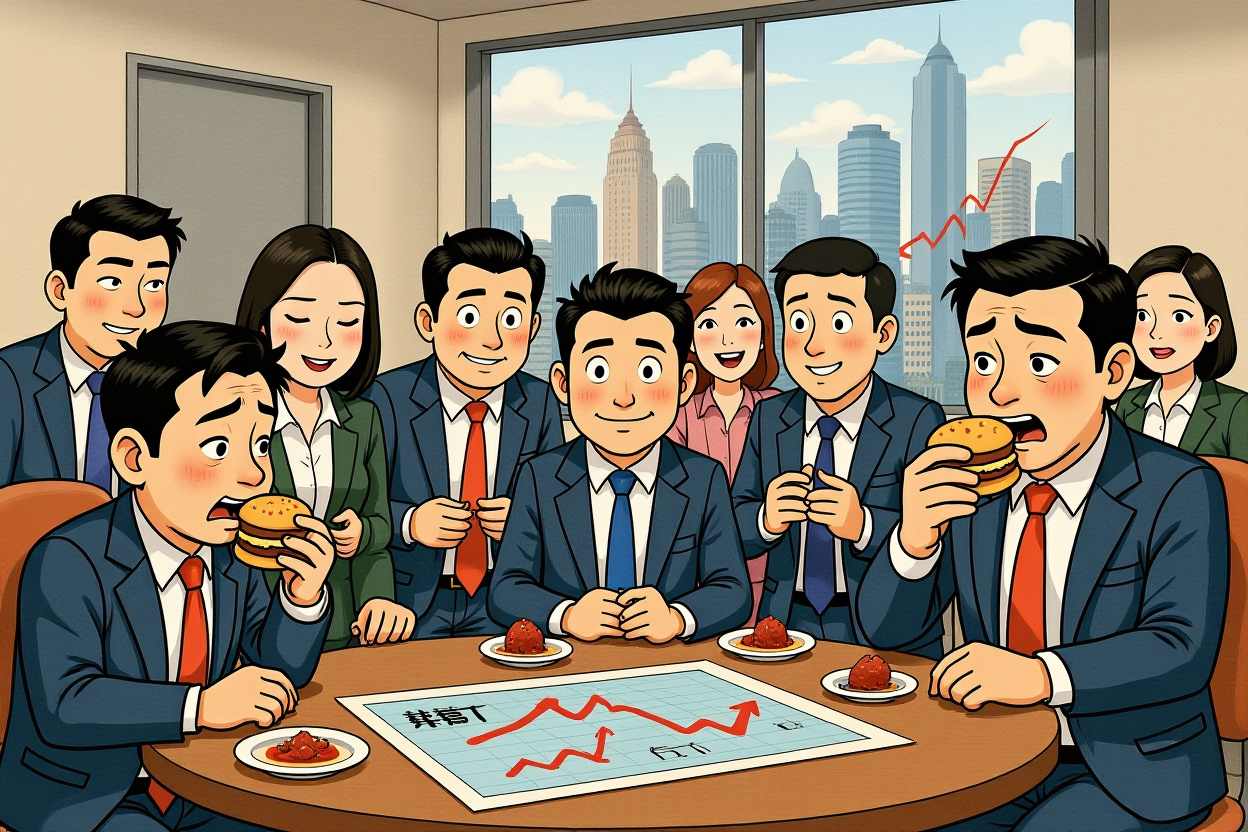
In early March 2026, a meticulously planned global product launch for McDonald’s backfired spectacularly, morphing into a public relations disaster that swept across social media platforms worldwide. The catalyst was a short video featuring McDonald’s Global CEO Chris Kempczinski. While promoting the new “Grand Mac” burger, Kempczinski praised the product but then proceeded to take only a minuscule, hesitant bite from the edge. Netizens were quick to mock the performance, dubbing it the “one-bite surface wound” and accusing the CEO of palpable insincerity. This seemingly minor act has thrust McDonald’s into the center of a raging舆论风暴 (public opinion storm), serving as a potent symbol of a deeper trust crisis facing the fast-food behemoth.
The video, under one minute long, was intended to showcase the new menu item. Kempczinski introduced the burger as his intended lunch. However, at the pivotal tasting moment, he appeared awkward, even joking that he didn’t know how to take a bite. The eventual nibble was widely perceived as inauthentic and dismissive. Critics pointed out a similar pattern from an August 2024 video where he tasted a chicken sandwich, chewing only twice before the scene cut to him wiping his mouth and declaring it “great,” leading to speculation he had spit the food out. The wording in the recent video further fueled backlash; Kempczinski repeatedly referred to the burger as a “product” rather than “food” or a “burger,” a commercialized term that resonated as cold and disconnected from genuine culinary enjoyment.
Competitors Seize the Moment
The PR misstep was immediately leveraged by rivals. Burger King North America President Tom Curtis swiftly posted a video of himself heartily devouring a Whopper, sauce dripping conspicuously from the corner of his mouth. This opportunistic, contrast-heavy marketing highlighted McDonald’s discomfort and amplified the narrative of a leadership out of touch with its own core product. The incident transcends a simple viral meme; it taps into growing consumer skepticism about corporate authenticity, directly feeding into the brand’s trust crisis.
Profile of a CEO: Elite Pedigree Meets Public Perception
Chris Kempczinski is no novice to the business world. According to MarketScreener, the 57-year-old executive holds an undergraduate degree from Duke University and an MBA from Harvard Business School. Before joining McDonald’s in 2015, he held senior roles at Procter & Gamble and PepsiCo. He ascended to the global CEO role in November 2019 following the ouster of his predecessor, Steve Easterbrook. Despite this impressive resume, his personal presentation has become a liability in this context.
Kempczinski is lean and an avid marathon runner. While he has claimed to eat McDonald’s three to four times a week, his physique struck many viewers as incongruous with the brand’s high-calorie offerings. U.S. commentators noted he “doesn’t look like someone who loves Mickey D’s.” This physical disconnect, combined with the perceived “elite arrogance” in the video, created a perfect storm of public resentment. The trust crisis is, in part, a crisis of relatable leadership. When the figurehead appears disengaged from the very experience the company sells, it breeds doubt among consumers and investors alike about the brand’s foundational values.
Navigating Global Headwinds: Value Erosion and Safety Scandals
The viral bite is a symptom of larger, more systemic challenges McDonald’s faces globally. In 2024, the company reported its first global comparable sales decline since 2020, with net profit dropping 3%. Soaring inflation drove up costs for ingredients and labor, forcing menu price increases that alienated value-seeking customers. Management has acknowledged that McDonald’s “value leadership” advantage is shrinking. In response, 2025 saw a strategic pivot to a “value platform,” pushing offerings like the $5 Meal Deal to win back inflation-weary consumers. This strategy showed early promise, contributing to 4% growth in total revenue and net income for the year, as reported by 每日经济新闻 (Daily Economic News).
The Shadow of Food Safety
Compounding the value perception issue are serious food safety lapses. A severe E. coli outbreak linked to McDonald’s in the United States in October 2024 resulted in multiple hospitalizations and one fatality. Such incidents inflict deep and lasting damage on consumer trust. As Kempczinski himself lamented in a shareholder letter, “There are some days when it feels like McDonald’s is the lead story for every major news outlet.” Rebuilding a resilient brand image is a long-term imperative, and the recent PR fiasco only sets back those efforts, intensifying the overarching trust crisis.
The Chinese Market: A Crucial Battleground Amidst a Trust Crisis
While grappling with global pressures, China represents both McDonald’s greatest growth opportunity and its most fiercely competitive arena. This duality makes the Chinese market a critical focus for understanding the brand’s future and the real-world implications of its trust crisis.
Aggressive Expansion Meets Local Giants
McDonald’s operates over 45,000 restaurants globally, with more than 7,700 in mainland China. The country is deemed the “number one incremental growth market,” with plans to open approximately 1,000 new stores in 2026, targeting 10,000 stores in China by 2028. However, this aggressive expansion collides with an intensely competitive landscape. The era of duopoly with 肯德基 (KFC) is over. Domestic chains have risen powerfully: 华莱士 (Wallace) boasts nearly 20,000 outlets nationwide, while 塔斯汀 (Tasting) has gained rapid traction with its localized “hand-stretched dough” concept. In the fiercely contested “budget meal” segment, these local players often undercut McDonald’s on price, appealing directly to the rationalized consumption trend.
Operational Challenges in a Diversifying Market
As McDonald’s penetrates deeper into third- to fifth-tier cities, its famed supply chain and management systems face new tests. Single-store efficiency becomes paramount. Compared to KFC’s model of exploring sub-brands like 肯悦咖啡 (K-Coffee) to share resources and improve labor efficiency, McDonald’s must solve the puzzle of balancing breakneck expansion with quality control and profitability. The trust crisis in China is not just about a CEO’s video; it’s about whether the brand can maintain its perceived quality and value as it scales, especially when local competitors are perceived as more authentic and adaptable.
Strategic Pathways: Rebuilding Trust in a Skeptical Era
Moving beyond the immediate fallout requires deliberate action. For McDonald’s, addressing the trust crisis means operating on multiple fronts simultaneously, from leadership communication to core business strategy.
Embracing Authentic Engagement
The backlash underscores a consumer demand for genuineness. Leadership must bridge the gap between corporate messaging and relatable human experience. This involves more than staged taste tests; it requires consistent, transparent communication about food quality, sourcing, and corporate values. Engaging directly with consumer feedback on social media and investing in community initiatives can help rebuild emotional equity.
Doubling Down on Value and Safety
The financial strategy must continue to address affordability without compromising perceived quality. The success of the 2025 value push indicates a responsive path. Concurrently, a relentless, publicly visible focus on food safety protocols is non-negotiable. Investors should monitor the company’s capital expenditures in supply chain technology and safety measures as key indicators of its commitment to restoring trust.
Beyond the Bite: Investment Implications and Forward Outlook
The “one-bite surface wound” incident is more than a fleeting social media scandal; it is a revealing stress test for McDonald’s brand resilience. The trust crisis it highlights is multifaceted, stemming from leadership perception, global economic pressures, and cutthroat local competition, particularly in China. For institutional investors and market analysts, the key takeaways are clear: brand health is inextricably linked to authentic leadership and adaptive market strategies. McDonald’s ambitious Chinese growth narrative remains compelling, but its execution must now contend with heightened scrutiny and more agile local rivals.
The path forward requires McDonald’s to demonstrate operational excellence in store expansion, unwavering commitment to value and safety, and, crucially, a more human-centric brand narrative. The company’s ability to navigate this trust crisis will be a significant determinant of its long-term equity story and its standing in the portfolios of global investors watching the Chinese consumer space. Stakeholders are advised to closely follow the company’s upcoming quarterly earnings calls and strategic announcements for signs of concrete steps to fortify consumer confidence and secure its growth trajectory in an increasingly skeptical world.