



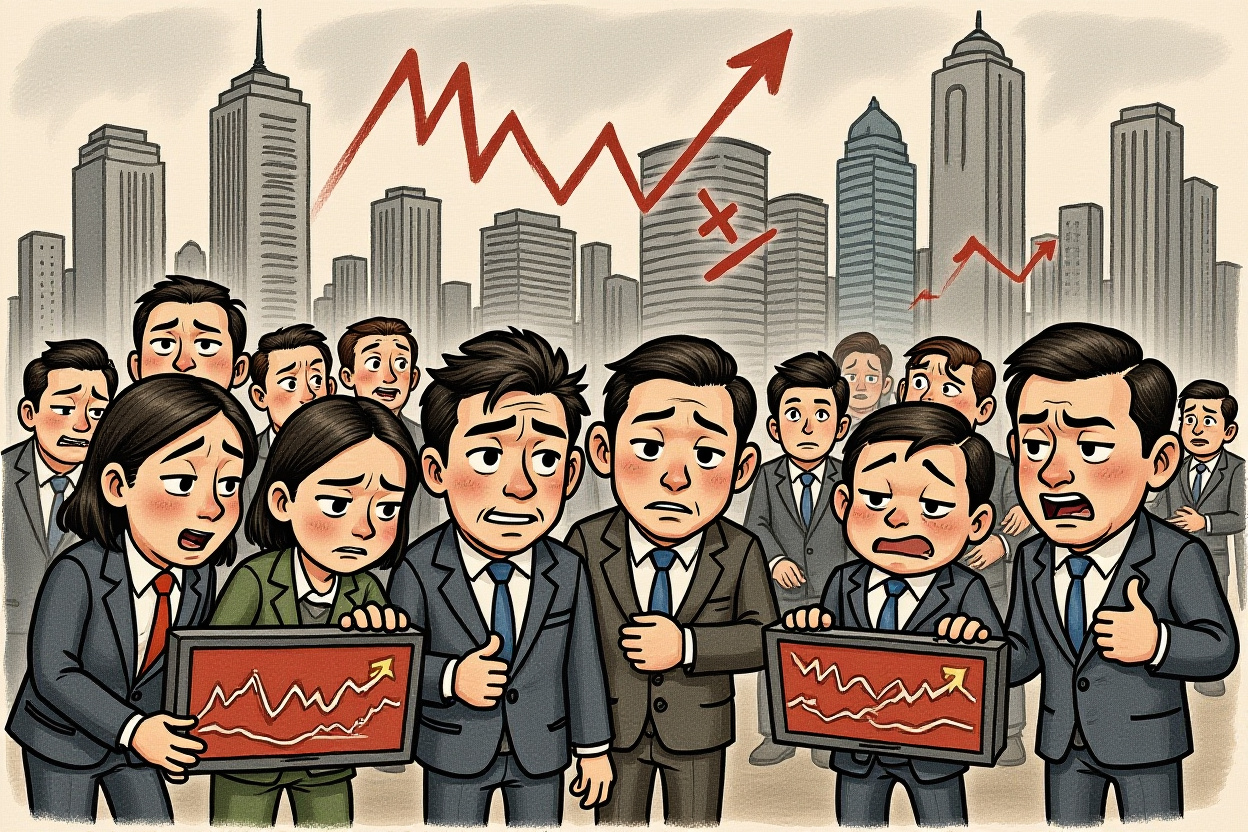
– Immediate stock price volatility and potential trading halts for the affected company.
– Critical examination of corporate governance and succession planning in China’s A-share market.
– Investor risk assessment strategies in light of unexpected leadership changes.
– Regulatory responses from bodies like the China Securities Regulatory Commission (CSRC) to ensure market stability.
– Long-term implications for sector performance and lessons for other listed entities.
The sudden death of a chairman at a billion-yuan A-share listed company sends shockwaves through China’s equity markets, highlighting the fragile interplay between corporate leadership and investor confidence. This event underscores the critical importance of robust governance structures in an era where unexpected transitions can trigger significant market dislocations. For international investors and fund managers, the sudden death of a chairman serves as a stark reminder of the unique risks embedded in Chinese equities, necessitating a deeper dive into contingency planning and regulatory safeguards. As news breaks via outlets like 凤凰网 (Ifeng.com), the financial community must swiftly assess the ramifications for portfolio holdings and broader market sentiment.
The Incident and Immediate Market Reaction
The abrupt passing of a key executive, such as a chairman, often catalyzes immediate turmoil. In this case, the sudden death of a chairman at a firm valued in the billions on the A-share market has prompted rapid responses from exchanges and investors alike.
Details of the Chairman’s Death and Company Disclosure
Chinese listed companies are required to promptly disclose material events under rules set by the 上海证券交易所 (Shanghai Stock Exchange) and 深圳证券交易所 (Shenzhen Stock Exchange). The announcement of the sudden death of a chairman typically follows regulatory guidelines, with filings submitted to the 中国证券监督管理委员会 (China Securities Regulatory Commission, CSRC). For instance, similar past events, like the passing of a chairman at a major 白酒 (baijiu) producer, led to immediate trading suspensions to manage volatility. Companies must navigate 信息披露 (information disclosure) protocols to maintain transparency while managing market perception.
Stock Price Volatility and Trading Halts</h3
Upon news of the sudden death of a chairman, the affected company's shares often experience sharp declines or heightened volatility. Data from historical cases show that A-share stocks can drop by 5-10% in the initial trading sessions post-announcement. Exchanges may impose temporary halts under 涨跌幅限制 (price limit rules) to curb speculative trading. For example, during the 2022 incident involving a 医药 (pharmaceutical) firm chairman's death, the 深圳证券交易所 (Shenzhen Stock Exchange) halted trading for one hour, allowing investors to digest the news. This mechanism aims to prevent panic selling but can also amplify uncertainty in the short term.
Corporate Governance in Chinese Listed Companies</h2
The sudden death of a chairman exposes vulnerabilities in corporate governance frameworks, particularly around succession planning. In China's A-share market, where many companies are family-controlled or founder-led, the loss of a key figure can destabilize strategic direction.
Succession Planning and Regulatory Requirements</h3
Regulators like the 中国证券监督管理委员会 (China Securities Regulatory Commission, CSRC) emphasize 公司治理 (corporate governance) through guidelines such as the 上市公司治理准则 (Code of Corporate Governance for Listed Companies). However, enforcement varies, and many firms lack formalized succession plans. A 2023 survey by 中金公司 (China International Capital Corporation Limited) revealed that only 40% of A-share companies have publicly disclosed contingency plans for executive transitions. The sudden death of a chairman forces boards to activate emergency protocols, often involving interim appointments by 董事会 (board of directors) members, which can lead to power struggles or operational delays.
Case Studies of Past Executive Transitions</h3
Analyzing previous incidents provides valuable insights. For example, after the death of 茅台 (Kweichow Moutai) chairman 袁仁国 (Yuan Renguo) in 2020, the company's shares initially fell but recovered within months due to strong brand equity and swift internal promotions. Conversely, the sudden death of a chairman at a smaller 制造业 (manufacturing) firm in 2021 led to prolonged instability, with the stock underperforming the 沪深300指数 (CSI 300 Index) by 15% over the following year. These cases illustrate how company size, sector, and governance maturity influence outcomes post the sudden death of a chairman.
Investor Sentiment and Risk Assessment</h2
For institutional investors, the sudden death of a chairman necessitates immediate risk reassessment. Portfolio managers must evaluate exposure to the affected stock and broader sector implications, balancing emotional reactions with data-driven analysis.
Impact on Institutional Holdings</h3
Major funds, such as those managed by 华夏基金 (China Asset Management) or 易方达基金 (E Fund Management), often hold significant stakes in large-cap A-shares. The sudden death of a chairman can trigger reevaluation of 基本面 (fundamentals), leading to portfolio rebalancing. Key considerations include:
– Liquidity risks: Large sell-offs may impact market depth, especially for mid-cap stocks.
– Credit rating reviews: Agencies like 中诚信国际 (China Chengxin International Credit Rating) may place ratings on watch for downgrade.
– Derivative exposures: Options and futures linked to the stock could see increased volatility, affecting hedging strategies.
Analyst Downgrades and Forecast Revisions</h3
Financial analysts swiftly adjust models post-event. For instance, after a chairman's death at a 科技 (technology) firm, 中信证券 (CITIC Securities) analysts revised earnings per share (EPS) estimates downward by 8% for the next fiscal year, citing leadership uncertainty. Reports often highlight:
– Management credibility gaps: New leaders may lack the track record of the deceased chairman.
– Strategic pivot risks: Changes in 投资决策 (investment decisions) or 并购 (M&A) activities could derail growth trajectories.
– Sector spillover: Peers in the same industry, such as 新能源 (new energy) or 消费 (consumer staples), might experience sentiment drag, as seen in past events.
Regulatory Framework and Market Stability</h2
The 中国证券监督管理委员会 (China Securities Regulatory Commission, CSRC) plays a pivotal role in mitigating disruptions from events like the sudden death of a chairman. Regulatory interventions aim to uphold market integrity and protect minority shareholders.
Role of the China Securities Regulatory Commission (CSRC)</h3
The CSRC monitors 上市公司 (listed companies) through 实时监控 (real-time surveillance) systems, ensuring compliance with 证券法 (Securities Law) provisions. In cases of the sudden death of a chairman, the regulator may:
– Mandate additional disclosures: Require detailed reports on interim leadership and operational continuity.
– Investigate insider trading: Scrutinize unusual trading patterns before the announcement to prevent 内幕交易 (insider trading).
– Coordinate with exchanges: Advise on trading halts or circuit breakers to prevent systemic risks, referencing guidelines from 中国人民银行 (People's Bank of China) on financial stability.
Measures to Ensure Continuity</h3
Regulatory bodies promote best practices to cushion the impact. For example, the 上海证券交易所 (Shanghai Stock Exchange) recommends that companies establish 应急委员会 (emergency committees) to handle sudden transitions. Outbound links to official resources, such as the CSRC's announcement database, provide transparency. Additionally, 保险 (insurance) products like 董责险 (directors and officers liability insurance) can mitigate financial losses, though adoption in China remains lower than in mature markets.
Long-term Implications for the Company and Sector</h2
Beyond immediate reactions, the sudden death of a chairman can reshape a company's future and influence sector dynamics. Investors must look ahead to governance reforms and strategic realignments.
Strategic Direction and Growth Prospects</h3
The loss of a visionary leader, such as a chairman who drove 创新 (innovation) or 国际化 (international expansion), may stall key initiatives. Companies often face:
– Delayed projects: For instance, a 一带一路 (Belt and Road) infrastructure deal might be postponed during the transition.
– Talent retention issues: Key executives may depart, exacerbating leadership voids.
– Investor confidence erosion: Long-term shareholders, including 社保基金 (National Council for Social Security Fund) allocations, might reduce holdings if governance concerns persist.
Lessons for Other A-Share Companies</h3
This incident serves as a wake-up call for the broader market. Firms are encouraged to:
– Strengthen succession planning: Implement clear 接班人计划 (succession plans) with board oversight.
– Enhance disclosure practices: Proactively communicate governance structures to investors.
– Diversify leadership: Reduce reliance on single individuals, as seen in global peers like 苹果公司 (Apple Inc.) after Steve Jobs' passing.
The sudden death of a chairman thus catalyzes a broader reflection on resilience in China's capital markets.
The sudden death of a chairman exposes vulnerabilities in corporate governance frameworks, particularly around succession planning. In China's A-share market, where many companies are family-controlled or founder-led, the loss of a key figure can destabilize strategic direction.
Succession Planning and Regulatory Requirements</h3
Regulators like the 中国证券监督管理委员会 (China Securities Regulatory Commission, CSRC) emphasize 公司治理 (corporate governance) through guidelines such as the 上市公司治理准则 (Code of Corporate Governance for Listed Companies). However, enforcement varies, and many firms lack formalized succession plans. A 2023 survey by 中金公司 (China International Capital Corporation Limited) revealed that only 40% of A-share companies have publicly disclosed contingency plans for executive transitions. The sudden death of a chairman forces boards to activate emergency protocols, often involving interim appointments by 董事会 (board of directors) members, which can lead to power struggles or operational delays.
Case Studies of Past Executive Transitions</h3
Analyzing previous incidents provides valuable insights. For example, after the death of 茅台 (Kweichow Moutai) chairman 袁仁国 (Yuan Renguo) in 2020, the company's shares initially fell but recovered within months due to strong brand equity and swift internal promotions. Conversely, the sudden death of a chairman at a smaller 制造业 (manufacturing) firm in 2021 led to prolonged instability, with the stock underperforming the 沪深300指数 (CSI 300 Index) by 15% over the following year. These cases illustrate how company size, sector, and governance maturity influence outcomes post the sudden death of a chairman.
Investor Sentiment and Risk Assessment</h2
For institutional investors, the sudden death of a chairman necessitates immediate risk reassessment. Portfolio managers must evaluate exposure to the affected stock and broader sector implications, balancing emotional reactions with data-driven analysis.
Impact on Institutional Holdings</h3
Major funds, such as those managed by 华夏基金 (China Asset Management) or 易方达基金 (E Fund Management), often hold significant stakes in large-cap A-shares. The sudden death of a chairman can trigger reevaluation of 基本面 (fundamentals), leading to portfolio rebalancing. Key considerations include:
– Liquidity risks: Large sell-offs may impact market depth, especially for mid-cap stocks.
– Credit rating reviews: Agencies like 中诚信国际 (China Chengxin International Credit Rating) may place ratings on watch for downgrade.
– Derivative exposures: Options and futures linked to the stock could see increased volatility, affecting hedging strategies.
Analyst Downgrades and Forecast Revisions</h3
Financial analysts swiftly adjust models post-event. For instance, after a chairman's death at a 科技 (technology) firm, 中信证券 (CITIC Securities) analysts revised earnings per share (EPS) estimates downward by 8% for the next fiscal year, citing leadership uncertainty. Reports often highlight:
– Management credibility gaps: New leaders may lack the track record of the deceased chairman.
– Strategic pivot risks: Changes in 投资决策 (investment decisions) or 并购 (M&A) activities could derail growth trajectories.
– Sector spillover: Peers in the same industry, such as 新能源 (new energy) or 消费 (consumer staples), might experience sentiment drag, as seen in past events.
Regulatory Framework and Market Stability</h2
The 中国证券监督管理委员会 (China Securities Regulatory Commission, CSRC) plays a pivotal role in mitigating disruptions from events like the sudden death of a chairman. Regulatory interventions aim to uphold market integrity and protect minority shareholders.
Role of the China Securities Regulatory Commission (CSRC)</h3
The CSRC monitors 上市公司 (listed companies) through 实时监控 (real-time surveillance) systems, ensuring compliance with 证券法 (Securities Law) provisions. In cases of the sudden death of a chairman, the regulator may:
– Mandate additional disclosures: Require detailed reports on interim leadership and operational continuity.
– Investigate insider trading: Scrutinize unusual trading patterns before the announcement to prevent 内幕交易 (insider trading).
– Coordinate with exchanges: Advise on trading halts or circuit breakers to prevent systemic risks, referencing guidelines from 中国人民银行 (People's Bank of China) on financial stability.
Measures to Ensure Continuity</h3
Regulatory bodies promote best practices to cushion the impact. For example, the 上海证券交易所 (Shanghai Stock Exchange) recommends that companies establish 应急委员会 (emergency committees) to handle sudden transitions. Outbound links to official resources, such as the CSRC's announcement database, provide transparency. Additionally, 保险 (insurance) products like 董责险 (directors and officers liability insurance) can mitigate financial losses, though adoption in China remains lower than in mature markets.
Long-term Implications for the Company and Sector</h2
Beyond immediate reactions, the sudden death of a chairman can reshape a company's future and influence sector dynamics. Investors must look ahead to governance reforms and strategic realignments.
Strategic Direction and Growth Prospects</h3
The loss of a visionary leader, such as a chairman who drove 创新 (innovation) or 国际化 (international expansion), may stall key initiatives. Companies often face:
– Delayed projects: For instance, a 一带一路 (Belt and Road) infrastructure deal might be postponed during the transition.
– Talent retention issues: Key executives may depart, exacerbating leadership voids.
– Investor confidence erosion: Long-term shareholders, including 社保基金 (National Council for Social Security Fund) allocations, might reduce holdings if governance concerns persist.
Lessons for Other A-Share Companies</h3
This incident serves as a wake-up call for the broader market. Firms are encouraged to:
– Strengthen succession planning: Implement clear 接班人计划 (succession plans) with board oversight.
– Enhance disclosure practices: Proactively communicate governance structures to investors.
– Diversify leadership: Reduce reliance on single individuals, as seen in global peers like 苹果公司 (Apple Inc.) after Steve Jobs' passing.
The sudden death of a chairman thus catalyzes a broader reflection on resilience in China's capital markets.
Analyzing previous incidents provides valuable insights. For example, after the death of 茅台 (Kweichow Moutai) chairman 袁仁国 (Yuan Renguo) in 2020, the company's shares initially fell but recovered within months due to strong brand equity and swift internal promotions. Conversely, the sudden death of a chairman at a smaller 制造业 (manufacturing) firm in 2021 led to prolonged instability, with the stock underperforming the 沪深300指数 (CSI 300 Index) by 15% over the following year. These cases illustrate how company size, sector, and governance maturity influence outcomes post the sudden death of a chairman.
Investor Sentiment and Risk Assessment</h2
For institutional investors, the sudden death of a chairman necessitates immediate risk reassessment. Portfolio managers must evaluate exposure to the affected stock and broader sector implications, balancing emotional reactions with data-driven analysis.
Impact on Institutional Holdings</h3
Major funds, such as those managed by 华夏基金 (China Asset Management) or 易方达基金 (E Fund Management), often hold significant stakes in large-cap A-shares. The sudden death of a chairman can trigger reevaluation of 基本面 (fundamentals), leading to portfolio rebalancing. Key considerations include:
– Liquidity risks: Large sell-offs may impact market depth, especially for mid-cap stocks.
– Credit rating reviews: Agencies like 中诚信国际 (China Chengxin International Credit Rating) may place ratings on watch for downgrade.
– Derivative exposures: Options and futures linked to the stock could see increased volatility, affecting hedging strategies.
Analyst Downgrades and Forecast Revisions</h3
Financial analysts swiftly adjust models post-event. For instance, after a chairman's death at a 科技 (technology) firm, 中信证券 (CITIC Securities) analysts revised earnings per share (EPS) estimates downward by 8% for the next fiscal year, citing leadership uncertainty. Reports often highlight:
– Management credibility gaps: New leaders may lack the track record of the deceased chairman.
– Strategic pivot risks: Changes in 投资决策 (investment decisions) or 并购 (M&A) activities could derail growth trajectories.
– Sector spillover: Peers in the same industry, such as 新能源 (new energy) or 消费 (consumer staples), might experience sentiment drag, as seen in past events.
Regulatory Framework and Market Stability</h2
The 中国证券监督管理委员会 (China Securities Regulatory Commission, CSRC) plays a pivotal role in mitigating disruptions from events like the sudden death of a chairman. Regulatory interventions aim to uphold market integrity and protect minority shareholders.
Role of the China Securities Regulatory Commission (CSRC)</h3
The CSRC monitors 上市公司 (listed companies) through 实时监控 (real-time surveillance) systems, ensuring compliance with 证券法 (Securities Law) provisions. In cases of the sudden death of a chairman, the regulator may:
– Mandate additional disclosures: Require detailed reports on interim leadership and operational continuity.
– Investigate insider trading: Scrutinize unusual trading patterns before the announcement to prevent 内幕交易 (insider trading).
– Coordinate with exchanges: Advise on trading halts or circuit breakers to prevent systemic risks, referencing guidelines from 中国人民银行 (People's Bank of China) on financial stability.
Measures to Ensure Continuity</h3
Regulatory bodies promote best practices to cushion the impact. For example, the 上海证券交易所 (Shanghai Stock Exchange) recommends that companies establish 应急委员会 (emergency committees) to handle sudden transitions. Outbound links to official resources, such as the CSRC's announcement database, provide transparency. Additionally, 保险 (insurance) products like 董责险 (directors and officers liability insurance) can mitigate financial losses, though adoption in China remains lower than in mature markets.
Long-term Implications for the Company and Sector</h2
Beyond immediate reactions, the sudden death of a chairman can reshape a company's future and influence sector dynamics. Investors must look ahead to governance reforms and strategic realignments.
Strategic Direction and Growth Prospects</h3
The loss of a visionary leader, such as a chairman who drove 创新 (innovation) or 国际化 (international expansion), may stall key initiatives. Companies often face:
– Delayed projects: For instance, a 一带一路 (Belt and Road) infrastructure deal might be postponed during the transition.
– Talent retention issues: Key executives may depart, exacerbating leadership voids.
– Investor confidence erosion: Long-term shareholders, including 社保基金 (National Council for Social Security Fund) allocations, might reduce holdings if governance concerns persist.
Lessons for Other A-Share Companies</h3
This incident serves as a wake-up call for the broader market. Firms are encouraged to:
– Strengthen succession planning: Implement clear 接班人计划 (succession plans) with board oversight.
– Enhance disclosure practices: Proactively communicate governance structures to investors.
– Diversify leadership: Reduce reliance on single individuals, as seen in global peers like 苹果公司 (Apple Inc.) after Steve Jobs' passing.
The sudden death of a chairman thus catalyzes a broader reflection on resilience in China's capital markets.
Major funds, such as those managed by 华夏基金 (China Asset Management) or 易方达基金 (E Fund Management), often hold significant stakes in large-cap A-shares. The sudden death of a chairman can trigger reevaluation of 基本面 (fundamentals), leading to portfolio rebalancing. Key considerations include:
– Liquidity risks: Large sell-offs may impact market depth, especially for mid-cap stocks.
– Credit rating reviews: Agencies like 中诚信国际 (China Chengxin International Credit Rating) may place ratings on watch for downgrade.
– Derivative exposures: Options and futures linked to the stock could see increased volatility, affecting hedging strategies.
Analyst Downgrades and Forecast Revisions</h3
Financial analysts swiftly adjust models post-event. For instance, after a chairman's death at a 科技 (technology) firm, 中信证券 (CITIC Securities) analysts revised earnings per share (EPS) estimates downward by 8% for the next fiscal year, citing leadership uncertainty. Reports often highlight:
– Management credibility gaps: New leaders may lack the track record of the deceased chairman.
– Strategic pivot risks: Changes in 投资决策 (investment decisions) or 并购 (M&A) activities could derail growth trajectories.
– Sector spillover: Peers in the same industry, such as 新能源 (new energy) or 消费 (consumer staples), might experience sentiment drag, as seen in past events.
Regulatory Framework and Market Stability</h2
The 中国证券监督管理委员会 (China Securities Regulatory Commission, CSRC) plays a pivotal role in mitigating disruptions from events like the sudden death of a chairman. Regulatory interventions aim to uphold market integrity and protect minority shareholders.
Role of the China Securities Regulatory Commission (CSRC)</h3
The CSRC monitors 上市公司 (listed companies) through 实时监控 (real-time surveillance) systems, ensuring compliance with 证券法 (Securities Law) provisions. In cases of the sudden death of a chairman, the regulator may:
– Mandate additional disclosures: Require detailed reports on interim leadership and operational continuity.
– Investigate insider trading: Scrutinize unusual trading patterns before the announcement to prevent 内幕交易 (insider trading).
– Coordinate with exchanges: Advise on trading halts or circuit breakers to prevent systemic risks, referencing guidelines from 中国人民银行 (People's Bank of China) on financial stability.
Measures to Ensure Continuity</h3
Regulatory bodies promote best practices to cushion the impact. For example, the 上海证券交易所 (Shanghai Stock Exchange) recommends that companies establish 应急委员会 (emergency committees) to handle sudden transitions. Outbound links to official resources, such as the CSRC's announcement database, provide transparency. Additionally, 保险 (insurance) products like 董责险 (directors and officers liability insurance) can mitigate financial losses, though adoption in China remains lower than in mature markets.
Long-term Implications for the Company and Sector</h2
Beyond immediate reactions, the sudden death of a chairman can reshape a company's future and influence sector dynamics. Investors must look ahead to governance reforms and strategic realignments.
Strategic Direction and Growth Prospects</h3
The loss of a visionary leader, such as a chairman who drove 创新 (innovation) or 国际化 (international expansion), may stall key initiatives. Companies often face:
– Delayed projects: For instance, a 一带一路 (Belt and Road) infrastructure deal might be postponed during the transition.
– Talent retention issues: Key executives may depart, exacerbating leadership voids.
– Investor confidence erosion: Long-term shareholders, including 社保基金 (National Council for Social Security Fund) allocations, might reduce holdings if governance concerns persist.
Lessons for Other A-Share Companies</h3
This incident serves as a wake-up call for the broader market. Firms are encouraged to:
– Strengthen succession planning: Implement clear 接班人计划 (succession plans) with board oversight.
– Enhance disclosure practices: Proactively communicate governance structures to investors.
– Diversify leadership: Reduce reliance on single individuals, as seen in global peers like 苹果公司 (Apple Inc.) after Steve Jobs' passing.
The sudden death of a chairman thus catalyzes a broader reflection on resilience in China's capital markets.
The 中国证券监督管理委员会 (China Securities Regulatory Commission, CSRC) plays a pivotal role in mitigating disruptions from events like the sudden death of a chairman. Regulatory interventions aim to uphold market integrity and protect minority shareholders.
Role of the China Securities Regulatory Commission (CSRC)</h3
The CSRC monitors 上市公司 (listed companies) through 实时监控 (real-time surveillance) systems, ensuring compliance with 证券法 (Securities Law) provisions. In cases of the sudden death of a chairman, the regulator may:
– Mandate additional disclosures: Require detailed reports on interim leadership and operational continuity.
– Investigate insider trading: Scrutinize unusual trading patterns before the announcement to prevent 内幕交易 (insider trading).
– Coordinate with exchanges: Advise on trading halts or circuit breakers to prevent systemic risks, referencing guidelines from 中国人民银行 (People's Bank of China) on financial stability.
Measures to Ensure Continuity</h3
Regulatory bodies promote best practices to cushion the impact. For example, the 上海证券交易所 (Shanghai Stock Exchange) recommends that companies establish 应急委员会 (emergency committees) to handle sudden transitions. Outbound links to official resources, such as the CSRC's announcement database, provide transparency. Additionally, 保险 (insurance) products like 董责险 (directors and officers liability insurance) can mitigate financial losses, though adoption in China remains lower than in mature markets.
Long-term Implications for the Company and Sector</h2
Beyond immediate reactions, the sudden death of a chairman can reshape a company's future and influence sector dynamics. Investors must look ahead to governance reforms and strategic realignments.
Strategic Direction and Growth Prospects</h3
The loss of a visionary leader, such as a chairman who drove 创新 (innovation) or 国际化 (international expansion), may stall key initiatives. Companies often face:
– Delayed projects: For instance, a 一带一路 (Belt and Road) infrastructure deal might be postponed during the transition.
– Talent retention issues: Key executives may depart, exacerbating leadership voids.
– Investor confidence erosion: Long-term shareholders, including 社保基金 (National Council for Social Security Fund) allocations, might reduce holdings if governance concerns persist.
Lessons for Other A-Share Companies</h3
This incident serves as a wake-up call for the broader market. Firms are encouraged to:
– Strengthen succession planning: Implement clear 接班人计划 (succession plans) with board oversight.
– Enhance disclosure practices: Proactively communicate governance structures to investors.
– Diversify leadership: Reduce reliance on single individuals, as seen in global peers like 苹果公司 (Apple Inc.) after Steve Jobs' passing.
The sudden death of a chairman thus catalyzes a broader reflection on resilience in China's capital markets.
Regulatory bodies promote best practices to cushion the impact. For example, the 上海证券交易所 (Shanghai Stock Exchange) recommends that companies establish 应急委员会 (emergency committees) to handle sudden transitions. Outbound links to official resources, such as the CSRC's announcement database, provide transparency. Additionally, 保险 (insurance) products like 董责险 (directors and officers liability insurance) can mitigate financial losses, though adoption in China remains lower than in mature markets.
Long-term Implications for the Company and Sector</h2
Beyond immediate reactions, the sudden death of a chairman can reshape a company's future and influence sector dynamics. Investors must look ahead to governance reforms and strategic realignments.
Strategic Direction and Growth Prospects</h3
The loss of a visionary leader, such as a chairman who drove 创新 (innovation) or 国际化 (international expansion), may stall key initiatives. Companies often face:
– Delayed projects: For instance, a 一带一路 (Belt and Road) infrastructure deal might be postponed during the transition.
– Talent retention issues: Key executives may depart, exacerbating leadership voids.
– Investor confidence erosion: Long-term shareholders, including 社保基金 (National Council for Social Security Fund) allocations, might reduce holdings if governance concerns persist.
Lessons for Other A-Share Companies</h3
This incident serves as a wake-up call for the broader market. Firms are encouraged to:
– Strengthen succession planning: Implement clear 接班人计划 (succession plans) with board oversight.
– Enhance disclosure practices: Proactively communicate governance structures to investors.
– Diversify leadership: Reduce reliance on single individuals, as seen in global peers like 苹果公司 (Apple Inc.) after Steve Jobs' passing.
The sudden death of a chairman thus catalyzes a broader reflection on resilience in China's capital markets.
The loss of a visionary leader, such as a chairman who drove 创新 (innovation) or 国际化 (international expansion), may stall key initiatives. Companies often face:
– Delayed projects: For instance, a 一带一路 (Belt and Road) infrastructure deal might be postponed during the transition.
– Talent retention issues: Key executives may depart, exacerbating leadership voids.
– Investor confidence erosion: Long-term shareholders, including 社保基金 (National Council for Social Security Fund) allocations, might reduce holdings if governance concerns persist.
Lessons for Other A-Share Companies</h3
This incident serves as a wake-up call for the broader market. Firms are encouraged to:
– Strengthen succession planning: Implement clear 接班人计划 (succession plans) with board oversight.
– Enhance disclosure practices: Proactively communicate governance structures to investors.
– Diversify leadership: Reduce reliance on single individuals, as seen in global peers like 苹果公司 (Apple Inc.) after Steve Jobs' passing.
The sudden death of a chairman thus catalyzes a broader reflection on resilience in China's capital markets.
In summary, the sudden death of a chairman in China's A-share market unveils critical vulnerabilities in corporate governance and investor risk management. Key takeaways include the immediate market volatility, regulatory safeguards, and the imperative for robust succession planning. For international professionals, this event underscores the need to integrate leadership risk assessments into investment frameworks. Moving forward, monitor CSRC updates and company filings closely, and consider diversifying exposures to mitigate similar shocks. Engage with expert analysis and regulatory resources to stay ahead in navigating China's dynamic equity landscape.