



Executive Summary
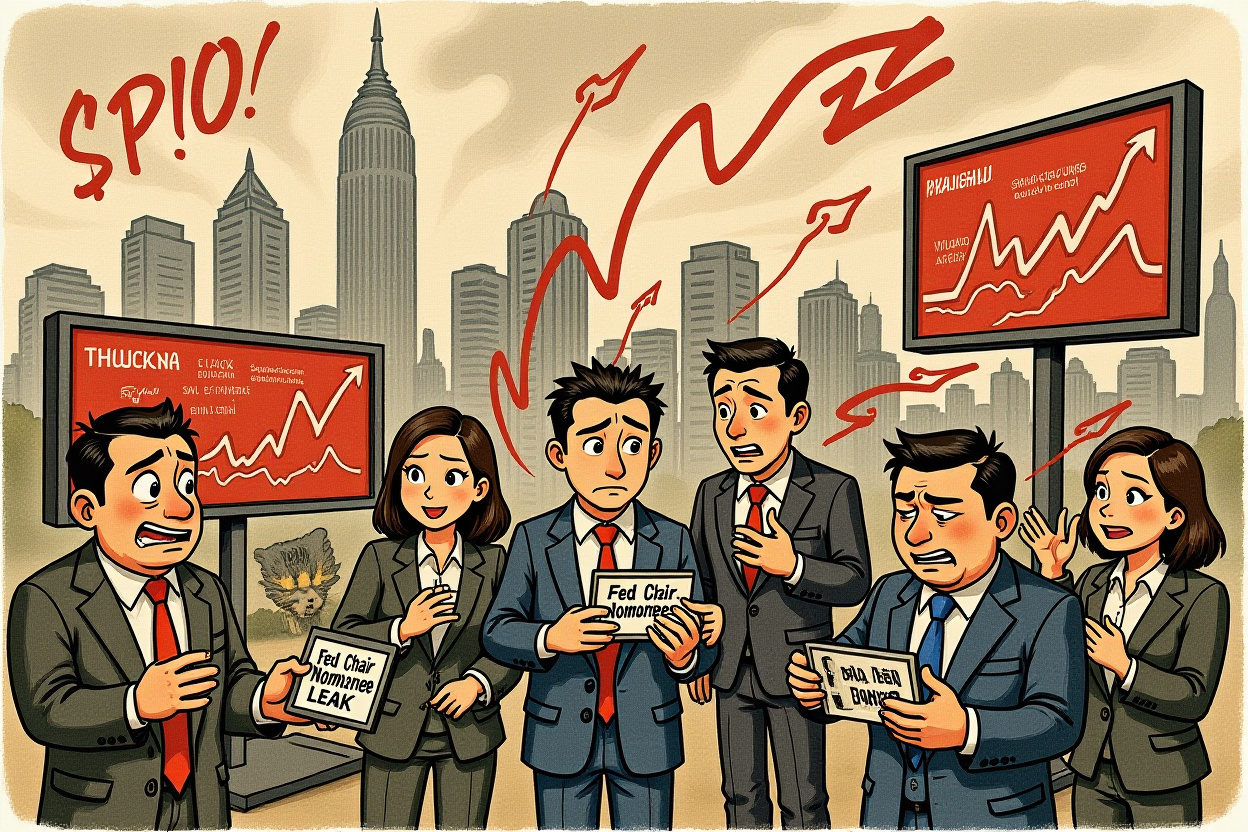
In a stunning development, leaked reports from US media have sent global financial markets into a tailspin, highlighting the immense sensitivity surrounding leadership changes at the world’s most influential central bank. This Fed Chair nomination leak has immediate and profound implications for asset classes worldwide.
– Global markets reacted violently to rumors that former Fed Governor Kevin Warsh (凯文·沃什) could be nominated as the next Federal Reserve Chair, with bond yields spiking and risk assets tumbling.
– Despite recent dovish rhetoric, Warsh’s long-established hawkish credentials on inflation and quantitative easing unwinding have alarmed investors fearing a policy pivot.
– The incident underscores the heightened geopolitical and policy uncertainty facing international investors, particularly those exposed to Chinese equities and emerging markets.
– Strategic portfolio adjustments and enhanced risk monitoring are now essential as this Fed Chair nomination leak introduces new volatility drivers for 2025.
The Seismic Shock from a Premature Revelation
Financial markets thrive on certainty, and nothing disrupts that delicate balance like an unexpected leak from the corridors of power. The global investment community was jolted awake by reports from Bloomberg News indicating that US President-elect Donald Trump (特朗普) is preparing to nominate Kevin Warsh (凯文·沃什), a former Federal Reserve governor, to succeed current Chair Jerome Powell (杰罗姆·鲍威尔). This Fed Chair nomination leak, occurring ahead of any official announcement, triggered an instantaneous and severe market reaction, demonstrating just how pivotal the leadership of the US central bank remains for worldwide capital flows. For professionals monitoring Chinese equity markets, such external shocks serve as a stark reminder of the interconnected nature of global finance, where US monetary policy decisions can ripple through Asian trading floors with breathtaking speed.
The very occurrence of this Fed Chair nomination leak points to potential instability in the transition process, raising questions about policy continuity. Investors who had begun pricing in a relatively stable outlook for 2025 were forced to abruptly recalibrate their models, leading to a classic flight to safety and a repricing of risk. This event is not merely about one personnel change; it is a stress test for market resilience in an era where information—verified or not—can move billions of dollars in milliseconds.
Immediate Market Reactions: A Data-Driven Panic
The market’s response to the Fed Chair nomination leak was swift, unified, and unequivocally negative. Within minutes of the Bloomberg report circulating, traders began offloading risk-sensitive assets and repositioning for a potentially more hawkish Fed regime.
– Fixed Income and Forex: The benchmark 10-year US Treasury yield surged approximately 4 basis points, a significant intraday move reflecting expectations of tighter monetary policy or faster balance sheet reduction. Simultaneously, the US Dollar Index (DXY) climbed 0.5%, as the prospect of higher relative US rates boosted the currency’s appeal.
– Equities and Cryptocurrencies: Risk assets bore the brunt of the sell-off. S&P 500 index futures dropped 0.7%, while Nasdaq 100 futures fell a more pronounced 1%, signaling particular worry for growth-oriented technology stocks. In a telling sign of broad-based risk aversion, Bitcoin prices plummeted by up to 4%.
– Precious Metals: Traditional safe-haven gold experienced a dramatic sell-off, tumbling over $40 per ounce in the spot market. Silver prices broke below key technical support, highlighting a market narrative shifting away from inflation hedges.
The reaction on prediction markets was equally dramatic. On the Polymarket platform, the contract tracking Warsh’s nomination probability skyrocketed to a peak of 95%, indicating traders were treating the leak as highly credible news. This cascade of moves illustrates how a single piece of unconfirmed information can reconfigure global asset allocations in moments, a dynamic Chinese market participants know all too well from domestic policy rumors.
Decoding Kevin Warsh: The Hawk Beneath the Dove’s Feathers
To understand the market’s visceral reaction, one must look beyond the headline and examine the policy DNA of the candidate at the center of this Fed Chair nomination leak. Kevin Warsh (凯文·沃什) served as a Governor of the Federal Reserve Board from 2006 to 2011, a period encompassing the Global Financial Crisis and the Fed’s initial foray into quantitative easing (QE). His recorded votes and public commentaries during that time paint a consistent picture: he has historically resided at the most hawkish end of the Federal Open Market Committee’s (FOMC) policy spectrum. This reputation, seemingly at odds with President-elect Trump’s stated desire for a chair amenable to rate cuts, is the core source of market anxiety.
Recent op-eds by Warsh in publications like The Wall Street Journal, where he suggested that artificial intelligence-driven productivity gains could dampen inflationary pressures, had led some observers to tag him as a potential dove. However, the market’s memory is long, and institutional investors quickly recalled his fundamental policy leanings. The critical disconnect lies between short-term political desires and long-established monetary philosophy, making this Fed Chair nomination leak a catalyst for profound uncertainty.
A History of Inflation Vigilance and QE Skepticism
Bloomberg Economics research immediately highlighted Warsh’s deep-seated concerns about the size of the Fed’s balance sheet as a primary reason for market unease. His policy record offers concrete examples of his hawkish bias:
– In late 2006, with the US economy still expanding, Warsh publicly expressed that his concerns about inflation significantly outweighed his worries about economic growth.
– During the pivotal month of September 2008, even as the Lehman Brothers collapse unfolded, he reportedly maintained that he “could not set aside his concerns about inflation.”
– By April 2009, with the Fed deeply engaged in crisis-fighting QE, Warsh was already forecasting that the exit from these unconventional policies would occur faster than the official guidance suggested.
This track record suggests Warsh is a believer in the primacy of price stability and a skeptic of prolonged, bloated central bank balance sheets. For global investors, particularly those in interest-sensitive sectors and emerging markets like China, a Fed chair with a proven instinct to tighten policy quicker than peers could accelerate capital outflow pressures and strengthen the US dollar, creating headwinds for Asian equities.
Market Psychology: Why the Alarm Bells Are Ringing
The violent reaction to this Fed Chair nomination leak is a masterclass in market psychology. Investors are not merely reacting to the individual, Kevin Warsh (凯文·沃什), but to the symbolic shift he represents. After years of a Fed policy framework increasingly tolerant of higher inflation under Chair Powell, the prospect of a “law and order” enforcer for price stability triggers a fundamental reassessment of the cost of capital. The focus phrase, Fed Chair nomination leak, encapsulates this pivot point where narrative and policy risk collide.
Trump’s repeated hints that he wants a Fed chief who will “cooperate” with rate cuts to stimulate growth created an expectation of continued accommodation. The market’s interpretation of Warsh’s potential nomination is that Trump may have inadvertently selected an inflation “hardliner” whose instincts could lead to swifter balance sheet reduction (quantitative tightening) and a less patient approach to rate cuts. This creates a classic policy uncertainty shock, compressing valuations for assets priced for perpetual low rates.
The Chinese Equity Market Lens: Navigating External Volatility
For sophisticated investors focused on Chinese equities, this Fed Chair nomination leak is a critical external volatility event. The health of the Chinese market is increasingly decoupled from the US cycle in many respects, driven by domestic policy from the People’s Bank of China (PBOC) and the 中国证券监督管理委员会 (China Securities Regulatory Commission). However, the global role of the US dollar and US Treasury yields means no major economy is an island.
– Capital Flow Pressures: A potentially more hawkish Fed could slow, or reverse, foreign capital inflows into Chinese bonds and stocks, affecting liquidity.
– Currency Dynamics: A stronger US dollar, fueled by higher US rate expectations, could pressure the 人民币 (Renminbi), complicating the PBOC’s monetary policy options.
– Sectoral Impacts: Chinese technology and growth stocks listed domestically and offshore are often valued against US peers and are sensitive to global discount rate changes. A rise in US yields could trigger valuation adjustments.
Historical analysis shows that during periods of Fed tightening or hawkish surprises, emerging market equities, including China’s, often experience heightened volatility. Investors must now factor in this renewed source of external risk, making the analysis of this Fed Chair nomination leak a mandatory exercise for portfolio strategy.
Strategic Implications and Forward-Looking Scenarios
The fallout from this Fed Chair nomination leak is not a one-day event; it sets the stage for several months of heightened scrutiny and potential market dislocation. The central question for 2025’s global macro outlook is whether Warsh, if confirmed, would temper his longstanding views to align with political objectives, or if he would steer the Fed towards a more aggressive normalization path. This ambiguity itself is a market risk premium that must be priced in.
Investors should prepare for multiple scenarios. In one, the leak proves accurate and Warsh is confirmed, leading to a prolonged period of market testing and probing of his true policy intentions. In another, political dynamics shift, and a different candidate emerges, but the episode has already revealed underlying market fragility. Each path requires a distinct strategic response.
Actionable Guidance for Professional Investors
In the wake of this Fed Chair nomination leak, proactive portfolio management is essential. Consider the following steps:
– Review Duration Risk: Assess exposure to long-duration assets, both in fixed income and equity sectors (like tech), which are most vulnerable to rising discount rates.
– Hedge Currency Exposure: For international portfolios with Chinese equity holdings, evaluate US dollar hedging strategies to mitigate potential Renminbi volatility.
– Increase Liquidity Buffers: In uncertain times, maintaining higher cash or cash-equivalent positions provides flexibility to capitalize on dislocations.
– Diversify Policy Sensitivity: Look for opportunities in sectors less correlated to US interest rates, such as select domestic A-share consumer staples or infrastructure plays aligned with Chinese domestic policy goals.
Furthermore, staying abreast of official communications from both the US transition team and Chinese regulatory bodies is crucial. The 国家外汇管理局 (State Administration of Foreign Exchange) may issue guidance on cross-border flows, while the PBOC could adjust its liquidity operations to stabilize domestic markets.
Synthesizing the Shockwave for a New Investment Reality
The episode triggered by the Fed Chair nomination leak serves as a potent reminder that in today’s interconnected financial ecosystem, geopolitical and policy risks can materialize from unexpected quarters with explosive force. For the global investment community, and particularly for professionals navigating the complexities of Chinese equity markets, the key takeaway is the renewed importance of scenario planning and robust risk frameworks. Markets have voted with conviction, expressing deep skepticism that a figure with Kevin Warsh’s (凯文·沃什) pedigree would preside over a dovish Fed, regardless of near-term political winds.
Looking ahead, vigilance is the watchword. Monitor confirmation hearings for any nominee closely, parsing their language for hints on the balance sheet and inflation tolerance. Pay equal attention to Chinese monetary policy signals, as domestic support could offset external pressures. Ultimately, this Fed Chair nomination leak is not just a news story; it is a catalyst that demands a recalibration of investment theses for the year ahead. The call to action is clear: engage in rigorous due diligence, stress-test your portfolios against a wider range of US policy outcomes, and ensure your investment process is agile enough to respond when the next leak—or official announcement—hits the wires. The markets have shown they will not wait for formalities.