



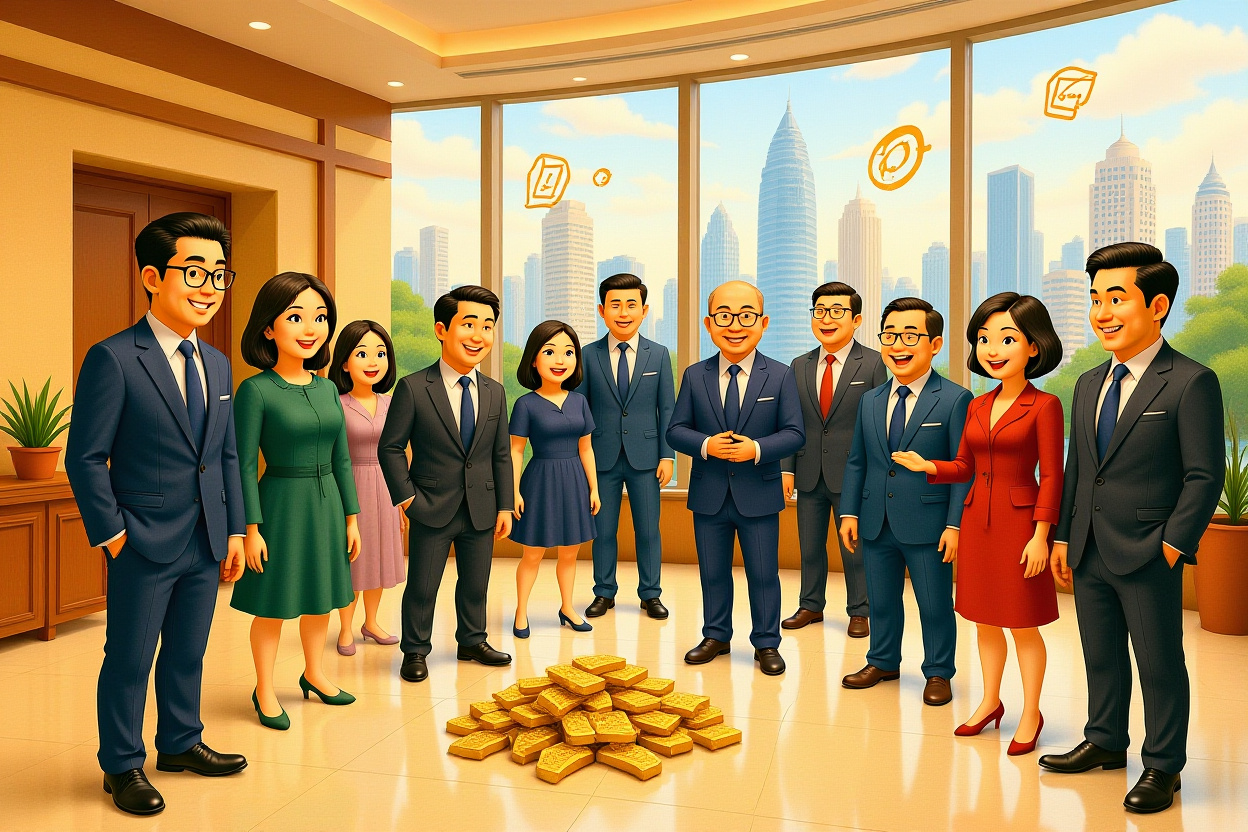
– Emperor Entertainment Hotel (00296.HK) confirmed the sale of 78 gold bricks totaling 78kg from its Macau hotel lobby, netting nearly HKD 1 billion. – The sale represents a significant gold asset realization opportunity, with profits estimated at HKD 9020 million due to high market prices. – The move aligns with broader trends in the hospitality sector, as Macau operators optimize assets post-gaming license changes. – Investor response was positive, with the company’s stock surging over 20% following the announcement. – This event underscores the strategic use of non-core assets for liquidity in volatile economic conditions. In a striking move that blends opulence with financial pragmatism, Macau’s Emperor Entertainment Hotel has transformed its legendary lobby spectacle into a substantial windfall. The hotel’s iconic ‘Golden Road’, a pathway lined with 78 gold bricks embedded in the floor, has been sold for nearly HKD 1 billion, marking one of the most notable examples of gold asset realization in the hospitality industry. This decision comes as global gold prices hover near record highs, offering a timely opportunity for asset optimization. For international investors monitoring Chinese equity markets, particularly those with exposure to Hong Kong-listed consumer and gaming stocks, this event provides critical insights into corporate strategy, valuation dynamics, and the evolving landscape of Macau’s tourism economy. Beyond the glittering surface, the sale reveals deeper narratives about capital allocation, brand repositioning, and responsive management in the face of shifting market fundamentals.
The Golden Road: From Opulent Symbol to Liquid Asset
For two decades, the lobby of the Emperor Entertainment Hotel in Macau served as a monument to extravagance. The ‘Golden Road’ was not merely decorative; it was a calculated branding masterpiece. Comprising 78 individual gold bricks, each weighing one kilogram and crafted from Swiss 999.9 pure gold, the installation was designed to project an image of unwavering prosperity and allure to high-rolling guests. This physical manifestation of wealth became a tourist attraction in its own right, drawing visitors keen to witness the audacious display.
Engineering a Brand Experience
The technical execution of the Golden Road was as meticulous as its financial implications. Each gold brick was set beneath transparent viewing panels in the lobby’s marble floor, allowing guests to literally walk on gold. The bricks carried independent serial numbers, underscoring their authenticity and value. From a marketing perspective, this feature was immensely successful. It generated immense free publicity, cemented the hotel’s status within the competitive Macau market, and created a unique identifier that differentiated it from rivals. The asset served its purpose brilliantly, enhancing brand equity and driving foot traffic for years.
The Inevitability of Change
However, in the fast-paced world of hospitality and gaming, even solid gold can lose its luster as a static display. With the closure of the attached Emperor Palace Casino in October 2025, the hotel’s business model shifted decisively towards pure accommodation and non-gaming amenities. The Golden Road, once a beacon for casino patrons, needed reevaluation in a post-gaming context. This sets the stage for the strategic gold asset realization that followed, turning a fixed brand asset into flexible capital.
The Strategic Decision: Timing the Gold Asset Realization Perfectly
The hotel’s parent company, Emperor Entertainment Hotel Limited (00296.HK), made a decisive move by selling the entire gold stockpile to Heraeus Metals Hong Kong Ltd., a premier refiner and trader. This was not a rash decision but a calculated financial maneuver. The announcement cited ‘current market conditions’ and the high prevailing market price of gold as key drivers. This gold asset realization strategy allows the company to unlock value that was otherwise lying dormant, albeit impressively, beneath guests’ feet.
Capitalizing on a Bullion Bull Market
The timing is impeccable. Global gold prices have been on a sustained upward trajectory, driven by macroeconomic uncertainty, inflationary pressures, and geopolitical tensions. At the time of the sale in late January, spot gold was trading near historic highs above USD 4,900 per ounce. By converting a physical, non-income-generating asset into cash during a peak, management demonstrated acute market awareness. This gold asset realization directly translates into a substantial one-time gain that can be redeployed into core business operations or debt reduction.
Beyond the Price: Operational and Security Rationale
While the financial windfall is headline-grabbing, the company’s statement also highlighted ancillary benefits. Maintaining and securing 78 kilograms of gold in a public space incurs significant ongoing costs: – Premium insurance premiums for high-value, high-risk assets. – 24/7 security surveillance and personnel requirements. – Potential liability and safety concerns. By removing the gold, the hotel eliminates these perpetual operational expenses, thereby improving future profit margins. This decision reflects a holistic view of asset management, where the cost of ownership is weighed against the opportunity cost of locked-up capital.
Financial Anatomy of the Deal: Unlocking Hidden Value
The transaction’s accounting details reveal the profound impact of this gold asset realization. Crucially, the gold bricks were carried on the company’s books as property, plant, and equipment with a historical cost of merely HKD 94 million. This was their purchase price two decades ago, and they were not revalued over time. The sale to Heraeus for approximately HKD 1 billion thus creates an accounting profit before transaction costs of around HKD 906 million.
From Book Value to Market Value: A Windfall Realized
After deducting fees, the company expects to recognize a net gain of approximately HKD 9020 million. This massive disparity between book value and market value underscores how traditional accounting can obscure the latent worth of certain assets. For investors, this event is a masterclass in active balance sheet management. It prompts a reevaluation of other companies that might hold substantial tangible assets—whether precious metals, art, or real estate—at historical costs far below current market values. The gold asset realization here acts as a catalyst for value discovery.
Immediate Market Reception and Stock Performance
The market’s verdict was swift and positive. On February 5, following the evening announcement, shares of Emperor Entertainment Hotel (00296.HK) surged as much as 20% in early trading before settling with a gain of nearly 10%. This positive stock reaction indicates investor approval of management’s capital allocation decision. It signals confidence that the freed-up capital will be used effectively and that the company is proactively enhancing shareholder value. The liquidity event provides a war chest that could fund renovations, strategic acquisitions, or bolster the dividend policy.
Macau in Transition: Contextualizing the Gold Sale
To fully appreciate this gold asset realization, one must view it within the broader evolution of Macau’s economy. The city, once overwhelmingly dependent on casino gaming revenue, is undergoing a government-mandated diversification. The non-gaming components of integrated resorts are now paramount. The closure of the Emperor Palace Casino in 2025 was part of this industry-wide consolidation following the renewal of gaming concessions.
The New Hospitality Playbook
In this new environment, hotel operators are reimagining their spaces and offerings. Extravagant displays like the Golden Road, which served a specific gaming-era marketing purpose, may no longer align with brand strategies focused on wellness, family tourism, or MICE (Meetings, Incentives, Conferences, and Exhibitions). The capital from this sale can be redirected towards refurbishing guest rooms, enhancing F&B outlets, or creating new leisure facilities that appeal to a broader demographic. This strategic pivot is essential for long-term competitiveness.
Gold as a Strategic Reserve in Volatile Times
The sale also mirrors actions by corporations and central banks worldwide, managing gold reserves in response to economic signals. The People’s Bank of China (中国人民银行) has been a consistent buyer of gold to diversify its foreign exchange reserves. On a corporate level, this move shows how non-financial firms can treat certain physical assets as a form of strategic reserve, to be liquidated when conditions are favorable. It is a sophisticated treasury operation played out on the public stage.
Investment Implications and Sector-Wide Lessons
For institutional investors and analysts covering the China consumer and gaming sector, this episode offers several key takeaways. It highlights the importance of scrutinizing balance sheets for hidden or underappreciated assets. It also demonstrates how management agility in executing asset sales can create immediate equity value. The successful gold asset realization by Emperor Entertainment Hotel may prompt similar reviews by peers in Macau and beyond.
Evaluating Management’s Strategic Acumen
The decision to sell reflects well on the board and executives, including figures like the company’s CFO. It shows a willingness to make bold, non-emotional decisions about legacy assets. In an interview with Bloomberg, a Macau-based hospitality analyst noted, ‘This is a textbook case of asset optimization. They converted a sunk cost into liquid capital at the optimal moment in the commodity cycle.’ Such actions are closely watched by active fund managers who prize capital discipline.
Forward-Looking Guidance for the Hotel Portfolio
With the proceeds, Emperor Entertainment Hotel can strengthen its overall portfolio, which includes: – The Macau Emperor Entertainment Hotel and Macau盛世酒店 (Macau Sheng Shi Hotel). – The Emperor Landmark Hotel in Hong Kong. – Three rental apartment properties under ‘The Unit’ brand in Hong Kong. Investors will now monitor how the HKD 1 billion is deployed. Options range from special dividends, which would directly reward shareholders, to reinvestment in higher-return projects across their properties. This capital infusion provides a buffer against any near-term macroeconomic headwinds affecting travel and tourism. The liquidation of Emperor Entertainment Hotel’s Golden Road is far more than a quirky news story. It is a multifaceted case study in corporate finance, market timing, and strategic adaptation. The company has successfully executed a significant gold asset realization, transforming a fixed, symbolic asset into nearly HKD 1 billion of liquid capital. This move capitalizes on favorable commodity prices, reduces future operational burdens, and signals proactive management to the investment community. For global investors, it reinforces the need to look beyond traditional financial metrics and consider the latent value in physical assets held by companies, especially in the hospitality and luxury sectors. As Macau continues its journey beyond gaming, expect more operators to rationalize their asset bases and reallocate capital towards future growth drivers. We recommend investors review their holdings in similar Hong Kong and Macau-listed entities for potential undervalued tangible assets and assess management’s track record in realizing such value. Stay informed on gold market trends and Macau’s tourism recovery for further opportunities in this dynamic space.