



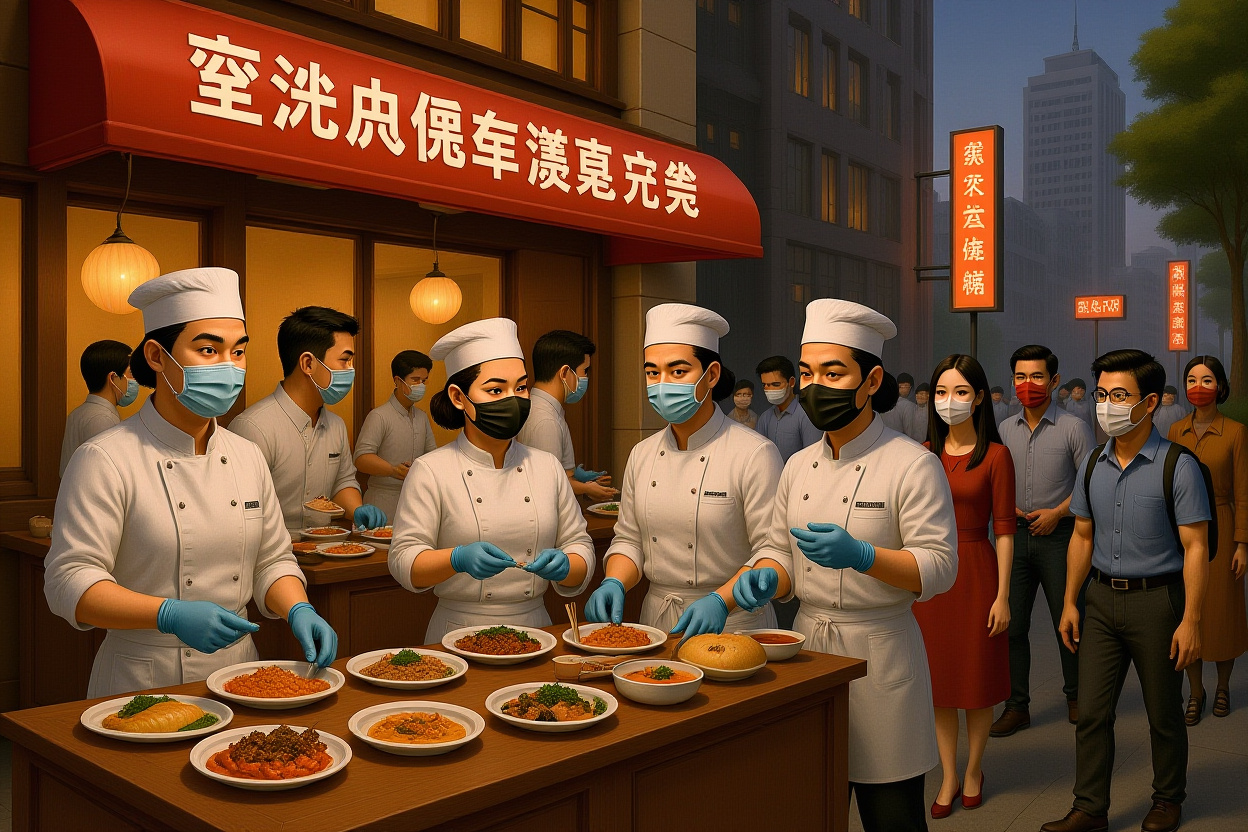
In an unexpected twist, luxury hotels across China are setting up street stalls to sell affordable meals, from steamed buns to braised duck necks. What’s driving this shift, and can it help these high-end establishments survive challenging times?
Luxury Hotel Street Vending: A New Consumer Habit
Across major Chinese cities, five-star hotels are stepping out of their lavish lobbies and onto the sidewalks. For as little as ¥5, customers can now enjoy breakfast, snacks, or boxed meals prepared by star-rated chefs. This luxury hotel street vending trend is redefining how consumers interact with high-end hospitality brands.
From Fine Dining to Street Food
At Guangzhou’s Baiyun Hotel, white-uniformed servers dish out classic Cantonese dishes like braised pork knuckle and spiced beef offal during evening rush hour. Meanwhile, in Changsha, the Meixi Lake Golden Crown Luxury Hotel draws long queues with its chef-prepared braised snacks, priced as low as ¥10 for three chicken feet.
– Affordability: Items range from ¥3 for steamed buns to ¥70–80 for premium boxed meals.
– Hygiene and Trust: Chefs wear hats, masks, and gloves, emphasizing non-pre-made ingredients.
– Convenience: Stalls are often set up near subway stations or offices, targeting commuters.
Why Luxury Hotels Are Embracing Street Vending
The move toward luxury hotel street vending isn’t just a marketing gimmick—it’s a response to significant industry challenges.
Declining Traditional Revenue Streams
Morgan Stanley data shows China’s hotel RevPAR fell 8% year-over-year in early summer 2025, with occupancy rates down 5%. Several factors contribute to this decline:
– Reduced business travel due to corporate cost-cutting measures.
– Fewer banquets (e.g.,升学宴 and谢师宴) because of government restrictions.
– Changing travel trends, like ‘special forces tourism,’ where tourists prioritize low-cost, short stays.
The Struggle to Cover Costs
As one hotel manager in Zhengzhou admitted, street vending doesn’t turn a profit when accounting for labor costs. However, it generates crucial cash flow to retain staff and maintain operations.
Shifting Consumer Behavior and Market Realities
The rise of luxury hotel street vending reflects broader changes in how people choose and value hospitality services.
Beyond the Star Rating
With the growth of third-party booking platforms and social media, travelers now prioritize practical amenities—like clean bedding, functional laundry rooms, or unique experiences—over formal star ratings.
The Real Estate Connection
Many luxury hotels were originally built as real estate accessories, helping developers secure land and increase property values. However, as the housing market cools, these hotels can no longer rely on parent companies for support and must operate profitably on their own.
Innovative Survival Strategies
Luxury hotel street vending is just one of many adaptations the industry is testing. Other initiatives include:
– ‘Leftover blind boxes’: Selling surplus buffet items at discounted prices.
– In-home chef services: Offering personalized catering for private events.
– Community canteens: Repurposing hotel dining spaces for affordable public meals.
The Future of Luxury Hotels
While street vending provides short-term relief, the ultimate goal remains driving customers back to core services: room bookings, conferences, and wedding banquets. The hope is that positive experiences at street stalls will translate into long-term loyalty.
However, the industry must also address systemic issues, like low per-square-meter efficiency and high labor costs, to remain sustainable.
Embracing Change in the Hospitality Industry
Luxury hotel street vending is more than a temporary fix—it’s a symbol of adaptation and resilience. As consumer preferences evolve and economic pressures mount, the ability to innovate and connect with communities will separate thriving hotels from those left behind.
Whether you’re a hospitality professional, investor, or curious traveler, keep an eye on this trend. The next time you pass a street stall, you might just find a five-star experience waiting.