



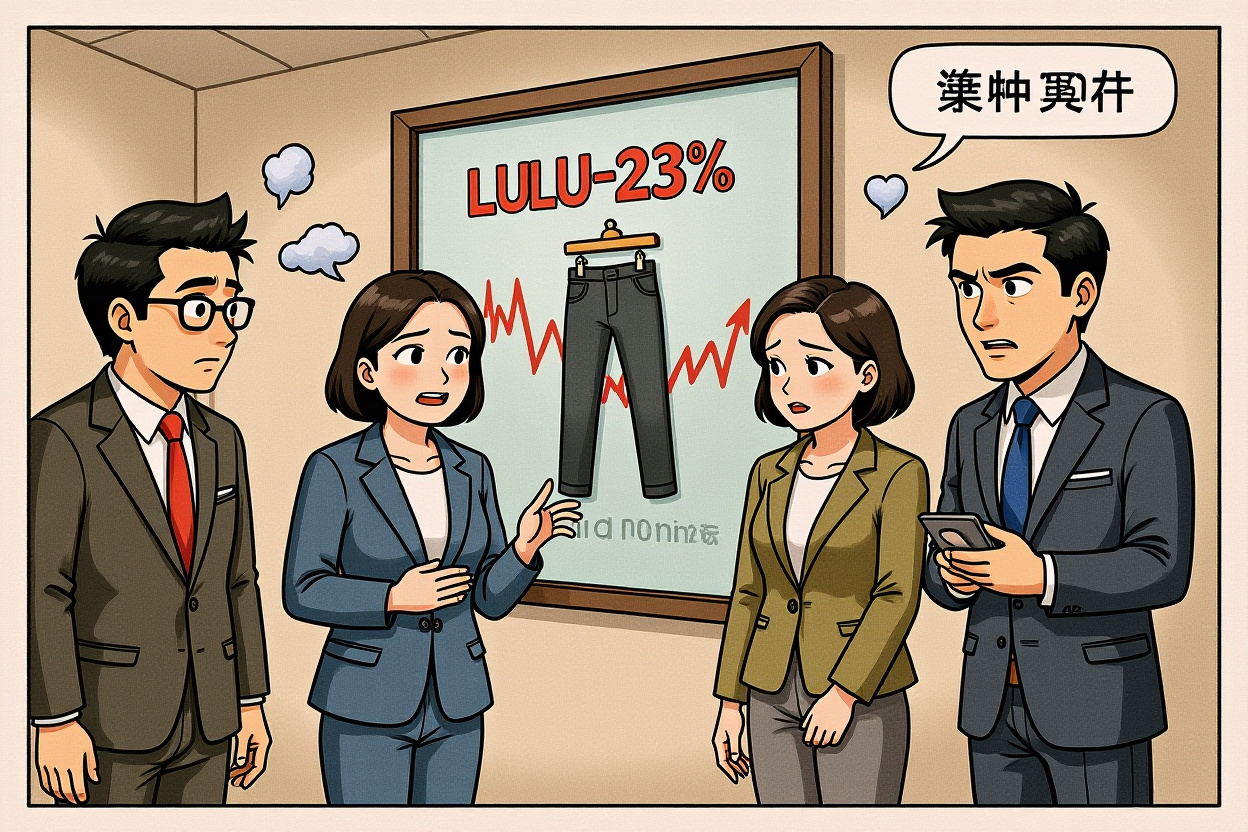
– Lululemon’s Get Low series yoga pants faced massive backlash for being see-through, leading to a swift product recall and re-listing with controversial guidelines.
– This incident is part of a recurring pattern of quality issues for the brand, undermining its reputation for premium, functional athletic wear.
– A strategic design shift towards fashion and sexuality, particularly in women’s lines, contrasts with consistent functionality in men’s products, revealing brand identity confusion.
– Financial markets reacted negatively, with Lululemon’s stock price dropping significantly, reflecting investor concerns over brand equity and growth in critical markets like China.
– The brand’s handling of the crisis, including blaming consumers, risks long-term erosion of trust among its core middle-class demographic, threatening its lifestyle brand aspirations.
In the competitive world of premium athleisure, few brands have commanded the loyalty and premium pricing power of Lululemon. However, a recent firestorm over its see-through yoga pants controversy has exposed cracks in this carefully curated image, sending shockwaves through consumer circles and financial markets alike. For investors and industry watchers focused on Chinese equities and consumer trends, this episode is more than a product flaw—it’s a case study in brand management, strategic drift, and the fragile nature of consumer trust in the digital age. The Lululemon see-through yoga pants controversy highlights how a single misstep can trigger widespread scrutiny, forcing a reevaluation of the brand’s market positioning and future growth trajectory in key regions like Asia.
The Immediate Product Crisis: Recall and Consumer Backlash
The uproar began when Lululemon’s newly launched Get Low series, marketed as a “deep squat” pant offering ultimate freedom and a naked feel, was found to be virtually transparent during movement. Priced between 850 and 1,000 yuan, these high-end yoga pants failed their basic function, leading to what consumers dubbed “wardrobe malfunctions” and social media embarrassment.
Details of the Get Low Series Debacle
The product was aggressively promoted on Lululemon’s official channels and social media, targeting fitness enthusiasts seeking both performance and style. However, within days of its release, platforms like Xiaohongshu (Little Red Book) were flooded with user reports and images showing the pants’ sheer material revealing undergarments during squats or bends. This see-through yoga pants controversy quickly escalated from consumer complaints to a full-blown public relations crisis. The brand’s initial response was to quietly pull the product from its website and app, only to re-list it shortly after with an added note suggesting customers size up and wear skin-toned, seamless underwear to “avoid exposure.”
Social Media Amplification and Brand Response Missteps
The viral nature of the scandal on Chinese social media platforms demonstrates the power of digital consumer activism. Users expressed outrage not just at the product failure, but at the brand’s perceived deflection of responsibility. Lululemon’s solution—shifting the burden to consumers—was seen as a tacit admission of design failure without a formal apology or recall. This handling contrasts sharply with standard crisis management protocols for premium brands and has intensified scrutiny. For a company that built its reputation on empowering athletes, this response felt dismissive, alienating its core user base who expect transparency and accountability.
A Recurring Pattern: Lululemon’s History with Quality and Transparency Issues
This is not an isolated incident for Lululemon. The see-through yoga pants controversy echoes past failures, suggesting systemic challenges in quality control and design validation processes.
Past Recalls and Their Market Impact
In 2013, Lululemon faced a similar scandal when it recalled black Luon yoga pants for being excessively sheer, a move that cost the company millions and damaged its stock price. Then-Chip Wilson, co-founder, compounded the crisis by suggesting that some women’s bodies simply “don’t work” for the pants, a comment that sparked accusations of body-shaming. More recently, in 2024, another line of tight-fitting pants was withdrawn due to fabric concerns. This pattern indicates that despite its premium positioning, Lululemon has struggled with consistency in material sourcing and product testing, a red flag for investors assessing operational excellence.
The Cumulative Effect on Brand Equity
Each recurrence chips away at the brand’s hard-earned equity. Consumers tolerate occasional mistakes, but repeated failures in core product categories like yoga pants—the very foundation of Lululemon’s empire—erode confidence. In financial terms, brand equity is a intangible asset that drives pricing power and customer lifetime value. The see-through yoga pants controversy acts as a stress test, revealing vulnerabilities that could affect long-term financial metrics, including sales growth and margin stability in crucial markets such as China, where brand perception is paramount.
Strategic Drift: From Functional Authority to Fashion-Focused Ambiguity
Beneath the product failure lies a more profound strategic shift. Analysis suggests Lululemon is gradually pivoting its design philosophy, particularly in women’s apparel, from performance-driven functionality to fashion-oriented aesthetics aimed at capturing social media trends and younger demographics.
Design Philosophy Evolution and Target Audience Expansion
Historically, Lululemon succeeded by catering to serious yogis and athletes, emphasizing technical fabrics, body-hugging support, and freedom of movement. Its products were tools for performance, not merely fashion statements. However, recent collections have introduced elements like lace, sheer panels, and ultra-low-rise designs that prioritize “looks” and “sex appeal” over practical workout needs. The Get Low series is a prime example, marketed for its “naked sensation” rather than its squat-proof durability. This shift aligns with a broader industry trend where athleisure blends with streetwear, but it risks diluting the brand’s functional credibility.
The Gender Disparity in Product Design Logic
A striking contrast exists between Lululemon’s men’s and women’s lines. Men’s products continue to emphasize functionality, with clear messaging around breathability, support, and comfort. There are no advisories about sizing up or specific underwear to prevent exposure. This dichotomy suggests a fragmented brand strategy: attempting to retain loyal, performance-focused users (often in men’s lines) while chasing the volatile, trend-driven women’s market. For investors, this raises questions about brand coherence and whether Lululemon can successfully serve two divergent consumer psychographics without compromising its core identity.
Financial and Market Implications: Reading the Signals
The see-through yoga pants controversy has tangible financial repercussions. Market data and analyst reactions provide a clear picture of the stakes involved, especially for stakeholders in Chinese equities where consumer discretionary trends are closely monitored.
Stock Performance and Investor Sentiment
Following the scandal’s eruption, Lululemon’s stock (NASDAQ: LULU) experienced significant pressure. Reports indicate a single-day drop of up to 6.5%, with year-to-date declines exceeding 23% amid broader market challenges. While not solely attributable to this incident, the controversy exacerbates existing investor concerns about growth saturation, competition, and brand health. Analysts from firms like Morgan Stanley and Goldman Sachs have noted that repeated product issues could impact same-store sales and margin projections, particularly in the Asia-Pacific region where Lululemon is banking for expansion.
The Chinese Market Context and Competitive Landscape
China represents a critical growth engine for global athleisure brands. Lululemon has invested heavily in store openings and digital marketing to capture the rising middle class. However, local competitors like Maia Active and international rivals such as Nike and Adidas are aggressively vying for market share. A scandal that damages prestige and trust can have outsized effects in China’s socially driven commerce ecosystem. Consumers here are highly informed and vocal; a misstep can trend for days, affecting purchase decisions. The see-through yoga pants controversy, therefore, isn’t just a PR headache—it’s a potential catalyst for market share erosion in a key geographic segment.
The Core Issue: Erosion of Consumer Trust and Brand Loyalty
At its heart, this scandal is about trust. Lululemon’s value proposition has long been intertwined with a lifestyle narrative—selling not just apparel but an aspiration of health, discipline, and community. The recent events threaten that narrative.
Psychology of Premium Pricing and Consumer Expectations
When consumers pay a premium—often 5 to 10 times the cost of fast-fashion alternatives—they expect flawless performance and ethical accountability. The see-through yoga pants controversy breaches that contract. It transforms a symbol of aspirational living into a source of anxiety and inconvenience. For the brand’s core demographic of urban, middle-class professionals, particularly women in China, this failure feels like a betrayal. Trust, once lost, is expensive and slow to rebuild, potentially leading to customer attrition and reduced brand advocacy, which are critical for organic growth.
Comparative Trust Dynamics with Competitors
Other premium athletic brands have faced quality issues but often handled them with more grace. For instance, when Patagonia has product defects, it emphasizes repair and replacement, reinforcing its commitment to durability and sustainability. Lululemon’s response—effectively advising users on how to wear the pants—comes across as cost-saving and dismissive. In the context of Chinese consumer culture, where “face” and respect are important, this approach can be particularly damaging. Investors monitoring brand health metrics should watch for shifts in net promoter scores (NPS) and customer satisfaction indices in the coming quarters.
Path to Recovery: Strategic Recommendations and Market Outlook
For Lululemon to navigate out of this crisis and restore confidence among consumers and investors, decisive action is required. The path forward involves transparency, strategic clarity, and reinforced commitment to core values.
Immediate and Long-Term Actions for Brand Rehabilitation
First, Lululemon should issue a clear, unambiguous apology and initiate a voluntary recall or exchange program for the affected Get Low series, absorbing the cost as an investment in trust. Second, it must recommit to rigorous product testing, perhaps establishing a consumer panel for pre-launch validation, especially for products targeting sensitive functionalities. Third, the brand needs to reconcile its design strategy: it can explore fashion-forward lines without compromising the technical integrity of its core offerings. Clear sub-branding or collections could help segment the market without confusing the master brand’s promise.
Investment and Strategic Insights for Stakeholders
For investors and market analysts, this episode serves as a reminder to scrutinize beyond top-line growth. Key indicators to monitor now include:
– Gross margin trends: Watch for increased costs related to quality control or potential discounting to clear inventory.
– Geographic sales breakdown: Pay attention to Asia-Pacific, especially China, for any slowdown in comparable sales growth.
– Marketing and SG&A expenses: Increases might indicate higher spending on reputation management or customer retention efforts.
– Management commentary: Listen for changes in strategic priorities or acknowledgments of the need for operational improvements in upcoming earnings calls.
The see-through yoga pants controversy is a pivotal moment that could either catalyze positive change or mark the beginning of a prolonged decline. Brands that listen, adapt, and prioritize their foundational promises tend to endure.
Lululemon stands at a crossroads. The see-through yoga pants controversy has laid bare the tensions between growth ambitions and brand integrity, between chasing trends and honoring heritage. For the sophisticated investors and business professionals tracking Chinese equity markets, this case underscores a fundamental truth: in the age of social media and informed consumers, product excellence and authentic communication are non-negotiable. The market’s reaction—a falling stock price—is a clear signal that financial performance is inextricably linked to brand trust. Moving forward, Lululemon must choose whether to double down on its functional roots or continue its fashion-forward gamble, but it cannot afford to ignore the voices of its disillusioned customers. The call to action is clear: monitor Lululemon’s next strategic moves closely, as they will reveal much about the brand’s resilience and its capacity to thrive in the demanding Chinese consumer landscape.