



Executive Summary
Logitech, a global peripherals giant, is embroiled in a severe public relations disaster in China following a promotional video that insulted consumers by comparing them to dogs. This incident highlights critical vulnerabilities in brand management and consumer relations in the world’s second-largest economy. Key takeaways include:
– A single offensive ad has triggered widespread social media outrage and calls for boycott, demonstrating the power of consumer sentiment in China’s digital ecosystem.
– Logitech’s apology, attributed to a third-party agency, has been widely criticized as insincere and inadequate, exacerbating the brand crisis in China.
– Financially, China is a cornerstone of Logitech’s growth strategy, with recent earnings showing over 20% quarterly revenue growth driven by the market, making this controversy a direct threat to profitability.
– The incident underscores a dangerous contradiction: multinationals profiting heavily from Chinese consumers while failing to respect them, risking long-term brand erosion.
– For investors and corporate executives, this serves as a cautionary tale on the importance of localized crisis management and authentic consumer engagement in China.
The Viral Insult That Ignited a Firestorm
In the competitive landscape of Chinese e-commerce, promotional campaigns are routine, but few have backfired as spectacularly as Logitech’s recent misstep. On March 26, a video posted on Logitech’s official flagship store on a major platform featured a voiceover stating, “When I lower the price, you still come running over like a dog.” This blatant comparison of consumers to animals was not just tone-deaf; it was a direct affront to the dignity of customers who have supported the brand for decades.
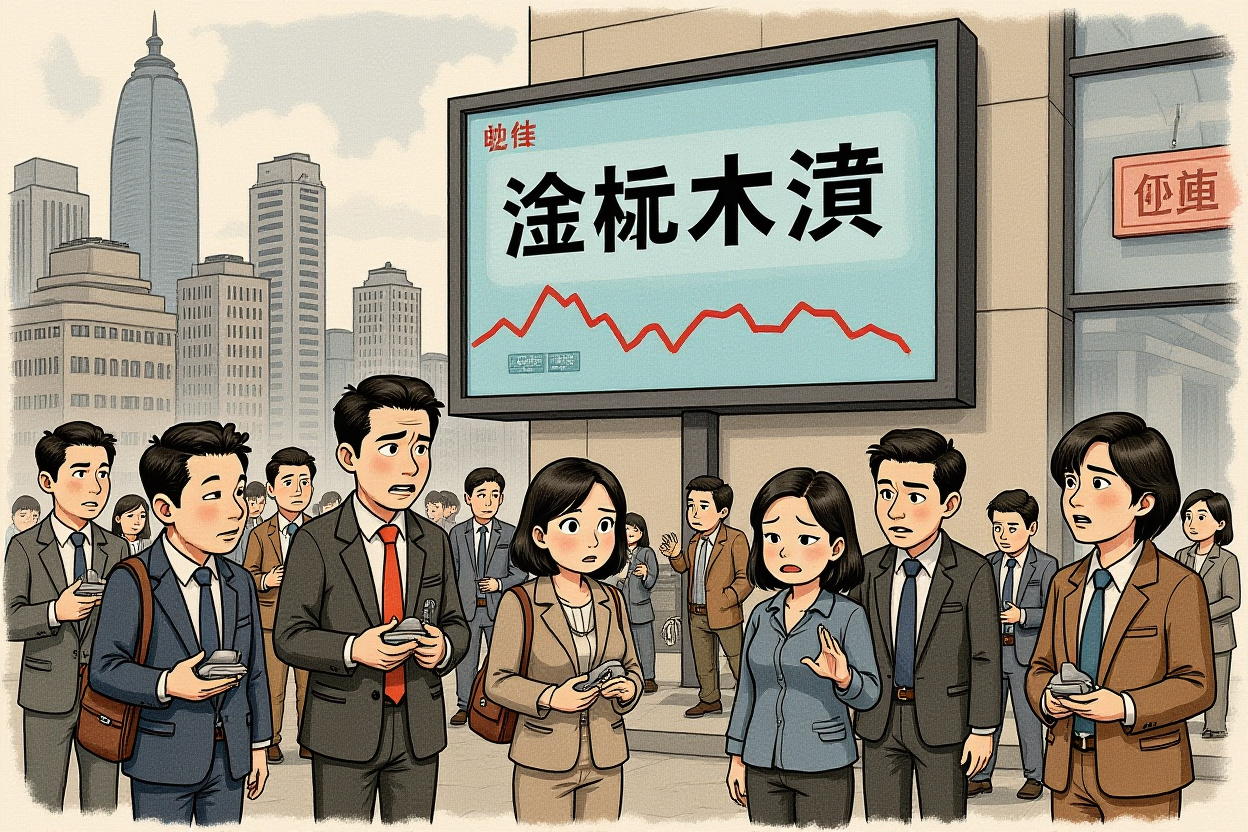
The video quickly went viral, with screenshots spreading across social media platforms like Weibo, where the hashtag #罗技侮辱消费者# (Logitech Insults Consumers) skyrocketed to the top of trending lists. The public reaction was immediate and fierce, with thousands of netizens expressing outrage and vowing to boycott Logitech products. This Logitech brand crisis in China exemplifies how a single misstep can escalate into a full-blown reputational emergency in the age of social media.
Anatomy of the Backlash
The core of the anger stems from the perceived disrespect towards Chinese consumers, who are increasingly assertive about their rights and brand expectations. Logitech’s customer base in China includes loyal gamers, professionals, and everyday users who have trusted the brand for quality peripherals. The ad’s message undermined this relationship, reducing rational purchasing decisions to animalistic behavior. Comments flooded brand live streams, demanding accountability, while consumers shared stories of long-term product use, highlighting the betrayal felt.
This incident is not merely about poor marketing; it reflects a deeper issue of brand arrogance. In China’s consumer culture, where trust is hard-earned and easily lost, such insults can have lasting repercussions. The speed at which the topic gained traction—within hours—shows the heightened sensitivity to brand conduct in this market. For global companies, understanding this dynamic is crucial to avoiding similar pitfalls.
The Role of Digital Platforms in Amplifying Outrage
Chinese social media platforms, particularly Weibo and Douyin, acted as accelerants for the controversy. Users organized coordinated efforts to刷屏 (spam) Logitech’s official channels with complaints, and meme culture amplified the insult, making it a symbol of corporate disrespect. This digital wildfire forced Logitech to respond hastily, but as we’ll see, the response itself became part of the problem. The Logitech brand crisis in China demonstrates how digital ecosystems can turn localized errors into national scandals, impacting stock sentiment and investor confidence.
Logitech’s Crisis Response: A Study in Inadequate Damage Control
Faced with mounting pressure, Logitech and its authorized agency, Shanghai Best Electronic Co., Ltd. (上海百事得电子有限公司), issued apologies within a day. The brand stated that the video was released未经审核 (without approval) by an employee of the third-party agency and had been taken down. It further mentioned disciplinary actions, including warnings and performance deduction for the involved staff. However, this response was met with skepticism and further criticism from the public and media alike.
Consumers and analysts quickly pointed out flaws in the apology. They argued that for an official flagship store video, multiple layers of review—from copywriting and voiceover to final publication—are standard, making it unlikely that a single employee could act alone. This raised questions about Logitech’s oversight of its local partners and its overall commitment to quality control in marketing. The apology was perceived as试图甩锅 (attempting to shift blame), rather than taking genuine responsibility for the Logitech brand crisis in China.
Public Perception and the ‘Apology Gap’
The backlash to the apology highlights a critical gap in crisis management for multinationals in China: the need for sincerity and tangible action. Netizens commented that the punishment was superficial, with no substantial measures to prevent recurrence or repair trust. Phrases like “缺乏诚意” (lack of sincerity) dominated discussions, indicating that mere words are insufficient in such sensitive situations. For a brand deeply embedded in the Chinese market, this misstep in communication exacerbated the initial insult, potentially deepening the Logitech brand crisis in China.
Expert insights suggest that effective apologies in China require immediate acknowledgment of fault, clear corrective steps, and often, direct engagement with consumer communities. Logitech’s response, by contrast, felt corporate and detached, failing to address the emotional core of the outrage. This案例 (case study) serves as a warning for other firms: in an era where consumer voices are amplified, half-measures can be more damaging than the original error.
Logitech’s Strategic Dependence on the Chinese Market
To understand the gravity of this controversy, one must appreciate Logitech’s deep roots and financial reliance on China. The brand entered the market in 1991, establishing a joint venture in Shanghai, and set up production in Suzhou by 1994. Over three decades, it has become a household name, with products like mice, keyboards, and headsets integral to China’s gaming and办公 (office) sectors. Today, China is Logitech’s second-largest global market and a key driver of recent growth, making this Logitech brand crisis in China a direct threat to its financial health.
Financial Performance and China’s Contribution
Logitech’s latest earnings report, released on January 27 for the third quarter of fiscal year 2026 (ending December 31, 2025), underscores China’s importance. Global revenue reached $3.755 billion, a 5.94% year-over-year increase, with net income up 16.6% to $568 million. Notably, the Asia-Pacific region saw a 15% growth in net sales at fixed exchange rates, primarily fueled by China. The report explicitly credited strong performance in gaming peripherals, tablet accessories, video collaboration devices, and pointing devices to robust demand in the Chinese market.
Logitech CEO Hanneke Faber (汉内克・法贝尔) had earlier highlighted China’s turnaround, noting连续三个季度正增长 (three consecutive quarters of positive growth) and attributing it to localized product strategies that cater to Chinese preferences for color, material, and customization. Specifically, the surge in popularity of domestic games like Black Myth: Wukong (黑神话:悟空) boosted demand for gaming mice, driving over 20% revenue growth in China for multiple quarters. This data paints a clear picture: Logitech’s profitability is tightly linked to Chinese consumer spending, yet the recent incident risks alienating that very base.
Market Dynamics and Consumer Evolution
Chinese consumers are not just buyers; they are sophisticated participants who value respect and brand ethos. Logitech has invested in local R&D teams to tailor products, recognizing that success requires more than just global branding. However, this incident reveals a disconnect between operational localization and cultural sensitivity. As the middle class expands and national pride grows, consumers are quicker to penalize brands that fail to honor their dignity. The Logitech brand crisis in China is a symptom of this broader shift, where financial success must be paired with social responsibility.
The Contradiction: Profiting from China While Insulting Consumers
The core irony of this situation is stark: Logitech has built a lucrative business on the backs of Chinese consumers, yet through this ad, it implicitly贬低 (belittled) them. This contradiction is not lost on the public, who have expressed outrage over the perceived ingratitude. In online forums, users juxtaposed Logitech’s financial gains with the insult, questioning how a brand that relies so heavily on a market could show such disrespect. This sentiment taps into wider narratives about multinational corporations in China, where there is increasing scrutiny over whether foreign brands truly value their local customers.
This Logitech brand crisis in China highlights a precarious balance. Brands often navigate complex supply chains and marketing partnerships in China, but when oversight fails, the consequences can be severe. The incident suggests that Logitech may have prioritized growth over governance, allowing third-party agencies to operate with insufficient checks. For investors, this raises red flags about operational risks and brand sustainability in key markets.
Consumer Psychology and Brand Trust Erosion
Trust is a fragile commodity in consumer markets, and in China, where word-of-mouth and social proof are powerful, once lost, it is difficult to regain. The ad’s message resonated as a betrayal because it attacked the self-worth of consumers—people who choose Logitech for its perceived quality and reliability. Psychological studies indicate that such insults can lead to long-term brand aversion, affecting not just immediate sales but also lifetime customer value. The Logitech brand crisis in China is thus a case study in how emotional triggers can override rational product evaluations, driving consumers towards competitors.
Examples from past brand scandals in China, such as those involving fashion or automotive companies, show that recovery requires sustained effort, often including product recalls, leadership apologies, and community initiatives. Logitech’s current approach, if unchanged, may fall short, potentially ceding market share to rivals like Razer, SteelSeries, or domestic brands that are capitalizing on this misstep.
Market Implications and Investor Perspectives
From a financial standpoint, this controversy poses tangible risks to Logitech’s stock performance and market valuation. While the company’s Q3 2026 earnings were strong, future quarters could see impact if consumer boycotts translate into reduced sales. Institutional investors and fund managers monitoring Chinese equities are likely to factor in reputational damage when assessing Logitech’s growth trajectory. The Logitech brand crisis in China serves as a reminder that non-financial risks—like brand perception—can have direct financial consequences in volatile markets.
Potential Impact on Sales and Stock Performance
Historically, consumer boycotts in China have led to short-term sales dips for brands across sectors, from luxury goods to technology. For Logitech, which derives significant revenue from high-margin gaming peripherals in China, even a modest decline could affect overall profitability. Analysts might revise earnings forecasts if sentiment worsens, potentially pressuring the stock. Moreover, this incident could influence partnerships with Chinese e-commerce platforms or esports organizations, further straining growth channels.
Data from similar crises suggests that stock prices often react negatively to such news, especially if media coverage persists. Investors should watch for updates on consumer sentiment surveys or sales data from market research firms to gauge the depth of the impact. The Logitech brand crisis in China is a live test of how well the company can mitigate these risks through effective communication and operational changes.
Lessons for Multinationals in China
For other multinationals operating in China, this episode offers critical lessons. First, localizing marketing efforts must include cultural sensitivity training and rigorous审核 (audit) processes for all content, especially when using third-party agencies. Second, crisis response plans should be pre-emptive and empathetic, avoiding blame-shifting that can alienate consumers further. Third, maintaining brand integrity requires aligning profit motives with respect for the consumer base—a disconnect that can lead to a Logitech brand crisis in China scenario.
Companies like Apple or Nike, which have faced their own challenges in China, have learned that transparency and community engagement are key. Logitech’s situation underscores that in today’s interconnected world, a brand’s actions in one market can reverberate globally, affecting investor confidence across borders.
Navigating the Path Forward: Rebuilding Trust in a Critical Market
To recover from this crisis, Logitech must move beyond superficial apologies and implement concrete steps that demonstrate genuine remorse and commitment to change. This involves not just internal reforms but also public actions that rebuild consumer trust. The Logitech brand crisis in China presents an opportunity for the brand to reset its relationship with a market that has been central to its success, but it will require strategic finesse and sustained effort.
Crisis Management Strategies for Recovery
Effective strategies might include: (1) A public apology from senior leadership, such as CEO Hanneke Faber (汉内克・法贝尔), directly addressing Chinese consumers through popular platforms like Weibo or Bilibili. (2) Implementing stricter controls over marketing content, with independent reviews and consumer feedback loops. (3) Launching a goodwill campaign, such as product donations to gaming communities or collaborations with Chinese influencers to修复关系 (repair relationships). (4) Enhancing transparency by regularly reporting on progress in consumer relations, similar to ESG (Environmental, Social, and Governance) disclosures that appeal to modern investors.
These actions should be communicated clearly and consistently, avoiding the pitfalls of the initial response. By taking ownership, Logitech can turn this Logitech brand crisis in China into a story of redemption, potentially strengthening brand loyalty in the long run.
Long-Term Brand Rehabilitation and Market Positioning
Looking ahead, Logitech must integrate lessons from this incident into its core business strategy in China. This means fostering a culture of respect within all operations, from R&D to customer service, and investing in local consumer insights to avoid future missteps. The brand should also leverage its strengths—such as product innovation and gaming ecosystem ties—to reaffirm its value proposition. For instance, highlighting partnerships with Chinese game developers or supporting local esports events could help reconnect with the community.
Ultimately, the Logitech brand crisis in China is a wake-up call for the entire industry. In an era where consumer voices are louder than ever, brands that listen and adapt will thrive, while those that dismiss concerns risk obsolescence. For Logitech, the path forward involves not just damage control but a fundamental reaffirmation of its commitment to the Chinese market.
Synthesizing the Fallout and Future Outlook
The Logitech brand crisis in China underscores a pivotal moment for multinational corporations in the region. What began as a misguided ad has escalated into a significant threat to brand equity and financial performance, driven by the power of consumer outrage in China’s digital age. Key takeaways include the critical importance of cultural sensitivity, the risks of over-reliance on third-party agencies without oversight, and the financial imperative of maintaining consumer trust in a high-growth market.
For sophisticated investors and corporate executives, this incident serves as a case study in managing reputational risk in emerging markets. It highlights that in China, where consumer patriotism and digital activism are rising, brands must operate with heightened accountability. The Logitech brand crisis in China is not just about one video; it’s about the broader challenge of aligning global operations with local values.
As we look forward, monitoring Logitech’s response and market performance will provide insights into crisis resilience. Other brands should proactively audit their marketing practices and engagement strategies to avoid similar pitfalls. In the end, the brands that succeed in China will be those that respect their consumers as partners in growth, not as mere transactions. Take this as a call to action: review your own brand’s presence in critical markets, invest in local intelligence, and prioritize authenticity—because in today’s world, trust is the ultimate currency.