



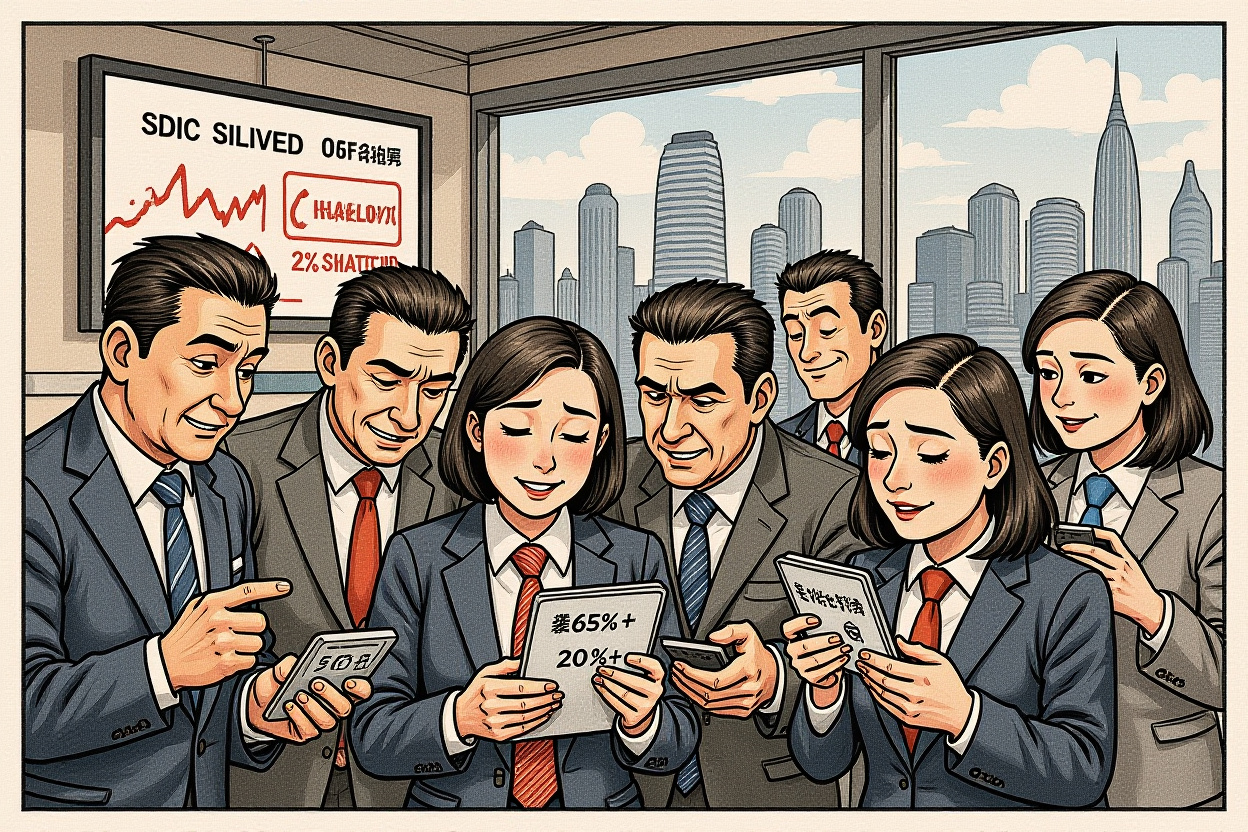
Executive Summary: Key Takeaways from the LOF Arbitrage Frenzy
In recent weeks, a surge in arbitrage activity surrounding Listed Open-Ended Funds (LOFs) has captivated retail investors in China, driven by social media hype and apparent easy profits. However, this LOF arbitrage frenzy is now facing significant headwinds, with multiple funds being halted for trading, highlighting underlying risks that demand careful attention.
– The LOF arbitrage frenzy has been fueled by social media platforms like WeChat, Xiaohongshu, and Douyin, where influencers promote step-by-step tutorials for exploiting price disparities between fund net asset values (NAVs) and secondary market prices.
– On February 1, several LOFs, including SDIC Silver LOF, GF Petroleum LOF, Huaan Petroleum Fund LOF, and Manulife Bond LOF, announced one-hour trading halts effective February 2, with warnings of extended suspensions if high premiums persist, signaling regulatory scrutiny.
– Core risks in LOF arbitrage include the T+2 settlement lag, which exposes investors to market volatility; liquidity pitfalls in thinly traded funds; and irrational premiums detached from fundamental asset values.
– Social media-driven herd behavior amplifies these dangers, as retail investors may overlook due diligence in pursuit of quick gains, leading to potential losses when the arbitrage window closes abruptly.
– For sophisticated investors, this episode underscores the importance of understanding product structures, monitoring regulatory announcements, and maintaining a disciplined approach to avoid the pitfalls hidden within the LOF arbitrage frenzy.
The Sudden Halt: A Wake-Up Call for Market Participants
Imagine logging into your trading account, ready to capitalize on what seemed like a guaranteed profit opportunity, only to find your positions frozen. That’s the reality that struck investors on February 2, when multiple LOFs were suspended for one hour at market open. This regulatory move, prompted by soaring premiums and frenzied trading, serves as a stark reminder that the LOF arbitrage frenzy is not without consequences. For global investors eyeing Chinese equities, such market dynamics offer critical insights into the interplay between retail sentiment, product innovation, and regulatory oversight in China’s rapidly evolving capital markets.
The halts affected funds like SDIC Silver LOF and GF Petroleum LOF, with exchanges citing the need to curb excessive speculation. If premiums fail to recede, authorities reserve the right to impose longer trading pauses, a measure aimed at protecting uninformed investors from sudden reversals. This intervention highlights how Chinese regulators are proactively addressing market anomalies, even in niche segments like LOFs, to maintain stability. As the LOF arbitrage frenzy continues to attract attention, understanding these risk-control mechanisms becomes essential for anyone navigating China’s financial landscape.
Behind the Halts: Regulatory Mechanics and Market Impact
The trading suspensions were announced via official fund announcements, referencing rules from the Shanghai and Shenzhen Stock Exchanges that allow for temporary halts when price deviations exceed reasonable thresholds. For instance, SDIC Silver LOF had seen its premium spike above 60% in late 2025, driven by hype around silver futures. By halting trading, exchanges aim to cool sentiment and provide time for arbitrageurs to narrow the gap between NAV and market price. Data shows that post-halt, premiums in some funds moderated slightly, but volatility remained elevated, underscoring the fragile nature of this LOF arbitrage frenzy.
Outbound link: For details on exchange rules regarding trading halts, refer to the Shenzhen Stock Exchange announcement on risk control measures for fund products.
Understanding the LOF Arbitrage Frenzy: Mechanics and Allure
At its core, the LOF arbitrage frenzy revolves around a simple premise: buying low and selling high across different market venues. LOFs are unique in that they can be traded both on exchanges (like stocks) and subscribed or redeemed directly with the fund company at net asset value. When secondary market prices exceed the NAV—a situation known as a premium—investors can purchase units at NAV through fund houses, transfer them to their brokerage accounts via a process called转托管 (transfer custody), and sell them at the higher market price, pocketing the difference. This LOF arbitrage frenzy has gained traction because it appears to offer low-risk gains, especially when premiums are sustained.
However, the reality is more complex. The process involves multiple steps and time lags, creating windows for market moves to erase profits. Social media has simplified this into digestible content, with influencers touting it as “free money” or “a hot pot meal’s worth of profit.” For example, one viral tutorial on Xiaohongshu bragged about turning a 100-yuan investment into double returns within weeks. Yet, as the recent halts demonstrate, this LOF arbitrage frenzy is far from a sure bet, and participants must grasp the intricacies to avoid pitfalls.
Case Study: How Silver and Oil LOFs Sparked the Craze
The current wave of the LOF arbitrage frenzy can be traced to specific commodities-driven funds. In late 2025, SDIC Silver LOF, the only public fund primarily investing in silver futures, saw its price surge amid global precious metal rallies. With premiums exceeding 60%, it became a poster child for arbitrage opportunities. After its申购 (subscription) channel was closed to curb inflows, attention shifted to oil-focused LOFs like GF Petroleum LOF and Huaan Petroleum Fund LOF, which benefited from rising crude prices and similarly high premiums.
– SDIC Silver LOF: Premium peaked at over 60% in December 2025, attracting massive arbitrage flows before halts were imposed.
– Oil LOFs: Multiple funds saw premiums above 20% in January 2026, with daily turnover spiking to millions of yuan, though some sessions had trades as low as 15,400 yuan, highlighting liquidity concerns.
This sequence shows how the LOF arbitrage frenzy migrates across sectors, often detached from fundamental valuations, and why regulators are stepping in to prevent systemic risks.
Hidden Dangers: Why the LOF Arbitrage Frenzy Isn’t Risk-Free
Beneath the surface of social media hype, the LOF arbitrage frenzy conceals several traps that can quickly turn profits into losses. Industry veterans warn that this is no “lie-down-and-win” strategy; instead, it demands careful risk assessment. For institutional investors, these dangers are well-known, but retail participants, lured by simplified tutorials, may overlook them until it’s too late. As the market corrects, understanding these risks is crucial for navigating the ongoing LOF arbitrage frenzy safely.
First, the T+2 settlement lag—or T+3 for cross-border LOFs—creates a critical time gap. Investors must wait two to three days after subscribing at NAV before they can sell on the exchange. During this period, if the premium collapses due to increased arbitrage supply or shifting market sentiment, the entire profit margin can vanish, leaving investors with losses after accounting for fees. Second, liquidity risk looms large: many LOFs have low trading volumes, meaning that while they can涨停 (hit the daily upside limit) easily during a frenzy, they can also跌停 (hit the downside limit) just as fast, trapping sellers. Finally, some premiums lack fundamental support, driven purely by speculative flows rather than asset performance, making them vulnerable to sharp corrections.
The T+2 Trap: A Timeline of Vulnerability
Consider a typical arbitrage timeline in this LOF arbitrage frenzy: Day 1, an investor subscribes to an LOF at NAV after seeing a 30% premium. By Day 3, when the units are available for sale, the premium may have narrowed to 10% due to套利 (arbitrage) pressure or market news. After subtracting subscription fees (often 0.1-0.5%) and trading commissions, the investor might break even or lose money. Data from recent episodes shows that premiums in some LOFs fluctuated by over 20 percentage points within days, underscoring the volatility. This time-sensitive nature means the LOF arbitrage frenzy requires precise timing, not just blind following.
Liquidity and Irrational Premiums: Case Examples
– On January 29, 2026, one small LOF recorded a mere 15,400 yuan in turnover before hitting the涨停 limit, indicating that minimal buying pressure could inflate prices, but also that exiting might be impossible during a sell-off.
– Premiums in some bond LOFs, like Manulife Bond LOF, soared despite stable underlying assets, suggesting herd behavior rather than value-based investing. When such irrational premiums correct, latecomers to the LOF arbitrage frenzy bear the brunt of losses.
These examples highlight why due diligence is non-negotiable. Investors should check daily turnover, premium history, and fund holdings before participating, rather than relying on social media trends alone.
The Social Media Effect: Amplifying the LOF Arbitrage Frenzy
In today’s digital age, investment decisions are increasingly shaped by online communities, and the LOF arbitrage frenzy is a prime example. Platforms like WeChat, Xiaohongshu, and Douyin have become breeding grounds for arbitrage tutorials, with finance “influencers”或 “大V” (big Vs) offering step-by-step guides that garner thousands of likes and comments. These influencers often frame LOF arbitrage as a low-effort side hustle, using phrases like “100 yuan can get you in” or “don’t miss the last bus.” This democratization of information has empowered retail investors but also fostered a herd mentality that exacerbates market distortions.
The danger lies in the “被带货” (being marketed to) risk, where influencers may have undisclosed incentives or lack professional credentials. For instance, live streams demonstrating arbitrage steps in real-time can create a fear-of-missing-out (FOMO) effect, pushing viewers to act without proper analysis. As part of the LOF arbitrage frenzy, this social dynamic can lead to overcrowded trades, rapid premium erosion, and amplified losses when the music stops. For global professionals, it’s a cautionary tale about the influence of digital media on China’s retail-driven market segments.
Influencer Impact: From Tutorials to Market Moves
A notable case involved a popular Douyin influencer who posted a “保姆级” (nanny-level) tutorial on LOF arbitrage, covering everything from account opening to场内卖出 (on-exchange selling). The video went viral, correlating with a spike in trading volumes for targeted funds. However, followers often overlooked disclaimers about risks, focusing only on the promised returns. This phenomenon underscores how the LOF arbitrage frenzy can be artificially sustained by online hype, detached from economic fundamentals. Investors should verify information from official sources like fund announcements or exchange websites rather than relying solely on social media content.
Outbound link: For regulatory guidance on social media financial advice, check the China Securities Regulatory Commission (CSRC) notices on investor education.
Regulatory and Market Implications: Looking Beyond the Frenzy
The recent trading halts are not isolated incidents; they reflect broader regulatory trends in China’s financial markets. Authorities are keen to prevent excessive speculation that could undermine stability, especially in products accessible to retail investors. The LOF arbitrage frenzy has caught the eye of regulators, who may introduce tighter controls on fund subscriptions,转托管 processes, or premium disclosures. For instance, the People’s Bank of China (PBOC) and CSRC have historically stepped in during market manias, and this episode could prompt similar actions if risks escalate.
From a market perspective, the LOF arbitrage frenzy highlights structural aspects of China’s fund industry. LOFs were designed to enhance liquidity and price discovery, but arbitrage activities can sometimes distort these goals. As premiums normalize post-halts, funds may see reduced inflows, impacting asset managers’ strategies. For international investors, this signals the need to monitor Chinese regulatory developments closely, as they can quickly alter market dynamics. The LOF arbitrage frenzy thus serves as a microcosm of China’s balancing act between innovation and control in its capital markets.
What Fund Houses and Experts Are Saying
Industry insiders urge caution. A manager from a major fund house noted, “LOF arbitrage isn’t free money; it’s a professional game with hidden costs.” Experts emphasize that while arbitrage can be profitable, it requires sophisticated tools to monitor premiums in real-time and act swiftly. They also warn that the LOF arbitrage frenzy could lead to stricter product approvals or higher barriers to entry, affecting future fund offerings. Investors should heed these insights, recognizing that sustainable gains come from informed strategies, not fleeting trends.
Navigating the Landscape: A Strategic Guide for Investors
For those involved or considering entry into the LOF arbitrage frenzy, a disciplined approach is paramount. Rather than chasing hype, focus on risk management and due diligence. Start by understanding the specific LOF’s underlying assets—whether it’s commodities, bonds, or equities—and assess whether premiums are justified by market fundamentals. Use reliable data sources to track premium trends and liquidity metrics, avoiding funds with erratic trading patterns. Additionally, factor in all costs, including subscription fees,转托管 charges, and taxes, to calculate realistic returns.
Here’s a practical checklist for navigating the LOF arbitrage frenzy:
– Monitor premium rates daily using fund company websites or financial data platforms; avoid funds with premiums above 20% unless supported by strong asset performance.
– Check average trading volume: Aim for LOFs with consistent turnover above 1 million yuan to ensure exit liquidity.
– Review fund announcements for subscription limits or halts, as seen with SDIC Silver LOF, to avoid being locked out.
– Diversify across multiple LOFs to spread risk, rather than concentrating on a single high-premium fund.
– Set stop-loss levels for premium declines, acknowledging that the LOF arbitrage frenzy can reverse quickly.
By adhering to these principles, investors can participate more safely, turning the LOF arbitrage frenzy from a speculative gamble into a calculated opportunity.
When to Walk Away: Red Flags in LOF Arbitrage
Recognize warning signs that signal excessive risk in the LOF arbitrage frenzy. These include social media posts promising guaranteed returns, funds with premiums soaring without news, or sudden trading halts like those on February 2. If a fund’s premium is based on speculative chatter rather than asset growth, it’s time to reconsider. Remember, the goal is long-term wealth preservation, not short-term frenzy participation. As the market evolves, staying informed through reputable financial news outlets will help you navigate these waters wisely.
Synthesizing Insights for Forward-Looking Investment
The LOF arbitrage frenzy offers valuable lessons for all market participants. It underscores the power of social media in shaping investment trends, the importance of regulatory vigilance, and the ever-present risks in arbitrage strategies. While opportunities exist, they are tempered by time lags, liquidity constraints, and irrational premiums. For global professionals, this episode reinforces the need to understand China’s unique market dynamics, where retail enthusiasm can quickly translate into volatility.
Moving forward, investors should prioritize education over impulse. Study fund structures, follow official regulatory updates, and engage with trusted advisors rather than online influencers. The LOF arbitrage frenzy may cool, but similar phenomena will arise as China’s financial markets innovate. By building a foundation of knowledge and caution, you can capitalize on opportunities while safeguarding against pitfalls. Take action today: review your portfolio for exposure to high-premium LOFs, conduct a risk assessment, and commit to ongoing learning about China’s equity landscape. In doing so, you’ll transform the LOF arbitrage frenzy from a cautionary tale into a stepping stone for smarter investing.