



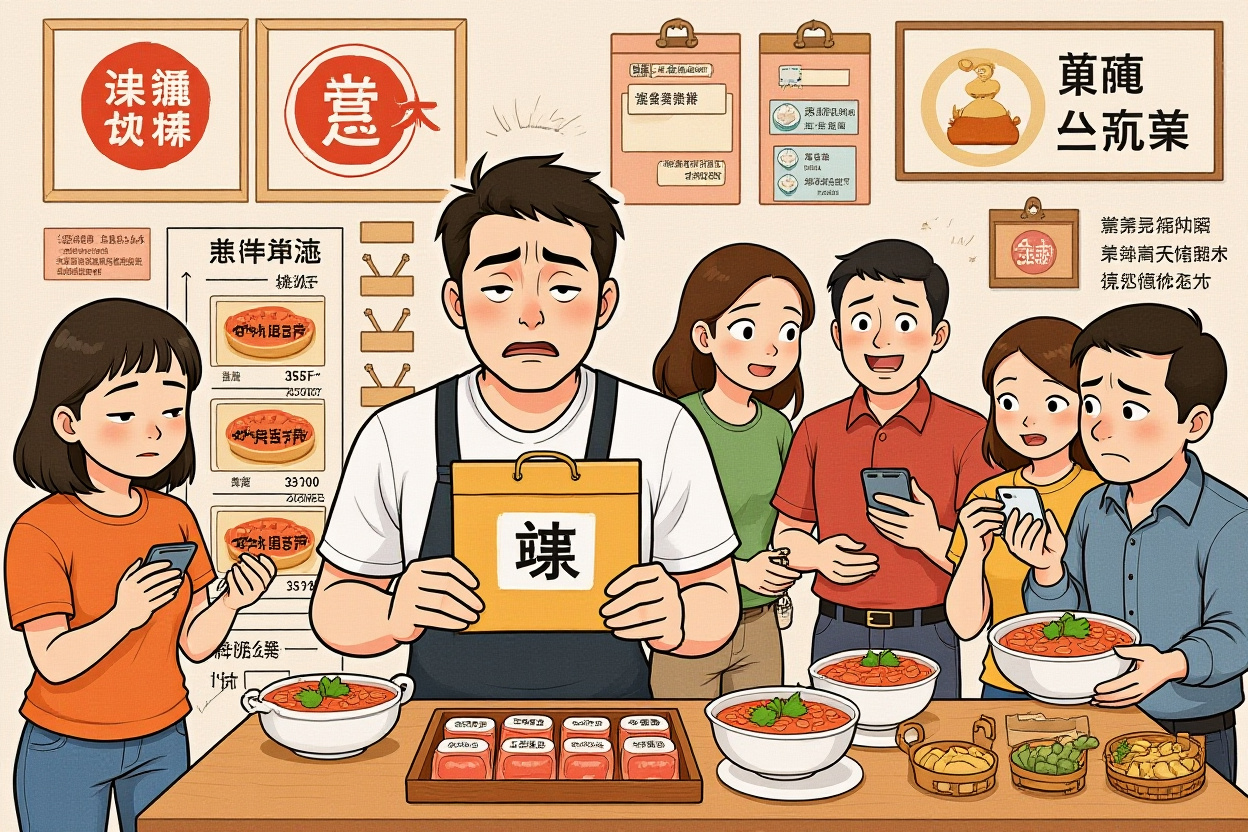
Executive Summary: Key Takeaways from the Liu Wenxiang Mala Tang Scandal
– The viral success of Liu Wenxiang (刘文祥) mala tang has been marred by widespread food safety violations, including using duck meat labeled as beef and pork across multiple franchise locations. – Rapid expansion to over 2,800 stores has outpaced quality control measures, with autonomous procurement by franchisees leading to inconsistent ingredients and misleading marketing. – Regulatory authorities in provinces like Fujian and Xinjiang have launched突击检查 (tū jī jiǎn chá,突击检查) , with some stores facing整改 (zhěng gǎi, rectification) orders and potential legal action for fraud. – This Liu Wenxiang mala tang scandal underscores broader risks for investors in China’s food and beverage sector, where网红 (wǎng hóng, internet celebrity) brands may prioritize growth over compliance. – Consumers and investors must demand greater transparency, as the incident could trigger stricter nationwide oversight for连锁门店 (lián suǒ mén diàn, chain stores).
From Viral Sensation to Regulatory Nightmare: The Unraveling of a Brand
In early 2026, a catchy slogan—“If the whole world blames you, I’ll take you to eat ‘Liu Wenxiang’”—propelled a once-obscure mala tang (麻辣烫) brand into the stratosphere of Chinese social media fame. Almost overnight, Liu Wenxiang (刘文祥) became synonymous with affordable, trendy street food, attracting long queues and franchise inquiries from across the country. Yet, by mid-March, the narrative had sharply pivoted from celebration to scrutiny, as investigations exposed a pattern of deception that threatens to unravel this culinary empire. The Liu Wenxiang mala tang scandal, centered on the substitution of duck meat for premium beef and pork, has erupted into a full-blown crisis, revealing the dark underbelly of China’s frenetic franchise boom. For international investors monitoring Chinese consumer markets, this episode serves as a stark reminder that viral热度 (rè dù,热度) can quickly turn into regulatory risk when foundational business practices are neglected.
The Social Media Engine and Its Sudden Stall
The rise of Liu Wenxiang was fueled by platforms like Douyin (抖音) and Xiaohongshu (小红书), where user-generated content and savvy marketing created a perfect storm of demand. Stores reported sell-outs of staple items like玉米粉 (yù mǐ fěn, corn noodles) and麻辣拌 (má là bàn, spicy mix), with some locations struggling to replenish inventory due to overwhelming orders. However, this explosive growth masked underlying vulnerabilities. As one industry analyst noted, ‘网红 brands often scale faster than their operational capabilities, leading to quality dilution and compliance gaps.’ The Liu Wenxiang mala tang scandal exemplifies this trend, where the pursuit of rapid market capture came at the expense of basic food safety protocols.
Initial Revelations: From Xiamen to Zhangzhou
On March 14, 2026, investigative reports from media outlets such as Diyi Bang Bang Tuan (第一帮帮团) catapulted the issue into the national spotlight. In Xiamen, a Liu Wenxiang franchise was found selling肥牛卷 (féi niú juǎn, fatty beef rolls) labeled as beef on delivery platforms, while product packaging clearly indicated鸭肉 (yā ròu, duck meat). Similarly, in Zhangzhou, items like黑椒肉柳 (hēi jiāo ròu liǔ, black pepper meat strips) and蚝油肉片 (háo yóu ròu piàn, oyster sauce meat slices) were verbally promoted as pork by staff, yet ingredient lists revealed duck as the primary component. These findings were not isolated; they pointed to a systemic practice of以次充好 (yǐ cì chōng hǎo, passing off inferior products as superior). When confronted, some employees offered baffling justifications, such as, ‘Beef costs 30-40 yuan per斤 (jīn,斤), but we sell it for 20 yuan—do you think it could be pure beef?’ This admission highlights a culture of cost-cutting that prioritized profits over integrity.
Systemic Failures in Franchise Management and Quality Control
At the heart of the Liu Wenxiang mala tang scandal lies a flawed business model that emphasizes expansion over oversight. With more than 2,800加盟店 (jiā méng diàn, franchise stores) nationwide, the brand’s headquarters enforced minimal standards, requiring only底料 (dǐ liào, base soup) and specific noodles to be sourced centrally. All other ingredients were left to the discretion of franchisees, creating a Wild West of procurement where price often trumped quality. This自主采购 (zì zhǔ cǎi gòu, autonomous procurement) approach, while reducing operational burden for the parent company, made consistent quality control nearly impossible. As a result, the Liu Wenxiang mala tang scandal is not merely about a few rogue stores; it reflects a structural deficiency in how many Chinese fast-food chains manage rapid scaling.
The Labeling Labyrinth: Online vs. Offline Discrepancies
Further complicating matters was the rampant inconsistency in product labeling. Items like喷火牛扒 (pēn huǒ niú pá, flaming beef steak) and麻辣肉片 (má là ròu piàn, spicy meat slices) were listed as beef or pork on apps like Meituan (美团) and Ele.me (饿了么), yet store employees私下 (sī xià, privately) admitted they were duck-based. In one egregious case, the same蚝油肉片 (háo yóu ròu piàn, oyster sauce meat slice) was categorized as chicken on one platform and duck on another, betraying a careless attitude toward basic accuracy. When questioned about these errors, franchisees deflected blame, citing excuses like ‘no time to update,’ ‘platform operational mistakes,’ or ‘headquarters’ uniform image errors.’ This lack of accountability underscores a broader issue: in the race to capitalize on the brand’s网红 status, fundamental aspects of consumer trust were overlooked.
Regulatory Gaps and the Illusion of Compliance
Despite mounting evidence, corrective actions were often superficial. After being exposed by journalists, some stores promised to inform customers truthfully but continued misleading new patrons, indicating that整改 (zhěng gǎi, rectification) was merely cosmetic. This behavior suggests that without stringent external pressure, franchises may revert to deceptive practices to maintain margins. The Liu Wenxiang mala tang scandal thus raises questions about the effectiveness of self-regulation within China’s franchise sector. As Professor Li Wei (李伟), a food safety expert at Renmin University, explains, ‘Autonomous procurement can work if coupled with robust auditing and clear penalties for non-compliance. Unfortunately, many chains focus on store count rather than store quality, leaving consumers vulnerable.’
Consumer Backlash and Escalating Regulatory Response
The fallout from the Liu Wenxiang mala tang scandal has been swift and severe, playing out across social media and triggering formal interventions by authorities. On platforms like黑猫投诉 (Hēi Māo Tóu Sù, Black Cat Complaints), a consumer rights portal, searches for ‘刘文祥’ yielded 859 complaints as of March 2026, ranging from hygiene issues to fraudulent labeling. This digital outcry amplified traditional media reports, creating a feedback loop that demanded official action. In response, market regulatory authorities in multiple provinces mobilized, conducting surprise inspections that could set precedents for the entire industry.
Social Media as a Catalyst for Change
Viral videos from inspections, such as one posted by @乌鲁木齐高新区市场监管 (@Ürümqi High-tech Zone Market Supervision), showcased grim conditions in some stores, including unclean preparation areas and haphazard storage. These visuals resonated deeply with netizens, many of whom had previously patronized the brand. The incident highlights how social media can serve as a powerful watchdog in China’s consumer markets, where traditional oversight may lag. For investors, this means that brand reputation is increasingly fragile; a single scandal can erode years of goodwill built through viral marketing. The Liu Wenxiang mala tang scandal demonstrates that in the age of digital transparency, operational excellence is non-negotiable.
Government Crackdown: From Fujian to Nationwide Implications
On the evening of March 14, regulatory bodies in福建 (Fújiàn, Fujian) and other regions launched突击检查 (tū jī jiǎn chá,突击检查) on Liu Wenxiang outlets. Initial findings confirmed violations, leading to整改 orders and warnings of severe penalties for以假冒真 (yǐ jiǎ mào zhēn, counterfeiting) and虚假宣传 (xū jiǎ xuān chuán, false advertising). Authorities have pledged拉网式排查 (lā wǎng shì pái chá, dragnet-style inspections) across all连锁门店 (lián suǒ mén diàn, chain stores) in their jurisdictions. This proactive stance signals a hardening regulatory environment, possibly inspired by broader food safety campaigns under the国家市场监督管理总局 (Guójiā Shìchǎng Jiāndū Guǎnlǐ Zǒngjú, State Administration for Market Regulation). For franchise operators, the message is clear: cut corners at your peril.
Broader Implications for China’s Food and Beverage Investment Landscape
The Liu Wenxiang mala tang scandal transcends a single brand, offering critical lessons for stakeholders in Chinese equities. As consumer spending on dining out grows, driven by urbanization and disposable income, the food and beverage sector has attracted significant capital. However, this incident reveals inherent risks in business models that prioritize rapid franchise rollouts without commensurate investment in supply chain integrity and compliance. For institutional investors and fund managers, due diligence must now extend beyond financial metrics to encompass operational robustness and regulatory adherence.
Risk Assessment for Fast-Food Chains and Franchise Models
– Quality Control Deficiencies: Brands with centralized procurement for key items but decentralized sourcing for others may face higher risks of inconsistency and fraud, as seen in the Liu Wenxiang mala tang scandal. – Regulatory Exposure: Increasing scrutiny from bodies like the市场监管部门 (shì chǎng jiān dū bù mén, market regulatory departments) could lead to fines, closures, or reputational damage that impacts stock valuations. – Consumer Trust Erosion: In an era of social media amplification, food safety failures can trigger boycotts and lasting brand damage, affecting long-term profitability. – Investor Takeaways: Portfolios with exposure to Chinese consumer staples should incorporate food safety audits and franchise compliance checks as part of standard risk management protocols.
The Role of Technology and Transparency in Mitigation
Forward-thinking chains are leveraging technology to prevent such crises. Blockchain for supply chain tracking, AI-powered quality monitoring, and digital platforms for real-time compliance reporting can enhance transparency. As Zhang Ming (张明), a venture capitalist focused on Asian retail, observes, ‘The Liu Wenxiang mala tang scandal is a wake-up call. Investors will increasingly favor brands that integrate tech-driven oversight into their expansion strategies, reducing reliance on manual checks.’ This shift could reshape investment trends, directing capital toward innovators who balance growth with governance.
Navigating the Aftermath: Paths Forward for Liu Wenxiang and the Industry
The immediate future for Liu Wenxiang (刘文祥) is fraught with challenges. Sales may plummet as consumer confidence wanes, and franchisees could face lawsuits or termination of agreements. To survive, the brand must undertake genuine reforms, possibly including a overhaul of its procurement system, enhanced staff training, and collaboration with third-party auditors. Moreover, the parent company might need to inject capital for store upgrades and compensation for affected customers. This Liu Wenxiang mala tang scandal could either become a cautionary tale of collapse or a case study in corporate turnaround, depending on the responsiveness of its leadership.
Strategic Recommendations for Recovery and Reform
– Centralize Procurement: Implement a unified sourcing system for all major ingredients to ensure quality and traceability, moving away from the problematic autonomous model. – Enhance Digital Labeling: Use QR codes on packaging and apps to provide real-time ingredient information, reducing labeling errors and building trust. – Engage with Regulators: Proactively work with authorities like the市场监管总局 (shì chǎng jiān dū zǒng jú, Market Supervision Administration) to establish compliance benchmarks and regular inspection routines. – Consumer Redress: Launch a transparent补偿 (bǔ cháng, compensation) program for past customers and publicly commit to higher standards through media campaigns.
A Call to Action for Investors and Industry Stakeholders
As the dust settles, the Liu Wenxiang mala tang scandal offers a pivotal moment for reflection and action. For investors in Chinese equities, it underscores the importance of ESG (Environmental, Social, and Governance) factors in investment decisions, particularly governance related to food safety. Allocating resources to companies with robust internal controls can mitigate downside risks. Meanwhile, industry associations should advocate for standardized protocols across franchises, perhaps借鉴 (jiè jiàn, drawing lessons from) international best practices. Ultimately, the goal is to foster a market where growth and integrity coexist, ensuring that China’s culinary boom benefits consumers and investors alike. By learning from this scandal, the sector can build a more resilient foundation for the future, turning crisis into opportunity for those who prioritize long-term value over short-term gains.