



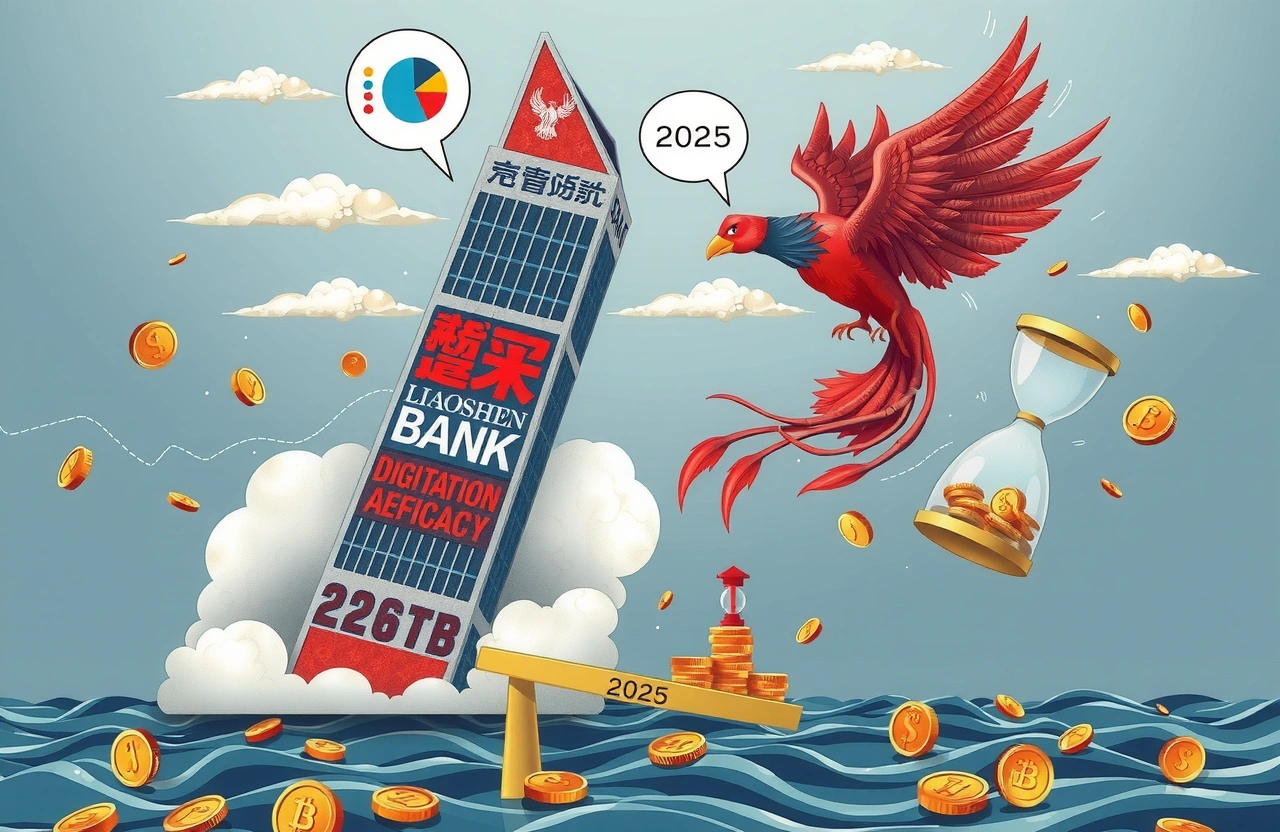
Key Highlights
- Consolidated losses widened to 42 million yuan—30 million worse than 2023 despite asset growth
- Revenue declined 3% year-on-year to 5.71 billion yuan as reform pressures mount
- Alarming 4.14% non-performing loan ratio signals persistent asset quality risks
- Parent-company profits remain negligible at just 721,600 yuan
- Bank claims cumulative loss reduction of 7.97 billion yuan since 2022 reform launch
The Financial Crossroads
Liaoshen Bank’s 2024 annual report reveals an institution at a critical juncture. Despite total assets growing 4.29% to 239.57 billion yuan, consolidated net losses deepened significantly—reaching 42 million yuan compared to 12 million yuan in 2023. This deterioration occurs as the bank enters what executives term a “critical phase” in their multi-year transformation program. Revenue declined nearly 3% year-on-year to 5.71 billion yuan, underscoring fundamental challenges in China’s regional banking sector where profitability pressures collide with reform mandates.
Performance Analysis: Adverse Trends
The latest figures present a paradox: asset growth accompanied by worsening losses. While Liaoshen Bank has expanded its balance sheet since launching reforms in 2021, revenue shrinkage suggests structural inefficiencies. The 2019 Banking and Insurance Regulatory Commission framework for regional lender consolidation explicitly targeted synergy gains—yet Liaoshen’s results indicate integration hurdles.
Consolidated vs. Parent Company Metrics
The divergence between consolidated and parent-level performance reveals subsidiary vulnerabilities. Though parent-only operations showed a nominal profit of 721,600 yuan, consolidated financials expose underlying stresses. This gap suggests distressed assets acquired during the merger phase continue dragging performance—a common challenge in China’s provincial bank consolidation initiatives documented by the People’s Bank of China.
Asset Quality: The Core Challenge
Liaoshen Bank’s non-performing loan ratio skyrocketed to 4.14%—well above China’s commercial banking sector average of 1.59% reported by the CBIRC. This indicates significant unresolved credit deterioration from acquired institutions despite regulators’ pressure to improve risk management.
Capital Adequacy Illusion?
The bank boasts capital adequacy ratios exceeding 18%—nearly double regulatory requirements—yet these buffers haven’t translated into profitability. This suggests liquidity may be trapped in unproductive assets rather than fueling growth.
The Reform Journey: 2021-Present
Liaoshen Bank emerged from Liaoning province’s 2021 city commercial bank consolidation—the cornerstone of China’s strategy to strengthen regional lenders. Chronologically:
– 2021: Formation through merger
– 2022: Transition period labeled “Year One”
– 2023: Targeted “breakthrough” year
– 2024: Transition from “normal” to “healthy” institution
Liaoshen’s leadership now positions 2025 as the decisive battle for relevance. The bank pledges intensified reform efforts while pursuing “Financial Liaoning Brigade Vanguard” status.
Roadmap to Recovery
Management cites cumulative losses reduced by 7.97 billion yuan since 2022—an indication reform inertia remains positive despite annual setbacks. Dual strategy implementation prioritizes:
- Operational efficiency upgrades
- Asset risk resolution frameworks
- Governance restructuring
The bank acknowledges overtaking larger competitors requires pioneering approaches as regional institutions nationwide contend with similar pressures.
Turning Point Strategy
At this inflection point, Liaoshen Bank must reconcile operational restructuring with genuine asset quality improvements. Persistent loss patterns suggest mergers alone haven’t addressed underlying weaknesses. Successful transitions demand:
- Accelerated resolution of legacy NPLs through provincial asset management channels
- Strategic partnerships injecting specialized credit management expertise
- Digitization investments reducing operating expenses
As Liaoning province positions 2025 as its “decisive breakthrough year”, regulatory forbearance may thin.
The bank’s challenge transcends finance—it must embed risk discipline institutionally. Investors and regulators should monitor LiaoShen’s concrete progress in converting capital strength into viable customer acquisition strategies. For stakeholders, patience must couple scrutiny: Demand quarterly transparency on loan classification improvements and measurable reductions in doubtful advance provisions.