



Allegations of a sudden, mass termination at Lenovo’s Infrastructure Solutions Group (ISG) in Shanghai have sent shockwaves through China’s tech sector, presenting a stark case study in the human cost of corporate strategic pivots. This reported lightning layoff event, characterized by its brevity and apparent disregard for standard procedure, raises urgent questions about Lenovo’s restructuring ethics, compliance with Chinese labor law, and the broader implications of its aggressive bet on artificial intelligence for its workforce and investors alike.
Executive Summary: The Core Implications
- A major, abrupt restructuring at Lenovo’s ISG division in Shanghai reportedly affected hundreds, with claims of dismissals conducted via a brief pre-recorded message.
- The alleged inclusion of pregnant employees in the layoffs presents a significant legal liability under China’s 劳动合同法 (Labor Contract Law) and a severe reputational risk.
- The move signals a profound strategic shift: pivoting from China-centric R&D towards a global, AI-driven model, potentially relocating software development to lower-cost regions like India.
- While aimed at boosting margins for the high-growth ISG and AI businesses, the execution threatens employee morale, corporate culture, and could impair long-term innovation capacity in the key China market.
- For investors, this episode underscores the critical need to evaluate the ESG (Environmental, Social, and Governance) and operational execution risks embedded in Chinese tech companies’ rapid AI transformations.
A Controvery Erupts: Dissecting the “Lightning Layoff” Claims
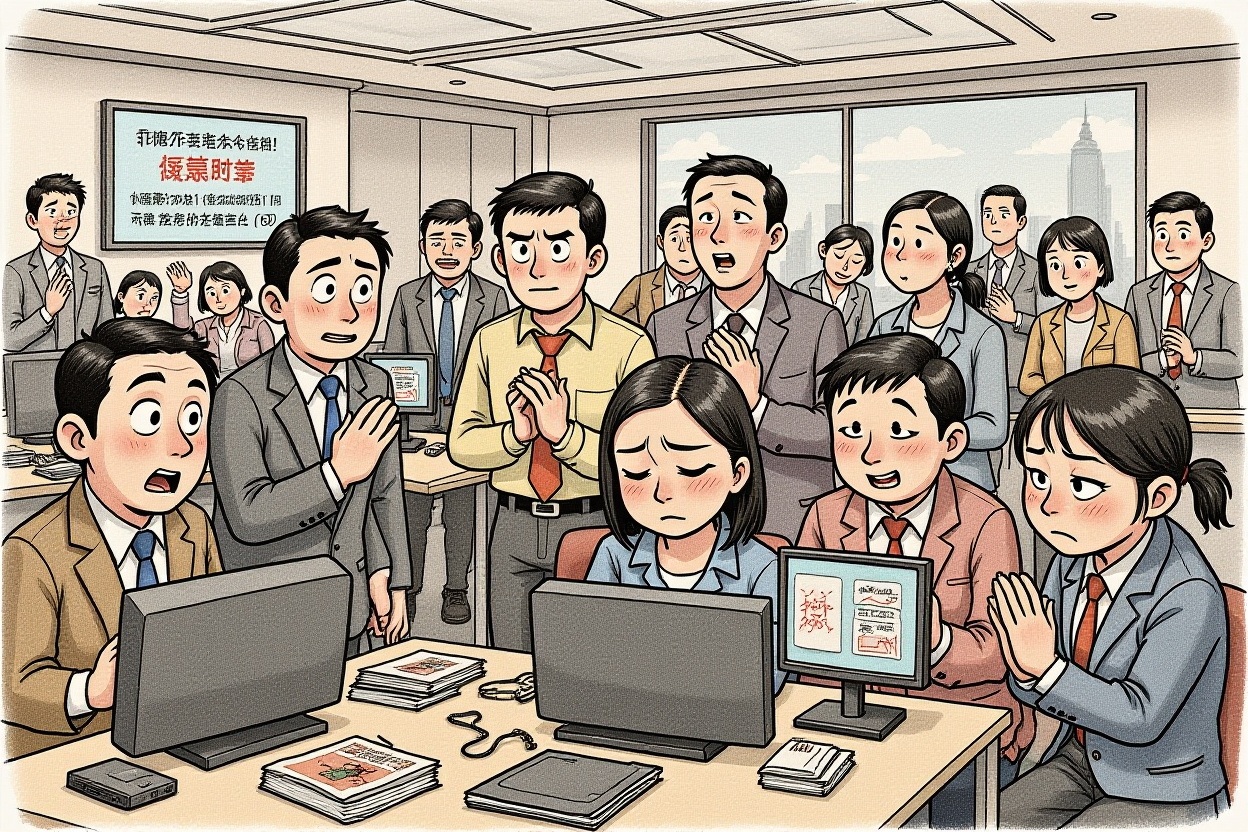
On December 1, multiple social media users with verified credentials identifying them as Lenovo employees ignited a firestorm with posts alleging a wholesale termination of the ISG team in Shanghai. The details, if accurate, depict a process of remarkable clinical efficiency and profound interpersonal failure. This reported lightning layoff has become the focal point for analyzing corporate restructuring gone awry.
The Anatomy of a 15-Minute Meeting
According to the online allegations, employees were convened for a 15-minute meeting, which then started 13 minutes late. The core announcement was delivered not by a live executive, but via a two-minute pre-recorded audio message declaring the layoffs. Participants claimed they were given no opportunity to ask questions or seek clarification before the meeting concluded. One anonymous post criticized the disrespect, stating, “The old man didn’t even have the courage to come up and speak, just played a recording and left.” This perceived cowardice and lack of transparency have become central to the burgeoning scandal.
Scale, Scope, and the Pregnant Employee Allegation
The alleged scale involves “hundreds” at the Shanghai site alone, with other posts suggesting the restructuring wave extends to software, firmware, and OS teams in Beijing, Tianjin, and Shenzhen. The most legally and ethically charged claim is that the layoffs did not exempt pregnant employees, who are afforded strong protections under Chinese law. The phrase “连孕妇都不能幸免” (even pregnant women could not escape) has become a rallying cry, amplifying the story from a business restructuring to a potential case of unlawful dismissal.
Strategic Context: Lenovo’s High-Stakes AI Gambit
To understand the probable *why* behind such a drastic move, one must examine Lenovo’s recent financial performance and strategic declarations. The company is executing a forceful pivot, aggressively reallocating resources towards artificial intelligence and high-margin infrastructure solutions. This strategic redirection is the likely engine driving the painful lightning layoff decisions in China.
Financial Performance: The ISG and AI Growth Engine
Lenovo’s Q2 FY2025/26 results, released on November 20, painted a picture of a company in transition but showing strong growth in target areas. Key data points include:
- Total Revenue: $204.5 billion, up 15% year-over-year.
- Adjusted Net Profit: $5.1 billion, up 25% year-over-year.
- ISG & SSG Contribution: Together, the Infrastructure Solutions and Solutions & Services Groups now account for one-third of total group revenue.
- AI Revenue Surge: AI-related income reached 30% of total revenue in Q2, up from 29% in the first half. AI PC shipments already make up 33% of the IDG (Intelligent Devices Group) business.
Notably, ISG posted the highest revenue growth rate, while SSG achieved an operating margin exceeding 20%. This financial backdrop suggests Lenovo is doubling down on its most profitable and strategically aligned segments, likely necessitating cuts elsewhere.
The “China for China” to “Global AI” Pivot
Employee comments provide crucial context: “联想中国区自己建立研发团队,主要销售中国区自研产品,全球产品软件研发搬到印度” (Lenovo China established its own R&D team, mainly selling China-developed products, while global product software R&D is moving to India). This indicates a strategic unwind of the “China for China” self-developed product strategy within ISG, shifting towards a globalized, potentially India-centric software development model to serve worldwide AI infrastructure needs. The reported dismantling of China-based software, firmware, and OS teams aligns perfectly with this costly strategic realignment.
Legal Landmines and Reputational Reckoning
The manner of the alleged layoffs, particularly the claims involving pregnant employees, transforms a business decision into a multi-front crisis. Lenovo now faces not only internal turmoil but also potential regulatory scrutiny and lasting brand damage. The fallout from this lightning layoff could extend far beyond severance payments.
Navigating China’s Protective Labor Framework
China’s 劳动合同法 (Labor Contract Law) provides robust protections, especially for vulnerable employees. Key articles relevant to this case include:
- Article 42: Prohibits employers from terminating employees under specific circumstances, including when the female employee is pregnant, on maternity leave, or nursing a child under one year old.
- Article 41: Governs economic layoffs, requiring employers to explain the situation to the labor union or all staff 30 days in advance, submit a layoff plan, and report to the labor administrative department.
- Article 46 & 47: Mandate economic compensation for employees terminated under economic layoff provisions, calculated based on years of service and average monthly wage.
The alleged use of a pre-recorded message likely violates the spirit, if not the letter, of consultation requirements. The inclusion of pregnant employees, if proven, constitutes a direct violation of Article 42, potentially entitling affected employees to reinstatement or double severance pay under Article 87.
Leadership and the “Special Award” Backlash
The identity of the “old man” (老头) in the recording became a subject of speculation, with employees pointing to the Chief Technology Officer. In July 2024, Lenovo appointed Dr. Tolga Kurtoglu, former CTO of HP and CEO of PARC, as its new Group CTO. The reported characterization of the layoff as a “special award” by the CTO, as mentioned in employee posts, has been perceived as incredibly tone-deaf, further eroding internal trust and exacerbating the public relations disaster.
Investor Calculus: Weighing Strategy Against Execution Risk
For institutional investors and analysts covering Lenovo (股票代码: 0992.HK), this incident is a critical datapoint beyond the quarterly earnings. It forces a reassessment of management’s operational execution, cultural health, and the hidden costs of its AI transformation.
The Short-Term vs. Long-Term Trade-Off
In the short term, reducing headcount in China-based R&D will likely improve the cost structure and operating margins of the ISG division, potentially providing a near-term boost to profitability that aligns with the segment’s high-growth narrative. However, the long-term risks are substantial:
- Innovation Erosion: Severing deep, China-market-specific R&D capabilities could impair Lenovo’s ability to tailor solutions for its home market, a key competitive arena.
- Talent Acquisition Damage: The reputational hit as an employer could hinder future recruitment of top engineering talent in China, a market vital for AI development.
- Operational Disruption: A sudden, demoralizing exit of hundreds of experienced personnel risks project continuity, knowledge transfer, and could lead to operational errors or delays.
ESG Scrutiny Intensifies
Environmental, Social, and Governance factors are increasingly pivotal in investment decisions globally. A lightning layoff event featuring allegations of illegal dismissals and poor stakeholder management triggers immediate red flags under the “Social” and “Governance” pillars. ESG-focused funds and institutional investors may now subject Lenovo to heightened scrutiny, potentially affecting its cost of capital and investor base composition.
Navigating the Fallout: What Comes Next?
The path forward for Lenovo is fraught with challenges. How the company manages the immediate aftermath will define its relationship with employees, regulators, and investors for years to come. The lightning layoff has illuminated deep fissures that require careful, principled repair.
Imperative Actions for Lenovo Management
To mitigate the escalating crisis, Lenovo’s leadership must move swiftly and transparently:
- Official Clarification: Issue a precise statement acknowledging the restructuring, outlining its business rationale, and clarifying the process followed, including compliance with all labor regulations.
- Remedy Potential Violations: If any protected employees, including pregnant workers, were affected, immediately offer reinstatement or lawful compensation to rectify the error.
- Leadership Accountability: Address the severe cultural misstep represented by the “special award” comment and the impersonal announcement method. Internal communication from senior leadership is crucial to rebuild trust.
- Transparent Severance: Ensure the severance packages offered are not only legally compliant but are perceived as fair and respectful, going beyond the bare minimum to demonstrate goodwill.
Monitoring Points for the Market
Investors and analysts should monitor several key developments:
- Regulatory Inquiry: Watch for any statements or investigations from local Human Resources and Social Security Bureaus (人力资源和社会保障局) in Shanghai or Beijing.
- Employee Litigation: The emergence of labor arbitration cases or lawsuits would confirm the legal disputes and quantify potential liabilities.
- Morale and Attrition: Subsequent employee reviews on platforms like Glassdoor and increased attrition rates in related divisions will signal the internal cultural damage.
- Future Financials: Scrutinize upcoming quarters’ ISG segment margins for the cost-saving impact, but also monitor revenue growth and commentary on innovation for signs of strategic impairment.
The reported lightning layoff at Lenovo’s Shanghai ISG is more than a personnel matter; it is a microcosm of the tensions defining China’s tech evolution. It highlights the fierce global competition in AI, the painful calculus of geographic resource allocation, and the often-overlooked human dimension of corporate transformation. For Lenovo, the financial logic of focusing on high-margin AI infrastructure is clear in its soaring revenues. However, the alleged execution—clumsy, impersonal, and potentially unlawful—reveals a dangerous disconnect between strategic ambition and operational humanity. The ultimate cost will be measured not just in severance packages or potential fines, but in lost trust, eroded culture, and a reputation that may hinder its ambition to be a truly global AI leader. Investors must now weigh whether the company’s strategic prowess is matched by the governance and operational excellence required to sustain it.