



Executive Summary
The launch of Sichuan-style grilled fish brand Kao Jiang (烤匠) in Shanghai, marked by 13-hour queues and over 6,300 tables reserved on opening day, has ignited a debate on the sustainability of viral marketing in China’s fast-moving consumer goods (FMCG) sector. This phenomenon offers critical insights for investors tracking Chinese equity markets, particularly in the consumer discretionary space. Key takeaways include:
– Viral hype driven by meticulous pre-launch campaigns and scarcity marketing can generate immense short-term traffic, but often at the cost of consumer experience and long-term brand equity.
– The emergence of scalpers and proxy queuing services highlights systemic vulnerabilities and exposes the artificial inflation of demand, raising red flags about operational integrity.
– Historical precedents, such as the trajectory of Tai Er Suan Cai Yu (太二酸菜鱼), suggest that without a rapid transition from hype to substance, brands risk rapid decline, impacting related stocks and sector valuations.
– For institutional investors, understanding Kao Jiang’s hype cycle is essential for assessing investment risks in Chinese consumer brands that rely heavily on social media-driven growth models.
– Regulatory scrutiny on consumer protection and fair market practices could intensify, affecting listed entities in the restaurant and broader retail sectors.
The Shanghai Spectacle: When Queues Become a Financial Indicator
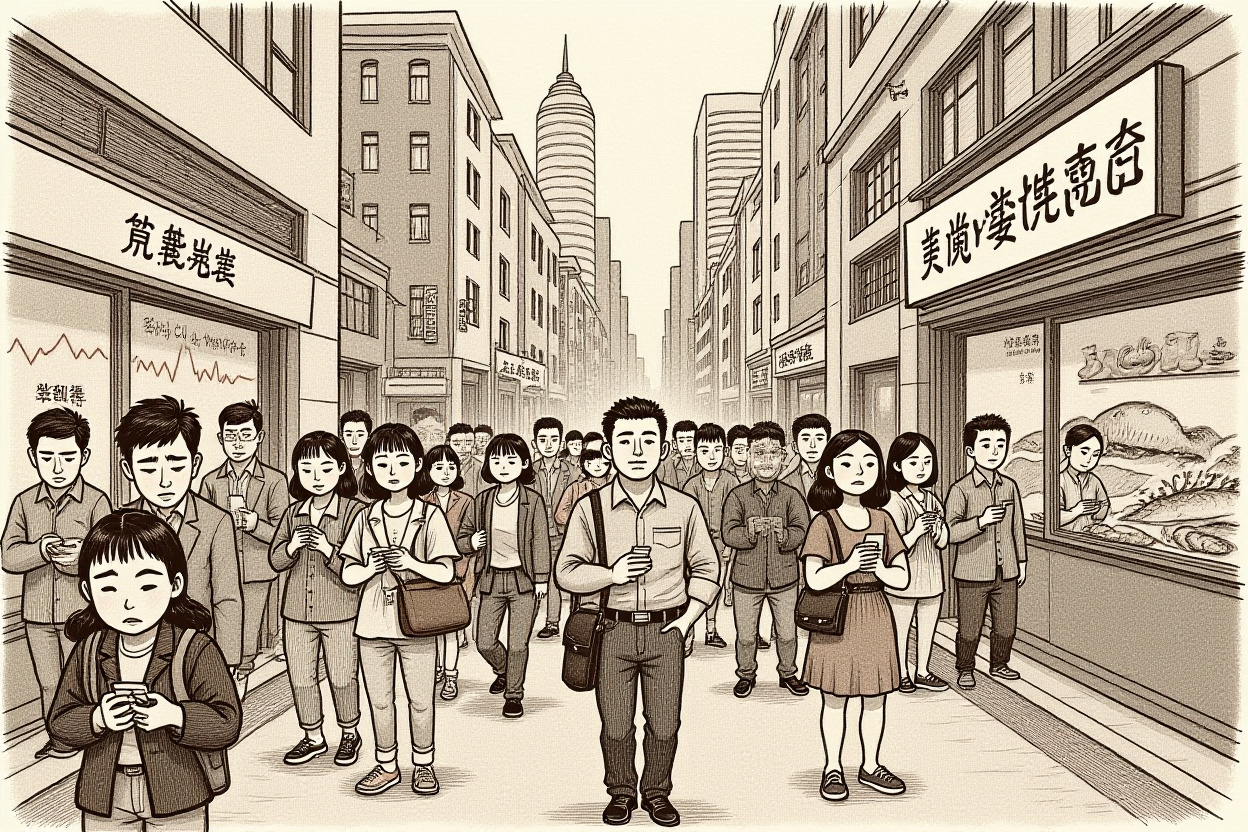
The recent debut of Kao Jiang in Shanghai’s bustling food scene was not merely a culinary event; it was a masterclass in engineered scarcity that captivated market watchers. Reports surfaced of patrons waiting up to 13 hours, with over 4,000 tables still queuing past midnight on the first day. For financial professionals monitoring the Chinese consumer landscape, such extreme demand signals are a potent mix of opportunity and peril. They reflect the intense competition for attention in China’s urban centers and the powerful draw of ‘first store economy’ (首店经济) strategies, where exclusive brand launches leverage local curiosity to drive footfall and media buzz. However, this Kao Jiang’s hype cycle also exposes the fragile foundation upon which many modern Chinese brands build their initial valuation.
This queue-driven phenomenon has immediate implications for market analysis. The sheer volume—6,300 tables reserved—translates to a staggering potential revenue spike, likely boosting short-term performance metrics that could attract speculative investment. Yet, the presence of scalpers, who reportedly earned over 1,000 yuan per day reserving slots, complicates this picture. It introduces noise into true demand signals, potentially misleading investors who rely on foot traffic data as a proxy for brand health. As seen in previous hype cycles, from bubble tea frenzies to hotpot restaurant launches, the initial surge often masks underlying challenges.
Deconstructing the Queue: Data and Anomalies
A closer look at the data reveals patterns critical for due diligence. Kao Jiang’s marketing consistently emphasizes queue metrics: 6.5-hour average wait times in Beijing, 1-hour peaks for 450 tables. In Shanghai, the numbers escalated strategically. This focus on quantitative social proof is a deliberate tactic in Kao Jiang’s hype cycle, designed to fuel fear of missing out (FOMO) among consumers and, by extension, create a compelling narrative for investors. However, anomalies such as proxy queuing via delivery apps for a 16 yuan fee indicate that the system is gamified. This erodes the authenticity of demand metrics, a red flag for analysts assessing the sustainability of revenue streams for any potential initial public offering (IPO) or market expansion.
The Scalper Economy and Market Distortion
The proliferation of ticket scalpers (黄牛) around Kao Jiang outlets is a microcosm of a larger issue in China’s consumer markets: the distortion of organic demand by secondary markets. When a queue number can be resold for 300 yuan, as was reported during Kao Jiang’s Beijing launch, it creates a parallel economy that inflates perceived value without adding real economic substance. For fund managers evaluating consumer stocks, this introduces a layer of risk. It suggests that reported sales or customer engagement figures may be artificially high, reliant on a one-time novelty factor rather than genuine repeat business. The China Securities Regulatory Commission (CSRC) and other bodies have historically scrutinized such practices in other sectors, reminding investors that regulatory headwinds could emerge if consumer complaints mount.
Marketing Machinery: The Engine Behind Kao Jiang’s Hype Cycle
Kao Jiang’s ascent is no accident; it is a product of calculated marketing strategies that blend traditional advertising with digital virality. Founder Leng Yanjun (冷艳君), with a background in television advertising, applied a media-savvy approach to the restaurant business. The brand’s slogan, “不吃火锅,就吃烤匠” (If not hotpot, then Kao Jiang), was propagated through a multi-channel campaign ahead of the Shanghai launch. This included social media teasers, influencer partnerships, and a star-studded event featuring celebrity Zhang Yanqi (张颜齐) as a ‘Sichuan-Chongqing tasting ambassador.’ Such tactics are emblematic of the playbook used by many Chinese consumer brands seeking rapid scale in a crowded market.
For investors, understanding this machinery is key to dissecting brand equity. The heavy reliance on pre-launch hype suggests that customer acquisition costs (CAC) are front-loaded, potentially pressuring margins if the hype fails to convert into loyal patronage. The focus on creating ‘queue spectacles’ also indicates a prioritization of top-of-funnel awareness over bottom-of-funnel retention—a risky strategy in the low-margin restaurant industry. As Kao Jiang’s hype cycle progresses, the ability to pivot from marketing-driven growth to operationally excellent service will determine its longevity and, by extension, its attractiveness to private equity or public market investors.
Leveraging First-Store Economy and Social Proof
The ‘first store economy’ is a powerful catalyst in Chinese retail, where cities compete to host exclusive brand debuts to boost local commerce and prestige. Kao Jiang expertly tapped into this by choosing Shanghai, a megacity with a high concentration of affluent, trend-conscious consumers. The brand’s narrative was built around scarcity and exclusivity, with queue length serving as the ultimate social proof. On platforms like Xiaohongshu (小红书) and Weibo, user-generated content of long waits amplified the buzz, creating a self-perpetuating loop of demand. This digital footprint provides valuable data for analysts tracking brand sentiment, but it also highlights the volatility of social media-driven trends, where a single negative review wave can quickly dampen enthusiasm.
Consumer Backlash and the Inevitable Downturn of Hype
Every hype cycle faces a reckoning, and for Kao Jiang, the cracks are already appearing. Consumer feedback on social media and third-party complaint platforms paints a picture of disillusionment. Patrons who endured marathon waits often report that the food—particularly the signature grilled fish—was ‘salty and oily’ or merely ‘average,’ failing to justify the time investment. Comments like ‘not worth it’ and ‘won’t return for a second visit’ are proliferating, signaling a potential口碑滑坡 (reputation landslide). This dissonance between sky-high expectations and grounded reality is a classic pitfall in Kao Jiang’s hype cycle, one that has doomed numerous网红餐饮 (internet-famous food and beverage) brands before.
From an investment standpoint, this backlash translates into tangible risks. Declining customer satisfaction scores can lead to plummeting repeat rates, directly impacting same-store sales growth—a critical metric for restaurant chains. Moreover, operational strains from overwhelming crowds have led to service breakdowns. Reports indicate flaws in the ‘Black Gold Member’ priority system and inadequate checks on proxy queuing, undermining fair access. For institutional investors holding stakes in comparable consumer discretionary stocks, such operational weaknesses are warning signs of poor management execution, potentially affecting valuation multiples across the sector.
Operational Strain and Systemic Vulnerabilities
The logistical challenges of managing thousands of queuing customers are immense. Kao Jiang’s Shanghai store faced pressure on its numbering, calling, and waiting area capacities, leading to customer frustration. These operational hiccups are not merely teething problems; they reflect a misalignment between marketing-generated demand and operational scalability. In financial terms, this suggests that the brand’s capital expenditure (CapEx) on new stores may not be matched by proportional investments in back-end systems and training, risking inefficiencies that erode profitability. As the brand expands—with plans likely for more tier-1 cities—these vulnerabilities could magnify, making it a cautionary case study in growth-at-all-costs strategies.
Broader Market Context: Lessons from China’s F&B Sector
To fully grasp the implications of Kao Jiang’s hype cycle, one must look at the broader Chinese food and beverage landscape, which is littered with examples of viral sensations that flamed out. A pertinent case is Tai Er Suan Cai Yu (太二酸菜鱼), a brand that once commanded hours-long queues with its focused menu and quirky store rules. By 2025, however, Tai Er’s store network had contracted by 135 outlets, underscoring the transient nature of such fame. The brand has since diversified its menu, a move often seen as an admission that the initial single-product hype was unsustainable. This pattern is familiar to analysts covering the China Consumer Discretionary Index: a rapid rise fueled by differentiation, followed by a plateau as novelty fades and competition intensifies.
For fund managers, these cycles highlight the importance of looking beyond top-line growth. Metrics like customer lifetime value (CLV), net promoter score (NPS), and operational margin become crucial in distinguishing fads from durable brands. The Chinese restaurant sector, while fragmented, is fiercely competitive, with low barriers to entry for concepts but high barriers to scale profitably. Regulatory factors also play a role; increasing scrutiny from bodies like the State Administration for Market Regulation (SAMR) on food safety and marketing claims could impose additional costs on hype-driven brands, affecting their financial projections.
Investment Implications for the Consumer Discretionary Sector
The rise and potential stumble of brands like Kao Jiang have direct ramifications for publicly traded companies and investment vehicles focused on Chinese consumption. Stocks of listed restaurant groups, mall operators benefiting from foot traffic, and even suppliers in the food chain can be impacted by these trends. A successful, sustained Kao Jiang’s hype cycle could boost sentiment for similar mid-market dining concepts, potentially driving up valuations. Conversely, a rapid decline could trigger a reevaluation of growth assumptions in the sector, leading to sector-wide multiple compression. Investors should monitor consumer sentiment data, same-store sales reports, and management commentary on marketing spend versus operational investment to navigate this volatile landscape.
Navigating the Future: From Viral Sensation to Sustainable Brand
The central question for Kao Jiang—and for investors betting on similar models—is whether it can transition from a hype-driven phenomenon to a brand with enduring equity. This requires mastering the latter stages of Kao Jiang’s hype cycle: moving beyond initial buzz to build product consistency, service excellence, and emotional loyalty. Historical precedents suggest that this transition is fraught. Brands that fail to invest in core competencies like supply chain management, staff training, and menu innovation often see traffic plummet once the novelty wears off, as consumers migrate to the next trending spot.
Strategic recommendations for stakeholders include diversifying revenue streams through catering or retail product lines, enhancing digital loyalty programs to capture customer data, and pacing expansion to ensure operational integrity. For investors, due diligence should focus on management’s long-term vision beyond queue metrics. Are they channeling profits into research and development for new dishes? Are they addressing complaint trends proactively? Answers to these questions will determine whether Kao Jiang becomes a case study in resilient branding or another footnote in the annals of China’s fleeting food fads.
The Path Forward for Operators and Investors Alike
For operators, the lesson is clear: leverage hype for initial awareness, but swiftly pivot to substance. This means balancing marketing budgets with investments in kitchen efficiency, quality control, and customer service protocols. For investors, the call to action is to adopt a skeptical eye toward hyper-queue data. Look for brands that demonstrate an ability to convert one-time visitors into regulars, as evidenced by repeat visit rates and positive word-of-mouth in local communities. Engaging with industry reports from firms like China International Capital Corporation Limited (中金公司) or market analyses from the Shenzhen Stock Exchange (深圳证券交易所) can provide broader context. Ultimately, in China’s dynamic consumer market, sustainable value is built not on waiting lines, but on consistent delivery of quality and experience.
As Kao Jiang’s hype cycle unfolds, it serves as a real-time laboratory for market observers. The brand’s journey will offer valuable lessons on consumer psychology, operational scalability, and investment timing in one of the world’s most competitive retail environments. Stakeholders would do well to watch closely, as the outcomes will ripple through portfolios and shape strategies for years to come.