



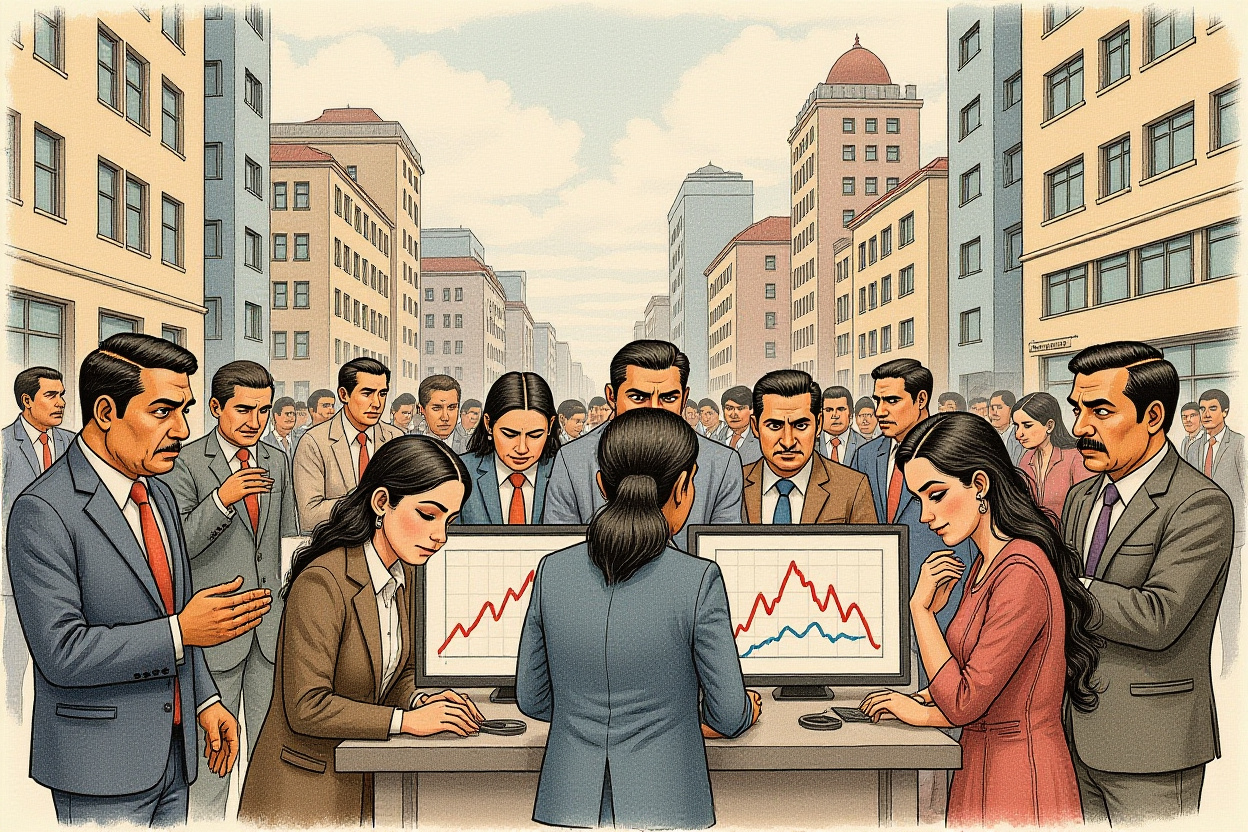
India faces a significant economic challenge as former U.S. President Donald Trump’s administration imposes punishing 50% tariffs on Indian goods, a move that government economic advisor V. Anantha Nageswaran (瓦拉达拉詹·阿南塔·纳格斯瓦兰) warns could reduce the country’s GDP growth by approximately 0.5 percentage points. Despite this external pressure, the Indian government maintains its growth projection of 6.3%-6.8% for the 2025-26 fiscal year, banking on strong domestic performance and recent policy measures to counterbalance the tariff impact. This economic standoff represents a critical test for India’s resilience in the global trade arena. The tariffs, reportedly imposed in response to India’s continued purchases of Russian oil, mark the highest rate applied to any Asian nation and threaten to undermine India’s competitive position against manufacturing rivals like Vietnam and Bangladesh. As the situation develops, economists and policymakers are closely monitoring how these Trump’s tariffs will affect India’s economic trajectory and what measures might be necessary to mitigate the damage. The duration of these Trump’s tariffs will ultimately determine their full impact on the Indian economy.
Understanding the Tariff Impact on India’s Economy
The imposition of 50% tariffs by the Trump administration represents one of the most significant trade challenges India has faced in recent years. According to V. Anantha Nageswaran (瓦拉达拉詹·阿南塔·纳格斯瓦兰), the government’s chief economic advisor, these Trump’s tariffs could reduce GDP growth by 0.5-0.6 percentage points during the current fiscal year if they remain in effect. This projection reflects the substantial trade relationship between the two nations, with the United States serving as India’s largest export market. The impact of these Trump’s tariffs extends beyond immediate financial losses. They create uncertainty for Indian exporters who must now reconsider their pricing strategies, supply chains, and market diversification efforts. The tariffs affect not only current orders but also future business relationships, as American importers may seek more stable trading partners without such punitive measures.
Sector-Specific Vulnerabilities
Certain industries face disproportionate exposure to these Trump’s tariffs: – Textiles and apparel: Labor-intensive sector highly sensitive to price changes – Jewelry and gems: Premium products where 50% tariffs dramatically affect affordability – Agricultural products: Commodities where thin margins make tariffs particularly damaging – Automotive components: Supply chain dependencies that are difficult to quickly reconfigure These sectors employ millions of Indian workers and contribute significantly to export revenues. The Trump’s tariffs threaten not only corporate profits but also livelihoods across these industries.
India’s Economic Resilience and Growth Projections
Despite the challenging external environment, the Indian government maintains its growth forecast of 6.3%-6.8% for the 2025-26 fiscal year. This confidence stems from several positive economic indicators and policy measures that provide a buffer against external shocks. The April-June quarter showed remarkable resilience with 7.8% growth, the fastest pace in over a year, demonstrating the underlying strength of the Indian economy. Several factors support India’s ability to withstand the impact of Trump’s tariffs: – Strong domestic consumption patterns – Diversified export markets reducing over-reliance on any single country – Robust digital infrastructure supporting new economic opportunities – Growing manufacturing capabilities under production-linked incentive schemes
Policy Measures Supporting Growth
The government has implemented several measures to counterbalance the potential damage from Trump’s tariffs: Recent tax reductions on most household items through GST reforms are expected to boost GDP by 0.2-0.3 percentage points, partially offsetting the tariff impact. Direct tax cuts have increased disposable income, supporting consumer spending that drives economic growth. The government remains committed to its fiscal deficit target of 4.4% for the current year, with the RBI’s substantial dividend payment and asset sale revenues helping to maintain fiscal stability. These policy measures demonstrate the government’s multi-pronged approach to maintaining economic momentum despite external challenges like the Trump’s tariffs.
Duration Dependency: How Long-Term Tariffs Would Amplify Impact
The ultimate economic damage from Trump’s tariffs heavily depends on their duration. Nageswaran emphasized that if the tariff uncertainty continues into the next fiscal year, the impact would be significantly more severe. Temporary measures allow businesses to absorb costs or temporarily shift strategies, but prolonged tariffs force permanent restructuring that can cause lasting economic damage. Short-term Trump’s tariffs (3-6 months) might be managed through: – Temporary price adjustments – Inventory management strategies – Short-term financing solutions – Operational efficiency improvements Extended Trump’s tariffs (12+ months) would necessitate more drastic measures: – Permanent supply chain reorganization – Market diversification requiring substantial investment – Product redesign or repricing strategies – Workforce restructuring or reduction Each additional month of these Trump’s tariffs increases the likelihood of permanent market share loss to competitors in Vietnam, Bangladesh, and other manufacturing hubs not facing similar trade barriers.
Comparative Advantage Erosion
The 50% tariff rate specifically targets India’s cost competitiveness, which has been a key advantage in global markets. By making Indian products significantly more expensive than alternatives, these Trump’s tariffs undermine the fundamental economic proposition that has driven export growth. This is particularly damaging because: – Competitor nations face lower tariff barriers – Buyers develop new supplier relationships that may persist even after tariffs lift – India’s manufacturing investment appeal diminishes relative to other destinations The longer these Trump’s tariffs remain, the more permanent these shifts become, creating structural challenges beyond the immediate fiscal impact.
Strategic Responses and Mitigation Approaches
Indian policymakers and businesses are deploying multiple strategies to counter the impact of Trump’s tariffs. These approaches recognize that while the government works on diplomatic solutions, economic actors cannot remain passive in the face of such significant trade barriers. The government is pursuing bilateral discussions to seek exemptions or reductions in the tariff rates, while simultaneously accelerating trade agreements with other partners to diversify export markets. Businesses are reassessing their supply chains and production costs to identify efficiency improvements that can partially absorb tariff impacts. Many companies are increasing their focus on domestic and other international markets to reduce dependence on the U.S. market. Industry groups are collaborating to develop collective responses, including potential challenges through WTO mechanisms.
Sector-Specific Adaptation Strategies
Different industries are adopting tailored approaches to address the challenge of Trump’s tariffs: Textile manufacturers are exploring premium product segments where tariff impacts represent a smaller percentage of final consumer prices. Jewelry exporters are increasing their focus on design innovation and craftsmanship differentiation to justify higher price points. Agricultural exporters are identifying products with less elastic demand where price increases can be more easily passed through to consumers. Technology companies are accelerating digital service exports which face different trade barriers than physical goods. These adaptive strategies demonstrate the resilience and creativity of Indian businesses in responding to challenging trade conditions created by the Trump’s tariffs.
Broader Implications for Global Trade Architecture
The imposition of these high tariffs on India reflects broader shifts in global trade relationships and the potential return of more aggressive trade policies. These Trump’s tariffs represent not just a bilateral issue but a sign of how trade might be weaponized in future geopolitical disagreements. This development has implications beyond India-U.S. relations: Other developing nations may reconsider their exposure to similar measures based on foreign policy decisions. The reliability of the U.S. as a trading partner comes into question, potentially accelerating regional trade bloc formation. The World Trade Organization’s dispute resolution mechanisms may face renewed testing as countries respond to unilateral tariff measures. Global supply chain planning increasingly must incorporate political risk alongside traditional economic considerations.
Historical Context and Precedents
Previous episodes of significant tariff imposition provide useful context for understanding the potential trajectory of these Trump’s tariffs: The 2002 steel tariffs imposed by the Bush administration were largely withdrawn after WTO rulings and retaliatory measures. The 2018-2019 trade war between the U.S. and China created significant disruptions but eventually led to a phase one trade agreement. Section 232 and 301 tariffs imposed during the Trump administration faced legal challenges but largely remained in place. These historical examples suggest that while these Trump’s tariffs may face legal and diplomatic challenges, they could persist for an extended period, necessitating long-term adaptation strategies.
Future Outlook and Economic Trajectory
The ultimate impact of Trump’s tariffs on India’s economy will depend on multiple factors beyond just their duration. Domestic policy responses, global economic conditions, and alternative market opportunities will all influence how significantly these trade barriers affect growth. Several scenarios could unfold: A quick resolution through diplomatic channels would minimize economic damage and allow for rapid recovery of trade flows. Protracted negotiations with temporary exemptions for certain sectors could create a mixed impact across industries. Extended tariffs with gradual market diversification would slow growth initially but potentially create more balanced trade relationships long-term. Escalation to broader trade tensions could trigger more significant economic consequences requiring major policy interventions. The government’s maintained growth forecast suggests confidence in India’s ability to navigate these challenges, but acknowledges the 0.5% potential growth reduction from these Trump’s tariffs.
Monitoring Indicators and Key Metrics
Several economic indicators will help assess the real-time impact of Trump’s tariffs: Monthly export data to the U.S. across affected sectors will show immediate demand changes. Export diversification metrics will reveal how quickly businesses are finding alternative markets. Employment figures in export-oriented industries will indicate broader economic consequences. Investment flow data will show whether manufacturing expansion plans are being adjusted due to trade uncertainty. Regular monitoring of these indicators will help policymakers calibrate responses and support measures to counter the effects of these Trump’s tariffs. India stands at a critical juncture where economic policy must balance external challenges with domestic priorities. While the Trump’s tariffs present undeniable headwinds, the country’s strong fundamentals and policy flexibility provide reasons for cautious optimism. The coming months will test India’s economic resilience and its ability to navigate complex international trade relationships while maintaining growth momentum. Businesses and policymakers must remain agile, preparing for various scenarios while continuing to strengthen the domestic economic foundation. For those interested in tracking this evolving situation, regular updates from the Ministry of Commerce and Industry provide official perspectives on trade developments. International organizations like the IMF and World Bank also offer analysis of global trade dynamics that can inform understanding of how these Trump’s tariffs fit into broader patterns. As the situation develops, staying informed through reliable economic reporting will be essential for businesses and investors making decisions affected by these trade policy changes.