



Executive Summary: Key Takeaways on IM Motors’ Market Struggle
Before diving into the analysis, here are the critical points that define IM Motors’ current predicament and its implications for the Chinese EV sector.
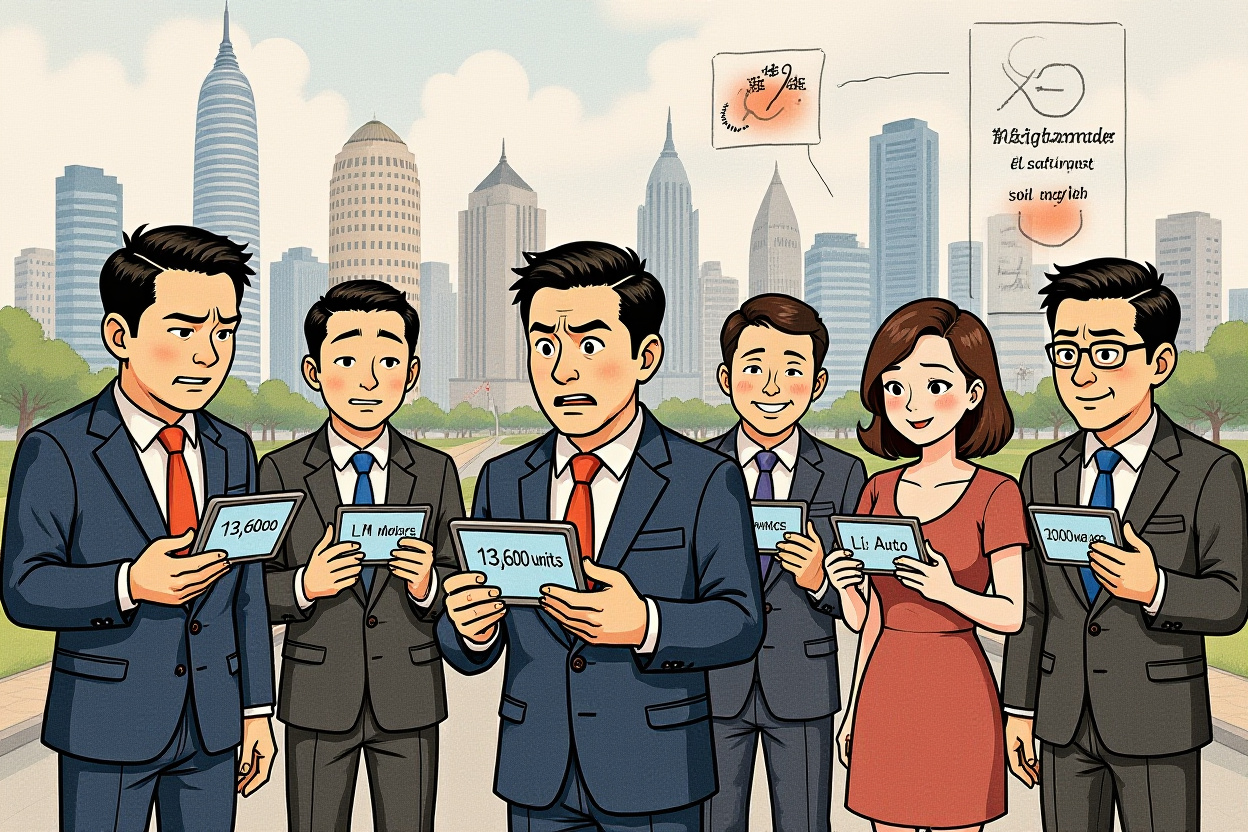
- IM Motors, the premium EV brand under SAIC Group (上汽集团), achieved a record monthly delivery of 13,600 units in November, yet it remains far from the industry’s safety zone, now consensus-set at 20,000 units per month for sustainable operations.
- Internal brand competition within SAIC, particularly with Feifan (飞凡) and the upcoming Huawei-backed Aito (尚界), threatens to cannibalize resources and confuse consumer positioning, undermining IM Motors’ growth trajectory.
- CEO Liu Tao’s (刘涛) series of marketing gaffes, including failed product demonstrations and controversial comparisons, have eroded brand credibility and highlighted leadership shortcomings in a market where executive persona is increasingly pivotal.
- Persistent product quality complaints, such as software glitches in the IM LS6 model and disputed refund policies, signal deeper operational issues that could hinder customer retention and trust.
- To break into the safe zone, IM Motors must overhaul its strategy, focusing on distinct product differentiation, robust quality control, and cohesive branding, rather than relying on price cuts or gimmicky features.
The Perilous Race to the Safe Zone in China’s EV Arena
In the frenzied battleground of China’s electric vehicle market, achieving a sales milestone is no longer synonymous with security. For IM Motors (智己汽车), the premium electric vehicle subsidiary launched by SAIC Group, Zhangjiang Hi-Tech (张江高科), and Alibaba Group (阿里巴巴集团), November’s delivery of 13,600 units marked a historical high. Yet, this accomplishment rings hollow against the backdrop of an industry where the safety zone—the threshold for stable survival—has escalated dramatically. Originally pegged at around 10,000 units monthly, the safe zone now hovers at 20,000 units, as evidenced by the robust performances of leaders like Nio (蔚来) and Li Auto (理想汽车). IM Motors’ incremental progress, while commendable, falls short of this benchmark, leaving the brand vulnerable in a sector characterized by rapid consolidation and fierce competition. This disconnect underscores a fundamental challenge: in China’s EV wars, breaking into the safe zone requires not just sales spikes, but sustained momentum and strategic clarity.
The urgency to break into the safe zone is amplified by the explosive growth of rivals. In the same November period, Leapmotor (零跑) reported year-over-year sales growth exceeding 75%, with monthly deliveries surpassing 70,000 units, while Seres (赛力斯) saw its new energy vehicle sales jump nearly 50% to 55,200 units. These figures demonstrate that consumer demand remains robust, contradicting any narrative of market fatigue. For IM Motors, which has struggled to gain traction since its 2020 inception, the inability to capitalize on this demand points to internal fissures rather than external headwinds. As the industry accelerates, the window for IM Motors to secure its position is narrowing, making the quest to break into the safe zone a race against time.
The Evolving Metrics of Market Survival
The concept of a safety zone in China’s EV market is fluid, shaped by scaling economies, technological advancements, and investor expectations. Initially, startups aimed for 10,000 monthly deliveries to achieve operational breakeven and attract further funding. However, as price wars intensify and manufacturing costs rise, analysts now cite 20,000 units as the new baseline for viability. This shift reflects the market’s maturation, where only players with significant volume can negotiate better supply chain terms and invest in R&D for autonomous driving and battery innovation. For IM Motors, which has hovered in the low thousands for much of its existence, the recent surge to 13,600 units is a step forward, but it remains a distant cry from the safety zone. Without crossing this threshold, the brand risks being sidelined in a market where giants like BYD (比亚迪) and Tesla (特斯拉) dominate, and nimble newcomers like Xiaomi (小米) make aggressive entries.
Internal Strife: The SAIC Portfolio’s Competitive Quagmire
IM Motors’ struggle to break into the safe zone is compounded by internal competition within its parent company, SAIC Group. Conceived as part of SAIC’s dual-brand strategy for premiumization, IM Motors was tasked with targeting the 300,000 yuan and above segment, while Feifan focused on the 200,000 yuan range. This plan quickly unraveled amid industry-wide price cuts, forcing IM Motors to lower its prices, which led to overlapping positioning with Feifan. For instance, the IM LS6, a volume model, launched with a starting price of 229,900 yuan, dangerously close to Feifan’s offerings. This internal cannibalization dilutes marketing efforts and confuses consumers, making it harder for IM Motors to carve out a distinct identity. Moreover, the impending launch of Aito, a joint venture with Huawei (华为), adds another layer of complexity. Huawei’s technological prowess in smart cabins and autonomous driving could overshadow IM Motors’智能 positioning, further straining resources and attention within SAIC.
The Feifan Rivalry and Resource Dilution
The rivalry with Feifan exemplifies the challenges of multi-brand strategies in fast-moving markets. Both brands emerged around the same time, but Feifan has also struggled to gain significant market share, creating a scenario where SAIC’s premium EV efforts are fragmented. In 2022, when Feifan’s R7 debuted at over 300,000 yuan, IM Motors responded with the LS7 priced at 289,800 yuan, sparking direct competition. This price convergence has blurred brand boundaries, forcing both to compete for the same pool of customers. Unlike independent EV startups that can focus solely on their own growth, IM Motors must navigate internal politics and shared resources, which can slow decision-making and innovation. As noted in industry reports, this internal strife is a key reason why IM Motors has yet to break into the safe zone, despite its privileged backing.
The Huawei Partnership: A Double-Edged Sword
SAIC’s collaboration with Huawei through the Aito brand introduces both opportunities and threats. While Huawei’s brand appeal and technical expertise could boost SAIC’s overall EV portfolio, it may also divert investment and strategic focus away from IM Motors. Aito models, leveraging Huawei’s HarmonyOS and advanced driver-assistance systems, have already gained traction, posing a direct challenge to IM Motors’ smart vehicle claims. For IM Motors, this means competing not only with external rivals but also with a sister brand that enjoys stronger consumer recognition and tech credibility. To break into the safe zone, IM Motors must differentiate itself decisively, perhaps by leveraging SAIC’s manufacturing scale or Alibaba’s data capabilities, but this requires clear prioritization from parent-company leadership.
Marketing Missteps and Leadership Controversies
IM Motors’ journey has been marred by a series of public relations blunders, largely centered on its CEO, Liu Tao (刘涛). In an era where executive branding is integral to corporate image, Liu Tao’s actions have repeatedly drawn negative attention, undermining efforts to break into the safe zone. During the IM LS6 launch event in September 2023, Liu Tao attempted to demonstrate the car’s drift capabilities but crashed into traffic cones twice, turning a promotional showcase into a viral embarrassment. Earlier, at the IM L6 unveiling in April 2023, he was accused of misrepresenting specifications of competitor Xiaomi’s SU7 model, sparking a feud that led to accusations of organized online bullying. These incidents, compounded by past videos showing Liu Tao violating traffic rules during test drives, have painted a picture of unprofessionalism that contrasts sharply with the polished personas of rivals like Li Xiang (李想) of Li Auto or He Xiaopeng (何小鹏) of Xpeng (小鹏汽车).
The Cost of Negative Publicity on Brand Equity
Marketing mishaps have tangible impacts on consumer perception and sales potential. In IM Motors’ case, the controversies have diverted attention from product strengths to executive foibles, making it harder to build brand loyalty. According to consumer sentiment analyses, such events can erode trust, particularly in a market where safety and reliability are paramount for EV adopters. For a brand trying to break into the safe zone, positive word-of-mouth and media coverage are crucial; instead, IM Motors has faced scrutiny over its leadership’s judgment. This has forced the company into defensive positions, issuing apologies and statements that do little to advance its market position. As competitors leverage CEO charisma to narrate visions of AI and robotics, IM Motors struggles to project confidence, hindering its ability to attract investors and partners.
Product Quality and Consumer Trust: The Foundation of Safety
Beyond marketing, IM Motors faces significant hurdles in product quality and customer service, which are essential for breaking into the safe zone. Shortly after the IM LS6’s launch, it garnered hundreds of complaints on platforms like China’s 12315 system, citing issues such as malfunctioning infotainment systems, radar failures, and unresponsive displays. These glitches, deemed basic for a smart EV brand, prompted an apology from Liu Tao and offers of compensatory services, but consumer skepticism persists. Recent months have seen ongoing complaints about motor noises and disputes over non-refundable pre-payments, where IM Motors’ policy of locking orders within 24 hours has led to customer frustrations. Additionally, the IM LS9’s marketed feature of an in-car shower—using a 10-liter water tank—has been criticized as a gimmick lacking practical utility, reflecting a potential misalignment with consumer needs.
The LS6 Saga: A Case Study in Operational Shortfalls
The IM LS6, positioned as a volume driver, highlights the brand’s quality control challenges. Data from third-party complaint portals shows over a hundred grievances in the past six months, ranging from software bugs to hardware defects. For instance, some owners reported complete blackouts of vehicle information displays, posing safety risks. While IM Motors has addressed some issues through over-the-air updates, the recurrence of problems suggests deeper systemic flaws in testing or supply chain management. In a competitive landscape where brands like BYD and Tesla emphasize reliability, such shortcomings make it difficult for IM Motors to retain customers and achieve the consistent sales volume needed to break into the safe zone. Moreover, the refund policy controversies indicate gaps in sales ethics, further tarnishing brand reputation.
Consumer Backlash and Market Perception
Negative experiences translate into poor market perception, which can stifle growth. The pre-payment disputes, where sales agents allegedly promised refundability contrary to official policy, point to training and oversight issues. This erodes trust, a critical asset for a new brand. As industry experts note, breaking into the safe zone requires not just acquiring customers but delighting them to foster repeat purchases and referrals. IM Motors’ focus on niche features like in-car showers, while innovative, may distract from core improvements in battery range, charging infrastructure, or autonomous driving—areas where consumers prioritize investment. To truly break into the safe zone, IM Motors must recalibrate its product roadmap to address fundamental quality and service pain points.
Strategic Crossroads: Navigating the Path to the Safe Zone
For IM Motors to break into the safe zone, it must embark on a comprehensive strategic overhaul. This involves reassessing its brand positioning, enhancing operational rigor, and leveraging its parent company’s assets more effectively. Unlike cash-strapped startups, IM Motors benefits from SAIC’s financial backing, but it needs to translate this into competitive advantages. First, it should clarify its differentiation from Feifan and Aito, perhaps by doubling down on luxury or performance niches where SAIC has historical expertise. Second, investing in quality assurance and customer service can rebuild trust; this could include extended warranties or transparent communication channels. Third, marketing efforts should shift from CEO-centric stunts to storytelling around technological innovations, such as collaborations with Alibaba on cloud connectivity or AI. Finally, exploring export opportunities could provide additional volume, helping it approach the safety zone faster.
Rebuilding Brand Trust Through Transparency
Regaining consumer confidence is paramount. IM Motors could initiate a quality transparency campaign, publishing regular reports on defect rates and improvement metrics, similar to practices by global automakers. Engaging with owner communities to co-create features might also foster loyalty. Additionally, revising sales policies to be more customer-friendly, such as flexible cancellation windows, could mitigate negative perceptions. As the brand works to break into the safe zone, these steps can create a foundation of reliability that attracts more cautious buyers in a saturated market.
Leveraging SAIC’s Ecosystem for Scale
SAIC’s extensive manufacturing and R&D capabilities offer a potential lifeline. IM Motors could integrate more shared platforms to reduce costs and accelerate production, enabling faster scaling towards the 20,000-unit threshold. Collaborations with SAIC’s joint ventures, such as with Volkswagen or General Motors, might provide access to advanced battery technology or global design insights. By strategically aligning with parent-company resources, IM Motors can overcome some of the scalability issues that hinder independent startups, making it feasible to break into the safe zone within the next 12-18 months.
Synthesizing the Challenge and Call to Action
IM Motors’ story is a microcosm of the broader upheaval in China’s automotive sector, where legacy giants grapple with innovation and market dynamics. While its record sales are a positive sign, they remain insufficient to break into the safe zone, exposing vulnerabilities in strategy, execution, and brand management. The internal competition with Feifan and Aito, coupled with leadership missteps and product quality issues, creates a multifaceted challenge that demands urgent addressal. For investors and industry observers, IM Motors serves as a case study in the perils of transitional periods; its fate will hinge on whether it can pivot from incremental gains to transformative actions. Looking ahead, the brand must prioritize cohesive branding, operational excellence, and customer-centric innovations to secure its place in the competitive hierarchy. As the EV race accelerates, the time for IM Motors to act is now—only by decisively overcoming these hurdles can it hope to truly break into the safe zone and ensure long-term viability in China’s unforgiving electric vehicle landscape.