



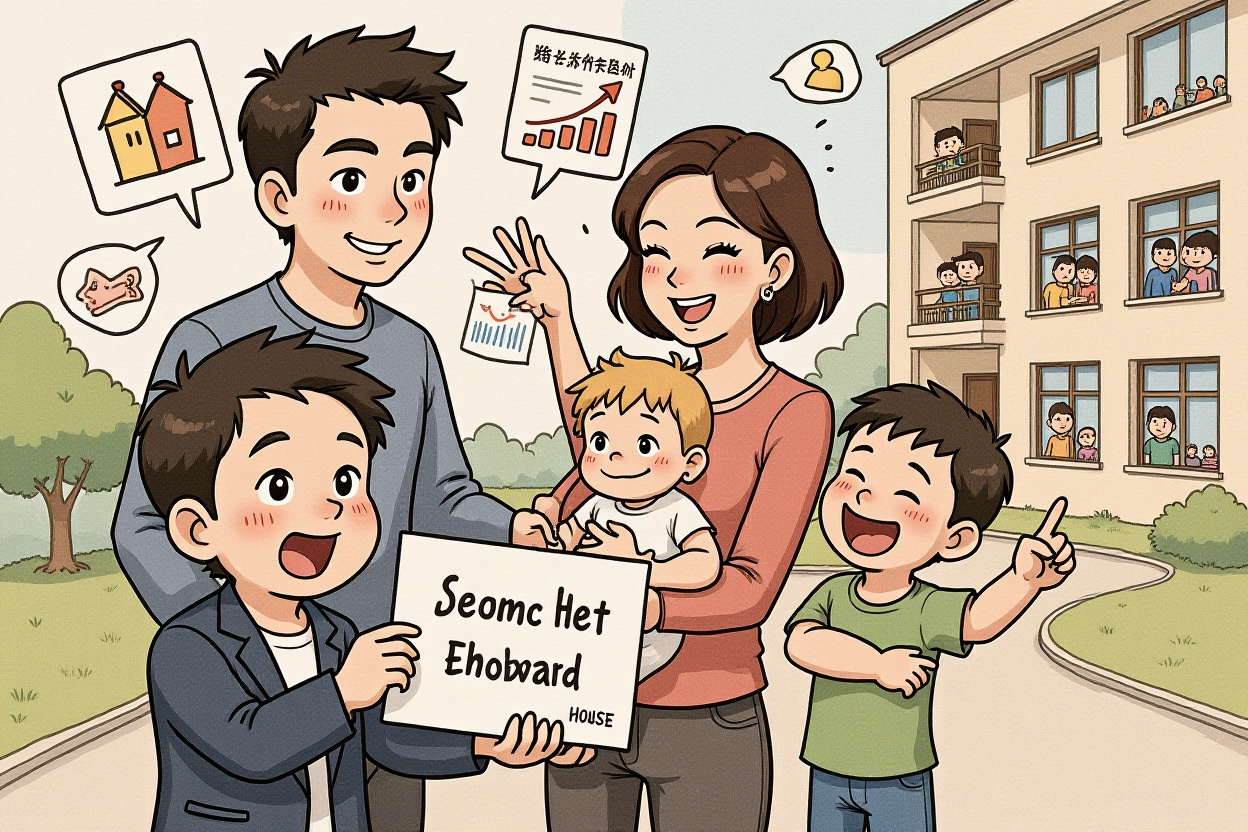
In a bold move to address demographic challenges, local governments in China are rolling out unprecedented incentives, with Hubei Province’s Zhushan County (竹山县) leading the charge by offering housing subsidies for families having children. This policy, part of a broader national trend, has significant implications for real estate markets, consumer spending, and long-term economic growth. For investors in Chinese equities, understanding these birth incentive policies is crucial for navigating sectors from property development to childcare services.
Executive Summary: Key Takeaways for Market Participants
- Zhushan County in Hubei Province provides housing subsidies of 25 square meters for a second child and 50 square meters for a third, potentially totaling 75 square meters, aimed at boosting local urbanization and birth rates.
- Similar birth incentive policies are emerging nationwide, including cash rewards and monthly allowances, reflecting government urgency to counter aging populations and stimulate economic vitality.
- These initiatives could catalyze demand in real estate and related sectors, offering investment opportunities but also posing risks from regulatory shifts and demographic uncertainties.
- National frameworks, such as the育儿补贴制度实施方案 (Childcare Subsidy System Implementation Plan), are expanding support, with healthcare reforms enhancing maternity benefits, signaling sustained policy commitment.
- For global investors, monitoring these trends is essential for assessing Chinese market resilience and identifying growth areas in consumer and healthcare equities.
The Zhushan County Initiative: A Case Study in Local Birth Incentives
Recent viral posts on social media have spotlighted Zhushan County’s innovative approach, where families receive “生育二孩奖励资格凭证” (Second Child Reward Eligibility Certificate) and “生育三孩奖励资格凭证” (Third Child Reward Eligibility Certificate). This local birth incentive policy is not just a social experiment but a strategic economic lever, directly tying family planning to housing purchases in designated urban areas.
Policy Details and Implementation Mechanisms
According to official documents from the竹山县官网 (Zhushan County Official Website), the “黄金十条” (Golden Ten Articles) introduced in August 2024 aim to accelerate urbanization. For births between June 1, 2021, and June 1, 2026, families buying new commercial housing in specified developments can claim subsidies: 25 square meters for a second child and 50 square meters for a third, with叠加计算 (stackable calculations) allowing up to 75 square meters. Updates in March 2024 extended the eligibility window to December 31, 2025, and clarified rules for多胞胎 (multiple births) and再婚家庭 (remarried families).
Beyond housing, additional perks include a one-time 10,000 yuan reward for third children, monthly 500 yuan育儿补贴 (childcare subsidies) until age three, and 300 yuan托育补助 (nursery subsidies) for enrolled infants. These comprehensive birth incentive policies demonstrate a multi-faceted approach to reducing the financial burden on parents.
Financial Implications for Families and Local Economy
For a typical family, the housing subsidy could offset a significant portion of mortgage costs, potentially stimulating property sales in a sluggish market. Local real estate developers may see increased demand, but investors should note the targeted nature of these programs, which could lead to uneven regional growth. The cash injections also boost disposable income, possibly driving consumption in retail and services sectors.
Broader Trend: National and Provincial Childbirth Subsidy Policies
Zhushan’s model is part of a wider movement across China, as provinces and cities deploy various incentives to reverse declining birth rates. This trend underscores the government’s prioritization of demographic stability as a cornerstone for economic planning.
Comparison with Other Regions like Tianmen
In天门市 (Tianmen City), also in Hubei, reports indicate even more generous packages, with second-child families eligible for up to 287,200 yuan and third-child families for 356,000 yuan in total subsidies. According to湖北日报 (Hubei Daily), these birth incentive policies have yielded positive results: Tianmen’s birth population grew 17% in 2024, the first increase in eight years, with a 5.6% rise in the first half of this year. Such data points suggest that well-funded incentives can have immediate demographic impacts, though sustainability remains a question.
National Framework and Healthcare Support
The national育儿补贴制度实施方案 (Childcare Subsidy System Implementation Plan), launched in July, mandates an annual 3,600 yuan per child for infants under three, with provinces like湖北 (Hubei),吉林 (Jilin), and广东 (Guangdong) rolling out配套实施方案 (supporting implementation plans). The全国医疗保障工作会议 (National Healthcare Security Work Conference) in December discussed enhancing产前检查 (prenatal check-up) coverage and分娩镇痛 (childbirth analgesia) benefits, aiming for “无自付” (zero out-of-pocket) costs for deliveries. These steps integrate birth incentive policies into broader social welfare reforms, potentially reducing healthcare equities’ volatility.
Economic and Market Implications for Investors
For sophisticated investors, China’s birth incentive policies represent both opportunities and risks. The direct correlation with real estate and consumer sectors necessitates a nuanced analysis of market dynamics.
Real Estate Sector Opportunities and Risks
Subsidized housing demand could buoy developers focused on affordable urban projects, particularly in regions like Hubei. Companies such as those listed on the上海证券交易所 (Shanghai Stock Exchange) or深圳证券交易所 (Shenzhen Stock Exchange) with exposure to second-tier cities might benefit. However, over-reliance on policy-driven demand poses risks if incentives are scaled back or if demographic responses are weaker than expected. Investors should monitor sales data from counties like Zhushan for early signals.
Demographic Trends and Long-term Growth Prospects
China’s aging population, with projections from the国家统计局 (National Bureau of Statistics) showing a shrinking workforce, makes these birth incentive policies critical for sustaining economic growth. Successful implementation could boost future consumer markets, from education to healthcare, making equities in these sectors attractive. Conversely, failure to reverse trends might pressure pension systems and healthcare costs, affecting related stocks.
Regulatory Environment and Government Priorities
The Chinese government’s approach blends local experimentation with national coordination, reflecting a pragmatic stance on demographic challenges. These birth incentive policies are embedded within larger economic strategies.
China’s Aging Population and Policy Responses
With the老年人 (elderly) population rising, authorities are leveraging tools like housing subsidies to align family planning with urbanization goals. The中国人民银行 (People’s Bank of China) and财政部 (Ministry of Finance) may adjust fiscal and monetary policies to support such initiatives, impacting bond and equity markets. For instance, increased local government spending on subsidies could influence yield curves for人民币-denominated (RMB-denominated) bonds.
Integration with Urbanization and Housing Policies
Policies like Zhushan’s “黄金十条” (Golden Ten Articles) explicitly link birth incentives to urban development, aiming to revitalize smaller cities. This aligns with national plans such as the新型城镇化规划 (New Urbanization Plan), which could drive infrastructure investments. Real estate investment trusts (REITs) and construction firms might see renewed interest, but investors must assess regional execution risks.
Global Perspective: Lessons from International Demographics
Comparing China’s birth incentive policies with global examples provides context for investors evaluating cross-border opportunities. Countries like Japan and Singapore have implemented similar measures with mixed results.
Similar Policies in Other Countries
Nations facing demographic declines, such as Japan’s childcare allowances or Singapore’s baby bonuses, offer precedents. While these have modestly boosted birth rates in some cases, they often require long-term fiscal commitment. For Chinese markets, this suggests that sustained policy support is essential, potentially benefiting sectors like insurance and family services.
Impact on Chinese Equity Markets
The ripple effects of birth incentive policies could enhance market sentiment, particularly for consumer staples and healthcare stocks. As families receive subsidies, discretionary spending might rise, favoring companies in the沪深300指数 (CSI 300 Index). However, global investors should factor in currency fluctuations and trade dynamics, as demographic shifts influence yuan trends and export competitiveness.
Synthesizing Insights for Forward-Looking Strategies
China’s aggressive push through birth incentive policies, exemplified by Hubei’s housing subsidies, marks a pivotal turn in addressing demographic headwinds. For institutional investors and corporate executives, these developments signal potential growth in real estate, consumer goods, and healthcare sectors, but also underscore the need for vigilance on policy continuity and regional disparities.
To capitalize on these trends, consider diversifying portfolios into equities linked to urban development and family services, while monitoring official announcements from bodies like the国家卫生健康委员会 (National Health Commission). Engage with market analyses that track subsidy implementations and birth rate correlations, as these will be key indicators for Chinese economic resilience in the coming years.