



Executive Summary
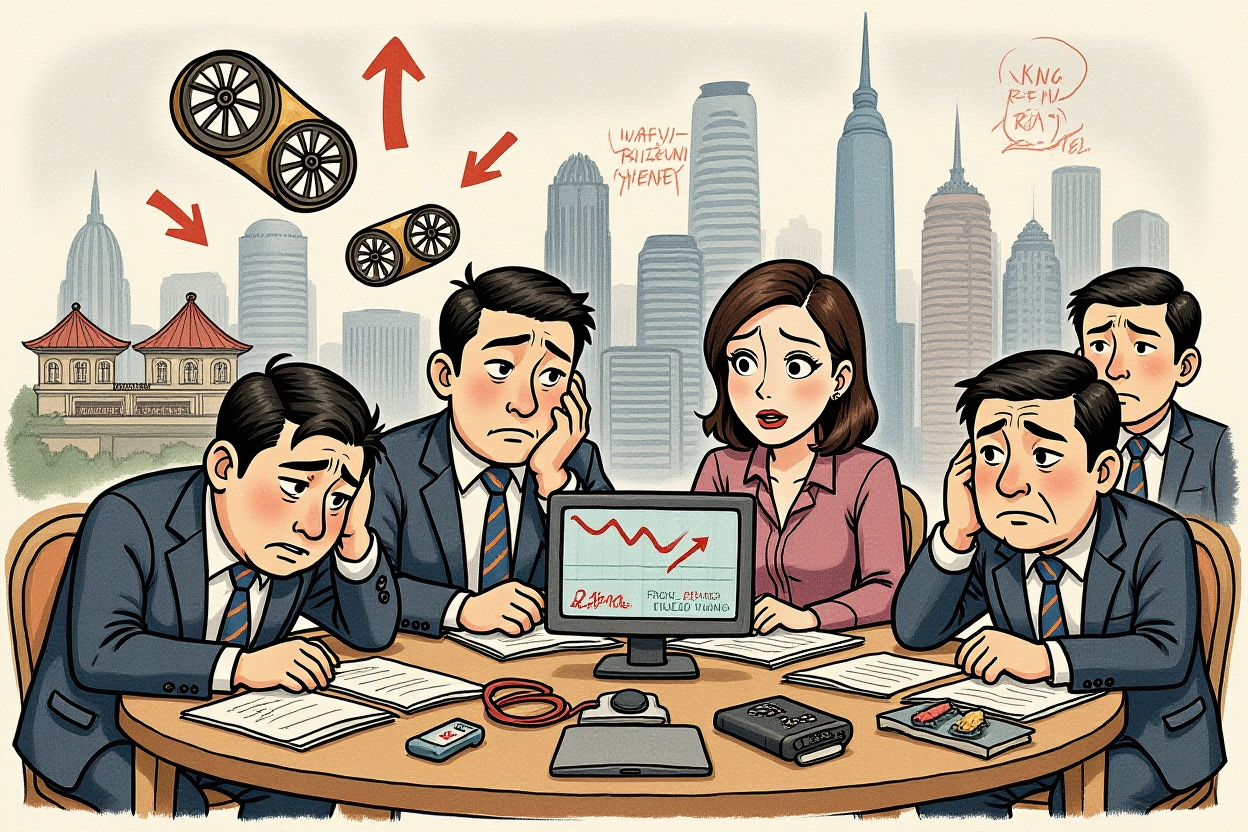
This analysis delves into the escalating financial and operational crisis at Huayi Brothers Media Co., Ltd., once China’s premier film studio. Key takeaways include:
– Wang Zhongjun (王中军), co-founder and legal representative, is subject to a consumption restriction order due to an advertising contract dispute, intensifying liquidity pressures.
– The company has disclosed 52.5 million yuan in overdue debt, exceeding 10% of its audited net assets, with multiple bank accounts frozen and controlling shareholders’ shares entirely seized.
– Huayi Brothers’ market value has collapsed by over 90% from its peak, with cumulative net losses surpassing 8 billion yuan over the past seven years, driven by strategic missteps and failed diversification.
– Major shareholders including Alibaba’s investment arm and Ma Yun (马云) pose control risks as share auctions proceed, highlighting governance vulnerabilities.
– Recovery efforts rely on upcoming film releases, short drama ventures, and AI integration, but investor confidence remains critically low amid persistent operational headwinds.
A Studio in Distress: The Immediate Crisis Unfolds
The financial unraveling of Huayi Brothers has reached a critical juncture, with legal and liquidity issues converging to threaten its survival. This crisis is epitomized by recent enforcement actions against its leadership and stark debt disclosures.
Details of the Restriction Consumption Order
According to corporate data platform Tianyancha, Huayi Brothers and its legal representative Wang Zhongjun (王中军) were recently issued a restriction consumption order by the Beijing Chaoyang District People’s Court. This order stems from an advertising contract dispute with applicant Beijing Tairuifeike Technology Co., Ltd., limiting high-consumption activities for Wang Zhongjun (王中军) and the company. Such orders are typically imposed when entities fail to fulfill court judgments, signaling severe cash flow constraints and legal entanglements that exacerbate Huayi Brothers’ crisis.
The consumption ban on Wang Zhongjun (王中军) is not merely symbolic; it restricts travel, luxury purchases, and other expenditures, impairing his ability to conduct business and negotiate deals. This development underscores the deepening operational crisis at Huayi Brothers, where management’s focus is diverted from revival to survival.
Financial Implications of 52.5 Million Yuan Debt
In a December 10, 2025 disclosure to the Shenzhen Stock Exchange, Huayi Brothers admitted to 52.5 million yuan in overdue debt to banks and other financial institutions. This amount exceeds 10% of the company’s 2024 audited net assets, triggering regulatory concerns and potential covenant breaches. The company cited delayed repayments due to temporary liquidity shortages, with some bank accounts already frozen.
Huayi Brothers stated it is negotiating with lenders for loan extensions and settlements, emphasizing asset sales to refocus on core film production. However, the scale of overdue debt—while modest relative to total liabilities—highlights a critical cash crunch. Key financial implications include:
– Increased borrowing costs and restricted access to new credit.
– Potential acceleration of other debts if cross-default clauses are invoked.
– Erosion of supplier and partner trust, impacting production schedules.
This debt overdue is a stark marker of Huayi Brothers’ crisis, reflecting years of financial mismanagement and market downturns.
Historical Context: From Film Giant to Financial Distress
To understand the current crisis, one must revisit Huayi Brothers’ rise and fall. Founded in 2004 by brothers Wang Zhongjun (王中军) and Wang Zhonglei (王中磊), the company debuted on the Shenzhen Stock Exchange in 2009 as China’s first listed film entertainment stock. Its peak saw a market capitalization exceeding 90 billion yuan, driven by blockbuster franchises and star-powered portfolios.
Peak Years and Strategic Missteps
Huayi Brothers dominated Chinese cinema through deep ties with director Feng Xiaogang and a stable of A-list celebrities like Huang Xiaoming, Deng Chao, and Li Bingbing. Hits such as A World Without Thieves, If You Are the One, and the Detective Dee series fueled revenue and investor euphoria. However, the company’s ‘de-filmization’ strategy—aimed at reducing reliance on movie revenue—proved disastrous. Launched in 2014, this pivot sought diversification but coincided with industry shifts and internal turmoil.
Critical missteps included overreliance on a few directors, mishandling of celebrity scandals, and failure to adapt to streaming disruptions. The Huayi Brothers’ crisis began brewing as box office returns dwindled and production costs soared, setting the stage for sustained losses.
Diversification Failures in Tourism and Gaming
Huayi Brothers ventured into tourism and gaming to hedge against film volatility, but both endeavors amplified losses. In tourism, the company invested 3.5 billion yuan in a Suzhou film-themed park that opened in 2018. Despite grand ambitions, the park incurred continuous losses due to high operational costs and insufficient visitor traffic, leading to its sale to Haihe’an Tourism in September 2025.
The gaming foray was equally ill-fated. In 2015, Huayi Brothers paid 1.9 billion yuan for a 20% stake in Hero Entertainment, hoping for film-game synergies. Hero Entertainment’s repeated IPO failures and operational decline—with revenue plunging 73.64% year-over-year in first-half 2024—forced Huayi Brothers to divest its stake for 336 million yuan in March 2025, booking a massive loss. These diversification failures drained capital and management attention, deepening the overall crisis.
Shareholder Structure and Control Risks
The ownership landscape at Huayi Brothers is increasingly fragmented, raising concerns about stability and future direction. With major stakes held by tech giants and founders’ shares frozen, control risks are paramount in this crisis.
Alibaba and Ma Yun’s Stake and Influence
As of Q3 2025, Alibaba’s investment arm, Hangzhou Ali Venture Capital Co., Ltd., and Ma Yun (马云) collectively hold 6.07% of Huayi Brothers’ shares, making them the second and third largest shareholders. They are considered acting-in-concert parties, and their potential actions could influence control. While Alibaba and Tencent (the fifth-largest shareholder) initially invested for content synergies, their patience may be wearing thin amid the prolonged crisis.
The presence of these tech giants offers a lifeline for potential restructuring or bailout, but also introduces uncertainty. Should they reduce stakes or demand strategic changes, it could destabilize management further, complicating recovery efforts.
Implications of Share Auctions and Freezes
Wang Zhongjun (王中军) and Wang Zhonglei (王中磊) now have 100% of their shares frozen, accounting for 13.81% of the company’s total equity. A block of 154 million shares held by Wang Zhongjun (王中军)—5.55% of total shares—is set for a second judicial auction on December 29-30, 2025, after an initial auction failed. Previous smaller auctions via JD.com’s judicial platform have already transferred shares.
Key implications include:
– Dilution of founder control, potentially leading to a change in corporate governance.
– Downward pressure on stock price from large block sales.
– Uncertainty for strategic investors evaluating entry points.
These share freezes and auctions are both a symptom and a cause of Huayi Brothers’ crisis, reflecting creditor actions and eroding market confidence.
Operational Challenges and Recent Performance
Beyond financials, Huayi Brothers faces steep operational hurdles. Recent film performances have been dismal, and cost-cutting measures have yet to stem the bleeding, underscoring the depth of the crisis.
Box Office Struggles and Production Pipeline
2025 releases like Sunflower, Lychee of Chang’an, and Volunteers: Blood for Peace failed to resonate with audiences or turn a profit. For the first nine months of 2025, revenue plummeted 46% year-over-year to 215 million yuan, with net losses widening 168% to 114 million yuan. This continues a brutal trend: from 2018 to 2024, annual net losses totaled over 8.2 billion yuan.
The production pipeline offers slim hope. Two high-profile projects are in advanced stages: Stephen Chow’s Mermaid 2 in post-production and Feng Xiaogang’s Catch the Spy, starring Lei Jiayin and Hu Ge, recently wrapped. Historically, these directors have delivered hits, but their ability to reverse fortunes is uncertain given shifting viewer preferences and competition from streaming platforms.
Cost-Cutting and Asset Disposal Efforts
Huayi Brothers is aggressively selling non-core assets to bolster liquidity. The company plans to exit low-synergy investments and use proceeds for core film and TV production. This restructuring is central to navigating the crisis, but execution risks remain high.
Asset disposal highlights include:
– The Suzhou theme park sale, though terms were undisclosed.
– Exiting the Hero Entertainment stake at a significant loss.
– Ongoing negotiations for other peripheral holdings.
While these moves may provide short-term cash, they also shrink the company’s scale and diversify revenue streams, potentially leaving it more exposed to film cyclicality.
Future Prospects: Can Huayi Brothers Recover?
The path out of Huayi Brothers’ crisis is narrow but not impossible. Management is betting on a multi-pronged strategy combining traditional filmmaking with digital innovation, yet skepticism abounds.
Upcoming Film Releases and Director Partnerships
Mermaid 2 and Catch the Spy represent critical tests. Stephen Chow and Feng Xiaogang have loyal followings, but their recent track records are mixed. Success hinges on marketing budgets, release timing, and audience reception in a post-pandemic market. Huayi Brothers must leverage these films not just for revenue but to restore brand prestige and attract co-production partners.
Long-term, the company may need to reforge director alliances beyond its core duo, investing in new talent and IP development to stay relevant.
Embracing Short Drama and AI Technologies
In response to the crisis, Huayi Brothers launched a short-drama label called “Huayi Brothers Fire Drama” and partnered with content platforms like China Literature and Dianzhong Technology. Short dramas, popular on mobile apps, offer lower production costs and faster monetization through micro-transactions.
Additionally, the company is exploring AI for scriptwriting, special effects, and distribution optimization. While these technologies could reduce costs and enhance creativity, they require upfront investment and expertise that may strain limited resources. This digital pivot is a recognition that traditional models are broken, but it remains a nascent effort amid the broader crisis.
Market Reaction and Investment Implications
Investor sentiment toward Huayi Brothers has turned profoundly negative, with the stock price reflecting years of disappointment. Understanding market dynamics is key for professionals assessing this crisis.
Stock Performance and Valuation Analysis
As of December 12, 2025, Huayi Brothers’ stock closed at 2.23 yuan, giving it a market cap of approximately 6.187 billion yuan—a drop of over 90% from its historical high. Trading volumes remain low, indicating limited institutional interest. The price-to-book ratio is deeply negative due to accumulated losses, and debt concerns overshadow any asset value.
Comparative analysis with peers like Beijing Enlight Media or Wanda Film shows that Huayi Brothers lags in both operational metrics and investor confidence. The stock is essentially pricing in a high probability of further dilution or restructuring, making it a speculative play rather than a value investment.
Lessons for Investors in Chinese Media Stocks
The Huayi Brothers’ crisis offers several cautionary lessons:
– Diversification away from core competencies can backfire without rigorous due diligence and integration plans.
– Overdependence on key personnel (directors, stars) creates single points of failure.
– Debt management is critical in cyclical industries like media; liquidity crunches can escalate rapidly.
– Regulatory shifts in China’s entertainment sector, including content controls and tax policies, require agile adaptation.
For investors, monitoring debt resolution, box office results of key films, and shareholder movements is essential before considering any position. The crisis may present a turnaround opportunity if asset sales and new releases gain traction, but risks remain elevated.
Synthesis and Forward Guidance
Huayi Brothers stands at a crossroads, with its crisis encompassing financial distress, operational challenges, and governance uncertainties. The consumption ban on Wang Zhongjun (王中军), share freezes, and massive cumulative losses paint a dire picture, yet the company’s legacy assets and strategic shifts offer glimmers of hope. Recovery will depend on successful execution of film releases, short-drama monetization, and prudent debt management. Investors should watch for catalysts such as debt restructuring agreements, box office surprises, or strategic investor injections. In the volatile Chinese media landscape, Huayi Brothers’ saga underscores the importance of agility and financial discipline—lessons that resonate far beyond this single company’s plight.