



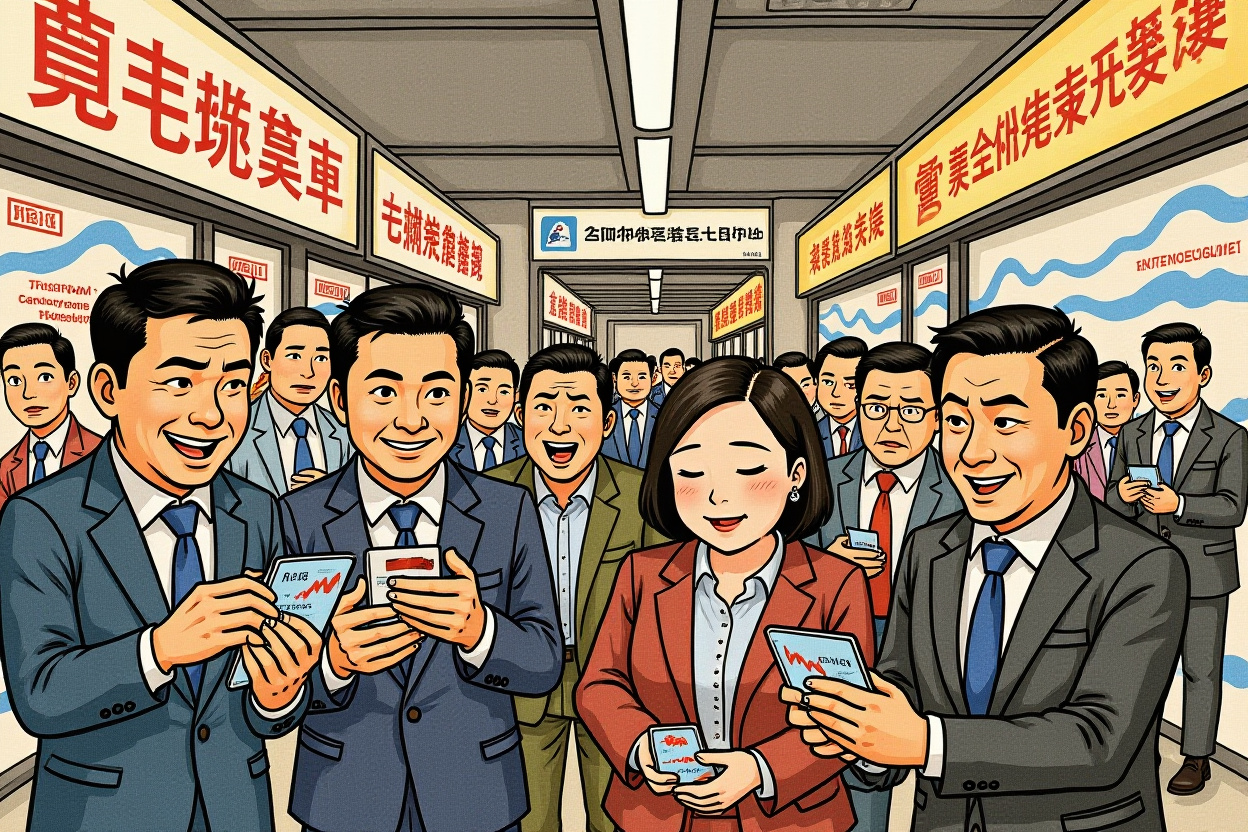
– Memory prices in Huaqiangbei experienced a sharp flash crash followed by a rapid rebound, with daily swings exceeding thousands of yuan for server memory sticks.
– The volatility is fueled by AI-driven supply constraints, speculative trading, and market psychology, leading to significant losses for new entrants.
– Industry experts predict continued price increases for server memory due to sustained AI demand, while consumer memory may stabilize but remain elevated.
– Consumers are advised to wait for better deals, as long-term trends suggest prices will eventually adjust, but short-term fluctuations are expected.
– This Huaqiangbei memory price volatility highlights broader semiconductor market pressures with global implications for tech investors.
The Rollercoaster Ride: Memory Price Volatility in Huaqiangbei
In the bustling electronics hub of Shenzhen’s Huaqiangbei market, memory stick prices have been on a wild ride that local merchants describe as “more exciting than stock trading.” Over the past month, prices for both consumer and server memory modules experienced a dramatic flash crash, only to rebound sharply within days, showcasing extreme Huaqiangbei memory price volatility. This phenomenon underscores the intense pressures in the global semiconductor supply chain, where artificial intelligence (AI) demand, speculative behavior, and supply constraints collide. For international investors and tech professionals, understanding these fluctuations is crucial for navigating the Chinese equity markets and making informed decisions on tech stocks and hardware investments.
Consumer and Server Memory: A Tale of Two Markets
The recent price swings have affected different memory segments unevenly. Consumer-grade memory, such as 16GB DDR4 modules from brands like Kingston, saw prices stabilize around 700 yuan after peaking above 900 yuan in late March. Meanwhile, 16GB DDR5 modules settled near 1,300 yuan, down from a high of 1,800 yuan. In contrast, server memory experienced more dramatic movements. For instance, Samsung’s 64GB DDR5 server memory sticks plummeted from 15,000 yuan in mid-March to 12,000 yuan by late March, with single-day drops reaching thousands of yuan. However, by early April, prices rebounded to 14,000 yuan, nearly recovering to previous highs. This Huaqiangbei memory price volatility highlights the market’s sensitivity to external shocks and internal dynamics, with server memory being particularly tight due to AI infrastructure demands.
Daily Fluctuations and Market Reactions
Drivers of the Volatility: AI Demand and Supply ChainsThe primary driver behind the memory price surge and subsequent volatility is the explosive growth in AI applications, which has strained production capacities for high-bandwidth memory (HBM) and server-grade components. Storage manufacturers have prioritized AI-related products, diverting resources from consumer memory and creating a structural shortage. According to industry reports from TrendForce, the shift in DRAM production toward HBM and server applications has tightened supply, supporting sustained price increases. This supply-demand mismatch is a key factor in the Huaqiangbei memory price volatility, as spot markets react more sharply to short-term imbalances than contract markets.
The AI Boom and Memory Constraints
AI models, particularly large language models, require substantial memory for training and inference, leading to skyrocketing demand for server memory. CFM Flash Market General Manager Tai Wei (邰炜) emphasized at the MemoryS 2026 conference that storage manufacturers are focusing on high-margin AI products, squeezing capacity for consumer-grade memory. This has driven inventory levels to historic lows, below safety thresholds. The Huaqiangbei memory price volatility reflects these upstream constraints, as traders scramble for limited现货 (spot) supplies. Despite temporary price corrections, the long-term outlook remains bullish for memory prices due to AI’s insatiable appetite, with contract prices projected to rise by 58-63% for DRAM and 70-75% for NAND Flash in Q2 2026.
Contract vs. Spot Market Dynamics
Memory procurement operates on two tiers: contract prices for large manufacturers dealing directly with suppliers like Samsung or SK Hynix, and spot prices for smaller buyers in markets like Huaqiangbei. The spot market is more susceptible to Huaqiangbei memory price volatility, as it responds immediately to sentiment shifts and inventory changes. The recent flash crash was partly triggered by speculative selling in the spot market, while contract prices remained stable or continued upward. This divergence highlights the importance of understanding market structures for investors; those exposed to spot-based trading face higher risks, whereas companies with long-term contracts may be better insulated. For more on market dynamics, refer to industry analyses from TrendForce.
Market Psychology and Speculative Forces
Beyond supply and demand, psychological factors play a significant role in amplifying Huaqiangbei memory price volatility. The market exhibits a herd mentality, where traders tend to “buy high and sell low” in response to price trends. During the initial price surge, fear of missing out (FOMO) drove aggressive purchasing, but when prices began to fall,观望 (wait-and-see) behavior took over, deepening the downturn. Zhang Wenqian (张文倩), a Huaqiangbei merchant, explained that this psychology can turn minor adjustments into steep declines, as seen in late March. The Huaqiangbei memory price volatility is thus not solely based on fundamentals but also on trader emotions and speculative bets, making it a risky arena for inexperienced participants.
The Herd Mentality and Panic Selling
The flash crash was accelerated by panic selling after Google’s announcement of the TurboQuant algorithm, which some misinterpreted as reducing memory needs. In reality, as Morgan Stanley analysts clarified, TurboQuant optimizes inference efficiency without cutting overall demand. However, the news sparked a sell-off among speculators, illustrating how misinformation can fuel Huaqiangbei memory price volatility. This reaction underscores the market’s sensitivity to tech developments, where even peripheral news can trigger outsized moves. For investors, it’s essential to differentiate between hype and substance, focusing on long-term trends rather than short-term noise.
Risks for New Investors and Traders
Expert Insights and Future ProjectionsIndustry experts remain optimistic about memory prices in the medium term, despite the recent volatility. TrendForce’s analysis suggests that the flash crash was a short-term correction, with underlying tightness persisting due to AI demand. The firm has revised its Q2 2026 contract price forecasts upward, anticipating continued growth. This outlook supports the notion that Huaqiangbei memory price volatility may subside as supply adjustments take hold, but prices will likely remain elevated. For stakeholders, from manufacturers to end-users, adapting to this new normal requires strategic planning and diversification of supply sources.
Industry Reports and Forecasts
Recommendations for Different StakeholdersBroader Implications for the Tech IndustryThe Huaqiangbei memory price volatility is not an isolated event but reflects broader challenges in the global tech ecosystem. High memory costs have already impacted consumer electronics, with smartphone and laptop shipments declining in China, as reported by the China Academy of Information and Communications Technology (中国信息通信研究院). This suppresses end-user demand, creating a feedback loop that exacerbates market imbalances. For international investors, these dynamics highlight the interconnectedness of Chinese equity markets with global tech trends, where memory prices can influence stock performance across sectors, from semiconductors to device manufacturers.
Impact on Consumer Electronics
Rising memory prices have contributed to weaker sales of PCs and smartphones, as noted in data from Luotu Technology (洛图科技), which reported a 40% year-on-year drop in laptop sales for early 2026. This dampens memory procurement from OEMs, adding to the spot market’s oversupply during downturns. The Huaqiangbei memory price volatility thus has ripple effects, affecting everything from retail pricing to corporate earnings. Companies like Kingston or Samsung may see margin pressures, while AI-focused firms continue to thrive. Investors should monitor these trends to identify winners and losers in the tech space.
Global Supply Chain Considerations
The memory market’s volatility underscores the fragility of global supply chains, where geopolitical tensions, production delays, and demand shocks can cause rapid price changes. For instance, capacity expansions take 18-24 months, meaning short-term fixes are limited. This Huaqiangbei memory price volatility serves as a reminder for businesses to build resilience through inventory buffers and multi-sourcing strategies. As AI adoption accelerates globally, demand for memory will only grow, making stability a key concern for policymakers and industry leaders alike.
In summary, the Huaqiangbei memory price volatility is a complex interplay of AI-driven demand, supply constraints, speculative trading, and market psychology. While prices have rebounded from the flash crash, underlying tightness suggests further increases ahead, particularly for server memory. Consumers and investors should approach this market with caution, leveraging expert insights and long-term perspectives. For those engaged in Chinese equities or tech investments, staying abreast of these developments is essential for capitalizing on opportunities while mitigating risks. Consider subscribing to market reports from firms like TrendForce for ongoing updates, and always conduct thorough due diligence before making investment decisions in this volatile sector.