



Executive Summary
– Memory module prices in Shenzhen’s Huaqiangbei electronics market underwent a severe flash crash in late March 2026, with server memory dropping by thousands of yuan, followed by a rapid rebound in early April.
– The volatility was fueled by a mix of speculative trading, cash flow pressures among distributors, and market panic exacerbated by news of AI memory compression technology, though underlying demand remains strong.
– Industry analysts, including those from TrendForce集邦咨询 (TrendForce), affirm that long-term upward price trends are intact due to AI-driven supply constraints, with contract prices projected to rise significantly in Q2 2026.
– The spot market’s wild swings have led to substantial losses for inexperienced speculators, while seasoned traders navigate the Huaqiangbei memory module price volatility with caution.
– For consumers and businesses, strategic patience is advised, as prices are expected to stabilize but remain elevated, with server memory leading the recovery while consumer-grade modules may offer better entry points later in the year.
The Rollercoaster Ride in China’s Premier Electronics Hub
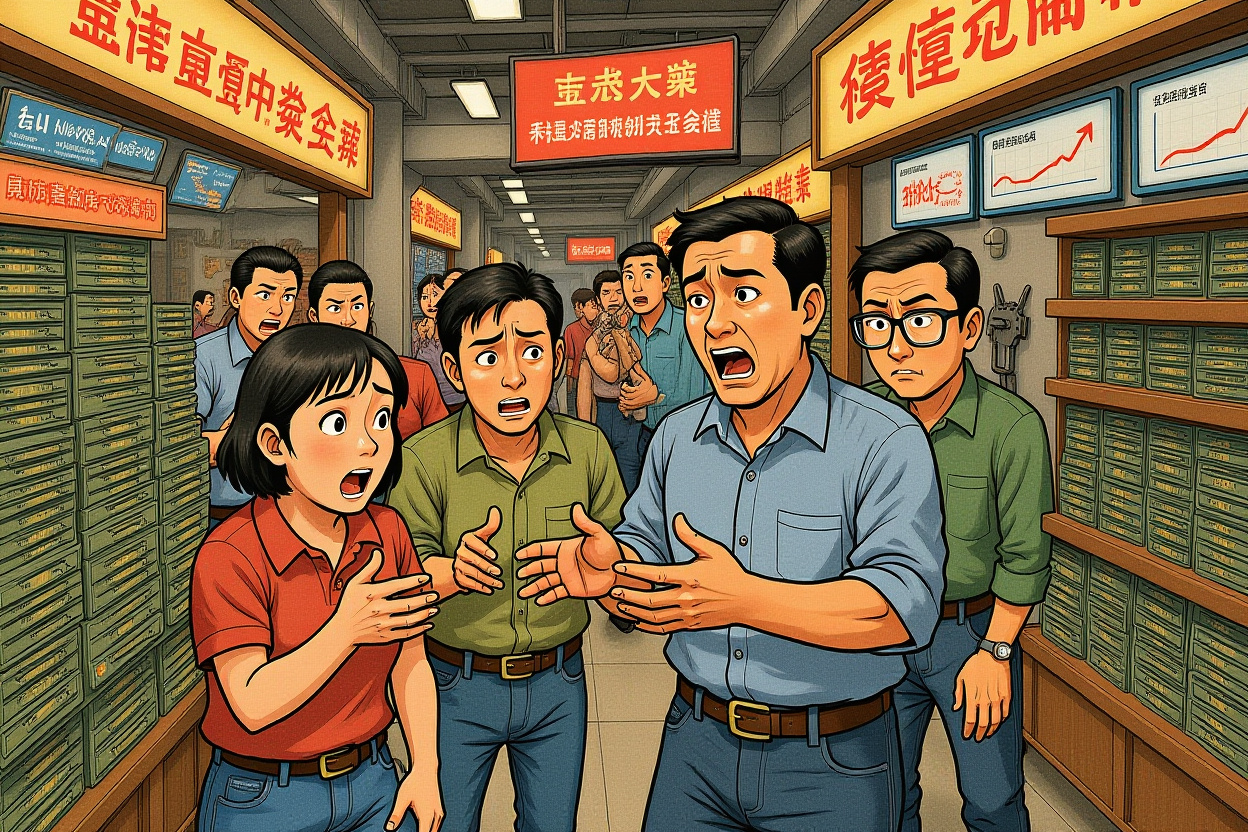
The bustling aisles of Shenzhen’s Huaqiangbei market, often dubbed the heartbeat of global electronics trade, recently witnessed a financial drama that left even veteran traders breathless. Over just two weeks in March 2026, memory module prices experienced a stomach-churning flash crash, only to stage a remarkable rebound that saw daily jumps of nearly a thousand yuan. This Huaqiangbei memory module price volatility has merchants like bear Xiong Qing (熊庆) describing the experience as “more exciting than stock trading,” highlighting the intense speculative fervor gripping the market. For international investors and corporate executives monitoring Chinese equity markets and tech supply chains, these swings are not mere local curiosities but critical indicators of broader trends in semiconductor demand, AI infrastructure development, and consumer electronics health.
From Panic to Recovery: A Timeline of Extreme Swings
In mid-March, the market for server memory modules, particularly high-capacity DDR5 variants, was trading at elevated levels. A Samsung 64G DDR5 server memory stick, for instance, commanded prices around 15,000 yuan. However, by late March, a sudden sell-off triggered a sharp decline, with prices plunging to approximately 12,000 yuan—a drop where single-day losses could exceed 1,000 yuan. The downturn was abrupt and widespread, causing alarm across Huaqiangbei’s storage dealerships. Yet, as April began, the narrative flipped. On April 2, prices rebounded by nearly 1,000 yuan, climbing to 12,800 yuan, and by April 3, they had surged to 14,000 yuan, nearly retracing the entire crash. This whipsaw action underscores the hypersensitivity of the spot market to sentiment shifts.
Consumer-grade memory, while less dramatic, followed a similar pattern. Kingston’s 16G DDR4 modules, which had peaked above 900 yuan in late March, stabilized around 700 yuan by early April. Similarly, 16G DDR5 prices settled near 1,300 yuan after touching 1,800 yuan. The stabilization suggests that the initial panic has subsided, but the underlying Huaqiangbei memory module price volatility remains a defining feature, driven by complex supply-demand dynamics and trader psychology.
Server vs. Consumer Memory: Diverging Paths in the Volatility
A key insight from this episode is the divergent behavior between server and consumer memory modules. Server memory, crucial for data centers and AI applications, exhibited more extreme volatility due to its tighter linkage to hyperscaler demand and speculative holdings. The rapid rebound indicates that fundamental shortages persist. In contrast, consumer memory, tied to PC and smartphone markets, saw a milder correction followed by stability, reflecting softer end-demand. Market inventories tell the story: many Huaqiangbei merchants now report scarce DDR5现货 (spot) availability, with DDR4 stocks largely consisting of二手拆机件 (used, dismantled components). This scarcity is a primary driver behind the price resilience and the ongoing Huaqiangbei memory module price volatility.
Unpacking the Causes: Why Did Prices Crash and Rebound So Fast?
Understanding the drivers behind this volatility is essential for investors seeking to navigate the Chinese tech sector. The flash crash was not triggered by a single event but by a confluence of factors that amplified market fears.
Market Sentiment and the Speculative Frenzy
The downturn began around March 20, predating the late-March news about Google’s TurboQuant memory compression algorithm. According to Huaqiangbei merchant Zhang Wenqian (张文倩), the initial pressure came from distributors facing cash flow constraints who initiated a gradual sell-off to lock in profits. “Some speculators needed to liquidate for liquidity, so they exited positions,” she explained. This triggered a cascade: as prices dipped, the ingrained “buy high, sell low” mentality took hold. Buyers, anticipating further declines, held back, while sellers grew anxious, creating a self-reinforcing cycle of decline. The announcement of TurboQuant on March 25 merely poured fuel on the fire, intensifying fears that AI memory demand might plateau.
However, this psychological aspect is central to the Huaqiangbei memory module price volatility. As bear Xiong Qing (熊庆) noted, the market attracted a flood of new, inexperienced speculators during the 2025涨价周期 (price hike cycle), lured by quick profits. “These new players hadn’t experienced the troughs of memory chip cycles,” he said. “They only saw the upside and ignored the crash risks.” When prices turned, many were caught holding overpriced inventory, leading to significant losses. Zhang Wenqian (张文倩) corroborated this, stating, “It’s common to see people losing over a hundred thousand yuan in a single day around here.”
The Real Impact of AI and Supply Chain Constraints
Beneath the sentiment-driven turmoil, structural factors are at play. The overarching narrative of AI-driven demand squeezing memory supply remains unchallenged. TrendForce集邦咨询 (TrendForce) analysts emphasize that the March downturn was a short-term correction influenced by weak consumer demand, convergence between spot and contract prices, and channel inventory adjustments. The core issue is that manufacturers are prioritizing high-margin AI memory products like高带宽内存 (High Bandwidth Memory, HBM), diverting产能 (production capacity) from consumer-grade DRAM and NAND Flash. CFM闪存市场 (CFM Flash Market) General Manager Tai Wei (邰炜) highlighted at the MemoryS 2026 conference that industry inventory levels have fallen below the safety line, with supply shortages expected to persist due to the 18-24 month expansion cycles for new capacity.
Furthermore, the TurboFactor was quickly reassessed. Morgan Stanley analysts clarified in a recent report that TurboQuant optimizes inference-stage键值缓存 (key-value cache) memory, not the HBM used for training or model weights. Thus, it enhances efficiency rather than reduces total memory demand. TrendForce concurred, noting that such technologies lower inference costs, potentially spurring more AI applications and, counterintuitively, boosting long-term memory需求 (demand). This realization helped calm markets and support the rebound, reinforcing that the Huaqiangbei memory module price volatility is a surface ripple over deep, sustained currents.
Expert Insights and Industry Analysis: What the Data Reveals
To cut through the noise, authoritative voices from research firms and industry leaders provide crucial context. Their analyses suggest that the recent spot market turmoil does not alter the fundamental bullish trajectory for memory prices.
TrendForce’s Bullish Contract Price Forecasts
TrendForce集邦咨询 (TrendForce) has been particularly vocal. In a March 31 update, they revised upward their Q2 2026 contract price projections. They anticipate整体一般型DRAM合约价格 (overall general DRAM contract prices) to rise by 58-63%, with NAND Flash合约价格 (contract prices) increasing by 70-75%. This optimism stems from DRAM原厂 (original manufacturers) aggressively shifting capacity to HBM and server applications while employing a “catch-up涨价 (price hike)” strategy to narrow price gaps between product categories. Despite risks of downward revisions in terminal device shipments, the supply crunch is expected to keep contract prices on an upward climb. For investors, this means the spot market’s Huaqiangbei memory module price volatility may offer trading opportunities, but the contract market—where major OEMs like Apple or Lenovo operate—remains firmly in涨价 (price increase) mode. [Link to TrendForce’s press release on Q2 2026 memory price forecasts]
The Dual Market Reality: Contract vs. Spot Dynamics
It’s vital to distinguish between合约价格 (contract prices) and现货价格 (spot prices). Contract prices are negotiated directly between large manufacturers and内存原厂 (memory chip makers) or their authorized agents, offering stability and volume guarantees. Spot prices, prevalent in hubs like Huaqiangbei, are highly sensitive to immediate supply and sentiment. The current divergence is stark: while spot prices wobbled, contract prices continued their ascent. This dichotomy explains why industry executives, like a top executive at a leading storage module上市公司 (listed company) who spoke to时代周报 (Time Weekly), assert that the抛售 (sell-off) reflects short-term market digestion but doesn’t undermine the broader行业上行趋势 (industry uptrend). For global fund managers, monitoring both metrics is key to assessing true supply tightness and investment timing in Chinese equities linked to the semiconductor sector.
Implications for Investors and End-Users: Navigating the Uncertainty
The extreme Huaqiangbei memory module price volatility carries lessons and strategies for different market participants, from institutional investors to individual consumers.
Risks and Opportunities for Market Participants
For speculators and traders, the recent crash is a cautionary tale. The influx of non-professional投机者 (speculators) during the boom has led to painful losses, emphasizing that memory trading requires deep market knowledge and risk management. As bear Xiong Qing (熊庆) implied, it’s akin to stock trading but with amplified volatility due to physical inventory risks. Conversely, for long-term investors in memory chip makers like三星 (Samsung) or美光 (Micron), the underlying demand story remains robust. The focus should be on companies with strong exposure to AI and server memory, as these segments are less susceptible to consumer downturns. Here, the Huaqiangbei memory module price volatility serves as a real-time barometer for sentiment, but fundamental analysis should guide portfolio decisions.
Strategic Advice for Consumers and Businesses
For PC builders or small businesses needing memory upgrades, the advice from Huaqiangbei insiders is nuanced. Zhang Wenqian (张文倩) suggests that while prices have retreated from peaks, they remain historically high. A Kingston 16G DDR4 module at 700 yuan is still far above the sub-200 yuan levels seen a year ago. “If you’re not in a hurry, I recommend waiting at least until the second half of the year,” she said. “In the long run, hardware prices that have risen will eventually come down.” For enterprises reliant on server memory, however, delaying purchases could be risky due to the persistent shortage. Proactive planning and diversified sourcing, as advised by Tai Wei (邰炜) of CFM, are prudent. This might include locking in contract prices early or exploring alternative suppliers to mitigate the impact of Huaqiangbei memory module price volatility.
Future Outlook: Sustained Growth or Imminent Correction?
Looking ahead, the consensus among experts points to continued price strength, albeit with moderated volatility as markets adapt to new realities.
2026 and Beyond: Projections for the Memory Market
TrendForce集邦咨询 (TrendForce) maintains that the紧张趋势 (tightness trend) has not eased. They forecast that the Q2 2026 contract price increases will extend into the second half of the year, providing a floor for spot prices. The structural shift toward AI means that产能分配 (capacity allocation) will remain skewed, keeping general memory supply tight. The中国信通院 (China Academy of Information and Communications Technology) data showing declining smartphone shipments and洛图科技 (Luotu Technology) reports of plunging laptop sales indicate weak consumer demand, but this is offset by voracious AI server needs. Therefore, while consumer memory prices may see slower growth or slight declines, server memory is poised for further gains. This bifurcation will characterize the market, reducing the likelihood of a broad-based crash but preserving elements of Huaqiangbei memory module price volatility in specific niches.
Key Factors to Watch in the Coming Months
Investors should monitor several indicators:
– Announcements from major cloud providers like谷歌 (Google) or阿里巴巴云 (Alibaba Cloud) regarding AI infrastructure spending.
– Quarterly earnings reports from DRAM manufacturers for guidance on capacity expansion and product mix.
– Inventory data from distributors in channels like Huaqiangbei to gauge spot market pressure.
– Regulatory developments from中国政府 (Chinese government) agencies that might impact semiconductor self-sufficiency efforts.
These factors will influence whether the Huaqiangbei memory module price volatility evolves into a more stable uptrend or sees further dramatic swings.
Synthesizing the Madness: Key Takeaways for the Global Audience
The wild ride in Huaqiangbei’s memory market is a microcosm of larger forces shaping global technology. The flash crash and rebound underscore that while speculative bubbles can form rapidly, fundamental drivers—like AI’s insatiable appetite for memory—remain powerful. For sophisticated investors, this episode highlights the importance of looking beyond spot market noise to contract price trends and supply chain fundamentals. The Huaqiangbei memory module price volatility is a symptom of a market in transition, where old cycles of consumer electronics dominance are giving way to AI-driven paradigms.
Moving forward, adopt a disciplined approach: diversify investments across the memory ecosystem, stay informed through authoritative sources like TrendForce and financial news from outlets such as时代周报 (Time Weekly), and avoid emotional trading based on short-term fluctuations. Whether you’re a fund manager adjusting portfolios or a corporate executive planning IT budgets, let this analysis guide your next steps in navigating the dynamic world of Chinese memory markets. The stakes are high, but with careful strategy, the opportunities are equally compelling.