



Executive Summary
In a landmark move for digital finance, Hong Kong has approved its inaugural batch of stablecoin licenses, sending shockwaves through equity markets and positioning the city as a frontrunner in crypto regulation. This development not only reflects Hong Kong’s strategic pivot towards embracing financial innovation but also has immediate and profound implications for investors, regulators, and the global digital asset ecosystem.
- – The Hong Kong Monetary Authority (香港金融管理局, HKMA) and the Securities and Futures Commission (SFC, 证券及期货事务监察委员会) have jointly issued the first regulatory approvals for stablecoin issuers, a critical step in formalizing the digital asset market.
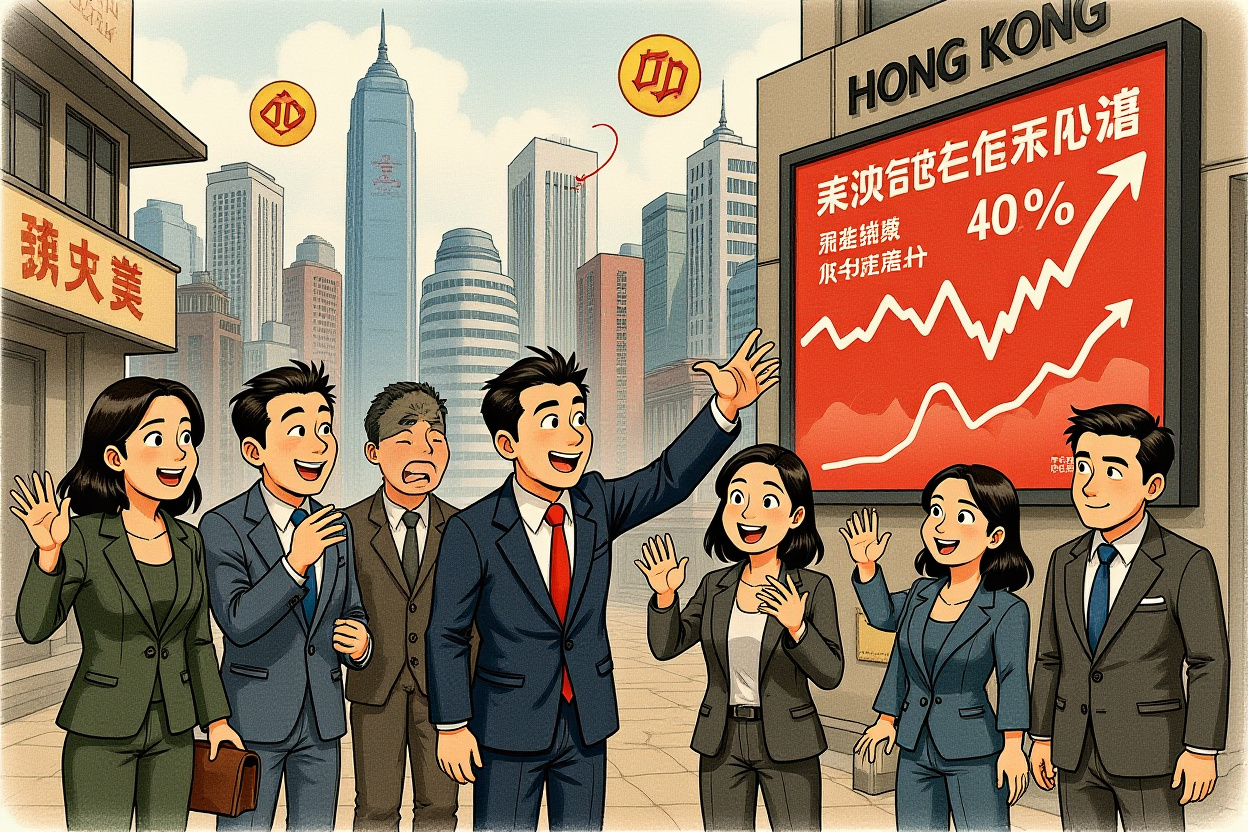
- – Publicly traded companies associated with licensed entities or the broader blockchain sector experienced explosive gains, with some stocks skyrocketing over 40% in a single trading session, highlighting intense investor appetite.
- – This regulatory clarity is expected to attract substantial institutional capital, enhance market stability, and bolster Hong Kong’s competitiveness against rivals like Singapore and Dubai.
- – However, the path forward involves navigating complex compliance requirements, technological risks, and the need for international coordination to ensure sustainable growth.
- – For global investors, this event underscores the accelerating convergence of traditional finance and digital assets, presenting both lucrative opportunities and new due diligence imperatives.
The Catalyst: Regulatory Green Light Sparks Unprecedented Volatility
Financial markets in Hong Kong witnessed a dramatic surge as news broke that the city’s regulators had granted its first stablecoin licenses. The announcement, made by the Hong Kong Monetary Authority (香港金融管理局, HKMA) in collaboration with the Securities and Futures Commission (SFC, 证券及期货事务监察委员会), served as a powerful validation signal for the entire digital asset sector. Within hours, shares of companies perceived to be beneficiaries—whether through direct application, partnership, or operational synergy with blockchain technology—entered a phase of extreme bullish momentum.
Trading screens lit up with double-digit percentage gains, a rare sight in typically measured equity movements. This straight-line rally, where prices ascended with minimal retracement, was fueled by a combination of speculative fervor and genuine strategic reassessment by fund managers. The approval of Hong Kong’s first stablecoin licenses is not merely an administrative act; it represents a deliberate policy shift to capture the next wave of financial innovation.
Decoding the License Announcement
The specific details of the license framework are grounded in the HKMA’s earlier consultation conclusions on stablecoin regulation. Licenses are expected to be awarded to entities that demonstrate robust reserve management, clear redemption policies, and stringent risk controls. While the exact names of the first licensees may be under a quiet period, market speculation points towards a mix of established financial institutions and agile fintech startups. This move aligns with Hong Kong’s broader ambition, as outlined in policy addresses, to develop a vibrant virtual asset ecosystem.
An outbound link to the HKMA’s official policy stance can be found here: HKMA Stablecoin Regulation. The licensing regime mandates that all stablecoin issuers operating in or targeting the Hong Kong market must obtain authorization, ensuring they hold high-quality liquid assets equivalent to the value of stablecoins in circulation. This directly addresses one of the core criticisms of stablecoins following events like the collapse of TerraUSD.
Market Reaction: A Surge Built on Anticipation
The equity response was immediate and visceral. Stocks of companies like BC Technology Group (0863.HK), a digital asset platform operator, and others in the fintech space saw volumes spike and prices leap. The phrase "最高暴涨超40%" (surging over 40%) dominated financial news headlines, capturing the sheer scale of the move. This volatility underscores how regulatory milestones can act as potent catalysts, repricing assets almost instantaneously as investors race to position themselves in a newly legitimized market segment.
Analysts from China International Capital Corporation Limited (中金公司) noted in client briefings that this rally likely factors in not just the licensing event itself, but the projected inflow of capital and business activity it is expected to generate. The issuance of Hong Kong’s first stablecoin licenses is perceived as lowering the systemic risk profile of digital asset investments, thereby attracting a broader pool of institutional money that was previously on the sidelines due to regulatory uncertainty.
Stablecoins 101: The Engine of Modern Digital Finance
To understand the magnitude of this development, one must first grasp what stablecoins are and why they are pivotal. Unlike volatile cryptocurrencies like Bitcoin, stablecoins are digital assets designed to maintain a stable value, typically pegged to a fiat currency like the US dollar or the Hong Kong dollar. They function as a crucial bridge between traditional finance and the blockchain world, enabling efficient payments, settlements, and trading.
The most common types include fiat-collateralized stablecoins (like those likely regulated under the new Hong Kong regime), crypto-collateralized stablecoins, and algorithmic stablecoins. Their adoption has exploded in recent years, with major players like Tether (USDT) and USD Coin (USDC) facilitating trillions in transactions. However, this growth occurred largely in a regulatory gray area, leading to calls for oversight to protect consumers and ensure financial stability.
Hong Kong’s Strategic Regulatory Calculus
Hong Kong’s approach has been methodical and ambitious. Following China’s mainland crackdown on cryptocurrency trading and mining, Hong Kong has strategically positioned itself as a compliant and innovative hub for digital assets. The journey to this point included the introduction of a licensing regime for Virtual Asset Service Providers (VASPs) and now culminates in this focused regime for stablecoin issuers. This dual-track regulation of exchanges and now stablecoins creates a more comprehensive framework.
Officials like Christopher Hui (许正宇), Secretary for Financial Services and the Treasury, have repeatedly emphasized that the goal is "to foster sustainable and responsible development." The government views Hong Kong’s first stablecoin licenses as a foundational step towards potentially launching a digital Hong Kong dollar (e-HKD) and integrating distributed ledger technology into the broader financial infrastructure. This regulatory foresight is aimed at mitigating the "wild west" reputation of crypto while harnessing its technological benefits.
Global Ripples: Redrawing the Competitive Map
The approval sends a clear message to the world: Hong Kong is open for business in the digital asset domain. This has immediate implications for its competitive standing against other financial centers vying for dominance in this space. Singapore, through its Monetary Authority of Singapore (MAS), has also been active, granting licenses to select players under its Payment Services Act. The European Union is rolling out its Markets in Crypto-Assets (MiCA) regulation. Hong Kong’s move is a direct bid to capture market share and talent.
For multinational corporations and institutional investors, this regulatory clarity reduces the operational and legal friction of engaging with digital assets. It enables more sophisticated financial products, such as tokenized bonds or funds using stablecoins for settlement. The presence of regulated, trustworthy stablecoin issuers within a reputable jurisdiction like Hong Kong lowers counterparty risk and enhances the appeal for asset managers and family offices globally.
A New Playbook for Institutional Capital
The influx of institutional interest is perhaps the most significant long-term implication. With clear rules in place, traditional finance giants—from hedge funds to investment banks—can now design strategies that incorporate stablecoins with greater confidence. This could range from using them for intraday liquidity management in treasury operations to creating novel yield-generating products. The licensing of Hong Kong’s first stablecoin licenses effectively provides a regulated on-ramp and off-ramp for fiat currency, a critical infrastructure piece that has been missing.
Quotes from industry leaders underscore this point. "This is the moment the industry has been waiting for," said a managing director at a major global bank speaking on background. "It transforms stablecoins from a niche crypto tool into a potential new pillar of the financial system, with Hong Kong at its center." Data from analytics firms already shows increased query volumes from institutional clients regarding Hong Kong-based crypto custody and trading solutions in the wake of the announcement.
Navigating the Inevitable Headwinds
While the market celebration is warranted, a measured perspective requires acknowledging the challenges that accompany this new frontier. Regulation, by its nature, introduces complexity and cost. Licensees will face ongoing scrutiny over their reserve audits, cybersecurity protocols, and anti-money laundering (AML) procedures. The Hong Kong Monetary Authority (香港金融管理局, HKMA) has made it clear that supervision will be active and rigorous to maintain systemic stability.
Furthermore, the technological underpinnings of stablecoins and blockchain networks are not infallible. Smart contract vulnerabilities, operational failures, or broader market contagion events remain real risks. Regulators themselves must walk a tightrope, fostering innovation without compromising on core principles of investor protection and financial integrity. The success of Hong Kong’s first stablecoin licenses will be judged not by the initial price pop, but by the resilience and transparency of the ecosystem they help build over the next decade.
Compliance as a Competitive Advantage
For the licensed entities, the compliance burden will be substantial but can be reframed as a strategic moat. Firms that successfully navigate the HKMA’s requirements will earn a significant trust premium in the market. This includes detailed public disclosure of reserve assets, which are likely to be confined to cash, cash equivalents, and high-grade short-term government debt. Such transparency is precisely what large-scale institutional adoption requires and was glaringly absent in previous industry scandals.
Another critical area is cross-border coordination. Stablecoins are inherently global. Hong Kong’s regulators will need to work closely with international bodies like the Financial Stability Board (FSB) and counterparts in other jurisdictions to avoid regulatory arbitrage and ensure consistent standards. This is especially pertinent for stablecoins pegged to the US dollar, which involve complex interplay with US monetary policy and regulatory views from bodies like the U.S. Securities and Exchange Commission (SEC).
Synthesis and Strategic Forward Look
The seismic market reaction to Hong Kong’s first stablecoin licenses is a definitive inflection point. It validates the economic potential of properly regulated digital assets and signals Hong Kong’s serious intent to be a leader in this domain. The straight-line rally in related equities, while possibly overextended in the short term, reflects a fundamental reassessment of the sector’s risk-return profile. For global investors, the message is clear: ignore the evolution of digital finance in Asia at your peril.
The key takeaways are threefold. First, regulatory clarity is a powerful catalyst that can unlock latent value and attract sophisticated capital. Second, Hong Kong has strategically deployed its regulatory toolkit to create a first-mover advantage in Asia’s digital asset race. Third, sustainable growth will depend on the meticulous execution of compliance frameworks and the continuous adaptation to technological and market developments. The approval of these licenses is not an endpoint, but the beginning of a new, more mature phase for crypto markets.
Moving forward, market participants should monitor several developments: the performance and transparency reports of the newly licensed issuers, the HKMA’s next steps regarding the e-HKD pilot, and the flow of institutional capital into Hong Kong-based digital asset platforms. For corporate treasurers and fund managers, the time is now to develop internal expertise, assess potential use cases, and engage with regulated providers. The era of speculative crypto gambling is giving way to an era of institutional digital asset finance, and with its latest move, Hong Kong has positioned itself squarely at the forefront of this transformation.