



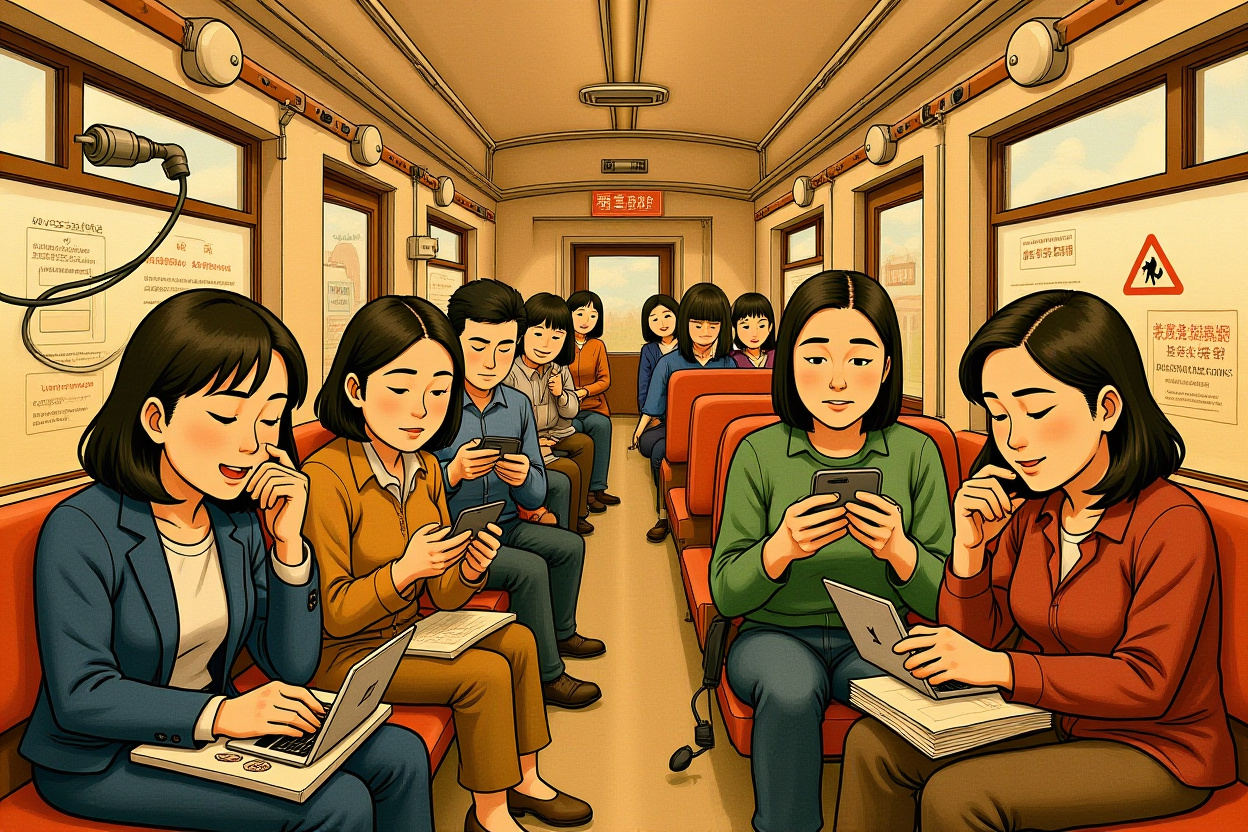
The Spring Festival Travel Rush and Our Reliance on Train Power Outlets
The annual 春运 (Spring Festival travel rush) is upon us, a period where millions crisscross China via the world’s largest high-speed rail network. In this era of digital dependency, the availability of power outlets on trains has become as critical as sustenance for many travelers. However, concerns linger: are these high-speed rail power outlets safe, or could they potentially damage our expensive smartphones, laptops, and tablets? This article delves into the technology behind China’s train electrical systems, evaluating the real risks and providing actionable guidance for the savvy traveler and investor alike.
Executive Summary: Key Takeaways on Train Power Safety
– High-speed rail power outlets are supplied via the train’s pantograph from the overhead grid, not an onboard battery, ensuring a continuous power source in theory.
– The electrical safety risk from these outlets is comparable to standard household outlets, with design features often enhancing passenger safety.
– Using high-wattage appliances is prohibited due to system limitations, and doing so poses a significant fire hazard.
– The unique electrical characteristics of train power, including high-frequency pulses and periodic interruptions, can accelerate wear or cause malfunctions in sensitive electronic devices.
– Protecting your devices requires a combination of using quality chargers, relying on power banks, and understanding your train’s specific power supply model.
The Mechanics of Power Supply on China’s High-Speed Trains
Modern 中国铁路 (China Railway) trains are predominantly electric. Understanding the source of power is the first step in demystifying the functionality of high-speed rail power outlets.
From Pantograph to Passenger Seat: The Power Journey
The train’s 受电弓 (pantograph) makes continuous contact with the 接触网 (overhead catenary wire) to draw high-voltage alternating current (AC). This electricity is primarily used for propulsion but is also transformed and rectified. Through onboard transformers and converters, it becomes the standard 220-volt, 50-hertz single-phase AC that feeds the cabin’s systems, including the power outlets beneath passenger seats. This design means the train’s power supply is essentially limitless while connected to the grid, alleviating concerns about “running out of juice” during long journeys.
Voltage Stability and System Design
Assessing the Safety Risks: Is Electrocution a Concern?Comparing Home and Train Electrical SafetyRegulatory Oversight and Safety StandardsPower Limitations and the Ban on High-Wattage AppliancesNot all devices are created equal, and the high-speed rail power outlet system has clear capacity constraints.
Understanding Wattage Restrictions
The Real Danger of OverloadingThe Hidden Danger: How Train Power Outlets Can Damage Your DevicesBeyond simple power availability, the quality of electricity from high-speed rail power outlets poses a subtle threat to device longevity. This is a critical consideration for professionals whose tools are essential for work.
The Issue of High-Frequency Electrical Noise
The power conversion process onboard trains can introduce 高频脉冲 (high-frequency pulses) or electrical noise into the output. These irregularities are not present in a well-regulated home grid. When a sensitive device like a modern smartphone is charged with this “dirty” power, it can experience symptoms like 飘屏 (touchscreen ghosting), unresponsive controls, or accelerated battery degradation. Over time, this stresses internal components, potentially leading to premature failure.
The Critical Role of Charger Quality
Understanding Power Interruptions During TravelFrequent travelers may notice their devices briefly stop charging every so often. This is not an illusion but a deliberate feature of the rail power system.
The Science Behind the 200-Meter Neutral Zone
Impact on Onboard Power CircuitsA Practical Guide to Protecting Your Electronics During Spring Festival TravelGiven the identified risks associated with high-speed rail power outlets, here is a tiered strategy to safeguard your devices during the travel rush.
Basic Protection: The Power Bank Strategy
Advanced Protection: Investing in Quality Charging GearFor the Diligent Traveler: Research and TimingSynthesizing the Risks and Moving Forward SafelyThe convenience of high-speed rail power outlets during China’s 春运 (Spring Festival travel rush) is undeniable, but it comes with technical caveats. The power is inherently less stable than a residential supply, featuring noise and periodic interruptions that can degrade sensitive electronics over time. While the immediate safety risk of electrocution is low, the fire hazard from misuse is real and serious. For the business professional or investor, this translates to a need for prudent device management and an awareness of how infrastructure nuances can impact personal technology assets. As China’s rail technology continues to evolve, we can expect improvements in power quality and reliability. Until then, a proactive approach—centered on quality power banks and chargers—is your best defense. Before your next journey, audit your charging kit, invest in reliable equipment, and travel with the confidence that your devices are protected.