



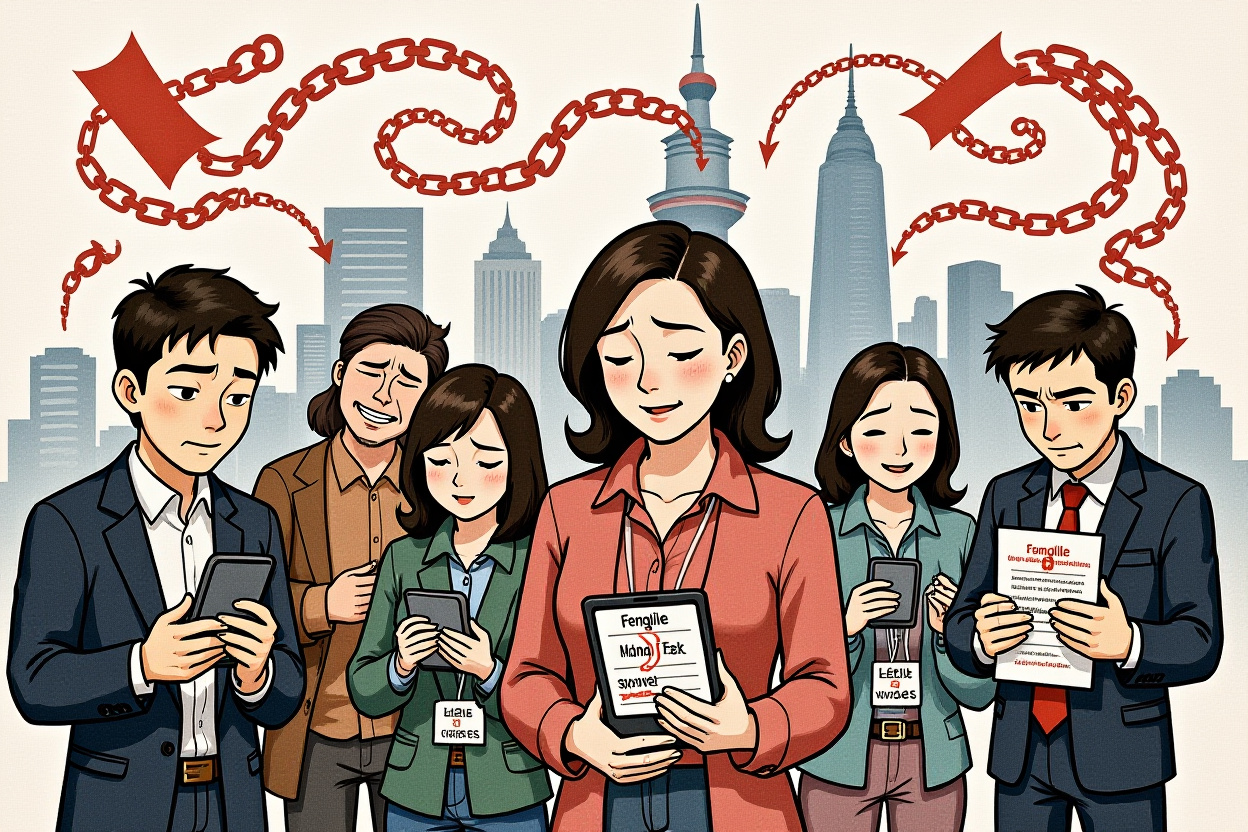
Summary of Key Insights
– Fenqile (分期乐), a prominent mini-loan platform, faces scrutiny for effective annual interest rates approaching 36%, far exceeding China’s regulatory caps, trapping young borrowers in debt cycles.
– Opaque fee structures, including hidden charges for membership, guarantees, and credit assessments, inflate costs, with some users repaying nearly double their original loan amounts.
– Despite regulatory crackdowns, such as the People’s Bank of China (中国人民银行) and National Financial Regulatory Administration (国家金融监督管理总局) guidelines capping costs at 24%, enforcement loopholes allow platforms to maintain high-profit models.
– The platform’s historical ties to campus lending and aggressive collection tactics, including harassment and data privacy breaches, highlight ongoing consumer protection failures in China’s fintech sector.
– Investors in Chinese equities must assess compliance risks as regulatory tightening could impact fintech firms like Lexin Group (乐信集团), Fenqile’s parent, amid broader market volatility.
The Hidden Costs of Festive Spending: Mini-Loans as a Debt Trap
As the Lunar New Year approaches, many young Chinese consumers face pressure to splurge on red envelopes, family trips, and gifts, often turning to quick-fix loans for relief. Platforms like Fenqile (分期乐) capitalize on this demand, advertising enticing offers such as “up to 50,000 yuan in credit” and “annual rates as low as 8%.” However, beneath this glossy facade lies a reality of high-interest mini-loans that can spiral into financial ruin. Recent viral cases on social media, like that of Ms. Chen (陈女士) who borrowed 13,674 yuan only to owe 26,859 yuan, expose how these products exploit vulnerability. This article delves into the mechanics of Fenqile’s mini-loans, regulatory challenges, and implications for investors, emphasizing how high-interest mini-loans are reshaping consumer finance in China.
Deconstructing Fenqile’s Mini-Loan Model: Allure Versus Reality
Fenqile (分期乐), operated by Lexin Group (乐信集团), markets itself as a financial technology innovator, targeting credit-conscious young adults with mini-loans—small, short-term credits designed for manageable repayments. Yet, user experiences reveal a stark contrast between promise and practice.
Case Study: The Debt Spiral of Ms. Chen
Ms. Chen (陈女士), a university student at the time, fell into Fenqile’s trap between 2020 and 2021, taking out five loans totaling 13,674 yuan for everyday expenses like a 400-yuan purchase split over 36 months. Promised “low interest” and “monthly payments as low as 18.23 yuan,” she later discovered effective annual rates ranging from 32.08% to 35.90%. After defaulting in August 2022, her debt ballooned to 26,859 yuan—nearly double the principal—due to compounded interest and fees. Her story, which trended on Weibo, underscores how high-interest mini-loans leverage extended terms to mask true costs, leaving borrowers like her in a cycle of distress exacerbated by aggressive collection tactics that involved harassing her family and friends.
Opaque Fee Structures and Hidden Charges
Fenqile’s advertising highlights low base rates, but additional fees often push comprehensive borrowing costs toward the 36% legal ceiling. On the Black Cat Complaints Platform (黑猫投诉平台), over 160,000 complaints cite unauthorized charges for membership,担保费 (guarantee fees), and信用评估费 (credit assessment fees). For instance, one user reported in February 2025 that Fenqile refused to disclose the actual lender, obscuring accountability for rates exceeding 24%. Another case from January 2025 involved a 1,450-yuan credit assessment fee added without clear consent. Media investigations, such as by The Chinese Consumer (《中国消费者》), detail how borrowers like Mr. Meng from Hangzhou repaid 12,425.4 yuan on a 10,300-yuan loan—1,782 yuan above the contractual amount—due to hidden increments. These practices exemplify how high-interest mini-loans thrive on complexity, ensnaring users who overlook fine print in lengthy digital agreements.
Regulatory Crackdown on High-Interest Lending: Rules Versus Reality
Chinese authorities have intensified efforts to curb predatory lending, but gaps persist, allowing mini-loan platforms to operate in a gray area.
PBOC and NFRA’s Guidelines on Financing Costs
Enforcement Challenges and Market AdaptationsTargeting the Vulnerable: Student Loans and Ethical ConcernsFenqile’s origins are rooted in campus lending, a segment now heavily regulated, yet evidence suggests ongoing targeting of young, impressionable borrowers.
Historical Ties to Campus Lending and Current Practices
Aggressive Collection and Data Privacy BreachesBusiness Model Analysis: Profit Drivers and Consumer BacklashLexin Group’s Financial Performance and StrategyIndustry-Wide Practices and Consumer SentimentInvestor Implications and Forward-Looking Market GuidanceRisks for Lexin and Fintech PeersOpportunities in Regulated Consumer FinanceSynthesizing Insights for Prudent Decision-MakingThe Fenqile mini-loan saga reveals a broader narrative in China’s financial evolution: the tension between innovation and protection. High-interest mini-loans, while filling a credit gap for young consumers, often perpetuate cycles of debt through opaque practices and aggressive tactics. Regulatory strides are promising, but as seen with Fenqile’s persistent high rates, full compliance remains elusive. For investors, this underscores the importance of due diligence on fintech firms’ lending models and regulatory adherence. As China refines its financial ecosystem, prioritize companies with clear cost disclosures, ethical collection methods, and alignment with national standards. Stay informed through resources like the National Financial Regulatory Administration announcements and engage with market analyses to navigate this dynamic landscape effectively.