



Executive Summary
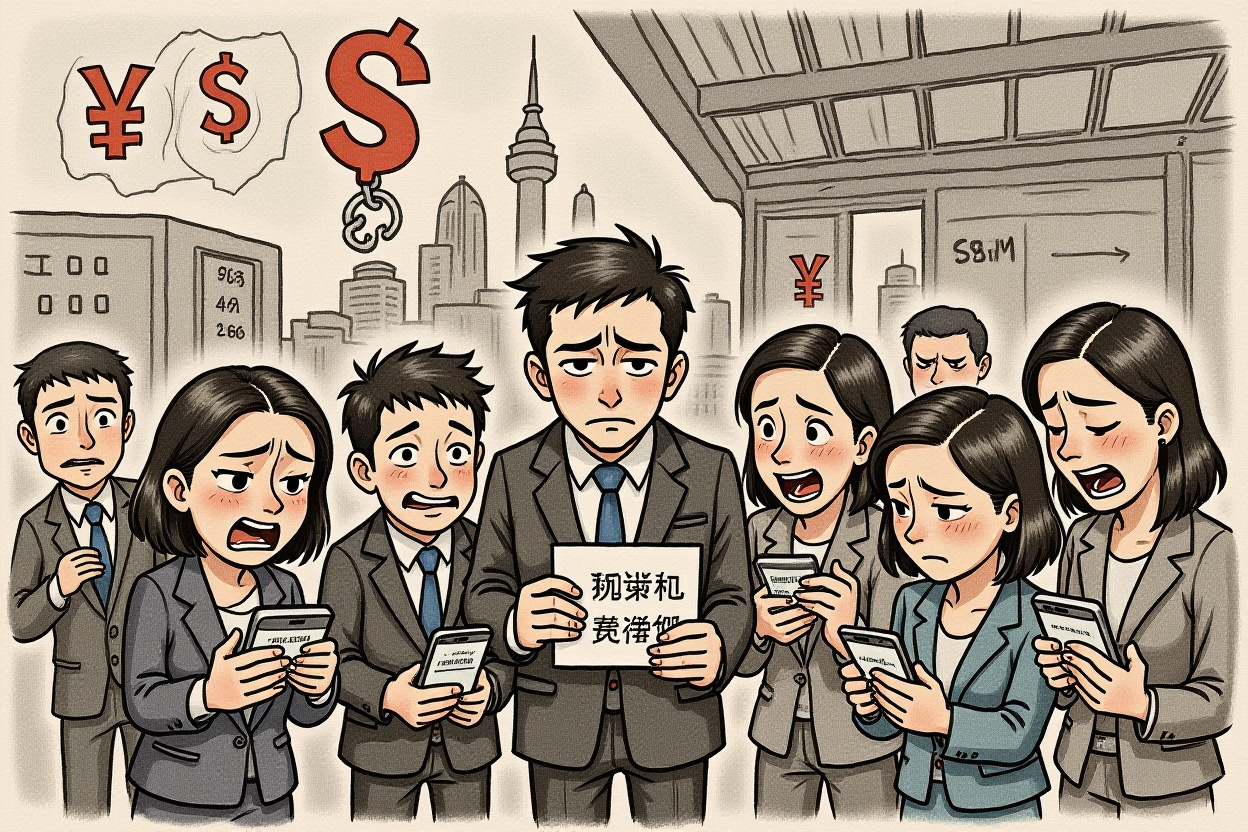
– High-interest mini-loans from platforms like Fenqile (分期乐) often carry effective annual percentage rates (APRs) nearing 36%, effectively doubling borrowers’ debt loads despite regulatory caps aimed at protecting consumers. – Opaque fee structures and hidden charges, including membership fees and 担保费 (guarantee fees), systematically inflate the true cost of borrowing beyond advertised low rates, trapping young users in cycles of debt. – Despite regulatory bans, historical ties to 校园贷 (campus lending) persist, with reports of aggressive marketing to students and 暴力催收 (violent debt collection) tactics that damage mental health and social relationships. – New guidelines from 中国人民银行 (People’s Bank of China, PBOC) and 国家金融监督管理总局 (National Financial Regulatory Administration, NFRA) target capping comprehensive financing costs, but enforcement gaps allow platforms to exploit loopholes, posing compliance risks. – For institutional investors in Chinese equities, this underscores the need for rigorous due diligence on fintech firms’ business models, regulatory adherence, and social impact, as tightening oversight could reshape market valuations.
The Hidden Crisis in China’s Consumer Finance Boom
As Chinese consumers gear up for Lunar New Year celebrations, the allure of easy credit to fund红包 (red envelopes) and travel has never been stronger. Platforms like Fenqile (分期乐) promise quick cash with slogans like “borrow up to 200,000 yuan with annual rates as low as 8%.” Yet, beneath this veneer of financial inclusion lies a disturbing reality: high-interest mini-loans are pushing a generation of young borrowers into debilitating debt. The recent case of Chen女士 (Ms. Chen), who borrowed 13,674 yuan only to face a repayment total of 26,859 yuan—nearly double the principal—has ignited public outrage and regulatory scrutiny. This phenomenon isn’t isolated; it reflects systemic issues in China’s rapidly evolving fintech sector, where the pursuit of growth often overshadows consumer protection. For global investors monitoring Chinese equity markets, understanding the risks associated with these high-interest mini-loans is crucial, as regulatory crackdowns and social backlash could significantly impact the valuations of listed players like Lexin Group (乐信集团), Fenqile’s parent company. The focus on high-interest mini-loans reveals a critical fault line in China’s financial ecosystem, one that demands immediate attention from policymakers and market participants alike.
Deconstructing the Mini-Loan Trap: How Debt Snowballs
The mechanics behind high-interest mini-loans are deceptively simple yet devastatingly effective. By offering small, seemingly manageable installment plans, platforms attract users who might otherwise avoid large debts. However, through extended repayment periods and layered fees, the true cost balloons, ensnaring borrowers in a cycle of financial dependency.
Case Study: Chen’s Descent into Debt
Chen女士 (Ms. Chen), a university student at the time, exemplifies this trap. Between 2020 and 2021, she took out five loans on Fenqile (分期乐) totaling 13,674 yuan for日常消费 (daily expenses), including a 400 yuan purchase stretched over 36 months. Promoted as “low interest” with “monthly payments as low as 18.23 yuan,” the loans carried APRs ranging from 32.08% to 35.90%. By 2022, unable to keep up, she defaulted, and over 1,000 days of逾期 (delinquency) later, her debt had surged to 26,859 yuan. This case highlights how high-interest mini-loans leverage behavioral biases—offering immediate gratification while obscuring long-term costs—a model that thrives on financial illiteracy among young consumers.
Opaque Fee Structures and Regulatory Arbitrage
Beyond stated interest rates, platforms impose a web of additional charges that push effective APRs to the legal极限 (limit). On the Hei Mao投诉平台 (Black Cat Complaints Platform), over 160,000 complaints against Fenqile (分期乐) detail unauthorized fees for会员费 (membership), 信用评估费 (credit assessment), and担保费 (guarantee fees). For instance, one borrower reported a 36% comprehensive APR, while another cited a 1,450 yuan “credit assessment fee” added without clear disclosure. These practices contravene guidelines from 中国人民银行 (People’s Bank of China) and 国家金融监督管理总局 (National Financial Regulatory Administration), which cap new loans at 24% APR and aim to align costs with 1-year LPR multiples by 2027. Yet, as seen in reports from 中国消费者 (China Consumer Journal), platforms often bury these terms in冗长的电子协议 (lengthy electronic agreements), making transparency a key battleground for regulators.
Regulatory Framework: Progress and Persistent Gaps
China’s regulatory authorities have stepped up efforts to rein in predatory lending, but enforcement remains a challenge. The 2025 directive from 中国人民银行 (People’s Bank of China) and 国家金融监督管理总局 (National Financial Regulatory Administration) represents a significant move, yet loopholes allow high-interest mini-loans to persist, threatening financial stability.
The 2025 Guidelines and Their Implications
Issued on December 19, 2025, the 小额贷款公司综合融资成本管理工作指引 (Guidelines for the Management of Comprehensive Financing Costs of Microfinance Companies) prohibit new loans with APRs exceeding 24% and mandate a phase-down to four times the 1-year LPR by end-2027. Non-compliant lenders face corrective orders, suspended lending, and征信动态管理 (dynamic credit reporting penalties). For investors, this signals a tightening environment that could squeeze margins for firms reliant on high-interest mini-loans. However, as Fenqile’s (分期乐) case shows, platforms may circumvent rules through fee reclassification or partnering with third-party collectors, highlighting the need for robust monitoring. The NFRA’s ongoing scrutiny, accessible via their official announcements, underscores the priority of consumer protection in China’s fintech agenda.
Enforcement Hurdles and Market Realities
Despite regulatory intent, practical barriers hinder implementation. Local金融管理机构 (financial management agencies) often lack resources to police thousands of online lenders, while digital platforms exploit jurisdictional ambiguities. Moreover, the demand for quick credit among youth—driven by rising consumerism—fuels a gray market for high-interest mini-loans. Data from 新浪财经 (Sina Finance) indicates that online microlending volumes grew 15% year-over-year in 2023, suggesting persistent appetite. For equity analysts, this creates a dichotomy: regulatory risks loom large, but market opportunities remain if firms pivot to compliant models. Tracking enforcement actions, such as those referenced in NFRA bulletins, is essential for assessing sector volatility.
Fenqile and Lexin Group: A Fintech Giant’s Controversial Legacy
To understand the high-interest mini-loan ecosystem, one must examine its key players. Fenqile (分期乐), operated by 吉安市分期乐网络小额贷款有限公司 (Ji’an Fenqile Network Microfinance Co., Ltd.), is a cornerstone of 乐信集团 (Lexin Group), a Nasdaq-listed fintech firm. Its journey from campus lender to mainstream platform reveals the ethical tightropes in China’s digital finance expansion.
From Campus Loans to Corporate Evolution
Founded in 2013 by 肖文杰 (Xiao Wenjie, 肖文杰), Lexin’s early growth was fueled by 校园贷 (campus lending), targeting students with easy credit for electronics and lifestyle purchases. After a 2016 regulatory crackdown on such practices, the company rebranded as a “fintech innovator,” going public in 2017. Yet, residual ties linger: over 922 complaints on Hei Mao投诉平台 (Black Cat Complaints Platform) cite ongoing campus promotions and loans to students, contravening禁令 (bans). This history matters for investors, as it underscores reputational risks and potential regulatory backlashes that could affect Lexin’s stock performance, especially amid heightened ESG (environmental, social, and governance) scrutiny globally.
Business Model and Partnership Networks
Fenqile (分期乐) claims partnerships with licensed institutions like 上海银行 (Bank of Shanghai) for fund disbursement, positioning itself as a connector in the信用消费 (credit consumption) chain. However, its profitability hinges on volume and fee income from high-interest mini-loans. Financial disclosures from Lexin Group show that service fees contributed over 60% of 2023 revenue, much derived from loan facilitation. This reliance on opaque charges makes the firm vulnerable to regulatory shifts. For fund managers, analyzing such business models requires digging into ancillary revenue streams and compliance audits, as highlighted in Lexin’s annual reports available on SEC filings.
The Human and Social Toll of Debt Cycles
Beyond balance sheets, high-interest mini-loans exact a heavy human cost, affecting mental health, privacy, and social cohesion. These factors are increasingly relevant for investors considering the social license of fintech firms in China’s regulated markets.
Aggressive Collection and Psychological Impact
暴力催收 (Violent debt collection) practices are rampant, with over 20,000 complaints describing harassment of borrowers’ families, friends, and even employers. Chen女士 (Ms. Chen) reported that collectors exposed her debt to loved ones, leading to depression and social isolation. Such tactics, while boosting recovery rates, erode consumer trust and invite regulatory penalties. From a market perspective, this amplifies litigation risks and potential class-action suits, as seen in global precedents. Investors should monitor complaint trends on platforms like Hei Mao投诉平台 (Black Cat Complaints Platform) to gauge operational risks.
Data Privacy Exploitation and Consumer Vulnerability
Fenqile’s (分期乐) privacy policy, as investigated by 经济参考报 (Economic Reference News), reveals extensive data harvesting—from身份证号码 (ID numbers) to人脸信息 (facial recognition)—shared with third parties like支付服务合作商 (payment service partners) and增信机构 (credit enhancement agencies). This creates a surveillance ecosystem where borrowers trade privacy for access, complicating退出策略 (exit strategies) from debt. For corporate executives, this underscores the importance of data governance in fintech valuations, as regulators like the 国家互联网信息办公室 (Cyberspace Administration of China) tighten data laws. Ensuring compliance with 个人信息保护法 (Personal Information Protection Law) is no longer optional but a critical investment criterion.
Investment Implications and Forward-Looking Strategies
The turmoil around high-interest mini-loans presents both risks and opportunities for sophisticated investors in Chinese equities. Navigating this landscape requires a nuanced understanding of regulatory trajectories, sector dynamics, and ethical considerations.
Risk Assessment for Fintech Portfolios
For institutional investors, key risks include: – Regulatory non-compliance: Fines, lending caps, or license revocations could impact firms like Lexin Group, affecting stock liquidity and valuation multiples. – Reputational damage: Social media backlash and consumer boycotts, as seen with Fenqile’s (分期乐)热搜 (hot search) scandals, can erode brand equity and customer acquisition. – Liquidity pressures: If debt collection efficiencies decline due to new rules, cash flows may weaken, threatening dividend payouts or growth investments. Mitigating these involves diversifying across fintech subsectors, such as支付科技 (payment tech) or区块链 (blockchain), which face less consumer-facing scrutiny.
Opportunities in a Reformed Lending Landscape
As regulation evolves, compliant lenders could capture market share. Investors should look for: – Firms embracing transparency: Platforms that clearly disclose APRs and fees, aligning with PBOC guidelines, may gain regulatory favor and consumer trust. – Technology-driven underwriting: Use of AI for risk assessment, rather than reliance on high fees, could reduce costs and improve sustainability. – Partnerships with traditional banks: Collaborations with institutions like 中国工商银行 (Industrial and Commercial Bank of China) for co-lending models might offer stability. Monitoring announcements from 中国银行保险监督管理委员会 (China Banking and Insurance Regulatory Commission) can provide early signals of sector shifts. Additionally, ESG-focused funds may prioritize firms with strong consumer protection records, turning ethical practices into a competitive advantage.
Synthesizing the Path Ahead for China’s Fintech Sector
The saga of high-interest mini-loans, epitomized by Fenqile’s (分期乐) practices, serves as a cautionary tale for China’s financial innovation journey. While digital lending has democratized access to credit, it has also exposed vulnerabilities in consumer safeguards and regulatory oversight. For investors, the key takeaways are clear: regulatory tightening is inevitable, with the 2025 PBOC-NFRA guidelines setting a new benchmark; social risks from debt collection and data abuse could trigger systemic reforms; and firms that pivot toward transparent, low-cost models will likely outperform in the long run. As China’s equity markets integrate deeper with global standards, due diligence must extend beyond financial metrics to include compliance audits and social impact assessments. The call to action is straightforward: engage with fintech management on their strategies for adhering to evolving regulations, diversify portfolios to mitigate sector-specific shocks, and advocate for stronger governance frameworks within investee companies. By doing so, investors can not only protect returns but also contribute to a more sustainable financial ecosystem for China’s youth and beyond.