



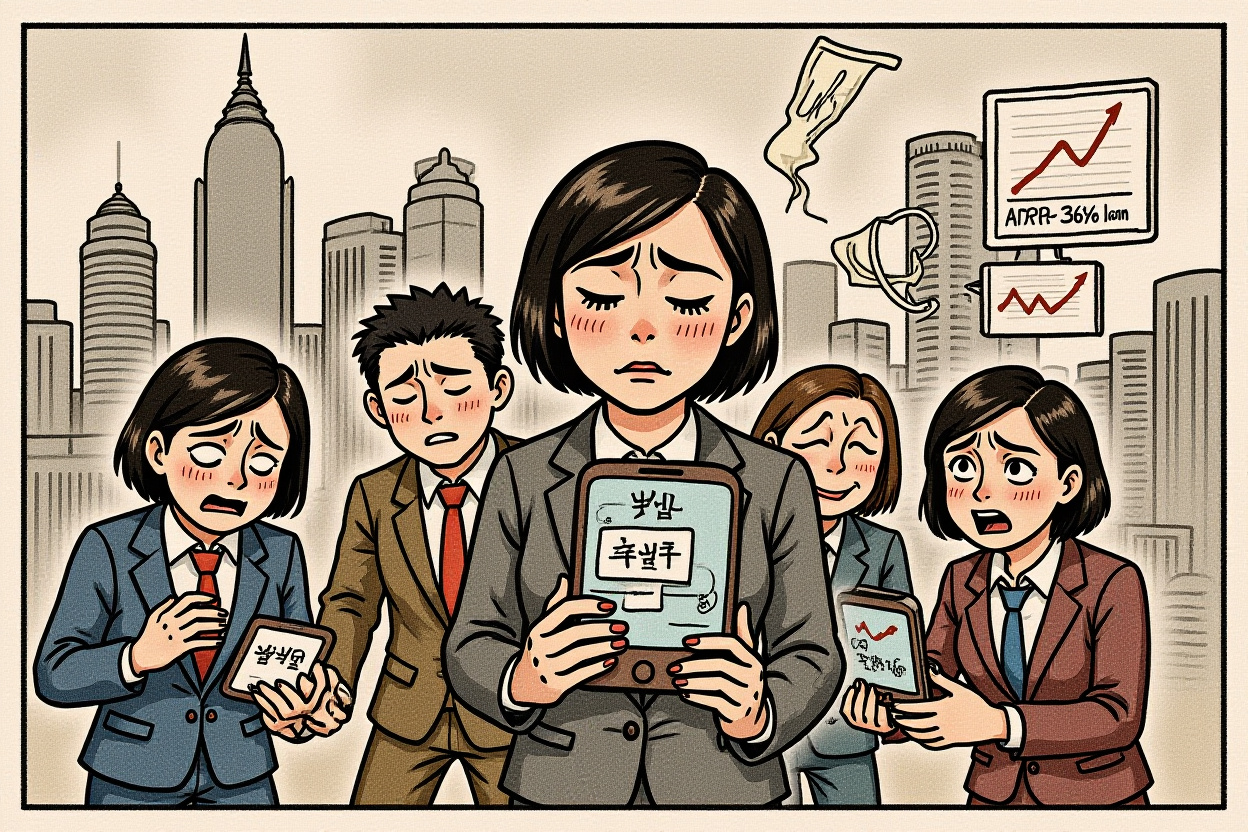
As China’s consumer credit market expands, mini-loans are becoming a double-edged sword, offering quick cash but often leading to crippling debt. This analysis delves into the case of Fenqile (分期乐), where borrowers like Ms. Chen end up repaying nearly double what they borrowed, exposing flaws in transparency, regulation, and ethical lending practices. With regulatory caps tightening, the sustainability of such models is under threat, posing significant implications for investors and the broader financial ecosystem.
Key Takeaways
- Mini-loans from platforms like Fenqile (分期乐) often carry effective annual percentage rates (APRs) nearing 36%, far exceeding regulatory limits, leading to repayment amounts that can double the original principal.
- Opaque fee structures, including hidden membership, guarantee, and credit assessment fees, are routinely added without clear disclosure, exploiting regulatory gaps and consumer oversight.
- Despite attempts to distance itself from past controversies, Fenqile (分期乐) continues to face allegations of targeting students and employing aggressive, sometimes violent, debt collection tactics.
- Regulatory bodies like the People’s Bank of China (中国人民银行) and the National Financial Regulatory Administration (国家金融监督管理总局) are cracking down, but enforcement remains challenging as lenders innovate to bypass rules.
- For institutional investors, the risks associated with fintech firms like Lexin Group (乐信集团) include compliance breaches, reputational damage, and potential market volatility as scrutiny intensifies.
The Allure and Harsh Reality of Mini-Loans
During festive seasons like the Lunar New Year, many young Chinese find themselves short on cash for gifts, travel, or family expenses. Platforms like Fenqile (分期乐) capitalize on this need, advertising enticing offers such as “up to 50,000 yuan in credit” and “annual interest rates as low as 8%.” These mini-loans, characterized by small amounts and long repayment terms, appear manageable but often mask exorbitant costs. The focus on mini-loans reveals a broader trend in China’s fintech sector, where accessibility comes at a high price.
Case Study: Ms. Chen’s Debt Nightmare
Ms. Chen, a university student at the time, borrowed 13,674 yuan through five loans from Fenqile (分期乐) between 2020 and 2021. With APRs ranging from 32.08% to 35.90% and terms extending up to 36 months, she was lured by promises of “low interest” and “monthly payments as low as 18.23 yuan.” However, after stopping repayments in August 2022 due to financial strain, she now faces a total repayment of 26,859 yuan—nearly double the principal. Her experience highlights how mini-loans can trap borrowers in a cycle of debt, compounded by psychological stress from aggressive collection efforts.
The Mechanics of Debt Accumulation
Fenqile (分期乐) operates on a model that extends loan durations to minimize monthly payments while maximizing interest over time. For instance, a 400 yuan expense split over 36 months seems trivial, but at high APRs, the total cost balloons. This snowball effect is central to the profitability of mini-loans, yet it often escapes borrower awareness until it’s too late. Data from complaints platforms show that this practice is widespread, with many users reporting similar experiences of escalating debt.
Opaque Fee Structures and Regulatory Gaps
Beyond stated interest rates, mini-loans frequently include hidden fees that push effective costs to regulatory limits. Fenqile (分期乐) has been accused of charging undisclosed membership, guarantee, and credit assessment fees, often buried in lengthy electronic agreements. This lack of transparency not only violates consumer protection norms but also challenges regulatory frameworks designed to curb excessive lending costs.
Hidden Costs Beyond Stated Interest
According to complaints on the Black Cat platform (黑猫投诉), over 160,000 grievances target Fenqile (分期乐) for fee opacity. One user noted in February 2025 that their comprehensive APR reached 36%, exceeding the 24% cap set by regulators. Another case from January 2025 involved a 1,450 yuan credit assessment fee added without clear explanation. These examples underscore how mini-loans exploit fee structures to maintain profitability while sidestepping direct interest rate violations.
- In a reported instance, a borrower from Zhejiang took a 10,300 yuan loan at a 6% stated APR but ended up repaying 12,425.4 yuan due to hidden charges.
- Similarly, a 15,000 yuan loan at 7.5% APR resulted in repayment of 17,650.43 yuan, highlighting discrepancies between contractual and actual costs.
Regulatory Framework and Enforcement Challenges
In December 2025, the People’s Bank of China (中国人民银行) and the National Financial Regulatory Administration (国家金融监督管理总局) issued the “Guidelines for the Management of Comprehensive Financing Costs of Small Loan Companies,” capping new loan APRs at 24% and aiming to align them with four times the one-year Loan Prime Rate (LPR) by 2027. However, enforcement remains uneven. Lenders like Fenqile (分期乐) adapt by introducing ancillary fees or extending terms, demonstrating the cat-and-mouse game between regulators and the industry. For mini-loans to become sustainable, stricter oversight and clearer disclosure requirements are essential.
Targeting the Vulnerable: From Campus to Consumer
Fenqile (分期乐) has its roots in campus lending, a controversial practice that fueled its early growth. Founded in 2013 by Xiao Wenjie (肖文杰), the platform initially targeted students with easy credit, accumulating scale before regulatory crackdowns on campus loans in 2016. Despite rebranding as a fintech entity under Lexin Group (乐信集团), which went public on Nasdaq in 2017, evidence suggests that mini-loans still reach student populations, raising ethical and legal concerns.
The Legacy of Campus Lending
Search results on the Black Cat platform (黑猫投诉) for “Fenqile campus loans” yield 922 complaints, indicating ongoing issues. Users report that promotional activities on campuses and loans to students persist, contravening regulations that restrict lending to non-students. This persistence highlights the difficulty of shedding a lucrative but risky business model, especially when mini-loans depend on high-volume, low-awareness borrowers.
Data Privacy and Aggressive Collection Practices
Upon agreeing to Fenqile’s (分期乐) terms, users consent to sharing personal data—including ID photos, bank details, and facial recognition—with third parties like payment processors and credit enhancers. This data collection facilitates aggressive debt collection, where borrowers’ contacts are harassed, leading to social stigma and mental health issues. Over 20,000 complaints cite violent collection tactics, such as threatening family members or employers, underscoring the human cost of these mini-loans.
Market Implications and Investor Considerations
For institutional investors and fund managers, the mini-loan sector presents both opportunities and significant risks. Lexin Group (乐信集团), as the parent company of Fenqile (分期乐), relies on this model for revenue, but regulatory scrutiny and consumer backlash could impact profitability and stock performance. Understanding these dynamics is crucial for informed investment decisions in Chinese equities.
The Business Model of Fenqile and Lexin Group
Fenqile (分期乐) operates through its licensed micro-lending entity in Jiangxi, partnering with banks like Shanghai Bank (上海银行) for fund disbursement. Its strategy involves volume-driven lending with high effective yields, but this depends on maintaining APR levels close to regulatory limits. As rules tighten, the model may require overhaul, potentially affecting Lexin Group’s (乐信集团) financials. Investors should monitor compliance reports and consumer sentiment indices to gauge sustainability.
Risks for Institutional Investors
Key risks include regulatory penalties, reputational damage from public scandals, and potential class-action lawsuits. For example, if Fenqile (分期乐) is forced to refund excess fees, it could lead to significant financial outlays. Additionally, as China emphasizes financial inclusion and consumer protection, companies failing to adapt may face market exclusion. Diversifying into more transparent lending products could mitigate these risks, making mini-loans a volatile segment for portfolio allocation.
Navigating the Future: Recommendations and Calls to Action
The evolution of mini-loans in China hinges on balanced regulation, consumer education, and ethical business practices. Stakeholders—from borrowers to investors—must proactively address the challenges posed by high-interest lending to foster a healthier financial environment.
For Consumers: How to Protect Yourself
Borrowers should scrutinize loan agreements for hidden fees, calculate effective APRs using online tools, and prefer regulated institutions over opaque platforms. Resources like the China Banking and Insurance Regulatory Commission (CBIRC) website offer guidance on responsible borrowing. Avoiding impulsive loans for non-essential expenses can prevent entanglement in mini-loan traps.
- Always request a full cost breakdown before signing any digital agreement.
- Report discrepancies to authorities like the National Financial Regulatory Administration (国家金融监督管理总局) via official channels.
- Consider alternatives such as savings plans or family support for short-term needs.
For Regulators: Strengthening Oversight
Regulatory bodies must enhance monitoring of fee structures, enforce APR caps stringently, and penalize non-compliance with fines or license revocations. Promoting financial literacy campaigns can empower consumers, while mandatory disclosure standards for mini-loans could reduce opacity. Collaboration with tech platforms to flag predatory lending apps would also bolster protections.
Synthesis and Forward-Looking Guidance
The mini-loan phenomenon epitomizes the tensions in China’s rapid fintech growth: innovation versus exploitation, accessibility versus sustainability. Cases like Ms. Chen’s reveal systemic issues that demand urgent attention from all market participants. As regulations evolve, lenders must prioritize transparency, while investors should conduct thorough due diligence on compliance and social impact metrics.
For a deeper understanding, refer to the official guidelines from the People’s Bank of China (中国人民银行) on small loan management and follow updates from financial news outlets. The future of mini-loans will likely see consolidation and reform, making informed vigilance the key to navigating this complex landscape. Take action today by reviewing your exposure to such assets and advocating for stronger consumer safeguards in China’s equity markets.