



Executive Summary
– The ‘mini-loan’ business model, popularized by platforms like Fenqile (分期乐), lures young borrowers with low upfront payments but entraps them in debt cycles through extended terms and hidden fees, often doubling the principal owed.
– Regulatory bodies like the People’s Bank of China (中国人民银行) and the National Financial Regulatory Administration (国家金融监督管理总局) have set caps on lending costs, but enforcement gaps allow some platforms to operate near the 36% annualized rate limit.
– Fenqile’s origins in controversial campus lending persist, with ongoing complaints about aggressive debt collection and data privacy violations, highlighting systemic risks in China’s fintech sector.
– For international investors, these ‘mini-loans’ represent both ethical dilemmas and regulatory vulnerabilities, necessitating careful scrutiny of consumer protection measures and compliance trends.
– The proliferation of ‘mini-loans’ underscores urgent needs for transparent pricing, stronger oversight, and financial literacy initiatives to safeguard young consumers in China’s evolving credit market.
The Allure and Trap of Mini-Loans in China’s Consumer Credit Landscape
As Lunar New Year approaches, many young Chinese face financial pressures—from gifting red envelopes to funding family trips—turning to seemingly convenient ‘mini-loans’ for relief. Platforms like Fenqile (分期乐) promise easy access with slogans like ‘borrow up to 50,000 yuan instantly,’ but behind this facade lies a darker reality of debt accumulation. The case of Ms. Chen, who borrowed 13,674 yuan only to owe 26,859 yuan after six years, epitomizes how these ‘mini-loans’ can drain resources through compounded interest and fees. This model, targeting cash-strapped youths, has sparked public outrage and regulatory scrutiny, revealing a precarious balance between financial inclusion and exploitation. For global investors monitoring Chinese equities, understanding the mechanics and risks of ‘mini-loans’ is crucial, as they impact consumer sentiment, regulatory policies, and the valuation of fintech firms.
Case Study: From 13,000 Yuan to 26,000 Yuan in Debt
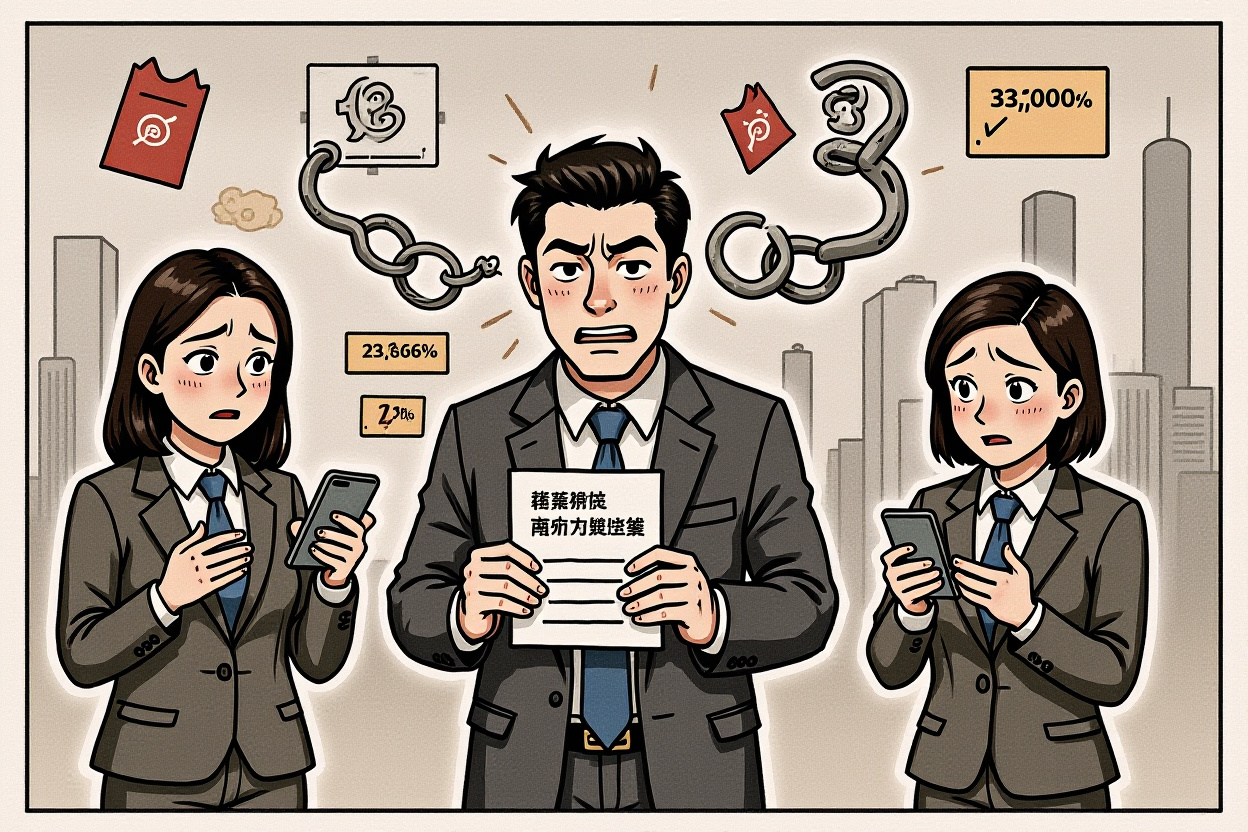
Ms. Chen’s experience with Fenqile (分期乐) began during her university years, where she took out five loans totaling 13,674 yuan for everyday expenses, including a 400-yuan purchase split over 36 months. The loans carried annual interest rates ranging from 32.08% to 35.90%, with monthly payments as low as 18.23 yuan masking the long-term burden. By 2022, unable to repay, she defaulted, leading to over 1,000 days of delinquency and aggressive debt collection that exposed her financial struggles to family and friends. This case, which recently trended on Weibo, highlights how ‘mini-loans’ can snowball into unmanageable debt, with effective costs nearing double the principal. Such stories are not isolated; they reflect a broader pattern where ‘mini-loans’ exploit behavioral biases, offering short-term relief while ensnaring borrowers in cycles of repayment that far exceed initial borrowings.
Opaque Fee Structures and the Debt Spiral
Fenqile (分期乐) advertises attractive terms like ‘annual rates as low as 8%’ and ‘borrow 20,000 yuan with daily interest from 2.2 yuan,’ but users often encounter hidden charges. Complaints on platforms like Black Cat投诉 (Hei Mao Tou Su) reveal additional fees for membership, guarantees, and credit assessments, pushing comprehensive annualized costs toward 36%. For instance, one borrower reported a 36% rate on a loan, while another cited unexplained ‘credit evaluation fees’ of 1,450 yuan. These practices, documented by The Chinese Consumer (中国消费者), show how lenders obscure true costs in lengthy electronic agreements. In a case from Zhejiang, a borrower’s actual repayments exceeded contracted amounts by over 2,000 yuan due to undisclosed fees. This lack of transparency transforms ‘mini-loans’ from tools of convenience into instruments of financial distress, emphasizing why regulators are stepping in to mandate clearer disclosures.
Regulatory Framework: Guidelines and Enforcement Gaps
In response to soaring consumer debt, Chinese authorities have introduced measures to rein in lending costs. On December 19, 2025, the People’s Bank of China (中国人民银行) and the National Financial Regulatory Administration (国家金融监督管理总局) jointly issued the Guidelines for the Management of Comprehensive Financing Costs of Small Loan Companies (小额贷款公司综合融资成本管理工作指引), prohibiting new loans with annualized costs above 24% and aiming to cap them at four times the one-year Loan Prime Rate (LPR) by 2027. The rules also mandate corrective actions, suspension of new lending, and credit reporting for violations starting in 2026. However, despite these efforts, ‘mini-loans’ continue to operate near legal limits, as seen with Fenqile’s (分期乐) rates approaching 36%. Enforcement remains challenging due to the digital nature of these platforms and evolving fee structures, such as service or guarantee charges that circumvent interest caps. For investors, this regulatory tug-of-war signals potential volatility, as stricter compliance could squeeze profitability for fintech firms reliant on high-margin ‘mini-loans.’
Central Bank Directives and Market Realities
The PBOC’s guidelines target the core issue of excessive borrowing costs, but implementation lags. Fenqile (分期乐), operated by Ji’an Fenqile Network Small Loan Co., Ltd. (吉安市分期乐网络小额贷款有限公司), illustrates how companies adapt by lengthening terms or adding fees to maintain revenue. For example, by offering 36-month分期 for small amounts, lenders dilute per-payment burdens while maximizing total interest. Data from the National Association of Financial Market Institutional Investors (中国银行间市场交易商协会) indicates that while average lending rates have declined, outliers persist in the ‘mini-loan’ segment. This gap between policy and practice underscores the need for real-time monitoring and stricter penalties, which could reshape the landscape for ‘mini-loans’ and affect related stocks like Lexin Fintech Holdings (乐信集团), Fenqile’s parent company listed on Nasdaq.
The Lingering Shadow of Campus Lending and Ethical Concerns
Fenqile’s (分期乐) rise is intertwined with China’s campus lending boom, a sector once notorious for predatory practices. Founded in 2013 by Xiao Wenjie (肖文杰), Lexin Fintech Holdings (乐信集团) leveraged student loans to achieve rapid growth, transitioning after a 2016 crackdown into a broader fintech player. Yet, remnants of this past endure: over 922 complaints on Black Cat投诉 (Hei Mao Tou Su) reference ‘campus loans,’ with reports of promotional stalls on university grounds and loans issued to students. These ‘mini-loans’ often target financially inexperienced youths, exacerbating debt risks. Moreover, aggressive collection tactics—such as harassing borrowers’ social circles—have led to mental health issues, as seen in Ms. Chen’s depression. For institutional investors, this ethical dimension complicates ESG assessments, as firms involved in ‘mini-loans’ may face reputational damage and regulatory backlash, influencing long-term sustainability.
Consumer Complaints and Violent Debt Collection
Beyond interest rates, Fenqile (分期乐) faces criticism for its collection methods. With over 20,000 complaints citing threats, privacy breaches, and ‘doxing’ of contacts, the platform’s practices violate guidelines from the China Banking and Insurance Regulatory Commission (CBIRC). Borrowers describe calls to family, colleagues, and even village leaders, creating social stigma and psychological distress. These tactics, while boosting recovery rates, undermine consumer trust and align with broader concerns about ‘mini-loans’ eroding financial well-being. As noted by industry experts, such behaviors could trigger stricter oversight under China’s evolving consumer protection laws, potentially increasing operational costs for lenders. For global fund managers, this highlights the importance of due diligence on corporate governance and social responsibility metrics when investing in Chinese fintech.Data Privacy Risks in the Mini-Loan Ecosystem
Information Sharing and Its ImplicationsEconomic Reference News (经济参考报), this ecosystem enables targeted advertising and risk assessment, yet it also exposes users to spam and fraud. For example, shared data might be used by unrelated marketers, violating expectations of confidentiality. This practice, common among ‘mini-loan’ providers, challenges China’s Personal Information Protection Law (个人信息保护法), which mandates explicit consent for data transfers. Investors should note that stricter enforcement could disrupt business models reliant on data aggregation, affecting the profitability of ‘mini-loans’ and prompting shifts toward more transparent practices.Market Implications for Investors and Regulators
The proliferation of ‘mini-loans’ in China presents both risks and opportunities for the financial sector. For institutional investors, companies like Lexin Fintech Holdings (乐信集团) offer exposure to consumer credit growth, but they also carry regulatory and reputational hazards. The stock’s performance on Nasdaq may fluctuate based on compliance with lending caps and consumer protection measures. Meanwhile, regulators face the task of balancing innovation with stability, as ‘mini-loans’ contribute to household debt—now exceeding 60% of GDP in China—posing systemic risks. The focus on ‘mini-loans’ in policy debates signals potential reforms, such as enhanced disclosure requirements or caps on effective annual rates, which could reshape industry dynamics. By monitoring these trends, investors can anticipate shifts in valuation and align portfolios with sustainable fintech practices.
Risks for Financial Technology Companies
Fintech firms engaged in ‘mini-loans’ must navigate a complex landscape of evolving regulations and consumer activism. Lexin’s (乐信集团) reliance on Fenqile (分期乐) for revenue—with ‘mini-loans’ constituting a significant portion—makes it vulnerable to policy changes. For instance, if authorities enforce the 24% cap stringently, margins could compress, impacting earnings and stock prices. Additionally, high complaint volumes may lead to lawsuits or fines, as seen in past cases with other lenders. Investors should assess management’s adaptability, such as diversifying into lower-risk products or improving transparency, to mitigate these risks. The ongoing scrutiny of ‘mini-loans’ serves as a cautionary tale for the sector, emphasizing the need for ethical lending standards to ensure long-term viability.Opportunities for Regulatory Intervention and Market Correction
Chinese regulators have tools to curb abuses in the ‘mini-loan’ market, including digital monitoring systems and stricter licensing. The recent guidelines from the PBOC and NFRA could be bolstered by real-time audits of platform fees and interest calculations. For example, requiring standardized annual percentage rate (APR) disclosures in loan agreements would empower consumers and reduce hidden costs. Moreover, partnerships with educational institutions could promote financial literacy, helping young borrowers avoid debt traps. From an investment perspective, these interventions may create opportunities in compliant fintech firms or regulatory technology (regtech) solutions. As the market for ‘mini-loans’ matures, alignment with global best practices could enhance China’s appeal to foreign investors seeking stable, responsible growth.Synthesizing the Mini-Loan Crisis: Paths Forward
The ‘mini-loan’ phenomenon in China reveals a critical junction in consumer finance, where accessibility clashes with sustainability. Cases like Ms. Chen’s demonstrate how opaque terms and high costs can transform small borrowings into overwhelming debts, draining the financial resources of young people. Regulatory efforts, while progressive, require robust enforcement to close gaps exploited by platforms like Fenqile (分期乐). For the international investment community, this underscores the importance of ESG criteria and due diligence in Chinese equities, particularly in the fintech space. Moving forward, stakeholders—including policymakers, companies, and consumers—must collaborate to foster transparent, fair lending practices. By addressing the root causes of debt spirals, China can harness the potential of ‘mini-loans’ for genuine financial inclusion, rather than allowing them to become instruments of exploitation. Investors are urged to prioritize firms with strong compliance records and consumer-centric models, as these are likely to thrive in an increasingly regulated environment.