



Executive Summary
This analysis delves into the rising concerns surrounding ‘mini-loans’ in China’s fintech sector, highlighting key risks for consumers and investors alike.
– ‘Mini-loans’ offered by platforms like Fenqile (分期乐) often carry deceptively high annual percentage rates (APRs) nearing 36%, far exceeding regulatory guidelines, leading to debt traps where borrowers repay nearly double their principal.
– Regulatory efforts, such as the People’s Bank of China (中国人民银行) and National Financial Regulatory Administration (国家金融监督管理总局) capping comprehensive financing costs at 24%, are being circumvented through opaque fees like membership,担保费 (guarantee fees), and service charges.
– Despite claims of moving away from ‘campus lending’, platforms retain predatory practices, including aggressive data collection and violent debt collection tactics that harass borrowers’ social circles, raising ethical and legal red flags.
– For institutional investors, companies like Nasdaq-listed Lexin Fintech Holdings (乐信集团) face significant reputational and regulatory risks that could impact stock performance and sector stability in Chinese equity markets.
– Consumers and investors must exercise extreme caution, prioritizing transparency and due diligence to navigate this high-stakes environment.
The Allure and Peril of China’s Mini-Loan Boom
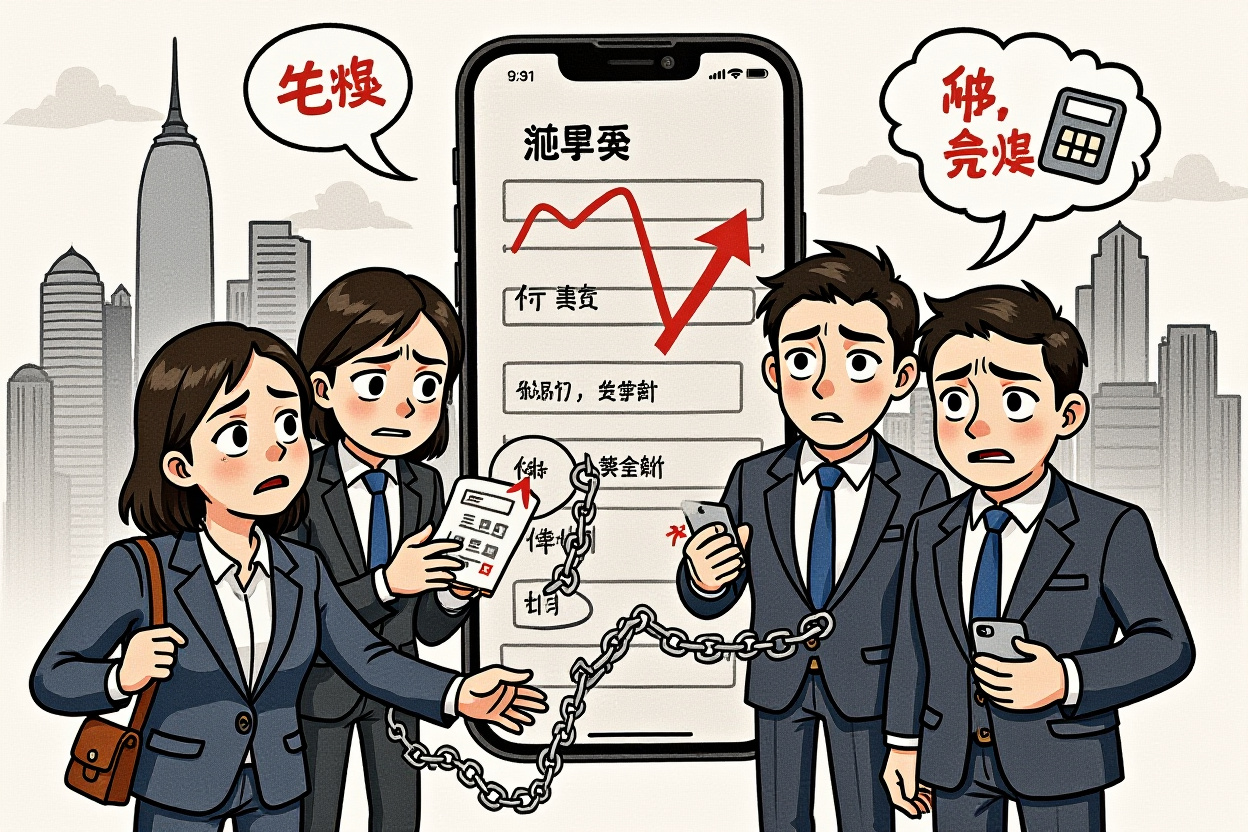
As Chinese consumers, particularly young adults, seek quick cash for holidays, gifts, or emergencies, ‘mini-loans’ have emerged as a seemingly convenient solution. Platforms like Fenqile (分期乐) advertise low monthly payments and high credit limits, tapping into the demand for instant gratification. However, beneath this facade lies a dangerous reality: these micro-loans are engineered to maximize lender profits at the expense of borrower financial health. The case of Ms. Chen (陈女士), who borrowed 13,674 yuan only to owe 26,859 yuan after six years, exemplifies how ‘mini-loans’ can spiral into unmanageable debt. With annualized rates pushing 36%, these products are not just costly—they are predatory, threatening to drain the savings and mental well-being of a generation. For global investors monitoring Chinese fintech equities, understanding this dynamic is crucial, as regulatory scrutiny and consumer backlash could destabilize key players.
The focus on ‘mini-loans’ reveals a broader trend in China’s consumer credit market, where fintech innovation often outpaces oversight. As platforms target vulnerable demographics, the financial and social costs mount, calling into question the sustainability of such business models. This article explores the mechanisms, regulatory challenges, and market implications of these high-interest loans, providing actionable insights for stakeholders.
The Opaque Cost Structure of Mini-Loans
At first glance, ‘mini-loans’ appear affordable, with platforms like Fenqile (分期乐) promoting low daily interest rates and flexible terms. Yet, the true cost is hidden in complex fee structures and elongated repayment periods, turning small debts into financial burdens.
Case Study: The Debt Snowball Effect
Ms. Chen’s (陈女士) experience is a textbook example of how ‘mini-loans’ operate. During her university years, she took out five loans from Fenqile, totaling 13,674 yuan, for expenses as small as 400 yuan spread over 36 months. Promised ‘low interest’ and minimal monthly payments, she soon found herself trapped. The APRs ranged from 32.08% to 35.90%, and after stopping payments in August 2022, her debt ballooned to 26,859 yuan—nearly double the principal. This snowball effect is common in ‘mini-loan’ models, where extended tenures and compounding fees ensure lenders profit handsomely while borrowers struggle. For investors, this underscores the high-margin but high-risk nature of such lending, reliant on consumer over-indebtedness.
Hidden Fees and Regulatory Evasion
Beyond stated interest, ‘mini-loans’ often include nebulous charges that inflate costs. On complaint platforms like Black Cat (黑猫投诉), users report unexplained fees for membership, credit assessment, and担保费 (guarantee fees), pushing comprehensive APRs to the legal limit of 36%. For instance, one borrower cited a 36% APR on a Fenqile loan, with additional hidden costs making repayment prohibitive. Regulatory guidelines, such as the December 2025 directive from the People’s Bank of China (中国人民银行) and National Financial Regulatory Administration (国家金融监督管理总局), cap new loan costs at 24% and aim to reduce them to four times the one-year Loan Prime Rate (LPR) by 2027. However, platforms exploit loopholes by bundling services or delaying fee disclosures, making compliance superficial. This opacity not only harms consumers but also poses compliance risks for companies, potentially leading to fines or operational restrictions that could affect stock valuations in Chinese markets.
Regulatory Crackdown and Persistent Loopholes
Chinese authorities have stepped up efforts to rein in predatory lending, but the ‘mini-loan’ industry continues to adapt, finding new ways to maintain profitability amid tightening rules.
New Guidelines and Their Limitations
The 2025 joint guidance explicitly prohibits new loans with comprehensive financing costs above 24%, mandating corrections and credit reporting for violations. This move aims to protect consumers from usurious rates prevalent in ‘mini-loans’. Yet, enforcement remains patchy, especially for online platforms operating across jurisdictions. For example, Fenqile (分期乐), based in Jiangxi’s吉安市分期乐网络小额贷款有限公司 (Ji’an Fenqile Online Micro-Loan Co., Ltd.), can leverage digital channels to reach borrowers nationwide, complicating local oversight. Investors should monitor regulatory actions closely, as stricter implementation could squeeze margins for fintech firms, impacting earnings reports and investor confidence in sectors tied to consumer finance.
Innovative Profit Models Amid Scrutiny
To circumvent caps, ‘mini-loan’ providers have diversified revenue streams. They may offer ‘discounted’ rates upfront but add mandatory insurance or service packages later, effectively boosting APRs. Reports from China Consumers (中国消费者) highlight cases where borrowers like Meng from Zhejiang paid thousands extra in hidden fees on Fenqile loans, despite contracted rates of 6-7.5%. This practice not only violates transparency norms but also erodes trust, potentially triggering consumer lawsuits and regulatory penalties. For global fund managers, such risks necessitate deeper due diligence on company disclosures and fee structures, as non-compliance could lead to significant stock downturns in volatile Chinese equity markets.
The Persistent Shadow of Campus Lending
Despite regulatory bans on校园贷 (campus loans), platforms like Fenqile (分期乐) retain ties to student lending, a legacy that continues to fuel controversies and consumer harm.
Fenqile’s Controversial Origins
Fenqile’s parent company, Lexin Fintech Holdings (乐信集团), founded by Xiao Wenjie (肖文杰) in 2013, built its empire on分期乐 (Fenqile), initially targeting university students with easy credit for electronics and lifestyle goods. This ‘campus loan’ model fueled rapid growth but attracted regulatory ire in 2016, leading to a rebranding effort as a ‘fintech’ entity. However, complaints persist: over 922 reports on Black Cat (黑猫投诉) reference ‘campus loans’ involving Fenqile, with allegations of on-campus promotions and loans to underage borrowers. This history suggests that the core business of ‘mini-loans’ remains intertwined with high-risk demographics, exposing companies to ongoing legal and reputational threats. For investors, this underscores the importance of assessing corporate governance and ethical standards, as past practices can resurface to damage brand value and stock performance.
Ongoing Violations and Social Impact
Beyond lending, platforms engage in aggressive tactics that exacerbate borrower distress. Over 20,000 complaints cite violent debt collection by Fenqile, including harassment of family, friends, and even community leaders through通讯录 (contact list)曝光 (exposure). Such practices not only violate privacy laws but also contribute to mental health issues, as seen in Ms. Chen’s (陈女士) case where she suffered depression due to social shaming. For institutional investors, these social costs translate into ESG (Environmental, Social, and Governance) risks, which are increasingly factored into investment decisions worldwide. Companies failing to address these issues may face divestment or negative ratings, affecting their appeal in global portfolios focused on Chinese equities.
Data Privacy and Aggressive Collection Practices
The ‘mini-loan’ ecosystem extends beyond lending into data exploitation, with platforms collecting vast amounts of personal information that can be misused for coercion or profit.
Information Harvesting and Third-Party Sharing
Upon signing up, borrowers often unknowingly consent to extensive data collection. Fenqile’s (分期乐) privacy policy, as investigated by Economic Reference News (经济参考报), allows the platform to gather names, ID photos, bank details, income data, facial recognition info, and location—over a dozen sensitive data points. This information is then shared with third parties, including payment processors, banks, and credit enhancers, creating privacy risks. For consumers, this means loss of control over personal data; for investors, it signals potential regulatory fines under China’s evolving data security laws, such as the Personal Information Protection Law (个人信息保护法). Non-compliance could lead to operational disruptions and financial penalties, impacting company bottom lines and stock stability.
The Human Toll of Debt Collection
Aggressive collection methods compound the harms of ‘mini-loans’. Borrowers report incessant calls, threats, and public shaming, tactics that violate guidelines from authorities like the China Banking and Insurance Regulatory Commission (中国银行保险监督管理委员会). These practices not only damage consumer welfare but also increase legal liabilities for lenders. In the long term, widespread backlash could spur stricter regulations, such as caps on collection frequency or bans on certain tactics, forcing platforms to overhaul operations and reduce profitability. For corporate executives and fund managers, this highlights the need to factor in litigation risks and potential regulatory shifts when evaluating fintech investments in Chinese markets.
Market Implications and Investor Considerations
The ‘mini-loan’ controversy has far-reaching consequences for China’s financial markets, affecting everything from stock valuations to sectoral stability, with key takeaways for sophisticated investors.
Risks for Fintech Companies Like Lexin Fintech Holdings
As the operator of Fenqile (分期乐), Lexin Fintech Holdings (乐信集团) faces direct exposure to the pitfalls of ‘mini-loans’. Its Nasdaq listing ties its fortunes to global investor sentiment, which can be swayed by regulatory news or consumer scandals. For instance, negative media coverage or government crackdowns could lead to stock volatility, as seen with past dips in Chinese fintech stocks. Investors should scrutinize Lexin’s financial reports for provisions related to compliance costs or loan loss reserves, as these metrics can indicate underlying risks. Additionally, monitoring announcements from the People’s Bank of China (中国人民银行) and National Financial Regulatory Administration (国家金融监督管理总局) is essential, as policy changes could swiftly alter the business landscape for ‘mini-loan’ providers.
Guidance for Institutional Investors and Executives
To navigate this complex environment, stakeholders should adopt a proactive approach. First, conduct thorough due diligence on fintech firms, focusing on fee transparency, regulatory compliance histories, and customer complaint volumes. Second, diversify portfolios to mitigate sector-specific risks, perhaps balancing exposure to ‘mini-loan’ companies with investments in more traditional financial institutions or tech firms with stronger governance. Third, engage with companies on ESG issues, pushing for better practices in lending and data handling. For example, investors can use shareholder meetings to advocate for clearer disclosures on APRs and collection methods. Finally, stay informed on macroeconomic indicators, such as youth unemployment rates or consumer debt levels, which can influence the demand for and sustainability of ‘mini-loan’ products. By integrating these strategies, investors can better assess opportunities and pitfalls in Chinese equity markets.
Synthesizing the Dangers and Paths Forward
The ‘mini-loan’ phenomenon in China represents a critical juncture where fintech innovation clashes with consumer protection and regulatory oversight. While these loans offer short-term liquidity, their long-term costs—financial, psychological, and social—are staggering, as evidenced by cases like Ms. Chen’s (陈女士) ordeal. For the market, this underscores systemic vulnerabilities: platforms profit from opacity and regulatory arbitrage, but at the risk of severe backlash that could trigger sector-wide reforms. Investors must recognize that the allure of high margins in ‘mini-loans’ is often underpinned by unsustainable practices, and a shift toward more ethical lending could reshape the competitive landscape.
Moving forward, all stakeholders have roles to play. Consumers should educate themselves on loan terms, avoiding traps by seeking alternatives like bank credit or family support. Regulators need to enhance enforcement, perhaps leveraging technology for real-time monitoring of loan costs and data practices. For investors, the call to action is clear: prioritize companies with transparent operations and robust compliance frameworks, as these are likely to thrive amid tightening rules. By fostering a more responsible ecosystem, China’s fintech sector can evolve to serve genuine consumer needs without exploiting vulnerabilities, ensuring stability and growth in the broader equity markets. Stay vigilant, demand accountability, and let informed decisions guide your investments in this dynamic space.