



Executive Summary
– Hemu’s luxury snowscape homestays in Xinjiang are achieving near-full occupancy with rates soaring to nearly 10,000 yuan per night, months ahead of peak winter season.
– Demand is fueled primarily by young, affluent travelers from southern China, who prioritize photogenic experiences and access to winter sports like skiing.
– The homestay boom signifies a broader shift towards experiential tourism, with revenue growth increasingly driven by ancillary services such as dining, cultural activities, and photography.
– Infrastructure developments, including the Jike Pu Lin International Ski Resort (吉克普林国际滑雪场), have transformed Hemu from a seasonal destination into a year-round hotspot, attracting both domestic and international interest.
– For investors and travel professionals, Hemu’s success offers insights into premium niche markets, but sustainability and service differentiation will be key to long-term viability.
A New Frontier in Luxury Travel: The Hemu Homestay Phenomenon
In the remote reaches of Xinjiang’s Altay region, a quiet revolution is unfolding. Hemu (禾木), a picturesque village once known primarily for its autumn foliage, has emerged as the epicenter of China’s luxury winter travel market. Hemu’s luxury snowscape homestays are commanding astronomical prices—some nearing 10,000 yuan per night—and yet, they are consistently "sold out," booked months in advance by a new generation of travelers. This isn’t merely a seasonal spike; it’s a sustained boom that reflects deeper changes in consumer behavior, social media influence, and the strategic development of China’s domestic tourism infrastructure. For global investors and industry watchers, understanding this trend offers a window into the evolving preferences of Chinese travelers and the lucrative opportunities within niche experiential markets.
Decoding the Premium Product: What Does a 10,000 Yuan Night Entail?
At first glance, paying nearly 10,000 yuan for a night in a wooden cabin might seem extravagant. However, Hemu’s luxury snowscape homestays are not just accommodations; they are curated experiences designed for the social media age.
Architectural Allure and "Instagrammable" Design
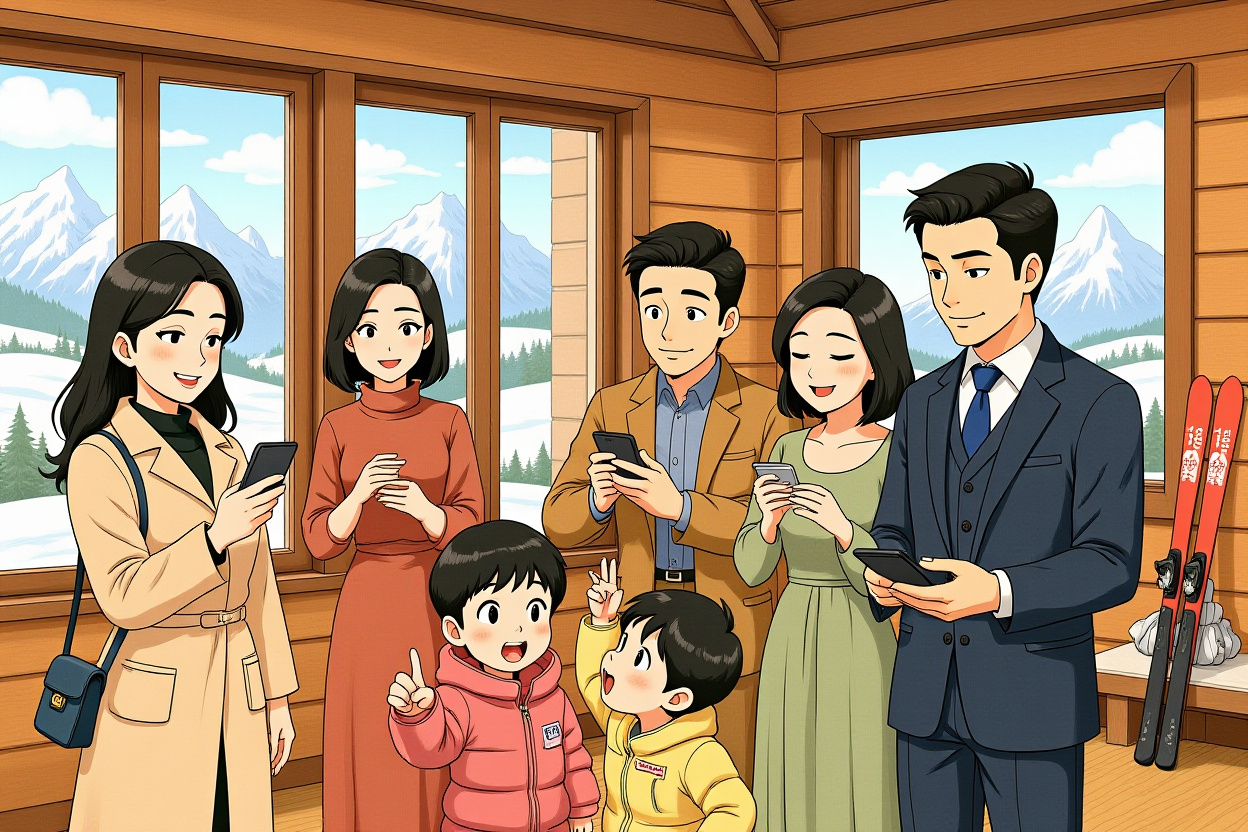
The most sought-after homestays feature traditional Tuwa-style log cabins with expansive floor-to-ceiling windows that frame uninterrupted views of snow-blanketed landscapes. Interiors blend rustic wooden aesthetics with modern comforts like underfloor heating, creating a cozy yet photogenic environment. As a traveler from Sichuan using the pseudonym Char Siu (叉烧) noted, "The atmosphere in the little wooden house is truly wonderful. The window is huge, the snowscape outside is very beautiful, and the room is very warm. You could sit inside and watch the snow all day." This design directly caters to the desire for "high出片率" (high photo yield), a critical factor driving bookings among young tourists.
Pricing Dynamics and Booking Frenzy
Data from online travel agencies (OTAs) like Ctrip (携程) and Meituan (美团) reveals the intense demand. For instance, a homestay on Hemu Village’s Su Mu He Road (苏木河路) lists room rates between 2,099 yuan and 9,899 yuan per night. Each room type is unique, and for December, only a handful of dates have vacancies. Another property on Ji Ke Pu Lin Road (吉克普林路) shows similar pricing from 1,880 yuan to 2,679 yuan per night, with near-complete occupancy through the month. Zhang Hai (张海), a homestay operator in Hemu since 2019, reported that his properties, priced from 3,868 yuan to 9,868 yuan per night, are already 80-90% booked for the upcoming winter golden period, with popular rooms requiring reservations a month or more in advance.
The Engine of Demand: Who is Driving the Hemu Homestay Boom?
The surge in Hemu’s luxury snowscape homestays is propelled by a distinct demographic shift and evolving travel motivations.
The Rise of the Experience-Seeking Youth and Family Traveler
Primary clientele consists of post-90s and post-00s generations (90后、00后), along with quality-focused family units. A significant proportion hails from southern provinces like Guangdong, Guangxi, and Sichuan, where snow is a novelty. These travelers are less price-sensitive and more value-driven, seeking immersive experiences over mere lodging. As San San (三三), a traveler from Guangxi, explained, the appeal lies in the "window that photographs very well." Social media platforms like Douyin (抖音) and Xiaohongshu (小红书), where "Hemu" and "Hemu Village" have garnered billions of views, serve as powerful discovery and inspiration tools.
Synergy with Winter Sports and Infrastructure Development
The growth is inextricably linked to the expansion of nearby winter sports facilities. The Jike Pu Lin International Ski Resort (吉克普林国际滑雪场), one of China’s largest, has positioned Hemu as a dual-purpose destination for skiing and luxury relaxation. Data from Tujia (途家) shows that for the new snow season (October 2025 to March 2026), homestay bookings in Altay have doubled year-over-year. The携程度假农庄 (Ctrip Holiday Farmhouse) (新疆禾木西融联营店) reported that入住率 (occupancy rates) and客单价 (average spending per guest) have both increased, with revenue growth estimated at around 20% annually. This synergy has transformed Hemu from a summer/autumn spot into a year-round attraction.
Beyond the Room: The Evolving Business Model of Homestays
Hemu’s luxury snowscape homestays are no longer just about providing a bed for the night. Operators have successfully diversified revenue streams by enhancing the overall guest experience.
Monetizing the "Second Consumption" Economy
The real financial upside for homestay businesses now often comes from ancillary services. Zhang Hai (张海) highlighted that收入 (revenue) growth is increasingly dependent on餐饮 (dining),旅拍 (travel photography), and curated local experiences. For example, he once orchestrated a marriage proposal during a snowstorm for a guest, creating a memorable event that added significant value. The携程度假农庄 (Ctrip Holiday Farmhouse) manager noted that services like ski equipment rentals, cultural tours featuring Tuwa (图瓦) traditions, and convenient shuttle services are becoming key differentiators and profit centers.
Strategic Positioning and Market Differentiation
Homestays are consciously marketing themselves as gateways to "自然+慢生活" (nature + slow living). This aligns with a global trend towards mindful travel and authenticity. By offering glimpses into local lifestyles—such as traditional music, woodcraft, and seasonal rituals—these properties command premium prices. The shift is from competing on room specs to competing on holistic experience, a strategy that resonates with the target audience’s desire for unique, shareable moments.
Market Implications and Forward-Looking Analysis
The success of Hemu’s luxury snowscape homestays carries significant lessons for the broader travel and investment communities.
Investment Opportunities and Sector Growth
The Hemu model demonstrates the viability of high-end, niche tourism in China’s developing regions. With the新疆 (Xinjiang) government actively promoting "冰雪游" (ice and snow tourism), investor interest in related infrastructure—from premium accommodations to transportation networks—is likely to intensify. The reported 20-30% annual revenue growth for established homestays signals a robust market with expansion potential. However, this also raises questions about sustainable development and the preservation of cultural heritage in villages like Hemu, which welcomed over 2 million tourists in 2024 alone, according to CCTV News (央视新闻).
Challenges on the Horizon: Sustainability and Competition
Rapid growth brings challenges. Environmental sustainability is a concern, given the fragile alpine ecosystem. Additionally, as more players enter the market, differentiation will become harder. The current demand for Hemu’s luxury snowscape homestays may face pressure from oversupply or shifting travel trends. Operators must continue to innovate, perhaps by integrating更多绿色实践 (more green practices) or forging partnerships with international luxury travel brands to maintain their edge.
Embracing the New Era of Experiential Travel
The story of Hemu’s homestays is a microcosm of China’s evolving travel economy. It underscores a move away from transactional tourism towards value-driven, experiential journeys. Hemu’s luxury snowscape homestays have tapped into a powerful confluence of factors: social media virality, rising disposable incomes, improved infrastructure, and a deep-seated yearning for connection with nature. For industry professionals, this trend highlights the importance of catering to the aesthetic and experiential demands of younger travelers. For investors, it points to lucrative opportunities in underserved regional markets that combine natural beauty with activity-based tourism. As the winter season approaches, all eyes will be on whether this boom can sustain its momentum and what lessons it holds for other destinations aspiring to replicate its success. Consider how your travel strategies or investment portfolios can adapt to harness the power of such premium, experience-centric models in the dynamic Asian tourism landscape.