



Wall Street’s Smart Money Retreats
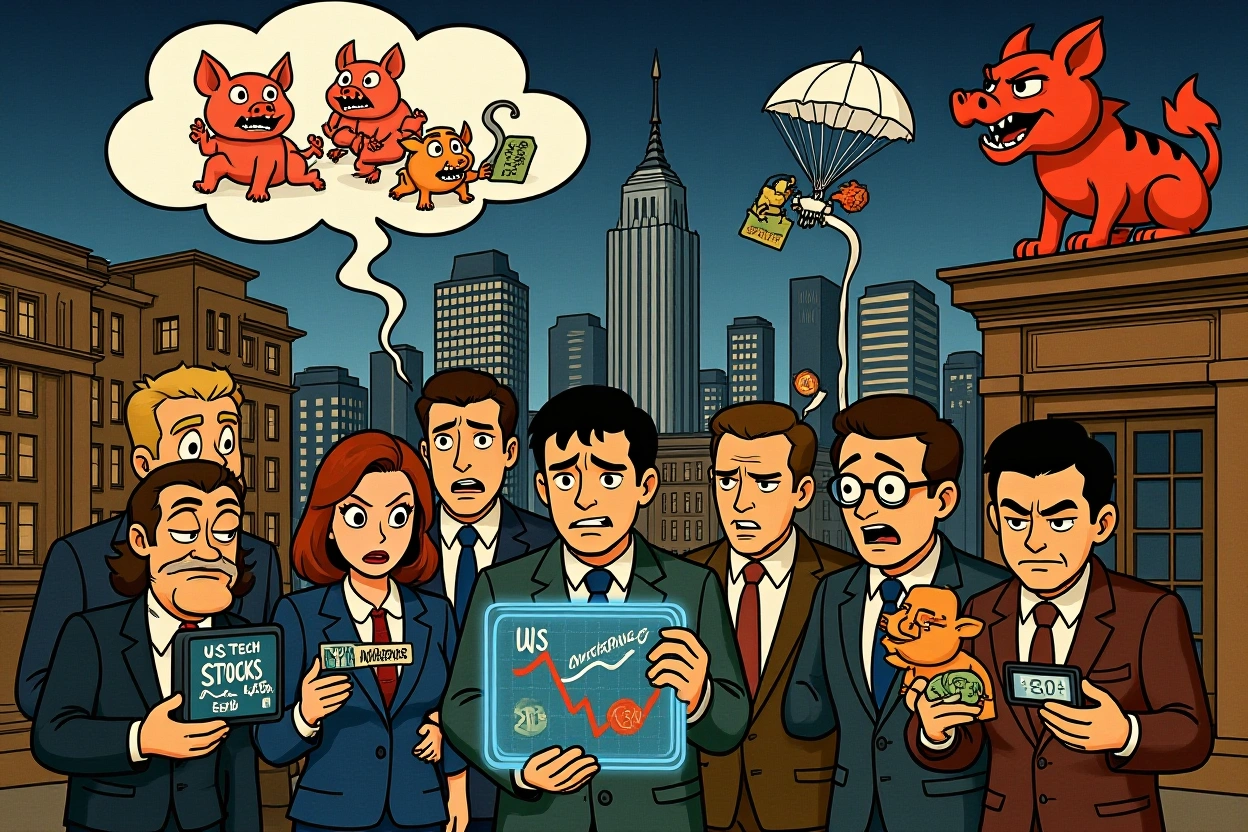
While the S&P 500 hovers near record highs, Wall Street’s most sophisticated investors are heading for the exits. According to Goldman Sachs’ prime brokerage division, hedge funds have now sold US equities for four consecutive weeks – marking the longest withdrawal streak since April’s tariff announcements. This cautious stance comes despite the index rallying approximately 25% from its April lows and approaching its longest monthly winning streak since last September.
Tech Sector Exodus Accelerates
The selling has been particularly aggressive in technology, media, and telecom stocks, where reduction speeds have hit their fastest pace in twelve months. Notably, funds are liquidating positions faster than they’re covering short positions – an unusual trend that’s intensified ahead of tech earnings season. This divergence creates a fascinating market dynamic where the most experienced players are retreating while retail investors continue buying enthusiastically.
Retail vs Institutional Divide
The contrast between institutional and retail behavior has become increasingly stark. Main street investors have now net purchased stocks for 23 consecutive trading days, creating one of the longest retail buying streaks on record. This unusual divergence between sophisticated funds and individual investors raises important questions about market direction as trade war clouds gather.
The Psychological Gap
Jonathan Caplis (乔纳森·卡普利斯), CEO of hedge fund research firm PivotalPath, observes: “Managers remain quite cautious because many underlying risks haven’t dissipated. Macroeconomic uncertainty remains their primary concern.” This professional wariness stands in sharp contrast to retail optimism, setting up potential volatility when these opposing forces collide.
Defensive Positioning Pays Off
The current wave of hedge funds selling US stocks continues a successful defensive strategy initiated last spring. In late March, anticipating potential tariff announcements from the Trump administration, funds systematically reduced equity exposure while increasing short positions. This prescient move proved particularly valuable for globally diversified funds, as international markets outperformed US equities during the subsequent volatility.
Leverage Management as Shield
Caplis explains how this approach protected portfolios: “Hedge funds didn’t experience the same drawdown as broader markets because they proactively reduced leverage. Having avoided that pain, they don’t feel compelled to chase the current rally.” This disciplined risk management contrasts sharply with the all-in approach of retail traders during the same period.
Seasonal Storm Clouds Gather
If historical patterns hold, the cautious approach of hedge funds selling US stocks may soon prove warranted. August and September have historically been the worst performing months for equities, and this year’s seasonal weakness could amplify existing trade-related pressures. UBS data reveals this pattern intensifies during the first year of presidential terms, creating a potentially treacherous two-month period starting in early August.
Presidential Cycle Amplification
Aaron Nordvik (亚伦·诺德维克), UBS’s head of macro equity strategy, warns: “The first year of a presidential term makes these months particularly challenging. If historical patterns hold, we should expect strong gains later in the year – but must first navigate difficult conditions starting around August 4th.” This seasonal vulnerability combines dangerously with looming tariff decision deadlines and extended market valuations.
Performance Tradeoffs
Admittedly, this defensive stance has come at a cost. While the S&P 500 surged approximately 25% from its April low, hedge funds measured by PivotalPath’s Equity Diversified Index gained just 7.8% through June – placing them in the 72nd percentile of performance for all six-month periods since January 2000. This underperformance highlights the opportunity cost of their risk-averse positioning.
The Valuation Question
Elevated market valuations provide fundamental justification for the caution behind hedge funds selling US stocks. With forward P/E ratios for the S&P 500 remaining well above historical averages, funds question sustainability – particularly as the Federal Reserve maintains higher interest rates for longer. The central bank’s recent decision to hold rates steady while acknowledging tariff impacts on inflation validates these concerns.
Retail Resilience Tested
The persistent buying from retail investors presents a fascinating counter-narrative to institutional caution. Goldman Sachs’ trading division suggests this retail demand “isn’t likely to disappear absent material changes in the economic outlook or employment data.” However, the durability of this trend faces mounting challenges:
– Mounting trade war escalation risks
– Declining consumer confidence metrics
– Exhaustion of pandemic-era savings buffers
– Student loan repayment resumptions
Navigating the Uncertainty
For investors navigating these crosscurrents, several key indicators warrant close monitoring:
Critical Signposts Ahead
– Trade negotiation developments between major economies
– Federal Reserve policy meeting minutes and inflation projections
– Technology sector earnings guidance revisions
– High-frequency employment and consumer spending data
– Treasury yield curve dynamics and credit spreads
As hedge funds selling US stocks accelerates, their caution reflects deeper concerns about market fundamentals. The growing divergence between institutional and retail behavior creates potential volatility triggers, particularly when combined with seasonal weakness and unresolved trade tensions. Investors would be wise to review portfolio risk exposures, consider tactical hedges, and maintain liquidity to navigate potential turbulence ahead. Remember that professional money managers often provide early warning signals – their current retreat deserves serious consideration in your investment planning.