



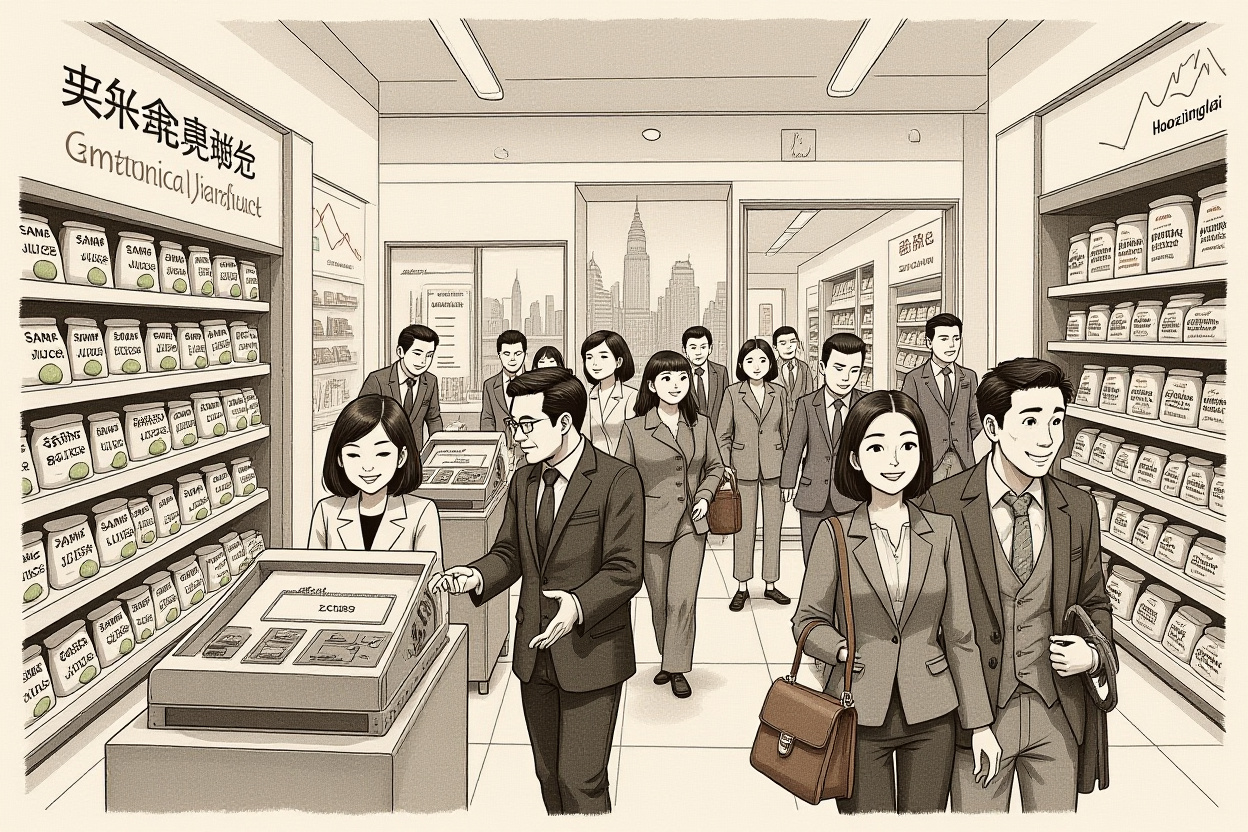
– Haoxianglai, a major discount snack chain under Wanchen Group, has begun selling popular Sam’s Club snacks like small green lemon juice at a premium of approximately 2 yuan.
– This move, currently in a regional pilot, signals a potential strategic shift from low-price volume sales to selective quality offerings, aiming to attract higher-end consumers.
– The pricing strategy highlights the intense competition in China’s snack retail market and the leveraging of viral products to drive foot traffic and brand perception.
– For investors, this development could indicate Wanchen Group’s efforts to diversify revenue streams and improve margins in a saturated market.
– Monitoring the expansion of this pilot and consumer response will be key to assessing its impact on the company’s financial performance and stock valuation.
In a surprising twist that has captivated Chinese consumers and market watchers alike, discount snack giant Haoxianglai (好想来) has started shelving Sam’s Club (山姆)爆款零食 or popular snacks in select stores. This unexpected move, akin to finding luxury brands in a bargain bin, underscores a fascinating evolution in China’s retail landscape. The focus phrase Haoxianglai shelves Sam’s Club snacks encapsulates a strategic experiment that could redefine competitive dynamics. As social media buzzes with comparisons and consumer reactions, the implications for business models, market positioning, and investment opportunities are profound. This article delves into the details, analyzing the premium pricing, regional pilot, and broader trends shaping the future of retail in China.
The Retail Phenomenon: Haoxianglai’s Surprise Move
The recent appearance of Sam’s Club snacks on Haoxianglai shelves has generated significant attention, primarily through social media posts from astounded consumers. This section explores the initial reactions and the factual basis of this development.
Haoxianglai Shelves Sam’s Club Snacks: Initial Evidence and Pricing
When users shared images and experiences of finding Sam’s Club items like the small green lemon juice (小青柠饮料) in Haoxianglai stores, the response was immediate and viral. Comments ranged from surprise to appreciation, with one consumer noting, Haoxianglai is getting more upscale; I saved 260 yuan by not needing a Sam’s Club membership. This sentiment highlights the perceived value and exclusivity associated with Sam’s Club products. The buzz has primarily centered on platforms like Weibo and Xiaohongshu, where such discoveries often trend, driving both online discussion and offline foot traffic to the affected stores.
A key aspect of this move is the pricing strategy. According to reports from Blue Whale News (蓝鲸新闻) reporter Lu Pengpeng (陆鹏鹏), Haoxianglai is selling these Sam’s Club snacks at a premium. For instance, the 300ml small green lemon juice is priced at 8 yuan per bottle, compared to 5.74 yuan on Sam’s Club app, representing a markup of over 2 yuan. Similarly, the 1L version costs 19.9 yuan versus 16.4 yuan. Other items include beef puff pastry cookies (牛肉馅酥脆饼干) and sea salt soda crackers (海盐苏打饼干), with similar pricing differentials. This premium pricing is deliberate, positioning Haoxianglai not just as a discount outlet but as a convenient source for in-demand products, even at a higher cost. The supplier delivers weekly, ensuring stock availability, which adds to the allure of consistent access without membership barriers.
Consumer Reactions and Market Perception
The consumer reaction to Haoxianglai shelves Sam’s Club snacks has been largely positive, with many expressing excitement over the accessibility. However, some have questioned the premium, given Haoxianglai’s discount image. This duality reflects the changing expectations in China’s consumer market, where convenience and product quality are increasingly valued alongside price. Market perception is shifting, and brands that adapt can capture new segments. For example, by offering Sam’s Club snacks, Haoxianglai may attract customers who previously shopped at higher-end stores, thereby increasing basket size and frequency of visits. This strategic move could enhance brand loyalty and differentiate Haoxianglai in a crowded marketplace.
Understanding the Players: Haoxianglai vs. Sam’s Club
To grasp the significance of this development, it’s essential to understand the contrasting business models of Haoxianglai and Sam’s Club.
Haoxianglai’s Business Model as a Discount Snack Store
Haoxianglai, under Wanchen Group (万辰集团), operates as a量贩零食店 or volume snack store, also known as a snack discount store. Its core strategy involves direct factory procurement or private label production, streamlining the supply chain to offer low prices. With over 15,000 stores nationwide and 150 million members, Haoxianglai has dominated the下沉市场 or lower-tier city market, leveraging economies of scale. The product mix typically combines well-known brands for traffic generation with white-label products for profitability, creating a balance between attractively priced items and higher-margin offerings. This model has allowed rapid expansion, but as the market saturates, innovation is necessary to sustain growth. The decision to Haoxianglai shelves Sam’s Club snacks represents a deliberate pivot towards curated selections that can command higher prices.
Sam’s Club’s Exclusive Appeal and Market Position
Sam’s Club, a membership-based warehouse club under Walmart, has a very different footprint in China. With only about 60 stores, primarily in first- and second-tier cities, it caters to a more affluent demographic seeking quality and bulk purchases. Products like the small green lemon juice and sea salt soda crackers have become viral hits, often selling out and creating a secondary market through daigou or purchasing agents. This exclusivity and product appeal make Sam’s Club items highly desirable, and their presence in Haoxianglai taps into this demand without the membership fee, albeit at a premium. The limited distribution of Sam’s Club stores means that many consumers in lower-tier cities cannot access these products easily, creating an opportunity for Haoxianglai to fill this gap and potentially disrupt traditional retail hierarchies.
Strategic Implications for China’s Retail Landscape
The introduction of Sam’s Club snacks in Haoxianglai is not merely a stocking decision; it represents a potential strategic pivot with far-reaching consequences for the industry.
From Low-Price Volume to Selective Quality: A Shift in Strategy
For years, Haoxianglai and similar discount stores have competed on price, undercutting traditional supermarkets and capturing market share. However, as competition intensifies, differentiation becomes crucial. By offering Sam’s Club snacks, Haoxianglai is testing a move towards 精选提质 or selective quality enhancement. This could allow the brand to maintain its down-market advantage while appealing to mid-to-high-end consumers who are familiar with Sam’s Club products but deterred by membership costs or location barriers. If successful, this strategy could diversify revenue streams and improve average transaction values. It aligns with broader trends in retail where discounters are adding premium lines to boost margins, as seen globally with chains like Aldi or Lidl. The focus phrase Haoxianglai shelves Sam’s Club snacks exemplifies this evolution, signaling a nuanced approach to growth in a maturing market.
Regional Pilot and Future Expansion Prospects
Currently, this initiative is limited to个别门店 or individual stores, specifically in Jiangsu province, acting as a regional pilot. This cautious approach allows Haoxianglai to gauge consumer response, supply chain logistics, and profitability before a wider rollout. If the pilot proves successful, scaling to over 10,000 stores could transform the brand’s image and market positioning. Investors should monitor announcements from Wanchen Group regarding expansion plans, as this could signal confidence in the strategy and impact stock performance. Additionally, partnerships with suppliers and potential exclusivity deals could emerge, further solidifying Haoxianglai’s competitive edge. The success of this pilot may inspire other discount retailers to adopt similar tactics, reshaping the entire snack retail sector in China.
Market Dynamics and Consumer Behavior Insights
This move sheds light on broader trends in consumer behavior and retail competition in China, offering valuable lessons for market participants.
The Power of Viral Products in Driving Foot Traffic
Sam’s Club snacks like the small green lemon juice have achieved cult status, often trending on social media and becoming must-buy items. By stocking these, Haoxianglai leverages this viral appeal to attract customers who might not otherwise visit a discount store. This tactic is similar to how retailers use loss leaders, but here, the premium pricing ensures profitability while still offering convenience. Understanding what products resonate with consumers and why can inform future inventory decisions across the retail sector. For instance, products that combine health trends, novelty, and social media virality are particularly potent in driving sales. The phenomenon of Haoxianglai shelves Sam’s Club snacks highlights how savvy retailers can capitalize on existing market hype to enhance their own offerings and customer engagement.
Competitive Pressures in the Discount Snack Sector
The discount snack store market in China has become crowded, with brands like Haoxianglai, Snack Island, and others vying for dominance. As growth slows in some regions, innovation is key. The move to shelve Sam’s Club snacks represents an attempt to stand out. If other players follow suit, it could lead to a new wave of competition based on product curation rather than just price. For investors, tracking market share shifts and same-store sales growth will be critical indicators of success. Additionally, mergers and acquisitions may accelerate as larger players consolidate the market. This environment necessitates agile strategies, and Haoxianglai’s approach serves as a case study in adapting to competitive pressures while exploring new revenue avenues.
Investor Perspectives and Financial Implications
From an investment standpoint, this development has several layers of implications for Wanchen Group and the broader Chinese equity market, requiring careful analysis by professionals.
Potential Impact on Wanchen Group’s Stock and Valuation
Wanchen Group, as the parent company of Haoxianglai, could see its stock influenced by this strategic move. If the pilot leads to increased sales, higher margins, or improved brand perception, it could positively affect valuation. Conversely, if the premium pricing deters customers or if supply chain issues arise, it might pose risks. Analysts will be watching key metrics such as revenue per store, customer traffic, and gross margin expansion in upcoming financial reports. Investors should consider the long-term strategy versus short-term earnings fluctuations. For reference, Wanchen Group’s stock ticker on the Shenzhen Stock Exchange (深圳证券交易所) is 300972, and performance should be monitored in light of retail sector trends. The initiative to Haoxianglai shelves Sam’s Club snacks could be a catalyst for re-rating if it demonstrates sustainable profitability and market differentiation.
Broader Trends in Chinese Equity Markets for Retail Stocks
This case study reflects larger trends in Chinese retail, where companies are adapting to changing consumer preferences and economic conditions. The shift towards omnichannel strategies, premiumization in discount segments, and the integration of viral marketing are themes that extend beyond snacks. For institutional investors and fund managers, understanding these dynamics can inform portfolio allocations in the consumer discretionary sector. Stocks of companies that successfully innovate may outperform, while those stuck in old models could lag. Keeping an eye on regulatory changes, consumer sentiment indices, and macroeconomic indicators like retail sales growth will provide context for investment decisions. The story of Haoxianglai shelves Sam’s Club snacks underscores the importance of agility and innovation in capturing value within China’s rapidly evolving equity markets.
The strategic experiment of Haoxianglai shelves Sam’s Club snacks offers a microcosm of the evolving Chinese retail ecosystem. By charging a premium for in-demand products, Haoxianglai is not just selling snacks; it’s testing a new paradigm that blends discount convenience with selective quality. Key takeaways include the importance of product curation in competitive markets, the leveraging of viral trends for business growth, and the potential for regional pilots to scale into nationwide strategies. For market participants, staying informed on such developments is crucial. As next steps, investors should monitor Wanchen Group’s quarterly earnings, expansion announcements, and consumer sentiment surveys. Engage with industry reports and consider the implications for related stocks in the retail and consumer goods sectors. The dance between discount and premium in China’s market is just beginning, and those who watch closely will be best positioned to capitalize on the opportunities ahead.