



Executive Summary
The dramatic overnight collapse of 国投白银 (Guotou Silver) has sent shockwaves through financial markets. This article delves into the event, providing critical insights for global investors.
- Guotou Silver, a prominent silver-linked investment product, experienced a catastrophic 31% drop in value during a single trading session, erasing billions in market capitalization.
- The plunge was triggered by a confluence of factors, including speculative unwinding, liquidity concerns, and broader weakness in the 白银 (silver) commodity complex.
- Retail and institutional investors faced significant losses, highlighting acute risks in leveraged commodity exposures within China’s evolving capital markets.
- Regulatory bodies, including the 中国证券监督管理委员会 (China Securities Regulatory Commission, CSRC), are scrutinizing the event, which may lead to tighter oversight of commodity-backed financial instruments.
- This incident serves as a stark reminder of volatility in Chinese commodities and underscores the need for robust risk management strategies for international portfolios.
The Night the Floor Fell Out: Guotou Silver Plummets 31%
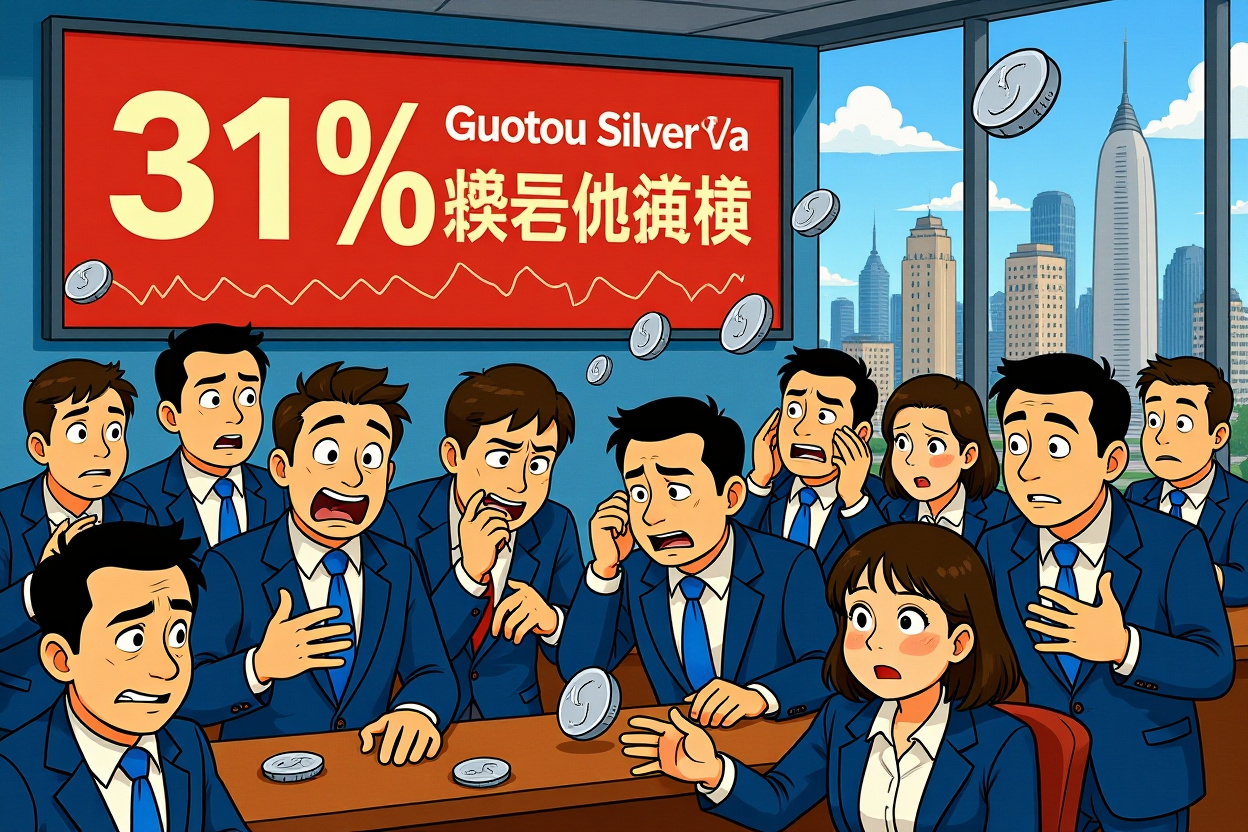
For investors tracking 中国大宗商品市场 (Chinese commodity markets), the morning of [Date] brought a brutal awakening. 国投白银 (Guotou Silver), a widely held instrument, recorded a vertiginous 31% decline, a move so severe it left market participants reeling. This wasn’t a gradual slide but a gap-down crash that occurred amidst overnight trading, perfectly encapsulating the headline: investors were indeed left sleepless. The focus phrase, Guotou Silver plummets 31%, became the dominant narrative across financial news desks from 上海 (Shanghai) to 纽约 (New York), forcing a urgent reassessment of risk in one of the world’s most dynamic but complex investment arenas.
The scale of the drop was unprecedented for such a mainstream product. Trading volumes skyrocketed as panic selling ensued, overwhelming normal market mechanisms. Preliminary data from the 上海期货交易所 (Shanghai Futures Exchange, SHFE) indicated that sell orders dwarfed buy-side interest, creating a vacuum of liquidity that exacerbated the fall. This event immediately raised questions about market stability and the structural integrity of similar commodity-traded products in 中国 (China).
Event Timeline and Immediate Market Reaction
The collapse unfolded during the extended trading hours. Key moments included a series of large block sells from unidentified institutional accounts, which triggered automated stop-loss orders and spurred a feedback loop of selling. Within minutes, the price breached multiple technical support levels, culminating in the historic 31% loss. Major financial media, including 凤凰网 (Phoenix Network), broke the news in real-time, amplifying the sense of crisis among the retail investor base.
Pre-Crash Indicators and Overlooked Warnings
In hindsight, several signals foreshadowed trouble. Analysts had noted a sustained buildup in speculative long positions in 白银 (silver) futures, coupled with weakening physical demand indicators from the industrial sector. Furthermore, 国投白银 (Guotou Silver) had been trading at a significant premium to its net asset value (NAV) in the weeks prior, a classic sign of overheating. These factors, combined with broader macroeconomic uncertainty, created a tinderbox that was ignited by the initial wave of selling pressure.
Deconstructing the Collapse: Internal and External Catalysts
Understanding why Guotou Silver plummets 31% requires a multi-faceted analysis. The crash was not a random event but the result of specific vulnerabilities being exposed under market stress.
Company-Specific and Structural Vulnerabilities
国投白银 (Guotou Silver) is structured as a commodity-traded fund (ETF) or similar product that tracks silver prices. Investigations suggest potential issues with its creation/redemption mechanism, which may have failed during the liquidity crunch, preventing authorized participants from arbitraging away the discount. There are also questions about the adequacy of its underlying liquidity reserves to meet redemption requests during a panic. The fund’s manager, 国投瑞银基金管理有限公司 (Guotou UBS Fund Management Co., Ltd.), has yet to release a full statement, but internal risk management protocols are under intense scrutiny.
Broader Market and Macroeconomic Forces
Externally, the plunge coincided with a sharp correction in global 白银 (silver) prices, driven by a stronger 美元 (US Dollar) and shifting expectations for 美国联邦储备系统 (U.S. Federal Reserve) interest rate policy. Within China, regulatory whispers about cooling speculation in commodity markets may have prompted some leveraged players to exit positions preemptively. The combined weight of these forces turned a correction into a cascade. Data from the 世界白银协会 (The Silver Institute) showed declining industrial offtake, further undermining the fundamental case for holding silver.
The Human and Financial Toll: Investor Fallout and Sleepless Nights
The phrase ‘investors sleepless overnight’ was no hyperbole. The human impact of Guotou Silver plummets 31% is profound, affecting a wide spectrum of market participants.
Retail Investor Anguish and Portfolio Damage
For many retail investors in 中国 (China), commodity ETFs like 国投白银 (Guotou Silver) are a key part of diversification strategies. Online investment forums and social media platforms were flooded with stories of life savings being severely dented. One investor from 深圳 (Shenzhen) quoted on 凤凰网 (Phoenix Network) stated, ‘I watched the value of my holding evaporate in real-time; there was nothing I could do.’ This event has sparked a wider debate about investor education and the suitability of complex commodity products for the average saver.
Institutional Reckoning and Counterparty Risk
On the institutional side, several hedge funds and asset managers reported significant mark-to-market losses. More concerning is the potential for counterparty risk if the fund’s structure was compromised. Prime brokers and clearinghouses are now assessing their exposure. The rapidity of the decline prevented orderly position unwinding, leading to margin calls and forced liquidations in related instruments, creating minor contagion in other 大宗商品 (commodity) sectors.
Regulatory Crosshairs and Market Safeguards
The 31% plunge has immediately drawn the attention of China’s formidable financial regulators. Their response will shape the future landscape for commodity investing.
The 中国证券监督管理委员会 (CSRC) Steps In
The 中国证券监督管理委员会 (China Securities Regulatory Commission, CSRC) has launched a formal inquiry into the trading activity surrounding 国投白银 (Guotou Silver). Regulatory sources indicate the probe will focus on potential market manipulation, the adequacy of disclosures by the fund manager, and the overall robustness of the product’s design. The CSRC has the authority to impose trading halts, levy fines, and mandate changes to fund structures. A statement is expected in the coming days, and market participants are awaiting guidance on whether new rules for commodity ETFs will emerge.
Exchange-Implemented Measures and Circuit Breakers
The 上海期货交易所 (Shanghai Futures Exchange) and 上海证券交易所 (Shanghai Stock Exchange), where related products may trade, are reviewing their circuit breaker mechanisms. The existing 10% daily price limit for many equity-linked instruments did not apply in the same way to this product, allowing the 31% move to occur. This gap in market safeguards is likely to be addressed. Enhanced volatility controls and improved liquidity provisioning agreements with market makers are now top priorities to prevent a repeat of an event where Guotou Silver plummets 31%.
Strategic Imperatives for Global Investors and Fund Managers
For international institutional investors, this episode is rich with lessons. The Guotou Silver plummets 31% scenario is a case study in emerging market commodity volatility.
Re-evaluating China Commodity Exposure and Due Diligence
First, it underscores the critical need for deep, on-the-ground due diligence when investing in Chinese financial instruments. Understanding the specific structure, liquidity profile, and regulatory regime of a product like 国投白银 (Guotou Silver) is non-negotiable. Investors must look beyond the benchmark index and scrutinize the operational mechanics of the fund itself. This includes stress-testing positions against extreme but plausible liquidity events.
- Conduct thorough audits of ETF creation/redemption processes and authorized participant relationships.
- Monitor premiums/discounts to NAV as a key sentiment and liquidity indicator.
- Maintain direct channels with 基金管理人 (fund managers) and 托管人 (custodians) in China for real-time risk assessment.
Portfolio Construction and Hedging in a New Reality
Second, portfolio construction must account for ‘fat tail’ events in specific market segments. Over-reliance on any single commodity or region, even within a diversified portfolio, can lead to unexpected drawdowns.
- Implement stricter position sizing limits for volatile commodity ETFs.
- Use options strategies to hedge against catastrophic downside moves in core holdings.
- Diversify commodity exposure across geographies, physical assets, and different financial instrument structures to mitigate single-point failures.
Navigating the Aftermath and Positioning for the Future
The dramatic event where Guotou Silver plummets 31% will leave a lasting imprint on 中国金融市场 (Chinese financial markets). While causing immediate pain, it serves as a necessary stress test, revealing cracks in the system that can now be addressed. For savvy investors, periods of extreme volatility and dislocation also create opportunities. The silver market itself may now be oversold, and structurally sound vehicles could become undervalued.
The key takeaway is that China’s commodity market integration with global finance is a work in progress, fraught with both immense opportunity and unique risks. The regulatory response in the coming weeks will be telling: will it foster greater transparency and stability, or will it lead to tighter capital controls that limit foreign participation? Investors must stay agile, informed, and critically engaged. The call to action is clear: enhance your market surveillance on Chinese commodity products, engage with regulators and exchanges through proper channels, and ensure your risk models are calibrated for the kind of extreme event witnessed with 国投白银 (Guotou Silver). The nights may have been sleepless for some, but the lesson learned must fuel a more prudent and profitable investment approach tomorrow.