



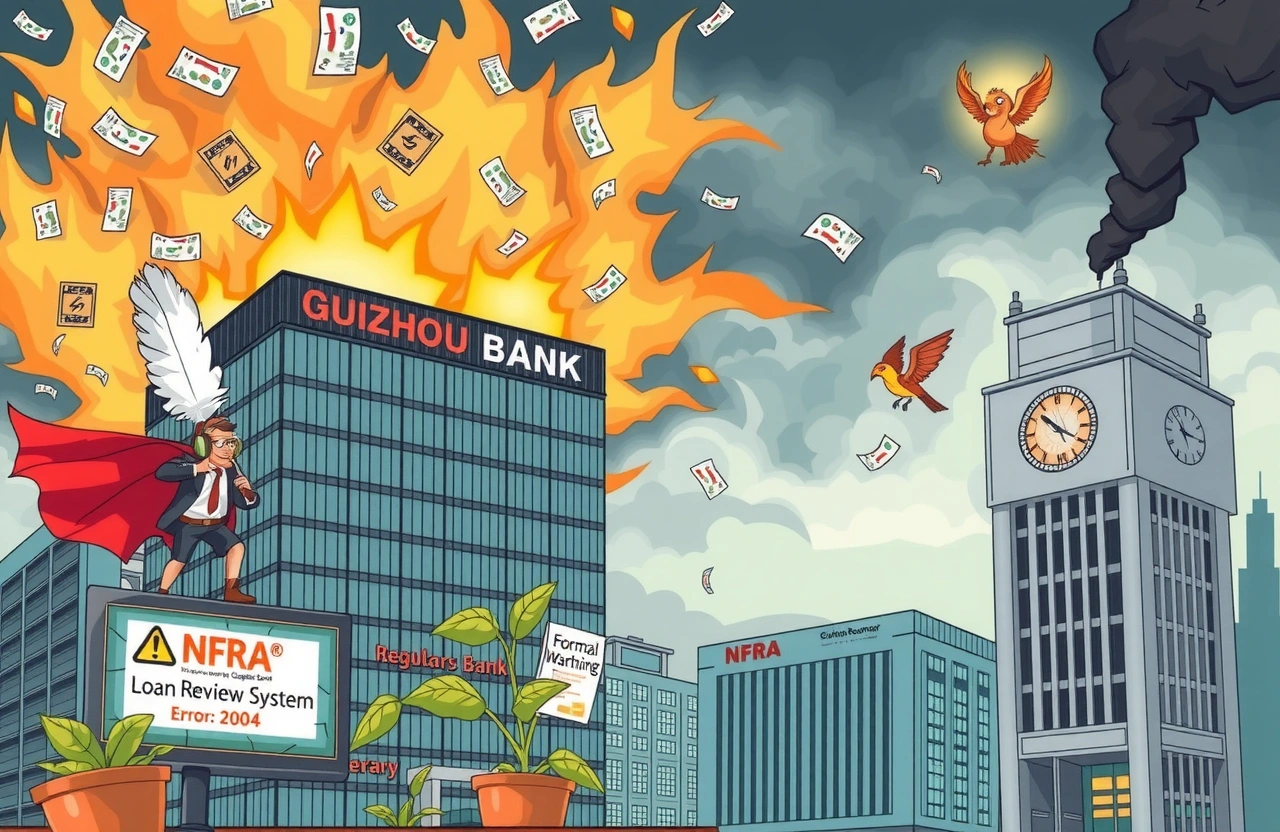
Guizhou Bank Faces Regulatory Scrutiny
China’s National Financial Regulatory Administration (NFRA) has imposed twin penalties totaling ¥300,000 on Guizhou Bank for critical deficiencies in its loan management systems. The July 16 sanctions signal intensified oversight as authorities accelerate banking sector reforms following recent economic headwinds. These penalties spotlight persistent risk control vulnerabilities in regional banking networks – recurring issues that continue prompting regulatory intervention across China’s financial landscape despite increasing compliance investments. This enforcement action reinforces Beijing’s determination to enforce stricter accountability standards.
Breaking Down the Regulatory Findings
Detailed NFRA reports indicate:
- The bank’s headquarters failed to institute adequate loan review mechanisms
- Guiyang Zunyi Road branch operations showed systemic underwriting flaws
- Collateral valuation processes lacked standardized verification protocols
- Client creditworthiness assessments relied on outdated risk models
The Enforcement Context
These penalties follow tightened supervision guidelines issued last April requiring provincial-level lenders to strengthen internal auditing capabilities within nine months. Industry analysts note smaller regional banks often struggle with legacy systems when implementing real-time monitoring frameworks demanded by current regulations. As regulatory expert Chen Liang (陈亮) from Peking University observed: ‘Compliance modernization requires cultural shifts more than technical solutions – effective risk governance must become instinctual at branch level.’
Executive Accountability Measures
The NFRA implemented personnel sanctions revealing extensive responsibility gaps:
- Former Small Business Department Deputy Director Yang Bin (杨斌) received formal warning
- Ex-Zunyi Road Branch Presidents Zhou Yue (周钺) and Zhai Huang (翟黄) faced penalties and warnings
- Regulators highlighted leadership’s inadequate response to early warning signals
Cascading Responsibility Failures
Investigation documents reveal middle management consistently bypassed early-stage verification requirements while senior leadership failed to install oversight redundancies. This creates risky lending environments where frontline staff face impossible pressure between sales targets and compliance mandates – a structural conflict requiring executive-level solutions.
Strategic Implications for Regional Banking
These sanctions highlight three critical challenges facing provincial lenders:
Technology Modernization Delays
Guizhou Bank’s case mirrors nationwide trends where regional banking institutions allocate under 8% of operational budgets toward compliance technology – substantially below the 17% average for national-level banks. Outdated data systems remain ill-equipped to handle real-time transaction monitoring requirements.
Talent Drain Consequences
Salary gaps exceeding 25% between municipal and national banking institutions drive experienced risk officers toward larger firms. Guizhou Bank reported risk management vacancy rates exceeding 15% during last year’s regulatory assessment – well above national averages.
Collateral Verification Crisis
Property valuation discrepancies contributed to 43% of penalties levied against provincial banks in 2024 according to China Banking Association reports. Outdated appraisal methods combined with limited third-party verification create hazardous exposure.
Blueprint for Loan Management Reform
Operational Transformation Priorities
Effective loan management overhaul requires:
- Centralized collateral registry systems
- Blockchain-enhanced documentation trails
- Third-party valuation partnerships
- Supervisory Control and Data Acquisition (SCADA) frameworks
Regulatory Compliance Optimization
Forward-looking institutions optimize adaptation through:
- Quarterly stress testing simulations
- Cross-training commercial/risk teams
- Automated workflow compliance checkpoints
- Strategic NFRA liaison appointments
Beyond Penalties: Market Perception Impacts
Immediate financial consequences extend past fines:
- Perception concerns triggered 60bp widening in bond spreads
- CLSA downgraded regional outlook to ‘cautious’ after sanctions
- Regulatory rehabilitation periods complicate expansion approvals
Restoring Institutional Credibility
Effective rehabilitation strategy requires:
- Public remediation roadmap publication
- Third-party compliance certification procurement
- External risk committee formation
- Enhanced transparency reporting
The Path Forward
Successful institutions viewing penalties not as endpoint but catalyst for transformation outperform peers by 11% ROE within 18 months after sanctions (Deloitte China Banking Benchmark). Guizhou Bank’s leadership must now demonstrate tangible commitment to enhancing operational cultures where risk protocols aren’t viewed as bureaucratic burdens but competitive safeguards differentiating sustainable lenders.
These enforcement actions spotlight China’s intensifying commitment to modernizing banking governance frameworks nationwide. Compliance investment today prevents catastrophic exposure tomorrow. Regional banks must prioritize capability-building initiatives to align with Beijing’s financial stability imperatives.
Call to Action: Banking executives should immediately commission independent loan management audits assessing compliance maturity gaps against revised regulatory requirements starting Q3. Implement corrective actions before December oversight examinations.