



Executive Summary
Key insights from the Guanghua Technology incident and its broader implications for Chinese equity markets:
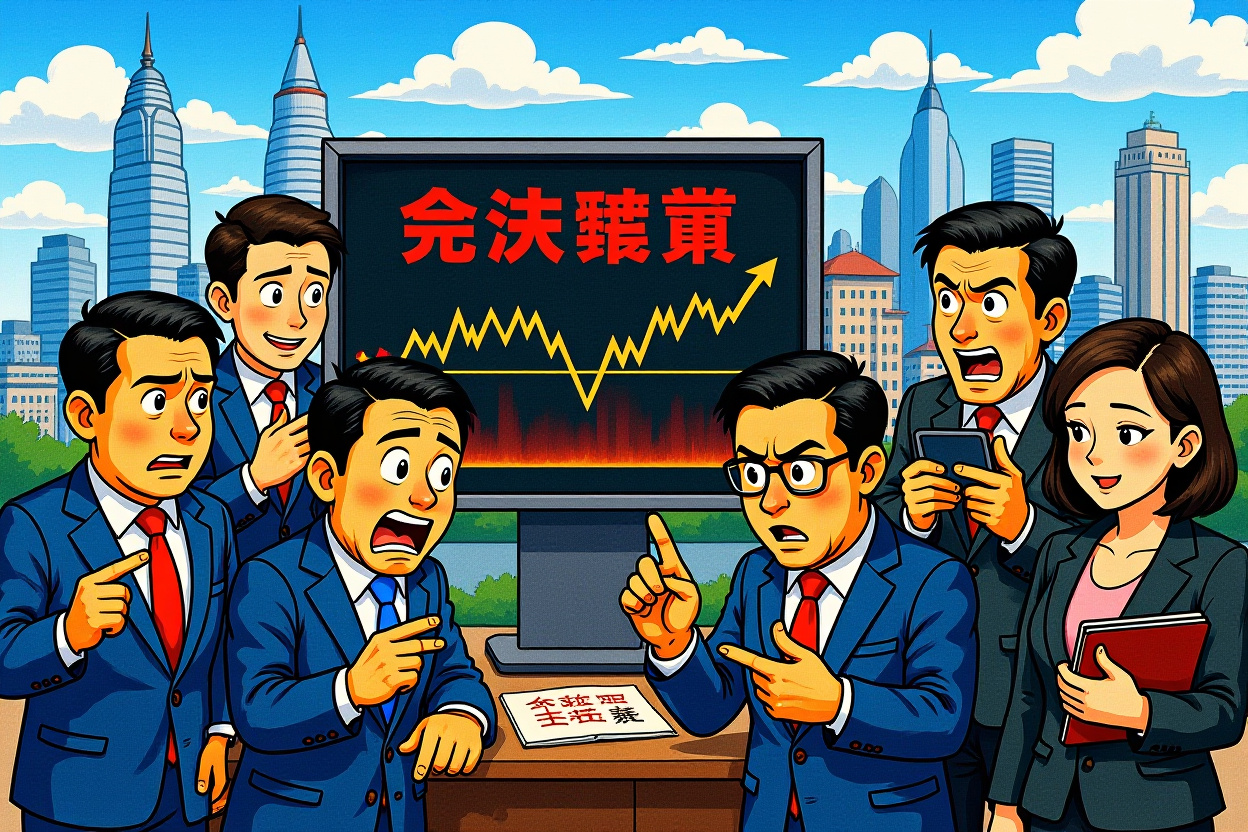
- Guanghua Technology’s stock experienced five consecutive limit-up days following an unauthorized online disclosure by the company secretary, underscoring the market’s sensitivity to unofficial information leaks.
- The China Securities Regulatory Commission (CSRC) issued a warning letter to the company, emphasizing lapses in internal controls and compliance with disclosure regulations.
- This event highlights persistent corporate governance challenges in China’s capital markets, with potential repercussions for investor confidence and regulatory enforcement.
- Institutional investors should enhance due diligence on corporate governance practices to mitigate risks associated with information asymmetry.
- Increased regulatory scrutiny may lead to stricter enforcement of disclosure rules, affecting market dynamics and stock volatility.
The Unfolding of Guanghua Technology’s Market Drama
In a startling sequence of events, Guanghua Technology (光华科技) found itself at the center of a market frenzy after its company secretary made an unauthorized online disclosure. The incident triggered a rapid surge in the company’s stock price, drawing immediate attention from regulators and investors alike. This case serves as a critical reminder of the vulnerabilities in corporate communication channels and their impact on market stability.
Details of the Online Disclosure Incident
The unauthorized online disclosure occurred during a live streaming session where the company secretary discussed undisclosed financial projections and potential business expansions. Key elements of the leak included:
- Mentions of upcoming partnerships with international technology firms, which had not been formally announced.
- Projections of revenue growth exceeding analyst estimates by over 20% for the next fiscal year.
- References to pending regulatory approvals for new product lines, information typically reserved for official channels.
This unauthorized online disclosure violated China’s securities laws, which mandate that material information must be disseminated through designated platforms like the Shanghai Stock Exchange (上海证券交易所) or Shenzhen Stock Exchange (深圳证券交易所) to ensure fair access for all investors.
Immediate Market Reaction and Trading Halts
Following the leak, Guanghua Technology’s stock price hit the daily upper limit for five consecutive trading sessions, a phenomenon known as ‘五连板’ in market parlance. Trading volumes spiked by 300% compared to the previous month, with retail investors driving much of the activity. The Shanghai Stock Exchange (上海证券交易所) temporarily suspended trading multiple times to curb excessive volatility, reflecting the market’s hypersensitivity to unverified information.
Regulatory Response and Compliance Implications
The China Securities Regulatory Commission (CSRC) swiftly intervened, issuing a formal warning letter to Guanghua Technology for failures in internal controls and information disclosure protocols. This regulatory action underscores the CSRC’s commitment to maintaining market integrity and protecting investor interests. The unauthorized online disclosure has raised questions about the adequacy of existing governance frameworks in Chinese listed companies.
Analysis of the CSRC Warning Letter
The warning letter highlighted several compliance breaches, including:
- Failure to prevent the unauthorized online disclosure of material non-public information.
- Inadequate internal controls over corporate communications, particularly for senior executives.
- Lack of timely corrective actions after the leak was identified.
CSRC officials, including Chairman Yi Huiman (易会满), have emphasized that such incidents undermine market fairness and erode investor trust. The regulator may impose fines or other sanctions if Guanghua Technology fails to address these issues promptly.
Broader Implications for Corporate Governance
This unauthorized online disclosure incident exposes systemic weaknesses in corporate governance among Chinese listed firms. A 2023 survey by the Shanghai Stock Exchange (上海证券交易所) found that over 15% of companies had inadequate controls over insider information. Enhanced training for company secretaries and stricter enforcement of disclosure rules are likely outcomes, as regulators aim to prevent similar occurrences.
Market Impact and Investor Sentiment
The Guanghua Technology case has reverberated across Chinese equity markets, influencing investor behavior and sector valuations. Technology stocks, in particular, experienced increased volatility as market participants reassessed governance risks. The unauthorized online disclosure serves as a cautionary tale for investors who may be exposed to similar events in other companies.
Short-Term Volatility and Long-Term Concerns
In the immediate aftermath, the CSI 300 Index (沪深300指数) saw heightened volatility, with technology subsectors underperforming by 2.3% over the week. Historical data from the Shenzhen Stock Exchange (深圳证券交易所) indicates that stocks involved in disclosure scandals often underperform the broader market by an average of 8% in the following six months. Investors are advised to monitor companies with weak governance scores, as identified by ratings agencies like China Chengxin International (中诚信国际).
Institutional Investor Reactions
Major institutional investors, including China Asset Management Company (华夏基金管理有限公司), have begun conducting deeper due diligence on corporate governance practices. Portfolio managers are increasingly incorporating ESG (Environmental, Social, and Governance) criteria into their investment decisions, with a focus on information disclosure quality. This shift may lead to reduced allocations to companies with poor compliance records, potentially affecting their cost of capital.
Legal Framework and Enforcement Mechanisms
China’s securities regulations provide a robust framework for addressing information disclosure violations, but enforcement consistency remains a challenge. The Securities Law (证券法) and CSRC guidelines explicitly prohibit the unauthorized dissemination of material information, with penalties ranging from warnings to criminal liability. The unauthorized online disclosure by Guanghua Technology’s company secretary tests the efficacy of these measures.
Key Regulations Governing Information Disclosure
Relevant legal provisions include:
- Article 86 of the Securities Law (证券法), which requires timely and accurate disclosure of material events.
- CSRC’s Measures for the Administration of Information Disclosure of Listed Companies (上市公司信息披露管理办法), detailing the channels and timing for public announcements.
- Guidelines from the Stock Exchanges on corporate communication protocols, emphasizing the role of company secretaries in compliance.
Legal experts, such as Professor Zhang Xin (张新) from Peking University Law School (北京大学法学院), note that while the framework is comprehensive, implementation gaps persist, particularly in monitoring digital communications.
Case Studies and Precedents
Similar incidents, such as the 2021 case involving Leshi Internet (乐视网), demonstrate the recurring nature of unauthorized online disclosure in Chinese markets. In that instance, the company faced delisting after repeated governance failures. Comparative analysis shows that companies with strong internal controls, like Tencent Holdings (腾讯控股), have avoided such scandals, highlighting the value of proactive compliance measures.
Investment Strategies in the Wake of Disclosure Scandals
For institutional investors and fund managers, the Guanghua Technology incident offers critical lessons in risk management and portfolio construction. The unauthorized online disclosure underscores the need for enhanced scrutiny of corporate governance practices when evaluating Chinese equities. Adopting a disciplined approach to information verification can mitigate potential losses.
Due Diligence Best Practices
Investors should consider the following steps:
- Review companies’ historical compliance records with CSRC and stock exchange disclosures.
- Engage with company management to assess the robustness of internal control systems.
- Utilize third-party governance ratings from providers like MSCI ESG Research or Sustainalytics.
For example, after the Guanghua Technology leak, several hedge funds reduced their positions in similar high-risk stocks, reallocating to sectors with stronger governance track records, such as consumer staples or healthcare.
Regulatory Developments to Monitor
Upcoming changes to China’s disclosure rules, expected in 2024, may introduce stricter penalties for unauthorized online disclosure. The CSRC is also exploring real-time monitoring of social media and online platforms for potential leaks. Investors should stay informed through official channels like the CSRC website (www.csrc.gov.cn) and adjust their strategies accordingly.
Navigating the Future of Chinese Equity Investments
The Guanghua Technology case illustrates the delicate balance between market efficiency and regulatory oversight in China’s rapidly evolving capital markets. While the unauthorized online disclosure triggered short-term gains, it ultimately exposed deeper governance issues that could deter long-term investment. As Chinese equities continue to globalize, adherence to international standards of transparency will be crucial for sustaining investor confidence.
Moving forward, market participants must prioritize governance metrics alongside financial performance when assessing opportunities. The CSRC’s heightened vigilance signals a broader shift toward stricter enforcement, which may reduce the frequency of such incidents but also increase compliance costs for listed companies. Investors are encouraged to leverage tools like the Corporate Governance Index (公司治理指数) published by the Shanghai Stock Exchange (上海证券交易所) to identify resilient investment targets. By integrating these insights into their decision-making processes, professionals can navigate the complexities of Chinese markets while capitalizing on their growth potential.