



Executive Summary
– Global gold prices have skyrocketed, with spot gold briefly surpassing $4,555 per ounce and domestic brand jewelry prices nearing 1,400 yuan per gram, fueling alternative consumption trends.
– The ancient craft of gold making, or ‘打金’ (dǎ jīn), has seen a massive resurgence, particularly among young consumers seeking personalized, cost-effective jewelry options, with social media topic views exceeding 1.3 billion.
– A new generation of professional goldsmiths, often in their 20s, is entering the industry, earning competitive wages and driving innovation in traditional craftsmanship.
– The trend of home gold making poses significant safety hazards, including fire risks and toxic fume exposure, as well as substantial financial losses due to operational errors and material wastage.
– Investors and market participants should monitor this behavioral shift for its impacts on gold retail, consumer protection regulations, and the broader precious metals market in China.
The Precious Metals Frenzy: Understanding the Gold Price Surge
The global financial markets witnessed a dramatic move in late March, as gold and silver prices surged overnight. On March 27, Eastern Time, spot gold prices broke through the $4,555 per ounce barrier, signaling intense investor appetite amidst geopolitical and economic uncertainties. This international rally had an immediate and pronounced effect on the Chinese domestic market. By March 28, the retail price of pure gold jewelry from major Chinese brands was rapidly approaching the psychologically significant level of 1,400 yuan per gram. This price escalation is not occurring in a vacuum; it reflects deep-seated market forces and is catalyzing unexpected consumer behavior, including the rapid rise of home gold making.
International Drivers and Domestic Price Reactions
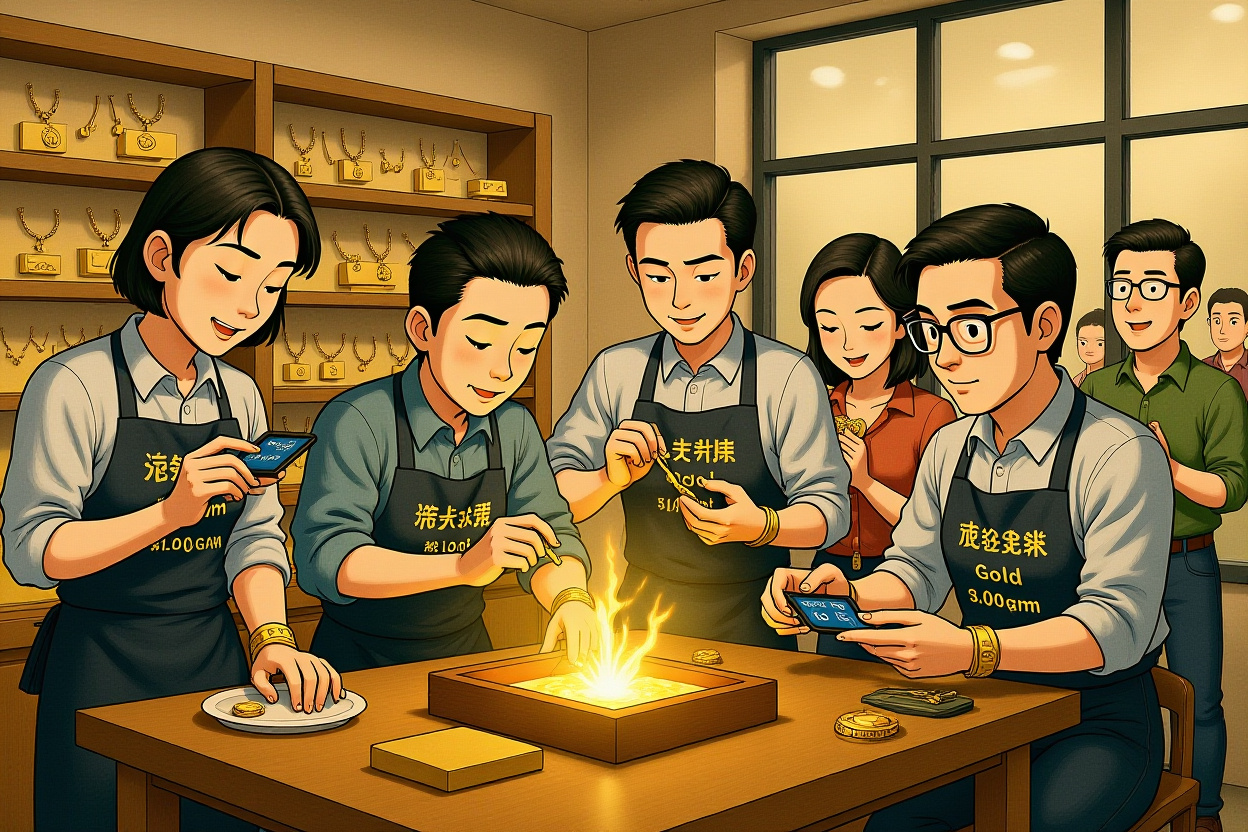
The Renaissance of Gold Making: Ancient Craft Meets Modern DemandGold making, the process of transforming raw gold into jewelry through melting, molding, shaping, and polishing, is an ancient art. However, it is experiencing a contemporary revival driven by economic pragmatism and a desire for personalization. On Chinese social media platforms, content tagged with ‘打金’ (gold making) has amassed over 1.3 billion views, indicating a massive surge in public interest. This trend represents a fundamental shift in how gold, both as an asset and a cultural symbol, is being consumed in China today.
The Process, Cost, and Appeal of Professional Gold Making
A visit to a professional workshop reveals the intricate steps involved. A master goldsmith can create a basic piece of jewelry, such as a ring or bracelet, in one to three hours. The process involves:– Melting the gold to a liquid state.
– Pouring it into a prepared mold.
– Shaping and refining the cooled metal.
– Final polishing to achieve a shine.
The labor cost for such basic pieces ranges from 10 to 40 yuan per gram. For more complex designs involving techniques like非遗花丝 (feiyi huāsi, intangible cultural heritage filigree) or手工錾刻 (shǒugōng zànkè, hand engraving), fees can climb to hundreds of yuan. Compared to the high brand premiums and工艺费 (gōngyì fèi, craftsmanship fees) at established retail stores, this offers significant savings. Consumers report that repurposing old family jewelry through this process preserves sentimental value while updating the style, creating a ‘new national trend’ that blends aesthetics, emotion, and finance. As Shanghai Gold Jewelry Industry Association Secretary-General Wang Huiqun (王惠群) advises, ‘Choosing a reputable workshop and clarifying all terms beforehand is crucial.’
A New Generation of Goldsmiths: Youth Injects Vitality into a Traditional Trade
Career Opportunities and Economic Realities for Young ArtisansOne gold making shop owner noted that after recognizing the trend’s growth three years ago, she now manages two stores with a team of 20, half of whom are goldsmiths primarily in their early 20s. The oldest is just 28. This young demographic brings strong innovation skills and an ability to精准把握客户的需求 (jīngzhǔn bǎwò kèhù de xūqiú, accurately grasp customer needs). The barrier to entry is relatively low, with no strict age or学历 (xuélì, educational background) requirements, making it accessible to recent graduates and career-changers alike. Financially, the prospects are solid. According to Zhou Baolin (周宝林), store manager at a gold making shop in Shanghai’s Yuyuan area, a standard goldsmith can earn around 10,000 yuan per month, with skilled engravers or masters commanding upwards of 15,000 yuan monthly. This represents a viable and attractive career in today’s competitive job market.
The Allure and Acute Dangers of Home Gold Making
As gold prices climb, the do-it-yourself ethos has extended into precious metals. A growing number of enthusiasts, lured by the promise of savings and creative fulfillment, are attempting home gold making. Social media is flooded with tutorial videos, creating the illusion that the process is straightforward and risk-free. However, experts uniformly caution that this trend is fraught with peril, encompassing both personal safety and financial security. The concept of home gold making may seem appealing, but its practical execution is a minefield for the untrained.Technical Hurdles and the High Probability of Failure
A basic home gold making kit, readily available on e-commerce platforms for 100 to 200 yuan, typically includes a torch, crucible, tongs, files, borax, and molding materials like油泥王 (yóuní wáng, modeling clay). Tutorials outline steps like setting up a耐火板 (nàihuǒ bǎn, fireproof board), heating the模具 (mújù, mold) with a torch, and plunging the cast piece into water. Despite detailed guides, professionals report a high failure rate. An employee from a Beijing workshop noted an increase in customers seeking help after failed home attempts. Wang Chao (王超), Director of the Ningbo Product Quality Inspection Institute’s Gold and Jewelry Testing Center, explains, ‘从理论层面看,居家打金并非完全不可行 (Cóng lǐlùn céngmiàn kàn, jūjiā dǎ jīn bìng fēi wánquán bùkěxíng, Theoretically, home gold making is not entirely impossible)… but if one’s动手能力 (dòngshǒu nénglì, hands-on ability) isn’t strong, the chance of failure is quite high.’ Imperfect molds and minor errors can ruin a piece, leading to frustration and loss.
Severe Safety Hazards and the Risk of Financial Loss
The most critical warnings concern safety and economics. Wang Chao (王超) highlights the primary danger: ‘黄金的熔点是1000多摄氏度 (Huángjīn de róngdiǎn shì 1000 duō shèshìdù, Gold’s melting point is over 1000 degrees Celsius)…家庭操作肯定有风险 (jiātíng cāozuò kěndìng yǒu fēngxiǎn, home operation certainly carries risk).’ Inadequate ventilation, improper handling of torches, and lack of protective gear can lead to fires or burns. Furthermore, if the gold being melted contains impurities like mercury, heating can release toxic vapors, posing a serious中毒 (zhòngdú, poisoning) risk. Beyond safety, financial loss is the most common ‘pitfall.’ Operational mistakes—such as improper mold preparation causing the casting to shatter or焊接 (hànjiē, soldering) errors leading to breakage—result in gold being trapped, scattered, or otherwise lost. This损耗 (sǔnhào, loss) often far exceeds expectations, and the cost of seeking professional repair to salvage the situation can negate any intended savings. Wang Chao (王超) advises理性看待 (lǐxìng kàndài, a rational view) of home gold making, acknowledging its limitations.
Market Implications and Strategic Considerations for Investors
The simultaneous surge in gold prices and the home gold making trend presents unique dynamics for the Chinese equity and commodities markets. For institutional investors and financial professionals monitoring Chinese consumer behavior and the gold sector, these developments offer several points for analysis.Impact on Retail Jewelry Stocks and Consumer Sentiment
Regulatory and Risk Management Perspectives As home gold making gains traction, regulatory bodies such as the国家市场监督管理总局 (Guójiā Shìchǎng Jiāndū Guǎnlǐ Zǒngjú, State Administration for Market Regulation) may turn their attention to the safety of kits sold online and the potential for consumer fraud. Increased scrutiny could lead to new standards or warnings, affecting related small businesses. From a risk management standpoint, the trend underscores the importance of education. Financial advisors and wealth managers might consider incorporating discussions about the risks of alternative physical asset ‘modification’ into their client communications, especially for those holding significant gold assets. The home gold making phenomenon is a vivid reminder that market euphoria, whether in equities or commodities, can spawn behavioral trends with unintended consequences.Synthesizing the Gold Rush: Caution Amidst the Glitter
The current gold market landscape is defined by record-breaking prices and a grassroots movement toward personal gold craftsmanship. The trend of home gold making, while emblematic of innovation and cost-consciousness, carries substantial risks that cannot be overlooked. For the savvy investor, this scenario highlights the multifaceted nature of gold demand—it is driven by global macro forces, retail investment, and now, a vibrant subculture of hands-on consumption. The warnings from experts like Wang Chao (王超) are clear: the pursuit of savings through DIY methods in a complex technical field like metallurgy often leads to greater costs, both personal and financial.
Moving forward, market participants should maintain a balanced view. The gold price rally may have further room to run, but consumer trends like home gold making are likely to evolve, potentially facing regulatory checks. The key takeaway is to appreciate gold’s enduring value while approaching new consumption trends with diligent research and prudence. For those exposed to the gold sector, whether through equities, ETFs, or physical holdings, staying informed on these behavioral shifts is essential for comprehensive market analysis. Consider consulting with professional commodity analysts or wealth managers to navigate this glittering yet volatile terrain effectively.