



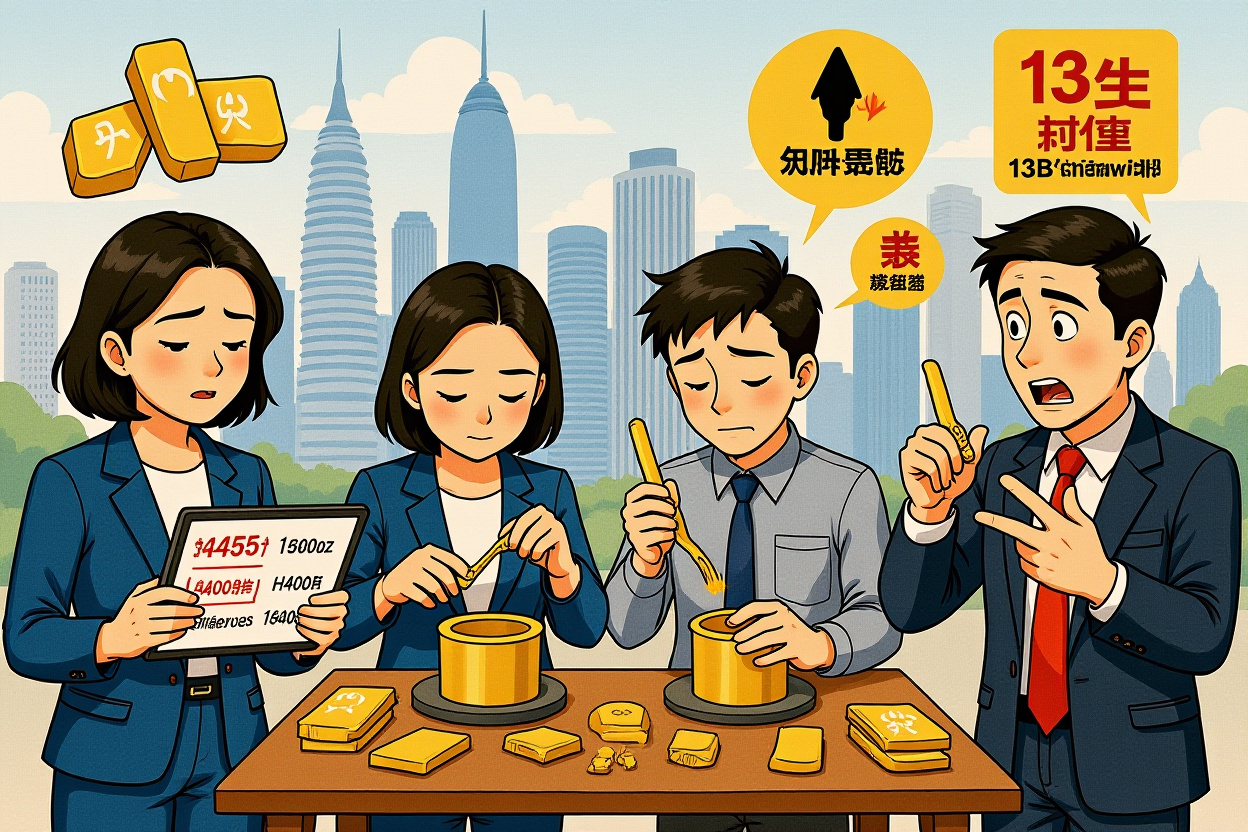
Executive Summary: Key Takeaways on the Gold Rush and DIY Trend
The recent surge in gold prices has ignited a fascinating consumer trend with significant market implications. Here are the critical points every investor and market watcher should know:
– Global gold prices have skyrocketed, with spot gold briefly exceeding $4555 per ounce, driving domestic brand gold jewelry prices in China toward 1400 yuan per gram, marking a sharp increase from previous days.
– A viral trend of DIY gold making, or home gold making, has emerged, particularly among young consumers seeking cost savings and personalization, with social media topics amassing over 13 billion views.
– Experts from industry associations and quality inspection institutes issue stern warnings: home gold making poses severe safety risks, including fire hazards and toxic fume exposure, alongside substantial property loss from operational errors that can cause unexpected gold损耗 (loss).
– The traditional gold crafting industry is experiencing a revival, with young goldsmiths, many in their 20s, entering the field, earning monthly salaries ranging from 10,000 to 15,000 yuan, and injecting innovation into this age-old craft.
– For consumers and investors, understanding the economics—where DIY gold making might seem cheaper but often leads to higher costs due to failures—is crucial for making informed decisions in the gold market.
The Meteoric Rise of Gold Prices: A Global and Domestic Analysis
In a stunning market move, gold has once again proven its allure as a safe-haven asset. On March 27, Eastern Time, gold and silver prices surged overnight, with spot gold突破 (breaking through) $4555 per ounce. This spike has reverberated across Chinese markets, where on March 28, major domestic gold jewelry brands saw their足金首饰 (pure gold jewelry) prices approach 1400 yuan per gram. For instance,老凤祥 (Lao Feng Xiang) quoted 1396 yuan/gram, up 28 yuan from the previous day;老庙黄金 (Lao Miao Gold) at 1397 yuan/gram, up 32 yuan; and周生生 (Chow Sang Sang) at 1391 yuan/gram, up 27 yuan. This price escalation is driven by global economic uncertainties, inflationary pressures, and shifting monetary policies, making gold a focal point for investors worldwide.
Market Implications for Chinese Equities and Consumer Behavior
The黄金急涨 (gold surge) directly impacts Chinese equity markets, particularly for companies in the黄金珠宝 (gold jewelry) sector. As prices rise, consumer demand for gold as both an investment and a luxury good evolves. Data from the上海黄金交易所 (Shanghai Gold Exchange) shows increased trading volumes, reflecting heightened investor interest. For businesses, this means potential revenue growth but also challenges in managing supply chains and consumer pricing sensitivity. The trend toward home gold making is a direct response to these high retail prices, as savvy consumers seek alternatives to traditional purchases.
The DIY Gold Making Revolution: Why Home Gold Making is Capturing Hearts
Home gold making, or DIY gold crafting, involves processes like熔金 (melting gold),倒模 (molding),塑型 (shaping), and抛光 (polishing) to create custom jewelry from raw gold. This ancient技艺 (craft) has found new life online, with social media platforms buzzing with tutorials and success stories. The appeal lies in its perceived affordability and creativity: compared to brand溢价 (premiums) and工艺费 (craftsmanship fees) at stores, where markups can be substantial, home gold making offers工费 (labor costs) as low as 10-40 yuan per gram for basic items. For young consumers, it’s a way to rejuvenate old family heirlooms or design unique pieces, blending emotional value with modern aesthetics in a新国潮 (new national trend).
The Economics of DIY vs. Professional Gold Crafting
At first glance, home gold making seems like a cost-effective hobby. A basic DIY kit, available on e-commerce platforms for 100-200 yuan, includes tools like火枪 (torches),石膏模具 (plaster molds), and耐火板 (fireproof boards). However, experts caution that the savings are often illusory. Wang Huiqun (王惠群), Secretary-General of the上海黄金饰品行业协会 (Shanghai Gold & Jewelry Trade Association), advises consumers to choose reputable shops with skilled artisans to avoid pitfalls. In professional settings, goldsmiths ensure minimal黄金损耗 (gold loss) and quality output, whereas DIY attempts frequently lead to wasted materials and additional repair costs, negating any initial省钱 (money-saving) benefits.
Expert Insights: Warnings from Industry Leaders on Home Gold Making
As the home gold making trend gains momentum, authorities are sounding alarms. Wang Chao (王超), Director of the黄金珠宝检测中心 (Gold & Jewelry Testing Center) at the宁波市质检院 (Ningbo Product Quality Inspection Institute), highlights multiple risks. From a safety perspective, gold melting requires temperatures over 1000°C, posing fire and burn hazards in home environments. Ventilation is critical to avoid toxic fumes, especially if impure metals containing volatile elements like汞 (mercury) are present. Moreover, property loss is a major坑 (pitfall): operational errors during molding or welding can cause gold to become trapped or碎片化 (fragmented), leading to irreversible损耗 (loss). Wang Chao emphasizes that while theoretically possible, home gold making demands high动手能力 (manual dexterity) and is not suitable for everyone.
Case Studies: Successes and Failures in the DIY Arena
Interviews with professional goldsmiths reveal a mixed picture. In Beijing,线下打金店铺 (offline gold crafting shops) report an influx of DIY enthusiasts seeking help after failed attempts. Common issues include improper模具制备 (mold preparation) causing castings to crack, or inadequate temperature control during melting. On social media, some bloggers share detailed教程 (tutorials), but even step-by-step guides can’t guarantee success due to variables like tool quality and individual skill. This underscores the importance of professional guidance, as echoed by Zhou Baolin (周宝林), a store manager in Shanghai’s豫园街道 (Yuyuan Street), who notes that skilled錾刻师 (engravers) can earn up to 15,000 yuan monthly, highlighting the value of expertise in this field.
Risks and Realities: Navigating the Pitfalls of Home Gold Making
The allure of home gold making is tempered by significant hazards that consumers must not overlook. Safety should be the top priority: always operate in well-ventilated areas, wear protective gear like厚手套 (thick gloves), and use长夹子 (long tongs) to handle hot materials. Beyond physical dangers, financial risks abound. Gold is a precious commodity, and any失误 (mistake) can result in substantial loss. For example, if a石膏模具 (plaster mold) fails, gold may be scattered and unrecoverable, forcing owners to consult professionals for修复 (repairs) at added expense. This makes home gold making a potentially costly endeavor, contrary to its frugal image.
Statistical Evidence and Consumer Advisory
Data from industry reports indicate that DIY gold crafting attempts have a high failure rate, with over 60% of amateurs experiencing significant黄金损耗 (gold loss) on their first try. Consumers are advised to:
– Start with small projects and practice on less valuable metals before using gold.
– Invest in quality tools from reputable suppliers to reduce defect risks.
– Consult with certified goldsmiths or associations like the上海黄金饰品行业协会 (Shanghai Gold & Jewelry Trade Association) for preliminary advice.
– Consider insurance options for valuable gold materials during DIY processes.
These steps can mitigate risks, but experts like Wang Chao (王超) reiterate that for most people, professional services remain the safer choice.
Market Outlook and Strategic Guidance for Investors
Looking ahead, the黄金 (gold) market is poised for continued volatility, influenced by global economic indicators and consumer trends. The rise of home gold making reflects a broader shift toward experiential consumption and financial prudence among younger demographics. For investors, this presents both opportunities and challenges. Gold-related equities, such as those of major珠宝品牌 (jewelry brands) and mining companies, may benefit from sustained demand, but the DIY trend could pressure retail margins. Monitoring regulatory updates from bodies like the中国人民银行 (People’s Bank of China) on gold trading policies is essential for informed决策 (decision-making).
Recommendations for Stakeholders in the Gold Ecosystem
– For institutional investors: Diversify portfolios with gold ETFs and mining stocks while staying alert to consumer behavior shifts that might affect traditional retail models.
– For corporate executives: Explore hybrid models that offer custom gold crafting services in-store to tap into the personalization trend without compromising safety.
– For consumers: If engaging in home gold making, prioritize education—attend workshops or online courses from accredited sources, and always test methods with inexpensive materials first.
– For regulators: Enhance public awareness campaigns on the risks of DIY gold crafting and enforce standards for tool quality to protect consumers.
Synthesizing the Gold Rush: Key Insights and Forward Steps
The convergence of soaring gold prices and the viral home gold making trend underscores a dynamic market landscape. While DIY gold making offers creative and economic appeals, it comes with embedded risks that experts vehemently warn against. From safety hazards to financial losses, the pitfalls are real and often underestimated. The traditional gold industry, rejuvenated by young artisans, provides a reliable alternative for those seeking quality and security. As gold remains a critical asset in global finance, stakeholders must balance innovation with caution. Whether you’re an investor analyzing market trends or a consumer exploring craft hobbies, informed choices are paramount. Take action today: consult professional resources, assess risks thoroughly, and consider supporting established gold crafting businesses to ensure your engagement with this precious metal is both rewarding and safe. The future of gold lies not just in its value, but in how wisely we handle its allure.