



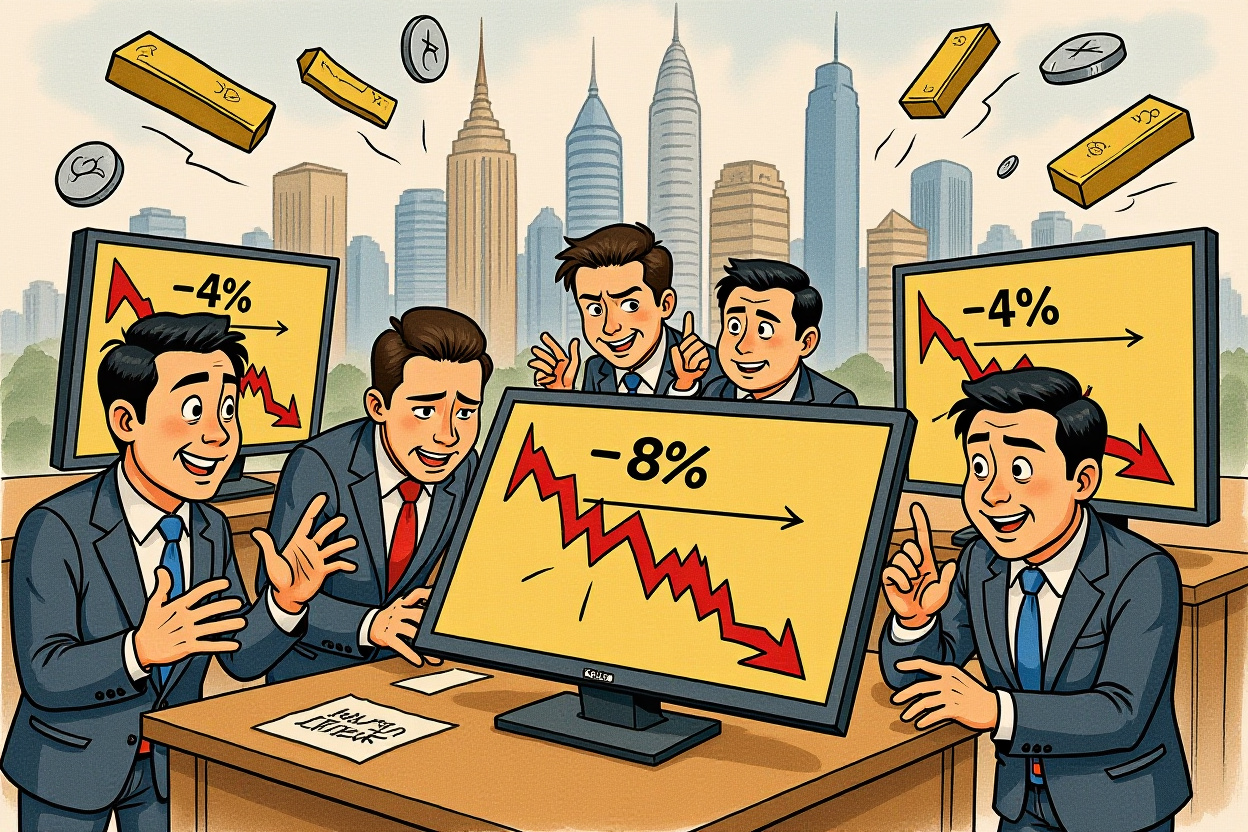
– Gold and silver prices experienced unprecedented volatility, with London spot gold falling over 4% and silver over 2% on February 2, following a massive late-January sell-off that saw silver drop over 35% in a single day. – Exchanges globally, including the Shanghai Gold Exchange (上海黄金交易所) and CME Group, have implemented emergency measures such as raising margin requirements and adjusting trading limits to curb risk. – Key drivers include shifting Federal Reserve policy expectations post-January meeting, geopolitical tensions, and the nomination of a hawkish Fed chair candidate, leading to a reassessment of the gold-dollar relationship. – Long-term fundamentals for gold remain supportive due to central bank buying and monetary easing, but silver faces heightened speculative unwinding and industrial demand concerns. – Investors must navigate this precious metals market volatility by monitoring regulatory changes, diversifying strategies, and focusing on macroeconomic indicators for informed decisions in Chinese and global markets. The precious metals market volatility has escalated to dramatic levels, capturing the attention of institutional investors worldwide. After an epic collapse in late January, gold and silver prices opened with renewed turmoil on February 2, prompting swift interventions from major exchanges. This rollercoaster ride—from a safe-haven frenzy to a policy-driven博弈—highlights the complex forces reshaping traditional asset logic. For professionals engaged in Chinese equities, understanding this volatility is critical, as it influences currency hedges, portfolio diversification, and broader market sentiment. In this deep dive, we analyze the data, decode the catalysts, and offer actionable insights for navigating these turbulent waters, where every price swing carries significant implications for global finance.
The Shockwave: Unprecedented Precious Metals Market Volatility
The recent price action in gold and silver has been nothing short of historic, marking one of the most volatile periods in decades. On February 2, London spot gold opened at $4,685.99 per ounce, down over 4.2%, after hitting an intraday low of $4,583.077. Similarly, London spot silver traded at $82.887 per ounce, falling over 2.7%, following a brief attempt to recover from earlier losses. This comes on the heels of a staggering sell-off on January 30, where spot gold plummeted over 12% to breach the $5,000 level, and spot silver crashed more than 35%, its largest single-day drop in nearly 40 years.
Market Data and Immediate Aftermath
Data from Wind (万得) and Wenhuacaijing (文华财经) paints a stark picture. Domestically in China, precious metals futures opened sharply lower on February 2. By 9:04 AM Beijing time, the Shanghai silver futures main contract hit its跌停 (down limit), gold futures fell over 10%, platinum contracts跌停, and palladium dropped more than 15%. This contagion effect underscores how global precious metals market volatility swiftly transmits to Chinese markets, impacting derivatives and physical trading alike. The sharp declines have erased gains from early January, when gold soared to near $5,600 per ounce amid geopolitical fears, illustrating the fragility of speculative bubbles.
Exchange Interventions: A Global Response
In response to this extreme precious metals market volatility, exchanges have moved aggressively to stabilize conditions. The Shanghai Gold Exchange (上海黄金交易所) issued a notice on February 2, citing high silver price fluctuations and invoking its risk control管理办法 (management measures). It announced that if the Ag(T+D) contract experiences a单边市 (one-sided market) on February 2, margins will rise from 20% to 26% and price limits from 19% to 25%. This preemptive step aims to prevent cascading liquidations and protect market integrity. Globally, the CME Group followed suit, announcing on January 30 that it would increase margin requirements for COMEX gold and silver futures, effective after the close on February 2. For gold, non-high-risk account margins rise from 6% to 8% of contract value, while silver margins jump from 11% to 15%. These adjustments reflect heightened systemic risk and are critical for institutional investors to factor into their trading strategies.
Decoding the Drivers: From Geopolitics to Monetary Policy
The precious metals market volatility is not random; it stems from a confluence of macroeconomic and political factors. Initially, prices rallied in early January due to tensions in Iran, warnings from former U.S. President Donald Trump, and a weakening U.S. dollar. However, the narrative shifted rapidly as利空 (bearish) factors accumulated, turning sentiment on its head.
The Fed’s Stance and Dollar Dynamics
The Federal Reserve’s January interest rate meeting proved pivotal. As noted by Xu Ying (徐颖), macro strategy chief analyst at Dongzheng Derivatives Research Institute (东证衍生品研究院), the Fed held rates steady but highlighted stable employment and persistent inflation risks, dampening expectations for near-term rate cuts. Chair Jerome Powell’s lack of dovish signals further weighed on sentiment. Concurrently, U.S. Treasury Secretary statements reaffirming a strong dollar policy bolstered the dollar index, eroding the appeal of gold and silver as alternative assets. This interplay between monetary policy and currency markets is a core driver of the current precious metals market volatility, forcing investors to recalibrate their outlooks.
Political Appointments and Market Sentiment
A major catalyst for the reversal was Trump’s nomination of Kevin Warsh (凯文・沃什) as the next Fed chair. Xu Ying (徐颖) explains that Warsh is perceived as more hawkish than other candidates, opposing quantitative easing despite aligning with Trump’s rate-cut desires. This nomination sparked fears of a steeper yield curve and increased financial market波动 (volatility), leading to a sharp unwind of long positions in precious metals. China International Capital Corporation Limited (中金公司) echoed this view, stating that the nomination challenges consensus expectations for Fed independence and a weak dollar trend, prompting a reassessment of gold’s cyclical demand拐点 (inflection point). Such political developments highlight how precious metals market volatility is increasingly tied to policy unpredictability.
Structural Shifts: Rethinking the Gold-Dollar Nexus
Beyond short-term swings, a deeper structural shift is underway in the precious metals market. CICC’s latest research points out that London spot gold breaching $5,500 per ounce represented a critical分水岭 (watershed). At that level, the total value of global gold holdings ($38.2 trillion) nearly equaled the total U.S.国债 (Treasury debt) stock ($38.5 trillion), an event not seen since the 1980s. This milestone suggests the post-Bretton Woods financial architecture—where the dollar anchors global finance via U.S. debt—is showing cracks.
Historical Context and Breakpoints
Historically, gold and the dollar have shared an inverse relationship, but recent precious metals market volatility blurs this dynamic. The surge in gold’s value relative to U.S. debt indicates growing investor skepticism about fiscal sustainability and monetary stability. As central banks, including the People’s Bank of China (中国人民银行), continue accumulating gold reserves, the metal’s role as a monetary asset is reinforced. However, the recent price collapse reminds markets that this transition is fraught with volatility, as speculative excesses can quickly reverse.
Implications for Global Finance
For international investors, this structural shift means that gold is no longer just a safe haven but a barometer of systemic risk. The precious metals market volatility reflects broader anxieties about inflation, debt levels, and geopolitical strife. As China integrates further into global markets, these trends directly affect yuan-denominated assets and hedging strategies. Investors must watch for signals like central bank buying patterns and美元指数 (DXY) movements to gauge long-term direction amid short-term noise.
Silver’s Unique Dynamics: Beyond the Gold Correlation
While gold often dominates headlines, silver’s recent precious metals market volatility has been even more extreme, driven by distinct factors. Silver’s dual role as a monetary and industrial metal makes it susceptible to wild swings when sentiment shifts.
Industrial Demand vs. Speculative Frenzy
In early January, silver benefited from the same geopolitical and monetary tailwinds as gold, but its higher volatility amplified gains and subsequent losses. The Trump administration’s delay on tariffs for key minerals like silver, platinum, and palladium removed a支撑 (support), while cooling geopolitical risks reduced its appeal as an industrial hedge. Xu Ying (徐颖) notes that炒作 (speculation) in silver has明显降温 (significantly cooled), with the Fed chair nomination acting as a trigger for profit-taking. This underscores how silver’s price is more leveraged to speculative flows than gold, exacerbating precious metals market volatility during periods of uncertainty.
Short-Term Outlook and Risks
Looking ahead, silver faces headwinds from reduced expectations for Fed liquidity and potential slowdowns in global manufacturing. However, its long-term prospects remain tied to green energy trends, given its use in solar panels and electronics. Investors should monitor inventory data from exchanges like the Shanghai Futures Exchange (上海期货交易所) and COMEX for supply-demand clues. The current precious metals market volatility serves as a cautionary tale: silver’s higher beta requires robust risk management, especially when trading derivatives or leveraged products.
Risk Management in Turbulent Times
Navigating this era of precious metals market volatility demands proactive strategies from institutional players. Exchanges’ margin hikes are just the first line of defense; investors must adapt their approaches to survive and thrive.
Exchange Measures and Margin Adjustments
The actions by Shanghai Gold Exchange (上海黄金交易所) and CME set a precedent for how regulators tackle extreme volatility. By adjusting保证金水平 (margin levels) and涨跌停板比例 (price limit ratios), they aim to curb excessive speculation and maintain orderly markets. For example, CME’s increase in silver margins for high-risk accounts to 16.5% forces traders to commit more capital, potentially reducing position sizes and liquidity. Investors should stay updated on such changes via official announcements [link to SGE notice] and [link to CME update] to avoid margin calls and optimize trading costs.
Strategies for Institutional Investors
In this environment, diversification is key. Consider blending physical holdings with futures, options, or ETFs to manage exposure. Monitor macroeconomic indicators like U.S.非农就业数据 (non-farm payrolls) and China’s CPI for directional cues. Additionally, leverage expert insights from firms like CICC, which advises focusing on微观基本面 (micro fundamentals) amid macro narrative swings. Tools like stop-loss orders and volatility-based position sizing can mitigate risks from sudden precious metals market volatility. Remember, the goal is not to avoid volatility but to harness it through disciplined, data-driven decisions. The recent precious metals market volatility underscores a new reality: traditional assets are being reshaped by geopolitical, monetary, and structural forces. While gold’s long-term trajectory remains upward due to central bank demand and monetary easing, silver’s path is clouded by speculative excess and industrial cyclicality. For investors in Chinese equities and global markets, the takeaways are clear. Stay vigilant on exchange regulations, diversify across assets, and base decisions on robust analysis rather than sentiment. As we move forward, monitor Fed policy under its new leadership, geopolitical developments in the Middle East and Ukraine, and China’s regulatory stance. Embrace this volatility as an opportunity to refine strategies and secure portfolios against unforeseen shocks. Take action now by reviewing your exposure, consulting with advisors, and subscribing to updates from trusted sources for ongoing insights into the evolving precious metals landscape.