



Executive Summary
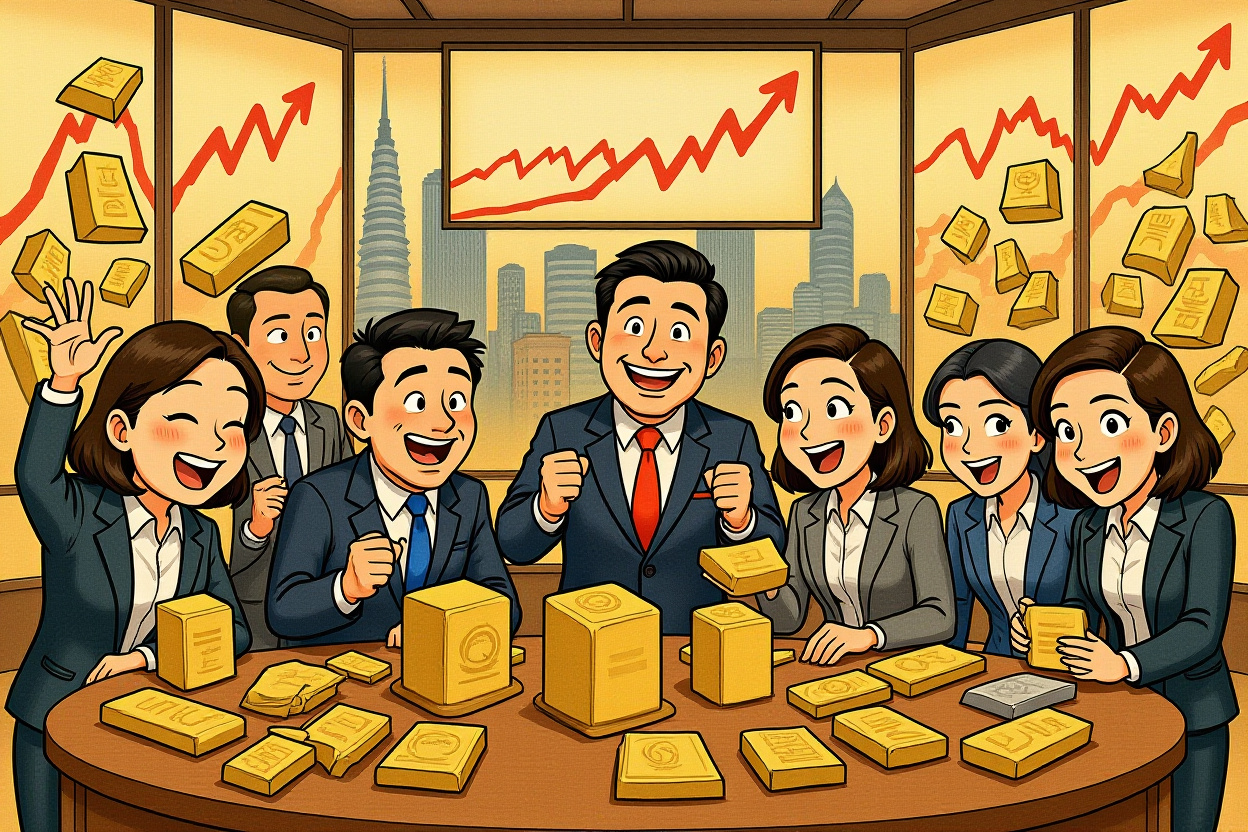
Key insights from the recent surge in precious metals markets:
– Gold and silver prices surged to record highs, with silver outperforming gold significantly, driven by intensified Federal Reserve rate cut expectations and broader macroeconomic shifts.
– Copper prices also reached historic peaks, reflecting synchronized strength in industrial and precious metals amid global monetary policy anticipation.
– Market sentiment is heavily influenced by potential changes in Federal Reserve leadership, with candidates like Kevin Hassett (凯文·哈西特) signaling dovish stances that could accelerate rate cuts.
– Leading financial institutions, including Goldman Sachs (高盛) and UBS (瑞银), have raised price targets, projecting further gains in gold and silver through 2026, supported by central bank demand and lower interest rates.
– Investors in Chinese equity markets should monitor these developments for impacts on resource stocks, currency fluctuations, and portfolio allocation strategies in volatile conditions.
Unprecedented Rally in Precious Metals
The global financial markets witnessed a dramatic surge in precious metals, with gold and silver prices soaring to multi-year highs in late November. This movement underscores a pivotal shift in investor sentiment, as safe-haven assets gain traction amid evolving economic policies. The gold and silver prices surge has captivated traders and institutional investors alike, signaling potential long-term trends in commodity markets.
From the evening of November 28 to the early hours of November 29 Beijing time, international gold prices climbed steadily, with both spot gold and COMEX gold reclaiming the $4,200 per ounce threshold. By the close, London spot gold had risen 1.48% to $4,218.55 per ounce, while COMEX gold settled at $4,256.4 per ounce, up 1.59%. Silver, however, stole the spotlight with even more impressive gains, as both spot and futures prices shattered previous records. London spot silver jumped 5.66% to $56.397 per ounce, and COMEX silver surged 6.06% to $57.085 per ounce.
Copper joined the rally, notching its own historic milestone. The London Metal Exchange (LME) copper contract briefly advanced nearly 2.5% to $11,210.50 per ton, marking a new all-time high. This synchronized uptrend across metals highlights broader inflationary pressures and supply-demand dynamics influencing global markets.
Record-Breaking Performance in Gold and Silver
The gold and silver prices surge is not an isolated event but part of a broader pattern of monetary metal appreciation. Silver’s outsized gains relative to gold suggest heightened industrial demand and speculative interest, as silver often exhibits higher volatility. Technical indicators show that silver has broken through key resistance levels, with analysts pointing to sustained investment flows.
Market data reveals that the gold and silver prices surge has been fueled by a combination of factors, including central bank acquisitions, retail investor accumulation, and hedge fund positioning. For instance, the People’s Bank of China (中国人民银行) has been a consistent buyer of gold, diversifying reserves away from the U.S. dollar. This trend is echoed globally, with emerging market central banks increasing their gold holdings to mitigate currency risks.
Copper Joins the Rally with Historic Highs
Copper’s ascent to record levels underscores its role as an economic barometer. Often called Dr. Copper for its predictive qualities, the metal’s price surge reflects optimism about global industrial recovery and green energy transitions. Key drivers include:
– Supply constraints from major producers like Chile and Peru due to operational disruptions.
– Rising demand from electric vehicle manufacturing and renewable energy infrastructure projects.
– Inventory drawdowns in LME warehouses, signaling tighter physical markets.
Investors should note that copper’s performance can influence Chinese equity markets, particularly stocks of mining companies such as Zijin Mining Group (紫金矿业集团) and Jiangxi Copper (江西铜业), which may benefit from higher commodity prices.
Federal Reserve Policy Shifts Fueling the Rally
Mounting expectations for Federal Reserve interest rate cuts have been a primary catalyst for the gold and silver prices surge. According to the CME FedWatch tool, the probability of a 25-basis-point rate cut in December stands at 86.4%, with only a 13.6% chance of rates remaining unchanged. Looking ahead to January, the market prices a 67.1% likelihood of a cumulative 25-basis-point reduction, a 10% probability of no change, and a 23% chance of a 50-basis-point cut.
This dovish pivot is reinforced by comments from Federal Reserve officials. Fed Governor Christopher Waller (克里斯托弗·沃勒) recently advocated for a December rate cut, emphasizing concerns about the labor market. Similarly, San Francisco Fed President Mary Daly (玛丽·戴利) elaborated on supporting a cut, citing nonlinear deterioration risks in employment and subdued inflation pressures.
Rising Probability of December Rate Cut
The gold and silver prices surge aligns closely with shifting Fed expectations. Market participants are closely monitoring economic indicators such as non-farm payrolls, CPI data, and retail sales for confirmation. Key data points to watch include:
– U.S. employment reports for signs of labor market softening.
– Inflation metrics to gauge the persistence of price pressures.
– Consumer sentiment indices reflecting household spending trends.
For real-time updates, investors can refer to the CME FedWatch page for probability assessments.
Potential New Fed Chair and Dovish Outlook
Speculation around the next Federal Reserve chair adds another layer of uncertainty and opportunity. U.S. Treasury Secretary Scott Bessent (斯科特·贝森特) indicated that President Donald Trump (唐纳德·特朗普) is highly likely to nominate a successor to current Chair Jerome Powell (杰罗姆·鲍威尔) before year-end. Bloomberg News, citing anonymous sources, reported that Kevin Hassett (凯文·哈西特), director of the White House National Economic Council, is the leading candidate.
Hassett, a trusted ally of Trump, is perceived as inclined toward dovish monetary policies. In recent interviews, he stated that if appointed, he would immediately advocate for rate cuts based on current economic data. However, Trump’s unpredictable decision-making style means the nomination could change until officially announced. White House Press Secretary Caroline Levitt (卡罗琳·莱维特) cautioned that no one knows Trump’s actions until he acts, advising stakeholders to stay tuned.
Market Reactions and Analyst Projections
Financial institutions have responded to the gold and silver prices surge with revised forecasts and strategic recommendations. Goldman Sachs (高盛) reiterated its year-end 2026 gold price target of $4,900 per ounce, citing central bank purchasing and declining interest rates as primary drivers. The firm believes gold could climb toward this level in the latter half of next year, supported by structural demand shifts.
UBS (瑞银) has raised its silver price projections by $5 to $8 per ounce, now expecting prices to reach $60 per ounce by 2026. The bank maintains a bullish stance, recommending increased exposure in the $47 to $50 per ounce range. Key factors underpinning this outlook include falling nominal and real interest rates, persistent deficit concerns, and potential dollar weakness.
Goldman Sachs’ Bullish Gold Forecast
Goldman Sachs analysts emphasize that the gold and silver prices surge is sustainable due to fundamental supports. They highlight:
– Ongoing geopolitical tensions enhancing gold’s safe-haven appeal.
– Central bank diversification strategies reducing reliance on the U.S. dollar.
– Technological advancements in gold-backed ETFs and digital gold products broadening investor access.
For Chinese investors, this implies potential opportunities in gold-related equities and ETFs listed on the Shanghai and Shenzhen stock exchanges.
UBS and Other Institutions Raise Silver Targets
UBS strategists note that silver’s rally is fueled by robust investment demand and supply constraints. They advise monitoring:
– Industrial consumption patterns in electronics and solar panel production.
– Mining output trends from major producers like Mexico and Peru.
– Currency movements, as a weaker dollar typically benefits precious metals priced in USD.
Other firms, such as Baocheng Futures (宝城期货), caution that while the gold and silver prices surge may continue, short-term technical overbought conditions could prompt corrections. Guoxin Futures (国信期货) points to silver’s breakout above $54 per ounce, with a next target near $56 per ounce, but warns of pullback risks.
Technical Analysis and Short-Term Outlook
From a technical perspective, the gold and silver prices surge has pushed both metals into overbought territory, suggesting potential consolidation. Chart analysis indicates that gold faces resistance around $4,300 per ounce, with support near $4,100. Silver, after breaking above $54, may target $60, but could encounter selling pressure at higher levels.
Traders should watch for key indicators like moving averages, relative strength index (RSI) levels, and volume patterns to time entries and exits. For instance, an RSI above 70 often signals overbought conditions, potentially leading to short-term reversals.
Support and Resistance Levels for Gold and Silver
Critical price levels to monitor include:
– Gold: Support at $4,150 (50-day moving average) and resistance at $4,350 (previous highs).
– Silver: Support at $52 (recent breakout point) and resistance at $58 (psychological barrier).
– Copper: Support at $10,800 (trendline) and resistance at $11,500 (extension target).
These levels can help investors manage risk and identify potential reversal points in the ongoing gold and silver prices surge.
Risks of Correction and Key Data to Watch
While the gold and silver prices surge presents opportunities, risks remain. Key factors that could trigger corrections include:
– Unexpectedly strong U.S. economic data reducing Fed cut probabilities.
– Strengthening U.S. dollar index dampening metal appeal.
– Profit-taking by institutional investors after rapid gains.
Upcoming events like the Fed’s December meeting and U.S. employment reports will be crucial. Investors can track these through financial news outlets like Bloomberg or Reuters.
Implications for Chinese Equity Markets
The gold and silver prices surge has direct ramifications for Chinese equities, particularly in the resources and financial sectors. Mining companies listed on the Shanghai and Hong Kong exchanges may see improved earnings and stock performance due to higher commodity prices. For example, stocks like Zhongjin Gold (中金黄金) and Yintai Resources (银泰资源) could benefit from increased revenue and investor interest.
Additionally, the broader economic environment influenced by Fed policies affects yuan (人民币) exchange rates and capital flows. A dovish Fed could lead to dollar weakness, potentially strengthening the yuan and making Chinese assets more attractive to foreign investors. This dynamic supports the gold and silver prices surge by enhancing local purchasing power.
Impact on Mining and Resources Stocks
Chinese mining equities are poised to gain from the gold and silver prices surge. Key considerations include:
– Production costs versus selling prices affecting profit margins.
– Regulatory policies from agencies like the China Securities Regulatory Commission (中国证监会) influencing market access.
– Global trade dynamics impacting export revenues for metal producers.
Investors should analyze company-specific factors such as reserve quality, operational efficiency, and debt levels when selecting stocks.
Broader Economic Indicators and Investor Sentiment
The gold and silver prices surge reflects deeper economic trends that influence Chinese markets. Monitoring indicators like:
– China’s CPI and PPI data for inflation signals.
– Manufacturing PMI for industrial activity levels.
– Foreign exchange reserves for currency stability insights.
These metrics help assess whether the rally is sustainable and how it might interact with domestic policies from the People’s Bank of China (中国人民银行).
Strategic Investment Considerations
For sophisticated investors, the gold and silver prices surge offers both opportunities and challenges. Portfolio allocation should balance exposure to precious metals with diversification across asset classes. Consider incorporating gold and silver through:
– Physical bullion or coins for direct ownership.
– ETFs like the SPDR Gold Trust (GLD) or iShares Silver Trust (SLV) for liquidity.
– Mining stocks and futures contracts for leveraged returns.
Risk management is essential, given the volatility associated with commodity markets. Setting stop-loss orders and regularly rebalancing portfolios can mitigate downside risks.
Portfolio Allocation in Precious Metals
Financial advisors often recommend allocating 5-10% of a portfolio to precious metals as a hedge against inflation and geopolitical risks. The current gold and silver prices surge may justify increasing this allocation temporarily, but investors should avoid overconcentration. Factors to evaluate include:
– Correlation with other assets in the portfolio.
– Long-term historical performance during market cycles.
– Costs associated with storage and transaction fees.
For Chinese investors, accessing metals through Shanghai Gold Exchange (上海黄金交易所) products can provide localized exposure.
Timing Entry and Exit Points
Timing investments during the gold and silver prices surge requires careful analysis. Strategies include:
– Dollar-cost averaging to reduce timing risk.
– Using technical indicators like moving average crossovers.
– Monitoring Fed announcements and economic data releases.
Investors should also consider tax implications and regulatory changes in their home jurisdictions. Consulting with a financial advisor familiar with Chinese and international markets is advisable.
Synthesizing Market Dynamics and Forward Guidance
The remarkable gold and silver prices surge underscores a transformative period in global finance, driven by anticipatory Fed policy shifts and structural demand factors. Record highs in precious and industrial metals highlight interconnected market forces that savvy investors can leverage for portfolio growth. As rate cut probabilities rise and potential leadership changes at the Fed loom, staying informed through reliable sources like central bank reports and financial analytics platforms is crucial.
Looking ahead, the trajectory of the gold and silver prices surge will depend on economic data, geopolitical developments, and monetary policy implementations. Chinese equity participants should closely watch related sectors for alpha generation opportunities while maintaining disciplined risk protocols. Proactive engagement with market trends will enable strategic positioning in evolving conditions. For ongoing updates, subscribe to specialized financial news services and monitor real-time data feeds to capitalize on emerging opportunities in precious metals and beyond.