



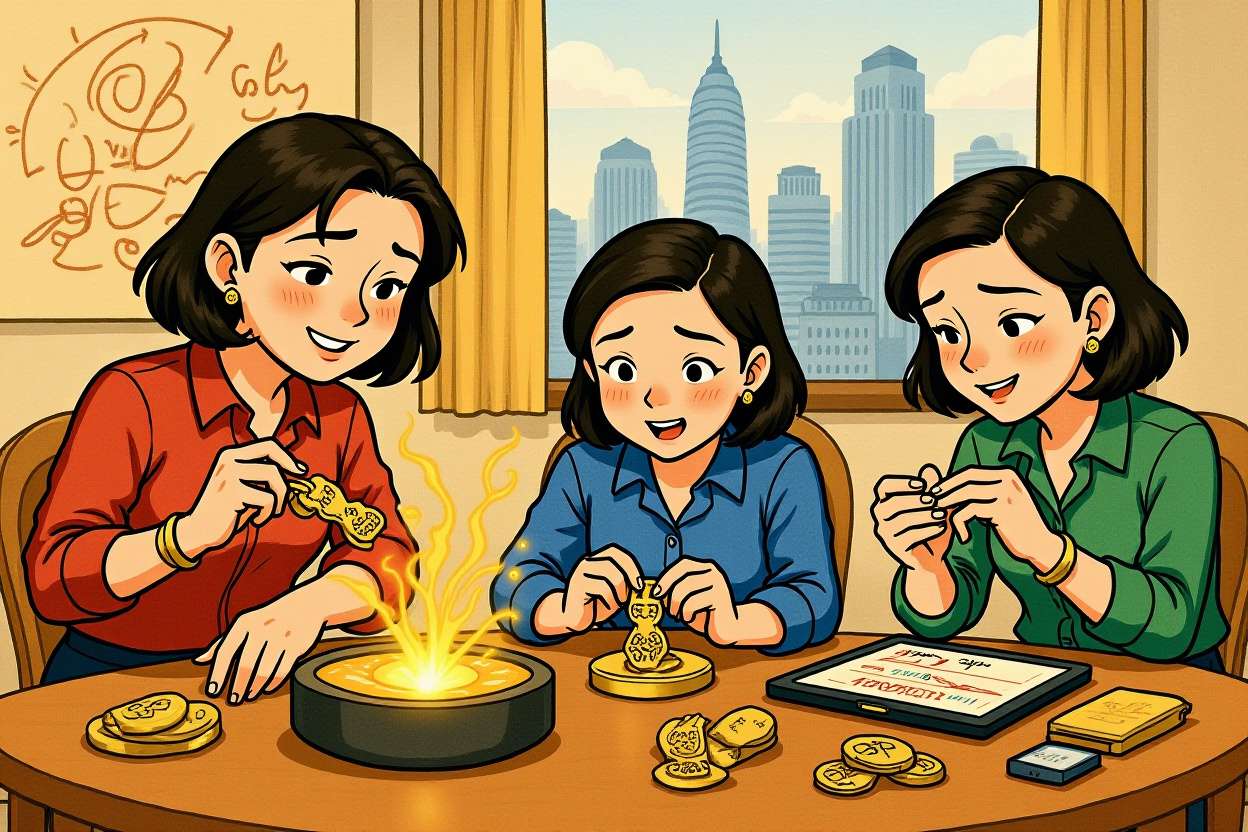
– Gold prices have skyrocketed globally and domestically, with major Chinese jewelry brands nearing 1,400 RMB per gram, driven by market volatility and safe-haven demand. – DIY gold crafting, or ‘home-based gold crafting,’ has become a viral trend among younger generations seeking cost-effective, personalized jewelry, revitalizing traditional craftsmanship. – Experts from industry associations and quality inspection institutes warn of serious safety hazards, including fire risks and toxic fumes, as well as financial losses from operational errors during DIY gold crafting. – The trend is creating new economic opportunities, with young artisans entering the field, but consumers are advised to prioritize professional services for complex projects to avoid pitfalls. – For investors, this surge in retail gold interest may signal shifts in consumer behavior and gold demand, warranting close monitoring of market trends and regulatory guidance. The recent dramatic ascent of gold prices has not only captivated global markets but has also ignited an unexpected cultural phenomenon among consumers, particularly in China. As spot gold breached $4,555 per ounce and domestic retail prices climbed perilously close to 1,400 RMB per gram, a parallel trend has emerged: the rise of DIY gold crafting. This practice, where individuals attempt to melt, mold, and craft gold jewelry at home, has exploded in popularity on social media, offering a blend of nostalgia, personalization, and perceived savings. However, beneath the surface of this enticing hobby lie substantial risks that experts are urgently highlighting. For sophisticated market participants, understanding this consumer-driven movement is crucial, as it reflects broader shifts in gold consumption, investment psychology, and even potential regulatory considerations within the dynamic Chinese equity and commodity landscape.
The Golden Surge: Record Prices and Market Dynamics
The current rally in gold is a multifaceted story rooted in global macroeconomic uncertainty and robust domestic demand. On March 27, Eastern Time, spot gold and silver experienced a late-night surge, with gold momentarily exceeding $4,555 per ounce. This global momentum swiftly translated to the Chinese market.
Domestic Retail Prices Approach Historic Highs
By March 28, the ripple effects were evident across China’s major jewelry retailers. A comparative price analysis revealed significant daily increases, pushing per-gram prices toward the 1,400 RMB psychological barrier. – Lao Feng Xiang (老凤祥) quoted 1,396 RMB per gram, a 28 RMB increase from the previous day’s 1,368 RMB. – Lao Miao Gold (老庙黄金) listed its price at 1,397 RMB per gram, up 32 RMB from 1,365 RMB. – Chow Sang Sang (周生生) reported a price of 1,391 RMB per gram, rising 27 RMB from 1,364 RMB. This price escalation is fueled by a confluence of factors: sustained inflationary fears, geopolitical tensions, and a weakening U.S. dollar enhancing gold’s appeal as a safe-haven asset. For Chinese consumers, gold has long served a dual purpose as both adornment and a store of value, making these price spikes a direct trigger for altered consumption patterns.
Impact on Consumer Psychology and Behavior
The soaring prices have made traditional gold jewelry purchases more costly, prompting cost-conscious buyers, especially younger demographics, to seek alternatives. This economic pressure is a primary catalyst for the DIY gold crafting trend, as consumers look to repurpose old jewelry or create new pieces without the hefty brand premiums associated with retail stores.
The Rise of DIY Gold Crafting: A New Consumer Trend
DIY gold crafting, an ancient technique involving melting, molding, shaping, and polishing gold into rings, bracelets, and necklaces, is experiencing a modern renaissance. On Chinese social media platforms,话题#打金# (gold crafting) has garnered over 1.3 billion views, indicating massive public interest.
What is DIY Gold Crafting?
The process transforms raw gold or old jewelry into new pieces. Professional goldsmiths report that crafting a basic item takes one to three hours, with labor fees ranging from 10 to 40 RMB per gram for simple designs. More intricate techniques, such as非遗花丝 (intangible cultural heritage filigree) or手工錾刻 (hand engraving), can cost hundreds of RMB per gram. Compared to retail markups, this offers a compelling value proposition.
Why Young Consumers Are Embracing It
The appeal extends beyond savings. For many, DIY gold crafting represents a fusion of sentiment and style. Consumers note that refurbishing heirloom pieces preserves the gold’s intrinsic value and emotional memory while updating it to contemporary tastes. This has transformed gold into a ‘new national trend’ that merges aesthetics, emotion, and financial function. The desire for unique, personalized items in an era of mass production is a powerful driver, making DIY gold crafting a symbol of individual expression.
Professional Gold Crafting: Revival of an Ancient Art
The booming interest has not only created consumers but also a new generation of artisans. Professional workshops are seeing an influx of young talent, injecting creativity and fresh business models into a traditional trade.
The Role of Young Artisans and Economic Opportunities
Shop owners report that many new goldsmiths are from the ’00s generation, with the oldest in their late twenties. These young teams excel in innovation and accurately capturing client desires. The barrier to entry is relatively low, with no strict age or学历 (educational background) limits, making it an attractive career pivot for graduates or professionals seeking change.
Wages and Industry Growth
According to Zhou Baolin (周宝林), store manager at a gold crafting shop in Shanghai’s Yuyuan area, entry-level goldsmiths can earn around 10,000 RMB monthly, while skilled engravers or craftsmen command salaries of approximately 15,000 RMB per month. This economic viability is drawing more youth into the field, ensuring the craft’s sustainability and evolution.
The Dangers of Home-Based Gold Crafting: Expert Warnings
While the professional scene thrives, the parallel trend of ‘居家打金’ (home-based gold crafting) is where significant risks emerge. Social media is flooded with tutorials, and e-commerce platforms sell basic ‘gold crafting kits’ for as little as 100-200 RMB, containing tools like crucible tongs, torches, and molding clay. This accessibility belies the complexity and danger involved.
Safety Hazards and Health Risks
Wang Chao (王超), Director of the Gold and Jewelry Testing Center at the Ningbo Product Quality Inspection Institute, emphasizes the paramount safety concerns. Gold melts at over 1,000 degrees Celsius, presenting severe fire and burn risks in a home environment. Furthermore, if the gold alloy contains volatile metals like mercury, heating can release toxic vapors, leading to poisoning in poorly ventilated spaces. Experts advise that any attempt at DIY gold crafting must involve stringent precautions: operating in well-ventilated areas, wearing thick gloves, using long tools, and maintaining distance from heat sources.
Financial Pitfalls and Hidden Costs
Beyond safety, financial loss is the most common pitfall for DIY enthusiasts. Operational errors often lead to gold wastage far exceeding expectations. Common mistakes include improper preparation of石膏模具 (plaster molds) causing castings to shatter, or焊接 (soldering) errors leading to metal breakage. These result in gold residue or loss that is difficult to recover. Many individuals end up seeking professional repair, incurring additional costs that negate any intended savings. Wang Chao (王超) candidly states that DIY gold crafting is not a simple follow-along activity; its possibilities are limited by skill, tool quality, and material purity.
Regulatory and Industry Perspectives on Gold Crafting
Industry bodies are observing this trend with a mix of optimism for craft revival and concern for consumer protection.
Insights from Industry Associations
Wang Huiqun (王惠群), Secretary-General of the Shanghai Gold Jewelry Industry Association, offers prudent advice for consumers considering professional services. She recommends choosing established workshops with scale, inspecting the goldsmith’s craftsmanship firsthand, and clarifying all terms and processes through prior agreement to avoid disputes. This guidance underscores the importance of due diligence in an industry experiencing rapid, informal growth.
Quality Control and Consumer Advice
The variability in outcomes for DIY gold crafting highlights the need for quality assurance. Professionals note that even with meticulous replication of online steps, failure is common due to factors like模具缺陷 (mold defects) or impure gold content. Consumers are urged to verify the purity of their gold materials, as adulterated metals can behave unpredictably during melting, compromising both safety and the final product’s integrity.
Investment Implications and Market Outlook
For institutional investors and market analysts, the DIY gold crafting phenomenon is more than a social trend; it is a microcosm of broader market forces.
Gold as a Safe Haven and Consumer Asset
The sustained high prices reinforce gold’s role as a premier safe-haven asset within portfolios. However, the surge in retail engagement—through both purchasing and crafting—suggests a deepening of gold’s cultural and financial footprint among the Chinese public. This could imply more resilient underlying demand, potentially supporting prices even during periods of economic stabilization.
Future Trends in Gold Consumption and Crafting
Looking ahead, the DIY gold crafting trend may evolve. Increased awareness of risks could steer consumers toward professional artisans, boosting that segment. Alternatively, technological advancements might make home crafting safer, though regulatory oversight would likely increase. Investors should monitor companies in the gold supply chain, from miners to retailers, as well as sectors related to crafting tools and education, for potential growth opportunities or risks. The convergence of record gold prices and the DIY gold crafting craze presents a complex narrative for financial professionals. On one hand, it demonstrates gold’s enduring allure and adaptability in modern culture. On the other, it serves as a stark reminder of the risks inherent in unregulated, technically demanding activities. The key takeaways are clear: while DIY gold crafting offers perceived economic and creative benefits, the associated safety hazards and financial losses are substantial and often underestimated. For consumers, the wisest course is to engage with reputable professionals for anything beyond simple projects. For investors, this trend underscores the importance of considering behavioral economics alongside traditional metrics when analyzing gold markets. As the landscape evolves, staying informed through authoritative sources and maintaining a balanced perspective will be essential. Consider consulting with financial advisors to explore how shifts in retail gold demand might impact your investment strategy in Chinese equities and commodities.