



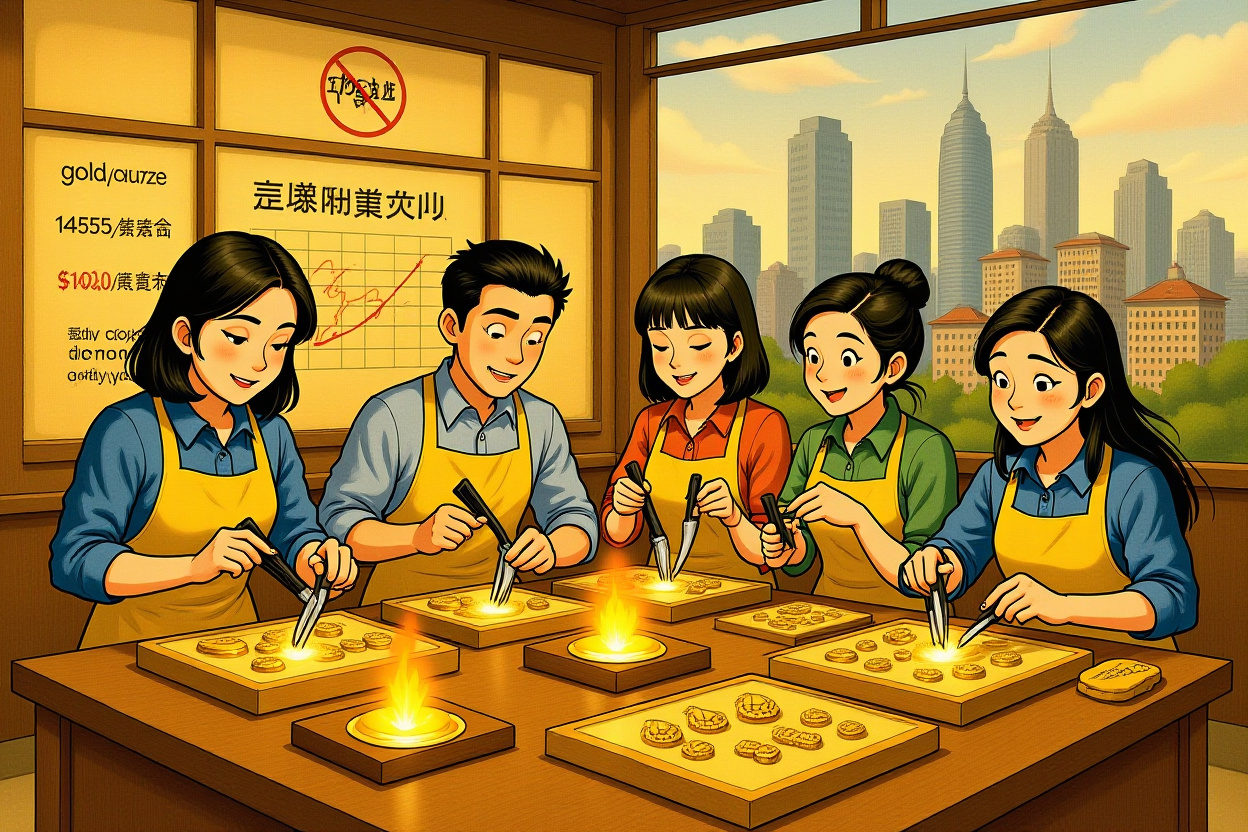
– Gold prices have skyrocketed globally, with spot gold exceeding $4555 per ounce and domestic Chinese jewelry prices approaching 1400 yuan per gram, driven by macroeconomic factors and investor sentiment.
– The ancient practice of gold crafting is experiencing a modern revival, particularly among young consumers seeking personalized, cost-effective jewelry, with social media views surpassing 1.3 billion.
– DIY home gold crafting kits are widely available online, but experts warn of severe safety risks, including high-temperature hazards and toxic fumes, as well as significant financial losses from gold wastage.
– Professional gold crafting offers economic opportunities, with young artisans entering the field and earning competitive wages, but requires adherence to safety standards and regulatory guidelines.
– Investors and consumers should exercise caution, prioritize professional services over DIY attempts, and stay informed on market trends to mitigate risks associated with home gold crafting.
THE GOLD RUSH REDEFINED: MARKET SURGE AND CONSUMER SHIFTS
The dramatic ascent of gold prices in late March 2024 has sent shockwaves through global financial markets, with spot gold breaching the $4555 per ounce barrier and domestic Chinese gold jewelry prices nearing an unprecedented 1400 yuan per gram. This rally, fueled by geopolitical tensions, inflation fears, and central bank policies, has not only captivated investors but also sparked a cultural phenomenon: the resurgence of gold crafting. As consumers grapple with soaring costs, many are turning to hands-on methods to engage with the precious metal, making home gold crafting a viral trend. This shift reflects a broader desire for customization, value retention, and connection to tradition in an uncertain economic landscape.
Global Drivers and Domestic Price Impacts
The surge on March 27, 2024, was precipitated by a confluence of factors, including the Federal Reserve’s monetary policy stance and ongoing international conflicts. In China, this translated into immediate retail price hikes across major jewelry brands. For instance, 老凤祥 (Lao Feng Xiang) raised its price to 1396 yuan per gram from 1368 yuan, 老庙黄金 (Lao Miao Gold) increased to 1397 yuan from 1365 yuan, and 周生生 (Chow Sang Sang) adjusted to 1391 yuan from 1364 yuan. These adjustments, often implemented daily, underscore gold’s sensitivity to global events and its role as a safe-haven asset. The price proximity to 1400 yuan has intensified consumer interest in alternative gold engagements, such as crafting, to avoid brand premiums and maximize value.
Consumer Behavior Evolution in Response to High Prices
High gold prices have catalyzed innovative consumer strategies, moving beyond mere investment to active participation. Young adults, in particular, are leveraging gold crafting to transform old heirlooms into modern pieces, blending情感记忆 (emotional memory) with contemporary design. This trend, dubbed “新国潮” (new national trend), positions gold as both a financial instrument and a cultural symbol. The rise of home gold crafting is a direct response to these market conditions, offering a perceived avenue for savings and creativity. However, this DIY approach comes with hidden pitfalls that could undermine its appeal, as experts caution against underestimating the complexities involved.
THE RENAISSANCE OF GOLD CRAFTING: TRADITION MEETS INNOVATION
Gold crafting, an age-old art involving熔金 (melting gold),倒模 (molding),塑型 (shaping), and抛光 (polishing), is enjoying a remarkable resurgence, driven by social media and shifting consumer preferences. Platforms like Douyin and Xiaohongshu have amplified its visibility, with related hashtags garnering over 1.3 billion views. This section delves into the craft’s fundamentals and its appeal to a new generation, highlighting why home gold crafting has become a focal point for both enthusiasts and skeptics alike.
Understanding the Gold Crafting Process
At its core, gold crafting transforms raw or recycled gold into jewelry through meticulous steps. Professional goldsmiths typically complete a piece in one to three hours, charging工费 (labor fees) of 10 to 40 yuan per gram for basic items, while complex designs like非遗花丝 (non-heritage filigree) or手工錾刻 (hand engraving) can cost hundreds of yuan. This contrasts sharply with retail markups, which often include significant品牌溢价 (brand premiums). The process requires specialized tools, such as torches, molds, and polishing equipment, and demands precision to minimize黄金损耗 (gold loss). For DIYers, replicating this at home involves similar steps but with greater risk of error, making home gold crafting a challenging endeavor even for the adept.
The Allure for Young Consumers: Personalization and Value
Young consumers are embracing gold crafting for its dual benefits: cost-effectiveness and personal expression. By refurbishing family jewelry or creating new pieces, they preserve sentimental value while aligning with modern aesthetics. Wang Huiqun (王惠群), Secretary-General of the上海黄金饰品行业协会 (Shanghai Gold and Jewelry Trade Association), notes that this trend reflects a desire for transparency and control over gold assets. In interviews, consumers report that home gold crafting allows them to bypass traditional retail channels, but this requires careful planning and awareness of risks. The DIY aspect appeals to those seeking hands-on experiences, yet without proper guidance, it can lead to disappointing outcomes.
PROFESSIONAL GOLD CRAFTING INDUSTRY: ECONOMIC OPPORTUNITIES AND YOUTH INFLUX
As gold crafting gains popularity, the professional industry is evolving, with young artisans injecting creativity and innovation. This section explores the career prospects and economic viability for goldsmiths, as well as the growing demand for skilled labor in this niche sector.
The Rise of Young Goldsmiths and Market Adaptation
Enterprises are increasingly recruiting年轻打金师 (young goldsmiths), often from the “00后” (post-2000 birth) demographic, who bring fresh perspectives and digital savvy. For example, shop owners report that young teams excel in understanding client needs and integrating modern design elements, such as minimalist styles or tech-inspired motifs. Zhou Baolin (周宝林), a store manager in Shanghai’s Huangpu District, highlights that these artisans can earn monthly salaries around 10,000 yuan, with skilled錾刻师 (engravers) reaching 15,000 yuan. The industry’s low barriers to entry in terms of age and education make it accessible to graduates and career-changers, fostering a dynamic workforce. This influx is revitalizing a traditional trade, positioning it as a viable career path in the creative economy.
Economic Viability and Industry Challenges
The gold crafting industry faces challenges, including fluctuating material costs and competition from mass-produced jewelry. However, the trend towards customization offers a competitive edge. Professional workshops must adhere to stringent safety and quality standards, which are often overlooked in home gold crafting scenarios. For consumers, choosing reputable craftsmen involves verifying credentials and inspecting portfolios, as recommended by industry associations. The economic appeal of professional services lies in their reliability and reduced risk of gold loss, contrasting with the uncertainties of DIY attempts. As demand grows, training programs and certifications are becoming more prevalent, ensuring a sustainable pipeline of talent.
THE DIY GOLD CRAFTING PHENOMENON: NAVIGATING RISKS AND REALITIES
The proliferation of home gold crafting tutorials on social media has made DIY gold smithing seem accessible, but experts uniformly caution against its dangers. This section details the process, common pitfalls, and authoritative warnings, emphasizing why home gold crafting requires careful consideration.
How Home Gold Crafting Works: A Step-by-Step Overview
DIY enthusiasts typically purchase kits from e-commerce platforms like Taobao, with “打金套装” (gold crafting kits) priced between 100 and 200 yuan. These kits include tools such as长嘴钳 (long-nose pliers),火枪 (torches),硼砂 (borax), and油泥王 (modeling clay). The process involves melting gold at over 1000°C, pouring it into molds, and cooling it rapidly. However, as Wang Chao (王超), Director of the宁波市质检院黄金珠宝检测中心 (Ningbo Quality Inspection Institute Gold and Jewelry Testing Center), explains, success depends on factors like mold quality and operator skill. Even with detailed video guides, many DIYers encounter failures due to improper technique, leading to cracked castings or incomplete melts. This underscores the gap between perception and reality in home gold crafting.
Expert Warnings: Safety Hazards and Financial Pitfalls
Wang Chao (王超) highlights critical risks associated with home gold crafting. First, the high temperatures involved pose fire and burn hazards, especially in non-ventilated spaces. Second, impurities in gold, such as mercury or other volatile metals, can release toxic fumes when heated, risking poisoning. Third, financial losses are common due to黄金损耗 (gold loss) from errors like over-melting or poor mold preparation. Data from offline shops indicates that up to 30% of DIY attempts result in significant gold wastage, negating any cost savings. For instance, a failed attempt might lose 5-10% of the gold’s weight, requiring professional修复 (repair) that adds expense. These realities make home gold crafting a risky venture, despite its trendy appeal.
The Illusion of Savings and Success Rates
While home gold crafting promises savings on labor fees, the hidden costs often outweigh benefits. Common mistakes include石膏模具 (plaster mold) defects, welding errors, and inaccurate measurements, all leading to unrecoverable gold. Social media platforms are filled with success stories, but these represent a minority; most DIYers struggle with repeat failures. Beijing-based goldsmiths report an increase in clients seeking help after botched home attempts, highlighting the need for realistic expectations. The trend towards home gold crafting, therefore, should be approached with skepticism, and consumers are advised to weigh the potential losses against the modest upfront savings.
REGULATORY AND SAFETY FRAMEWORKS FOR GOLD CRAFTING
Engaging in gold crafting, whether professionally or at home, necessitates compliance with safety standards and regulatory guidelines. This section outlines best practices, legal considerations, and the role of industry bodies in mitigating risks.
Industry Standards and Consumer Protection Measures
Organizations like the上海黄金饰品行业协会 (Shanghai Gold and Jewelry Trade Association) advocate for consumer education and professional oversight. Wang Huiqun (王惠群) recommends selecting established workshops with visible certifications and clear fee structures. For DIYers, precautions include working in well-ventilated areas, using protective gear like厚手套 (thick gloves), and following verified methods from authoritative sources. Regulatory authorities, such as the国家市场监督管理总局 (State Administration for Market Regulation), periodically issue guidelines on precious metal handling, but these often focus on commercial entities rather than individual hobbyists. This gap leaves home gold crafters vulnerable, underscoring the importance of self-regulation and risk awareness.
Legal and Insurance Implications
Home gold crafting may not be covered by standard homeowner or liability insurance policies, exposing individuals to financial responsibility for accidents or damages. In professional settings, compliance with劳动安全 (labor safety) regulations is mandatory, including equipment maintenance and employee training. Consumers should verify that craftsmen carry appropriate insurance and adhere to本地法规 (local regulations). Additionally, transactions involving gold should be documented to prevent disputes over purity or weight. As home gold crafting grows, policymakers may consider tighter controls, but for now, personal accountability is paramount. Engaging with accredited professionals, rather than DIY methods, offers a safer and more legally sound alternative.
FUTURE OUTLOOK AND STRATEGIC RECOMMENDATIONS
As gold prices remain volatile and crafting trends evolve, stakeholders must navigate a landscape filled with both opportunities and risks. This section provides forward-looking insights and actionable advice for investors, consumers, and industry participants.
Market Predictions and Investment Strategies
Analysts project that gold may continue its upward trajectory in 2024, supported by economic uncertainty, but advise diversification into related assets like黄金ETF (gold ETFs) or stocks in companies such as阿里巴巴集团 (Alibaba Group) for exposure to e-commerce jewelry sales. For consumers, the appeal of home gold crafting may wane as awareness of risks spreads, potentially shifting demand towards professional services. Monitoring indicators like the中国人民银行 (People’s Bank of China) gold reserves or global inflation data can inform decisions. Investors should consider gold’s role as a hedge while avoiding overexposure, especially given the speculative nature of DIY trends.
Strategic Recommendations for Safe Participation
To engage with gold crafting responsibly, prioritize safety by opting for professional workshops over DIY attempts. Explore platforms offering curated crafting experiences or invest in gold through regulated channels like银行金条 (bank gold bars). For those intrigued by home gold crafting, start with small-scale projects under expert supervision, and always conduct purity tests on materials. The trend towards home gold crafting, while culturally significant, is best approached with caution and education. Share this article to raise awareness, and consult with certified financial advisors or goldsmiths before making any commitments. By balancing innovation with prudence, you can harness gold’s potential without falling prey to its pitfalls.
In summary, the intersection of soaring gold prices and the DIY movement has created a compelling yet hazardous trend in home gold crafting. While it offers creative fulfillment and perceived savings, the risks—from safety hazards to financial losses—demand careful consideration. Experts across the industry, from Wang Chao (王超) to Wang Huiqun (王惠群), emphasize the importance of professional guidance and realistic assessment. As the market evolves, staying informed and prioritizing safety will be crucial for anyone involved in gold crafting or investment. Take the next step: evaluate your goals, seek accredited advice, and share these insights to foster a safer, more informed community around gold engagement.